





Should I watch it?
Ask Your Own Question

What is the plot?
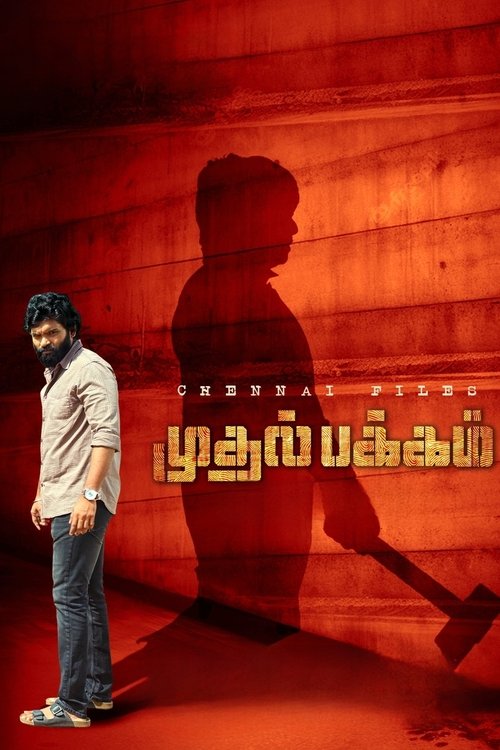
The film opens with Prabha arriving in the city to take part in a televised interview about his late father, a celebrated crime novelist whose books taught Prabha the rudiments of deduction. The program is being recorded in a downtown studio; cameras hum and lights glare while reporters prepare their questions. Outside the studio, a chance meeting brings Prabha face to face with Ramaiah, a seasoned police inspector who is quietly carrying a battered copy of one of Prabha's father's novels. Ramaiah reveals he is an ardent admirer of the deceased writer, and the two men fall into an easy conversation. Ramaiah listens to Prabha describe the investigative techniques he absorbed from the novels, and when a puzzling homicide surfaces soon after, Ramaiah invites Prabha to accompany him to the crime scene.
Prabha examines the initial murder with an attentiveness that draws Ramaiah's respect. He pieces together small inconsistencies in the witnesses' timelines and spots overlooked physical evidence, directing Ramaiah to a line of inquiry that cracks the case. The inspector watches as Prabha reconstructs what must have happened and authorizes queries that lead to a confession from a peripheral suspect. Ramaiah, impressed by Prabha's deductive agility, asks him to stay on and assist with another investigation that is consuming the city: a string of brutal killings that has so far claimed three victims.
The serial murders share a grotesque signature. Each body is found with the face mangled beyond recognition; the facial tissues are crushed and burned, rendering identification by sight impossible. Every corpse wears the same kind of plain white mask tied around the neck like an inverted collar, an identical, unsettling marker left on each victim. The deaths appear unrelated at first; the victims live in different neighborhoods, work at different jobs, have distinct social circles. Ramaiah and Prabha collect forensic reports and trace each man's last known movements. Through meticulous cross-referencing of attendance lists and surveillance footage, Prabha isolates one common denominator: all three had been present at the same regional athletic meet at the municipal stadium several months earlier.
They travel to the stadium and speak with staff and security. A stadium security guard remembers an incident in the women's changing room during that event: a man, known among the spectators as a notorious womanizer, had forced his way into the locker area and attempted to molest a young female athlete. The guard recounts the girl's scream and how several other women--fellow competitors--rushed in and gave the intruder a severe beating. The guard's description of the assailant and his subsequent appearance matches photographs on social media of a local troublemaker named Muthu. Prabha and Ramaiah realize the three recently murdered men were among those who joined the beating in the changing room; the evidence points to retaliation by the man they had assaulted.
A flashback scene reconstructs the event at the changing room in detail. Muthu intrudes upon the athletes, making lewd comments and reaching toward one player; the woman lashes out, calling for help. A cluster of athletes drags the intruder into a corner and strikes him with fury. The beating is prolonged; punches and kicks land on his face and head again and again. Muthu falls to the floor, bleeding profusely from the nose and mouth; his face is smashed against a concrete step. After the attack he staggers away, his visage ruined, and his long-term girlfriend abandons him in disgust. The film shows Muthu's humiliation and the beginning of his obsession: alone and disfigured, he begins planning a campaign of vengeance directed at the men who laid hands on him.
Back in the present, Prabha and Ramaiah compile a list of everyone involved in the beating. They notify potential targets and increase patrols around their residences, and they stake out the next most likely victim: Arun, a young man who had participated in the assault and is still alive. Ramaiah assigns officers to follow Arun's routines, and Prabha monitors Arun's phone records and social activities, determined to anticipate Muthu's next move.
Their private investigation is interrupted when tragedy strikes Ramaiah at home. One morning he receives news from his daughter's school: his teenage daughter Nandhini has taken her own life on campus. The film cuts between the sterile corridors of the school and Ramaiah's collapse at the station. Teachers and students murmur, and school administrators show Ramaiah an empty classroom and the spot where Nandhini ended her life. Ramaiah stumbles back to the precinct, face ashen, but he rejects advice to take leave. He insists that he will continue working the serial-killer case even while grieving, and Prabha watches the inspector bury his pain under duty.
Ramaiah and Prabha escalate surveillance on Arun. On the day they anticipate an attack, they embed themselves near Arun's college gate and keep a low profile. Muthu appears in the crowd, carrying a backpack and scanning faces. When he spots Arun leaving with friends, he moves in with lethal intent. At Arun's school compound Muthu attempts to abduct him. He lunges, grabs Arun by the collar, and tries to drag him toward a waiting vehicle. Prabha and Ramaiah are nearby and break cover; seeing them, Muthu detonates an explosive charge he has concealed in a trash bin to create a chaotic diversion. The explosion rips a hole in the pavement, showering bystanders with debris and setting off car alarms. In the confusion Muthu forces Arun into an idle van and speeds away.
Prabha catches sight of the van and gives chase on foot. He notices the license plate is partially obscured and shouts to Ramaiah, who radios a squad car. Prabha follows the vehicle into an industrial stretch of the city and pursues when it stops near a disused, multi-story warehouse. Muthu carries Arun into the building, and Prabha follows him up a narrow stairwell. They confront one another on an upper landing. Prabha demands Arun be released; Muthu responds with fury. The two men wrestle in the dim stairwell as rain leaks through a hole in the roof. They crash through a handrail, roll across a littered corridor, and exchange blows. Prabha manages to land heavy strikes, but Muthu slips away down a back stair and disappears into the labyrinth of the abandoned structure. Prabha calls out as police sirens approach; by the time reinforcements arrive, Muthu has vanished.
The following morning the city's forensics teams find two bodies dumped in a rural stretch of scrubland outside the municipal limits. Both corpses display the same brutal mutilation of the face and are found with identical white masks around their necks--two more victims conforming to the pattern that has become the police's worst fear. Investigators note the murder site is remote and that the bodies were likely transported in a van, suggesting the killer has expanded his hunting ground. Ramaiah and his colleagues believe Muthu has escalated his spree, striking beyond the city and leaving little trace.
At the rural site Prabha senses something is off. He slips away from the formal perimeter and moves toward a clump of abandoned farm buildings nearby. The tall grass brushes his knees as he approaches a corrugated-metal shed, and he hears muffled footsteps inside. Pushing open the rusted door, he finds Muthu in the dim interior, hunched over and frantically preparing a new attack. Muthu turns and the two men collide. Muthu throws the first punch, a wild haymaker fueled by rage and pain; Prabha responds with focused restraint, sidestepping and delivering a series of controlled blows designed to stun rather than maim. The fight moves through the long hall of the rural building: Prabha slams Muthu against a rafter and for a moment gains the upper hand. Muthu fumbles with a jagged piece of metal and tries to slash Prabha's forearm, but Prabha ducks and lands a decisive shove against a balcony railing on the upper floor.
Muthu loses his footing and teeters over the edge. Prabha reaches out and pushes--he forces Muthu off balance--and Muthu falls from the upper level to the ground below. The impact is violent; Muthu's body crumples and lies still among splintered wooden beams. Prabha stands over him, breath heaving, and binds him with zip ties when he realizes Muthu is gravely injured but still alive. He calls Ramaiah and the arriving officers secure the scene. Medics lift Muthu onto a stretcher; he is conscious but in critical condition, his face swollen and further mangled from the fall. At a press briefing later that afternoon the police announce they have captured the man suspected of committing the series of murders, and they present photographs showing the arrested suspect being taken into custody with visible trauma from the encounter at the rural building.
After the arrests and the official announcement that the serial-killer case is closed, the narrative returns to the interview set where Prabha first arrived in the city. Vedha, the journalist who conducted that original televised conversation, meets with Prabha in a quieter, off-camera room to record an extended interview intended for a magazine feature. Over the course of their conversations, Vedha and Prabha have developed a personal connection; she admits she admires his calm intelligence and finds herself drawn to him beyond professional interest. In the soft light of the studio's green room, she asks him about his motives, about the way his father's novels shaped him, and about the choices he made while assisting Ramaiah.
Prabha sits across from Vedha and speaks plainly. He recounts the sequence of events he observed, from the stadium incident to the final struggle in the rural building, and he explains the practical steps he took to identify the victims and track Muthu. He describes confronting Muthu on the stairwell and the final fight in the abandoned building, down to the shove he uses that sends Muthu to the floor. He tells Vedha that he pushed Muthu from the balcony, that the fall left Muthu critically injured, and that he then secured him until police arrived. Vedha listens intently, her pen poised, as Prabha describes these actions without flourish. She asks him how he felt when Ramaiah refused to step away from the case after Nandhini's death, and Prabha answers that duty and grief are entangled--he watched Ramaiah choose to carry on.
The film closes on that intimate confessional note: Prabha speaking quietly into the recorder, Vedha absorbed in what he says, and the city's skyline visible through the studio window beyond them. Outside, the police have declared the serial murders solved and the suspect taken into custody alive. Inside, Prabha and Vedha sit together while the tape runs, and Prabha reveals the untold truth to the woman who has come to care for him. The last image holds on their faces as the recording light blinks off, and the screen fades to black.



What is the ending?
In the final moments of Muthal Pakkam, Prabhu uncovers a shocking truth tied to his father's past crimes, but the screen fades on an ambiguous cliffhanger where the antagonist escapes into the shadows, leaving Prabhu and Inspector Ramaiya staring at an unresolved clue, hinting at dangers yet to come.
Now, let me take you through the ending scene by scene, as the tension builds to its deliberate open close.
The climax erupts in a dimly lit abandoned warehouse on the outskirts of Chennai at night, rain pounding the rusted metal roof. Prabhu, drenched and breathing heavily, his shirt torn from a earlier scuffle, clutches a faded journal from his late father, the renowned crime novelist. His face is etched with exhaustion and dawning horror as he pieces together that his father not only wrote about real crimes but orchestrated some, including one that mirrors the current case. Inspector Ramaiya bursts through a side door, his uniform soaked, pistol drawn shakily in his right hand, his usual bumbling demeanor replaced by grim determination. Ramaiya's eyes widen as he sees Prabhu holding the journal open to a page with bloodstained edges.
Ramaiya lowers his gun slightly and steps forward across the puddles, his boots splashing. Prabhu looks up, voice hoarse, and hands over the journal without resistance. Ramaiya flips through it under the beam of his flashlight, his face paling as he reads entries detailing unsolved murders linked to Prabhu's family legacy. Suddenly, the antagonist--a shadowy figure in a black raincoat, face partially obscured by a hood--emerges from behind stacked crates on the far end of the warehouse. The villain, previously underdeveloped and operating from the sidelines, raises a silenced pistol and fires once, the bullet grazing Ramaiya's shoulder. Ramaiya stumbles back, dropping the journal into a puddle, clutching his bleeding arm with his left hand while firing wildly with his right, missing as the antagonist ducks.
Prabhu dives behind a crate, heart pounding visibly through his chest, grabs a loose metal pipe from the wet floor, and charges. The antagonist pivots, firing again, shattering a nearby glass pane that rains shards down. Prabhu swings the pipe, connecting with the villain's wrist, sending the pistol clattering across the concrete. The two grapple hand-to-hand, Prabhu's investigative drive fueled by betrayal over his father's secrets pushing him forward, while the antagonist fights with cold precision, landing a knee to Prabhu's stomach that doubles him over gasping. Ramaiya, blood trickling down his arm, shouts Prabhu's name and limps forward, tackling the antagonist from behind. The three collapse in a heap, fists flying amid grunts and the relentless rain.
The antagonist breaks free first, shoving Ramaiya into Prabhu, then snatches his dropped pistol from the floor. He stands, aiming at them both, chest heaving, a smirk visible under the hood as lightning flashes outside illuminate his unyielding eyes. But before he pulls the trigger, distant police sirens wail, growing louder--backup Ramaiya had called earlier via radio. The antagonist hesitates, glances at the journal floating in the puddle, then backs toward a rear exit door rusted half-open to the stormy night. Prabhu pushes to his knees, lunging weakly, but the villain kicks him back down.
Ramaiya raises his gun with his good arm, fires once more--the bullet pings off the doorframe. The antagonist slips through the door into the darkness, vanishing into the pouring rain and fog-shrouded alley beyond, his footsteps fading into the storm. Prabhu crawls to the journal, retrieves it, water smudging the ink, and stares at the final page: a cryptic note hinting at more accomplices. Ramaiya slumps against a crate, pressing his wound, phone to his ear confirming the sirens' approach.
The screen lingers on them both under the flickering warehouse light: Prabhu, journal in trembling hands, eyes fixed on the open door, fate uncertain as the father's legacy now burdens him directly; Ramaiya, wounded but alive, bandaging his shoulder crudely with his tie, his cop instincts sharpened yet insufficient to end the threat, demoted in spirit from bumbling to battle-tested. Police lights flash outside as officers enter, but the camera pulls back through the door into the endless rain, the antagonist's shadow briefly visible fleeing down the street, gone. Fade to black on that unresolved void.
Prabhu survives, forever altered by the family truth, positioned for potential pursuit. Ramaiya survives his injury, credibility as a cop affirmed in crisis but career likely stalled by the escape. The antagonist evades capture, free to strike again. Redin Kingsley's character, absent since mid-film, remains sidelined with no role here, his earlier comedic bridging forgotten. Shilpa Manjunath's presence, tied to lighter moments, fades entirely by this point.
Is there a post-credit scene?
Yes, Muthal Pakkam (2025) features a post-credit scene that delivers a chilling twist, deepening the film's themes of vengeance and unresolved trauma.
After the main credits roll and the theater lights begin to dim, the screen fades back in to a dimly lit hospital room at night, bathed in the harsh glow of fluorescent lights flickering overhead. Muthu, the disfigured serial killer, lies bandaged and motionless on a stark white bed, his chest rising and falling shallowly under the monitors' steady beeps--critically injured from Prabha's brutal throw but alive, as the police had announced. His one visible eye, swollen shut beneath layers of gauze, suddenly flutters open with a glint of feral hatred, pupils dilating in the shadows. A faint, ragged smile cracks his cracked lips, revealing bloodstained teeth, as his bandaged hand twitches toward a hidden scalpel on the bedside tray. The camera lingers on his face, capturing the raw fury simmering beneath his broken body--motivated not by defeat, but by an unquenchable thirst for revenge against Prabha, Ramaiah, and the world that scarred him. Cut to black with a single, ominous heartbeat echoing, leaving audiences gripped by dread that the cycle of violence endures, mirroring Muthu's internal rage born from betrayal by his girlfriend and attackers years ago. This scene underscores Prabha's overconfident closure of the case and Ramaiah's personal grief over Nandhini's suicide, hinting at future peril without resolving their emotional turmoil.
Is this family friendly?
No, Muthal Pakkam is not family-friendly due to its nature as a crime thriller centered on a serial murder investigation and psycho killer.
Potentially objectionable or upsetting aspects for children or sensitive viewers include: - Tension-building scenes typical of crime thrillers involving murder investigations. - References to serial killings and deductive pursuit of a psycho killer. - Non-linear narrative structure that heightens incoherence and intensity without relief. - Flimsy but present crime elements that may evoke unease.








