






























Should I watch it?
Ask Your Own Question

What is the plot?
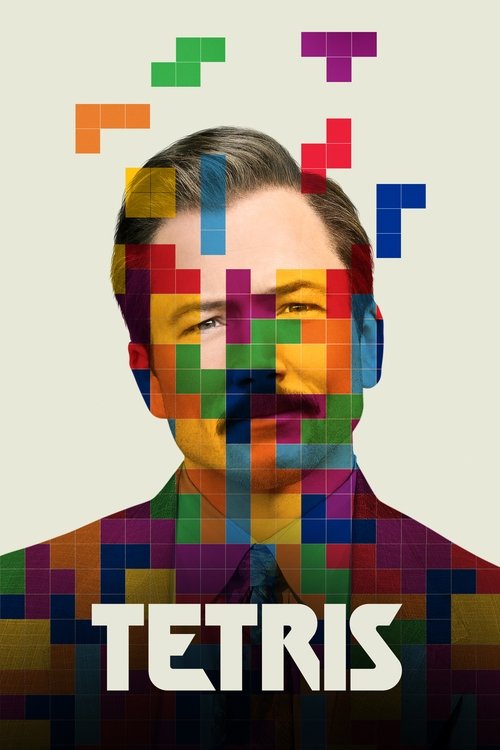
In 1988, at the Consumer Electronics Show in Las Vegas, Dutch game entrepreneur Henk Rogers stands behind a small booth trying to drum up interest in GO, a strategy title he brings with him as Bullet-Proof Software's latest product. Attendees pass by with little enthusiasm until one young woman drifts off toward a neighboring stand. Henk follows her curiosity and finds himself transfixed by a simple, hypnotic puzzle on display: a program of falling colored blocks called Tetris, created by a Soviet programmer named Alexey Pajitnov. Henk abandons his own pitch and falls into the game, playing until the show closes.
After the trade show, Henk travels to Tokyo to pursue the opportunity he recognizes. He meets Hiroshi Yamauchi, the reclusive president of Nintendo, and demonstrates a Famicom version of Tetris atop a table in Yamauchi's austere office. Yamauchi enjoys the game's purity and offers Henk a buyout, but Henk rejects a lump-sum purchase and instead convinces Yamauchi to partner with him: Henk will adapt and distribute Tetris on Nintendo's systems while maintaining a stake in its future. To finance cartridges and arcade cabinets, Henk secures a $3 million loan from a bank manager named Eddie, signing over his apartment as collateral despite warnings from his wife Akemi. Back at their Tokyo apartment, their daughter Maya and the family's younger child play Tetris for hours; Akemi worries aloud about Henk risking their home, and Henk reassures her that the children's obsession proves the game's appeal.
News from London complicates Henk's plans. Robert Stein of Andromeda Software, the intermediary who first licensed Tetris from the Soviet agency ELORG, has moved quickly to sublicense rights and create a tangle of claims. Stein has persuaded British media baron Robert Maxwell and his son Kevin to back Mirrorsoft, and Stein begins to promise different platform rights to different buyers. From Tokyo, Henk learns that Sega has been promised arcade rights in Japan, which undermines his Famicom strategy. He presses Nintendo for an advance on royalties so he can proceed despite the obstacle; Nintendo redirects him to Seattle to meet their American executives.
In Seattle, Henk meets Nintendo of America's president Minoru Arakawa and senior vice president Howard Lincoln. They unveil the Game Boy, a portable handheld system slated to ship bundled with Super Mario Land. Henk argues that Tetris is a more universally accessible title for the new device and persuades Arakawa and Lincoln to consider packaging Tetris with the Game Boy--if Henk can secure handheld rights. Energized, Henk returns to London to negotiate with Stein and the Maxwells. He offers Stein $25,000 for worldwide handheld rights; Stein appears to accept, but the situation darkens when Henk learns that Stein has also promised those same handheld rights to Atari Games for $100,000 as a favor to the Maxwells. Realizing that middlemen are manipulating ELORG's contracts, Henk decides to go straight to Moscow and obtain rights directly from the Soviet agency.
Henk arrives in Moscow on a tourist visa and quickly enlists the help of a young translator named Sasha, who warns him bluntly that walking into ELORG without an invitation is dangerous. Sasha escorts him to the bland, bureaucratic offices of ELORG, where the president, Nikolai Belikov, greets them and insists that ELORG never licensed anything beyond PC rights. Henk produces a Japanese cartridge of Tetris and argues that those earlier sublicenses were overbroad, that Stein has misrepresented the scope of his agreement and that ELORG is missing significant revenue. Belikov refuses to be hurried and orders Henk out, while a pair of KGB agents watch from the building's periphery and make a point of shadowing Henk as he leaves.
While Henk navigates the corridors of Soviet bureaucracy, Stein and the Maxwells advance their own maneuvers. Kevin Maxwell, Robert Maxwell's brusque son, grows alarmed when he notices missing funds in Mirrorsoft's ledgers; his father, a ruthless operator, brushes aside such questions and presses on to secure Tetris as a linchpin of Mirrorsoft's expansion. Stein appears increasingly anxious that Mirrorsoft will stiff him on promised royalties. In Moscow, Valentin Trifonov, a senior official in the Department of Foreign Trade with close ties to the security services, begins to take an interest in Tetris as a source of hard currency and personal enrichment. Trifonov tells his own aides that the Soviet system is on the verge of change and that there is money to be had for those who act now.
Henk returns to ELORG with Sasha and manages to be introduced, for the first time, to Alexey Pajitnov. In a small apartment full of secondhand furniture, Alexey demonstrates the original version of Tetris--early code, monochrome blocks, the logic of rotating pieces and clearing lines. He explains that he built the program as a hobby while working at a government computer center; he never received royalties. Henk listens and begins to form a rapport with Alexey. That night Alexey invites Henk to dinner at his home; his wife Nina keeps a careful eye on their visitor. Henk proves himself honest and respectful; Alexey opens up, telling Henk about his father, a university professor whose career collapsed after supporting a colleague who was punished for selling a book abroad. Alexey reveals the fragile position of intellectual labor inside the Soviet system.
Soviet surveillance escalates. KGB men photograph Henk as he spends time with Alexey and others who gather at a rioting-in-waiting club where young Muscovites dance to Western songs like "The Final Countdown." Henk is roughed up on the street by plainclothes officers who steal his Levi jeans, and his hotel room is ransacked. A threatening photograph of Sasha kissing him appears in a fax to his Tokyo office; Henk's enemies intend to use it to blackmail him, implying an affair that would humiliate his wife. Back in London, Stein confronts Kevin Maxwell and shoves him in anger after discovering Kevin has traveled to Moscow behind his back; their relationship fractures visibly. Meanwhile, in ELORG corridors, Belikov finds himself pressured by Trifonov and by Maxwell's offers.
Alexey receives thinly veiled threats against his family. Trifonov summons Alexey and tells him bluntly that his job is on the line unless he helps secure Tetris for foreign buyers; men accompanying Trifonov shadow Alexey's two sons, Dmitri and Peter, and make implied threats about their safety. Under this pressure, Belikov hands Alexey a letter of intent from Mirrorsoft to deliver to Henk--Belikov attempts to shift blame by telling Alexey to fax the letter on his behalf. Alexey, worrying about his family's survival and believing he must comply, faxes the Mirrorsoft letter to Henk's office. The timing proves crucial: the Mirrorsoft letter contains deadlines and conditions that Stein and Robert Maxwell hope will cloud the legitimacy of other offers.
Henk receives news that Atari machines are already shipping versions of Tetris for cartridge. He returns to Nintendo in Tokyo and informs Minoru Arakawa and Howard Lincoln that a competing handheld product has hit the market. Henk discovers that Stein and the Maxwells have been trading sublicenses and that Atari's claimed rights rest on expired or ambiguous paperwork. Henk convinces Arakawa and Lincoln to join him in returning to Moscow to settle matters in person. He also proposes a formal offer to Belikov: $25,000 upfront and twenty-five cents per copy sold, paired with an estimate that Tetris could sell 20 million copies and thus deliver roughly $5 million in royalties. The scale of Henk's financial projection recalibrates Belikov's thinking.
In London, Robert Maxwell attempts a personal intervention. He instructs his son Kevin to gather the million dollars Belikov demands as proof of Mirrorsoft's seriousness. Kevin frantically sifts through company accounts and discovers embezzlement and missing retirement funds. When he confronts his father for the money, Maxwell invalidates the uncertainty and insists on moving forward. Stein grows enraged at Maxwell for undermining him; he punches Kevin after discovering Kevin's clandestine trip to Moscow that jeopardized Stein's own deal and payment.
Back in Moscow, tensions come to a head. Henk, accompanied by Arakawa and Lincoln, confronts Belikov at ELORG. At the same time Robert Maxwell arrives with Kevin and Stein to press Belikov to sign with Mirrorsoft. Maxwell tries to bluster his way through the Soviet bureaucracy, but Belikov refuses to be browbeaten. In a physical exchange, Maxwell reaches toward Belikov in anger; Belikov responds with a sharp headbutt that staggers Maxwell and asserts ELORG's independence. Recognizing that Mirrorsoft cannot fulfill the promised wired million dollars and that their claims were built on sleight of hand, Belikov signs the agreement that authorizes Nintendo--in Henk's name and with Nintendo's financial backing--to receive console and handheld rights. The paperwork makes clear which platforms are granted and that ELORG never intended to license ambiguous, cross-platform rights as Stein had claimed.
Immediately after the signing, Trifonov moves to punish those who frustrate his plan. He orders his men to follow Henk, Arakawa and Lincoln; they pursue the three through Moscow streets as they race to the airport. Alexey appears at the wheel of a small Soviet car and whisks them into the city's clogged avenues; Henk and the Nintendo executives crouch in the back as Alexey drives desperately. Trifonov's armed convoy pursues with sirens, bullets bouncing off windshields; Henk clings to the seats while police and party thugs exchange shouts. The group reaches Moscow's airport; with Trifonov closing in, they sprint through security, barrel down a departure gate and board a plane bound for Tokyo. Trifonov and his men run onto the tarmac and climb aboard a different flight in the hope of following them, but Sasha, who has been working as Henk's translator and whose loyalty has been ambiguous, reveals herself to be a state security officer who has evidence of Trifonov's corruption. Sasha arrests Trifonov at the airport for treason and conspiracy, preventing him from intercepting the plane that carries Henk and the Nintendo delegation out of the country.
Henk arrives back in Tokyo exhausted and relieved. He reunites with Akemi and their children. He makes amends with Maya in a quiet, awkward conversation--he missed her school concert while in Moscow and shows her the pile of documents that prove he fought for their future rather than abandoning their family. Henk sends Alexey a Game Boy and a plane ticket to the United States, and he begins the process of helping Alexey and his family emigrate. Alexey receives the handheld and, later, a visa. He and his family leave the Soviet Union behind; in America Alexey continues to work with Henk. Together they launch The Tetris Company to manage licensing and protect the game's rights going forward.
No characters die over the course of these events. The major violent confrontations end with arrests and expulsions rather than fatality. Robert Maxwell and Robert Stein suffer reputational and financial losses rather than mortal harm; Trifonov is detained and removed from power; Belikov retains ELORG's authority within the agency and is not killed despite threats.
Commercially, the strategy plays out precisely as Henk forecast. Nintendo ships the Game Boy bundled with Tetris; players around the world respond instantly. Tetris appears across multiple platforms and becomes a cultural phenomenon. At home, Henk's collateralized apartment pays off its debt as Bullet-Proof Software and Nintendo collect revenue. Alexey eventually relocates and joins Henk in protecting and licensing Tetris through their new company. In the film's closing moments, Henk attends public celebrations as Game Boys proliferate and children fill their hands with Tetris; Alexey watches images of the Singing Revolution and the Soviet Union's political changes from a safe distance. A final series of images shows Henk and Alexey continuing their partnership: they oversee licensing, defend the intellectual property, and remain friends as Tetris circulates relentlessly across the globe. The film ends with Henk at home with his family, Maya grown and eventually taking an active role in the Tetris business, while the game's simple falling blocks continue to cascade across screens everywhere.






What is the ending?
Short Summary
Henk Rogers secures the worldwide rights to Tetris for Nintendo by exposing Robert Maxwell's deception to the Soviet agency Elorg, escapes Moscow with the contract, and reunites with Alexey Pajitnov years later after the Game Boy's success, while the corrupt KGB agent Valentin is arrested by the loyal agent Sasha.
Expanded Narrative Ending
Henk Rogers returns to Moscow for a final confrontation despite previous rejection and threats. This time he arrives with the backing of Nintendo executives Howard Lincoln and Minoru Arakawa, the developers of the Game Boy. The stakes have intensified because Robert Maxwell and his son Kevin, operating through the software company Mirrorsoft, have been competing aggressively for the same rights.
The turning point comes when government official Nikolai Belikov becomes instrumental in Henk's favor. Nikolai reveals to Elorg, the Soviet state agency controlling software exports, that Robert Maxwell promised Kevin fifty percent of Tetris profits to the corrupt KGB agent Valentin Trifonov in exchange for stopping Henk and securing the rights for Maxwell instead. This exposure of Maxwell's deception and the revelation that Maxwell never delivered the promised one million dollars to Kevin proves decisive. Elorg recognizes that Henk and Nintendo represent the legitimate path forward, and they award the rights to Rogers.
The moment Henk secures the contract, urgency erupts. Valentin, the disloyal KGB agent whose corruption has been exposed, panics and reveals his secret deal with the Maxwells directly in front of Sasha, a loyal KGB officer. Valentin then pursues Henk through the streets of Moscow in a desperate attempt to stop him from leaving with the contract. The chase extends all the way to the airport, but Henk reaches the plane in time and escapes. As Valentin steps off the airport bridge in disgust at his failure, Sasha arrests him for corruption and breaking the law, and soldiers take him away.
Henk, along with Howard Lincoln, Minoru Arakawa, and Alexey Pajitnov, boards a flight to Zurich, fleeing the Soviet Union with the secured rights to Tetris.
The film then jumps forward in time to show the aftermath. Following the unbelievably successful release of Nintendo's Game Boy with Tetris, Henk makes five million dollars. He uses this wealth to buy Alexey a ticket to San Francisco. The two men, who said goodbye at the Moscow airport, reunite two years later in the United States.
Alexey's fate during the intervening years reflects the consequences of his loyalty to Henk. The corrupt KGB agents who might have exposed Alexey's role in helping Henk escape are arrested and unable to reveal his involvement. Alexey returns to the one-room apartment he had been assigned as punishment for siding with foreigners earlier in the film. Following the fall of the Soviet Union, Henk sends him a Game Boy with Tetris as a gift, symbolizing their enduring friendship across the ideological divide that once separated them.
The film's epilogue reveals that Henk and Alexey go on to found The Tetris Company together, cementing their partnership that began in the shadow of the Cold War and culminated in bringing one of the world's most popular video games to global audiences.
Is there a post-credit scene?
Yes, the 2023 movie Tetris includes a post-credits scene during the credits sequence. It features authentic home video footage of the real Henk Rogers and Alexey Pajitnov captured during their first meeting in the Soviet Union, providing a poignant, unpolished glimpse into the genuine historical encounter that sparked the global Tetris phenomenon, with no additional narrative or teaser content beyond this archival clip.
Is this family friendly?
No, the 2023 movie Tetris is not family-friendly due to its R rating primarily for pervasive strong language.
Potentially objectionable or upsetting aspects include: - Frequent profanity, with nearly 30 uses of the f-word, plus multiple instances of the s-word, a–, b–ch, d–n, b–tard, and crap. - Scenes of violence such as government agents punching, kicking, and beating characters (resulting in visible bruises and cuts), threats to harm children, a kidnapping, a punch to the face, a small fire, car crashes, and a character breaking a phone in anger. - Brief partial nudity where a character walks around in boxers after pants are stolen. - A surprise kiss from one character to another, who notes they are married. - Tense thriller elements involving intimidation and threats by authority figures.








