

























Popular
What motivates Colonel Guile in his mission against M. Bison?
How does Chun-Li's backstory influence her actions in the film?
What is the significance of Ryu and Ken's friendship in the film?
How does M. Bison's character embody the film's conflict?
What role does the character of Zangief play in the story?
Should I watch it?
Ask Your Own Question

What is the plot?
Sorry, we aren't able to watch and write up a full detailed plot yet. Check back in a few days.
More Movies Like This
Browse All Movies →






What is the ending?
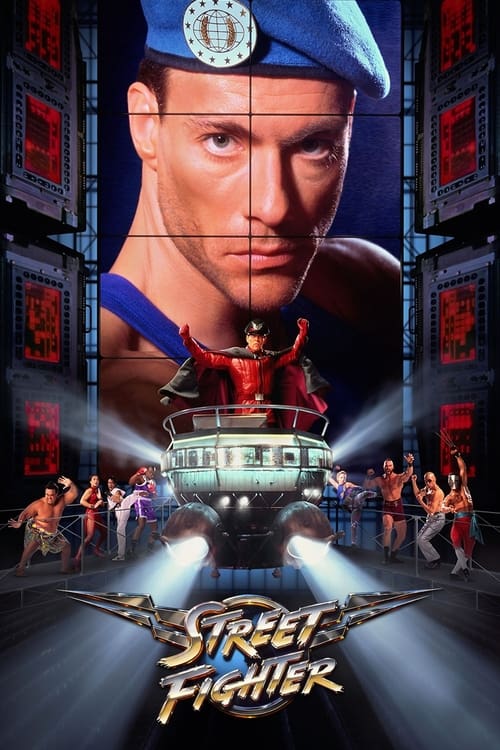
In the ending of the 1994 movie "Street Fighter," Colonel Guile and his team successfully defeat the villainous M. Bison. Guile confronts Bison in a climactic battle, ultimately defeating him. After the fight, Guile and his allies celebrate their victory, while Bison's plans for world domination are thwarted. The film concludes with a sense of camaraderie among the heroes, and Guile delivers a memorable line, hinting at the ongoing fight against evil.
As the final act of "Street Fighter" unfolds, the tension escalates dramatically. The scene opens in M. Bison's stronghold, where Colonel Guile, portrayed by Jean-Claude Van Damme, prepares for the ultimate confrontation. Guile's determination is palpable; he is driven not only by a sense of duty but also by the personal loss of his friend, Charlie Nash, at the hands of Bison. The stakes are high, and Guile's resolve is unwavering.
The camera shifts to Bison, played by Raul Julia, who is in his command center, surrounded by his henchmen. He exudes confidence, believing that his plans for world domination are foolproof. Bison's arrogance is evident as he taunts Guile, showcasing his villainous nature. The atmosphere is thick with anticipation as the two forces prepare to clash.
The scene transitions to a large, chaotic battle between Guile's team and Bison's forces. The action is frenetic, with explosions and martial arts combat filling the screen. Characters like Chun-Li, played by Ming-Na Wen, and Ryu, portrayed by Kenji Yamamoto, engage in their own fights, showcasing their skills and determination to bring down Bison. Chun-Li's motivation is deeply personal; she seeks revenge for her father's death, which adds emotional weight to her actions.
As the battle rages on, Guile finally confronts Bison in a dramatic showdown. The two engage in a fierce fight, with Guile utilizing his agility and combat skills against Bison's formidable powers. The choreography is intense, with each blow exchanged reflecting their contrasting ideologies--Guile's fight for justice against Bison's quest for power. The stakes are not just physical; they are emblematic of the larger struggle between good and evil.
In a pivotal moment, Guile gains the upper hand. With a powerful move, he delivers a decisive blow to Bison, sending him crashing to the ground. Bison, now defeated, attempts to use his technology to escape, but Guile is relentless. He delivers a final, powerful strike, ensuring that Bison's reign of terror is over. The camera captures the moment of victory, with Guile standing over Bison, a mix of relief and triumph washing over him.
As the dust settles, Guile's team gathers, celebrating their hard-fought victory. The camaraderie among the characters is evident; they have fought together and emerged victorious against a common enemy. Chun-Li, Ryu, and the others share in the moment, their expressions reflecting a mix of joy and the weight of their losses. Guile, embodying the spirit of a true leader, acknowledges their efforts and sacrifices.
In the final scene, Guile delivers a memorable line, hinting at the ongoing struggle against evil. The camera pans out, showing the team united, ready to face whatever challenges may come next. The film closes on a note of hope and resilience, emphasizing the importance of friendship and the fight for justice.
As the credits roll, the fates of the main characters are clear: Guile has avenged his friend and thwarted Bison's plans, Chun-Li has taken a step towards closure regarding her father's death, and Ryu and the others have solidified their bonds through shared struggle. The film ends, leaving the audience with a sense of victory, but also a reminder that the fight against evil is never truly over.
Is there a post-credit scene?
The 1994 film "Street Fighter" does not have a post-credit scene. The movie concludes with a climactic battle and a resolution to the conflict between the characters, particularly focusing on Colonel Guile's victory over the villainous M. Bison. After the final showdown, the film wraps up with a sense of triumph and camaraderie among the characters, but there are no additional scenes or teasers after the credits roll. The film ends on a note of celebration, with Guile and his allies reflecting on their victory, leaving no room for a post-credit sequence.
What motivates Colonel Guile in his mission against M. Bison?
Colonel Guile is driven by a personal vendetta against M. Bison, who is responsible for the death of his friend and fellow soldier, Charlie Nash. Guile's determination to bring Bison to justice is fueled by a mix of grief, anger, and a sense of duty to protect the innocent from Bison's tyrannical rule.
How does Chun-Li's backstory influence her actions in the film?
Chun-Li is motivated by a deep desire for revenge against M. Bison, who kidnapped her father when she was a child. Her quest for justice is personal, and she is portrayed as a strong, determined journalist who uses her skills to infiltrate Bison's organization, showcasing her resilience and commitment to uncovering the truth.
What is the significance of Ryu and Ken's friendship in the film?
Ryu and Ken's friendship is central to the narrative, highlighting themes of loyalty and camaraderie. Their bond is tested as they navigate the challenges posed by Bison's forces. Ryu's serious demeanor contrasts with Ken's more carefree attitude, but ultimately, their mutual respect and support for each other drive them to fight against Bison's oppression.
How does M. Bison's character embody the film's conflict?
M. Bison is portrayed as a ruthless dictator with grand ambitions of world domination, embodying the film's central conflict between good and evil. His manipulative nature and willingness to use violence to achieve his goals create a palpable tension throughout the film, as he seeks to crush Guile and his allies while asserting his power.
What role does the character of Zangief play in the story?
Zangief serves as a comedic yet formidable antagonist who is fiercely loyal to M. Bison. His character adds a layer of humor to the film, but he also represents the physical threat posed by Bison's forces. Zangief's interactions with other characters, particularly his clashes with Guile and the heroes, highlight the absurdity of the situation while showcasing his brute strength.
Is this family friendly?
The 1994 film "Street Fighter" contains several elements that may be considered objectionable or upsetting for children or sensitive viewers. Here are some aspects to consider:
-
Violence: The film features numerous fight scenes, including hand-to-hand combat and weapon use. Characters engage in physical confrontations that may be intense or graphic for younger audiences.
-
Death and Injury: There are moments where characters are seriously injured or killed, which could be distressing. The portrayal of violence is often exaggerated, but it still conveys a sense of danger.
-
Language: The dialogue includes some mild profanity and suggestive remarks that may not be suitable for younger viewers.
-
Thematic Elements: The film deals with themes of war, crime, and power struggles, which may be complex or unsettling for children to understand fully.
-
Character Behavior: Some characters exhibit aggressive or villainous traits, which could be alarming or confusing for younger audiences.
-
Mature Humor: There are instances of innuendo and adult humor that may not be appropriate for children.
Overall, while "Street Fighter" is an action-adventure film, its content may not be suitable for all family members, particularly younger children or those sensitive to violence and mature themes.








