



Popular
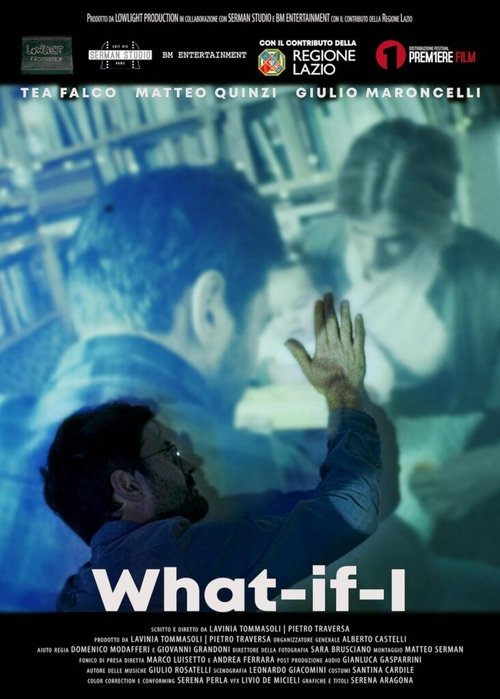
What is the main conflict faced by the protagonist in What-if-I?
How does Mia's relationship with her best friend evolve throughout the film?
What role does the mysterious character, the Guide, play in Mia's journey?
What are some key alternate realities that Mia experiences, and how do they impact her character development?
How does the climax of the film challenge Mia's understanding of success and happiness?
Should I watch it?
Ask Your Own Question

What is the plot?
On the evening of July 4, Ava Brucks returns to her coastal North Carolina hometown of Southport to celebrate her best friend Danica Richards' engagement. Danica's fiancé, Teddy Spencer, joins them in a small convoy that includes Ava's on-again, off-again ex Milo Griffin and Danica's estranged friend Stevie Ward, who has recently left a rehabilitation program. After the engagement party they pile into cars and drive toward a cliffside overlook to watch the fireworks. While their vehicles sit on the narrow, winding road above the ocean, Teddy drives in a careless, aggressive manner that forces a small sedan driven by Sam Cooper to swerve. Sam's car tumbles over the cliff and crashes into the rocks and surf below. All four witnesses--Ava, Danica, Milo and Teddy--stand frozen as Teddy insists they keep the incident secret. Teddy's father, the influential politician Grant Spencer, leverages his power to ensure Sam's death is covered up. Under the weight of the cover-up and the moral fallout, Danica breaks off the engagement with Teddy.
A year after the accident, Ava comes back to Southport for Danica's bridal shower; Danica is now engaged to a new man, Wyatt. At the shower Ava meets Tyler Trevino, a traveling true-crime podcaster who has come to Southport to investigate the notorious 1997 killing spree carried out by a fisherman named Ben Willis. Later that night, Danica receives a handwritten note tucked into her purse: I know what you did last summer. The handwriting and the threat disturb everyone, but the warning becomes deadly soon after. That night Wyatt leaves the bridal shower and walks alone; a hulking figure dressed like a fisherman attacks him on the docks. The assailant wields a rusted fisherman's hook and hacks Wyatt repeatedly, killing him in a brutal, hook-inflicted slaughter that matches the MO of the long-dead Ben Willis.
The next day Tyler takes Ava to the stretch of shoreline where Ben Willis murdered sisters Elsa and Helen Shivers in 1997, showing her the exact spot and telling her details he has uncovered. While they stand among the dunes and wreckage, a figure dressed in a ragged fisherman's raincoat and mask materializes and ambushes them. The attacker lunges at Tyler and kills him violently, driving a hook into his torso and leaving him dead on the sand. Ava flees the scene. Traumatized and desperate for answers, Ava, Danica and the remaining circle of friends turn to Julie James, the single survivor of Ben Willis's 1997 rampage and a local woman who still lives with the scars of that night. Julie listens as they describe the recent killings and, upon learning about Sam's death and the pattern of the attacks, tells them that the new assailant must have some personal link to Sam Cooper.
Tensions in Southport quickly spill into the public arena when a heated town hall meeting draws a large crowd. Julie's former husband, Ray Bronson--who also happens to be Stevie's employer--stands up in the meeting and accuses Grant Spencer of arranging a cover-up of the 1997 killings to protect the town's reputation and tourism. The accusation deepens suspicion about Sam Cooper's death and the people around him. Ava, Milo and Stevie start digging into local records and discover that Sam's car, the one Teddy caused to go off the cliff, had been registered to Judah Gillespie, the town pastor. They follow that lead to Judah's parsonage and to chapel congregants who imply that Judah and Sam had a relationship and knew each other. Meanwhile, the Fisherman surfaces again; he attacks Danica in her home, slamming into her with the masked fury of a killer who believes he is enacting vengeance. Teddy intervenes in the assault and manages to pull the Fisherman off Danica, allowing her to escape. The attacker then stalks Milo and, in a close, brutal encounter, strangles Milo with his bare hands until Milo's life is extinguished; the Fisherman drags Milo's corpse away from the scene, taking the body with him.
Ava and Danica take what they have found about Judah to the local police and file a complaint, convinced that the pastor's connection to Sam makes him a person of interest. Instead of opening an investigation, the police lock Ava and Danica in an interrogation room and charge them with harassment after heated questioning. While the town's institutions fumble, the Fisherman escalates his campaign. Teddy--already shaken by the cover-up and now under direct physical attack--tries to protect those he once endangered, but the Fisherman finds and murders him, striking him down with the same hook-like weapon that cut Wyatt. Grant Spencer, Teddy's father, comes under scrutiny and is subsequently located and killed by the Fisherman in a similarly brutal fashion, chopped or slashed with the hook in a scene that rock the town and removes the Spencers' shield of influence.
With the town leadership collapsing, Ray Bronson presses Julie, Ava and Danica to leave Southport and head out to sea aboard Teddy's yacht, arguing that the water will keep them safe from a land-bound murderer. As the women agree to flee, local officers investigating Judah's disappearance and other leads enter Judah's church. They find Judah's body strewn inside the sanctuary, a violent death visible on his corpse, and discover, among his belongings, a photograph of Sam Cooper with Stevie Ward. The photograph provides a chilling new revelation: Stevie and Sam were acquainted. The image, combined with other evidence, allows the police to identify Stevie Ward as the fisherman's primary suspect--the masked, hook-wielding killer now terrorizing Southport.
The refugees on Teddy's yacht believe they might be safe as the boat slips from its moorings and pushes into open water, but the vessel proves to be a trap. Stevie boards the yacht and reveals herself as the Fisherman. In the tight quarters of the yacht's decks she confronts Ava and Danica and, in a measured, cold voice, explains how she and Sam met at rehab and grew close; she recounts Sam's death and says she intends to exact retribution for him. Stevie demonstrates a deranged conviction that Sam's demise demands punishment of those she believes were responsible. In a rapid, violent sequence, Stevie stabs Danica multiple times with a knife before throwing her overboard into the surf. Sea water splashes the deck as Danica disappears beneath the waves. Ray Bronson, who is on the boat and has been following events closely, fires a single shot from a pistol at Stevie, hitting her and sending her tumbling off the side of the vessel into the water below. The bullet throws Stevie back into the breakers, and she disappears from sight.
When Ava is later taken to Ray's bar for medical attention after the yacht attack, Ray applies a bandage to a wound on her torso. As Ray helps dress the injury, Ava notices that Ray carries a scar and a fresh wound in the exact same location where she had previously injured the Fisherman during one of their earlier confrontations. That visual match snaps a realization into place: Ray is not merely a bystander; he is aligned with the Fisherman and may be an accomplice. Julie, who has been working to piece together the pattern, learns the same fact and rushes to the bar to confront Ray and warn Ava. When Julie arrives Ray turns violent. He attacks both women and pins aside their attempts to escape. During the struggle Ray speaks plainly: he confesses to watching Ben Willis and following his methodology, painting himself as a man who chose to carry forward Willis's legacy of brutality. Ray admits that he recruited Stevie Ward as his partner--partly to assist her in her own private mission of vengeance for Sam, partly to punish the town that he says destroyed his life after the 1997 murders. He details how he orchestrated parts of the campaign, providing logistical support and covering tracks for the killings that followed. As Ray lifts a weapon and moves to execute Julie, Ava seizes a nearby speargun--a long pole-like weapon with a pointed tip--and fires it at close range. The projectile penetrates Ray's chest, and he collapses, dead from the speargun wound before he can finish killing Julie.
Danica, who had been thrown overboard earlier from the yacht, fights through the waves and resurfaces. Exhausted and battered, she washes ashore and is later found alive. She limps back to Ava and embraces her amid the wreckage of trust and blood that the series of murders has left behind. The two friends tend to one another and discover that the man they had believed venerable--Ray Bronson--was complicit in the violence, while Stevie Ward, though shot and knocked into the water, is not accounted for among the dead. Officials, friends and survivors search the coastline and the nearby marshes but fail to recover Stevie's body. Ava, Danica and Julie piece together the trail of evidence--the photograph in Judah's church, the eyewitness accounts, the matching wounds and scars--and come to the grisly conclusion that the Fisherman's campaign was not the work of a lone, resurrected 1997 killer but a partnership between Stevie and Ray, forged from grief and a desire for revenge.
After the confrontation at Ray's bar, Southport reels from the twin revelations of who the Fisherman is and who facilitated the murders. The police continue to investigate the church death; they catalog the wounds on Judah's corpse and collect the photograph that linked Stevie to Sam Cooper. They transport bodies and take statements from survivors, but as the investigators begin to close in on suspects, a handwritten note arrives for Julie. The envelope bears no return address; inside she reads a short message that says it isn't over. Julie folds the paper once, then makes a call to an old ally. She drives to meet Karla Wilson, a fellow survivor and once-roommate from the time of Ben Willis's killing spree, and asks Karla to help her prepare for what might come next.
In the final scene, Julie stands on Karla's porch, the note still in her hand, and explains the events that have unfolded--the cliffside accident that killed Sam Cooper, the cover-up orchestrated by Grant Spencer, the new murders perpetrated by a fisherman who uses a rusted hook and who is revealed to be Stevie Ward, and the role of Ray Bronson in facilitating the recent attacks. Karla listens as Julie lays out the names of the dead--Sam Cooper, killed when his car drove off the cliff as Teddy Spencer forced him into the guardrail; Wyatt, hacked to death on the docks by the hook-wielding Fisherman; Tyler Trevino, ambushed and slain by the Fisherman at the Shivers' beach site; Milo Griffin, strangled by the attacker and dragged off; Teddy Spencer and Grant Spencer, each murdered in attacks carried out by the Fisherman; Judah Gillespie, found murdered inside his church alongside a photograph revealing Stevie's connection to Sam; and Ray Bronson, who dies after Ava fires a speargun into his chest as he moves to kill Julie. Julie hands Karla the note and asks for help because Stevie, though wounded and shot by Ray, is still unaccounted for. The camera closes on the two women standing on the porch together as the wind moves across the marsh grass and the sound of distant, restless waves fills the frame, leaving the town and the survivors braced for whatever the Fisherman and his conspirators might do next.







What is the ending?
In the ending of "What-if-I," the main character, Alex, confronts the consequences of his choices, leading to a poignant resolution with his love interest, Mia. The film concludes with Alex making a heartfelt decision that impacts his future and relationships, ultimately embracing the uncertainty of life.
As the final act unfolds, the scene opens in a dimly lit café where Alex sits alone, his expression a mix of contemplation and regret. The camera captures the flickering candlelight, casting shadows that mirror his internal struggle. He reflects on the choices he has made throughout the film, particularly regarding his relationship with Mia. The weight of his decisions hangs heavily in the air, and the audience can feel the tension building as he grapples with the idea of what could have been.
In the next scene, Mia enters the café, her presence illuminating the somber atmosphere. She approaches Alex with a cautious optimism, her eyes searching his for answers. The dialogue is charged with unspoken emotions as they discuss their past, the misunderstandings that led them to this moment, and the dreams they once shared. Alex's voice trembles as he admits his fears of commitment and the "what-ifs" that have haunted him. Mia listens intently, her heart aching for the man she loves, yet she stands firm, demanding honesty.
As the conversation deepens, the camera shifts to close-ups of their faces, capturing the raw vulnerability in their expressions. Alex's internal conflict is palpable; he wants to reach out, to bridge the gap between them, but the fear of failure looms large. Mia, on the other hand, embodies a quiet strength, urging him to confront his fears rather than run from them.
The pivotal moment arrives when Alex, with a shaky breath, reveals his decision to take a leap of faith. He acknowledges that life is filled with uncertainties, but he chooses to embrace them with Mia by his side. The emotional weight of his words hangs in the air, and the audience can sense the shift in their dynamic. Mia's eyes well up with tears of relief and joy as she realizes that Alex is finally ready to commit to their relationship.
In the final scene, the café fades into the background as Alex and Mia step outside into the bustling city streets. The camera captures their hands intertwining, a symbol of their renewed connection. They walk together, the uncertainty of the future ahead of them, but for the first time, they face it united. The film closes with a wide shot of the couple walking into the sunset, embodying hope and the promise of new beginnings.
As the credits roll, the fate of each main character is clear: Alex has chosen to confront his fears and embrace love, while Mia has shown resilience and the power of forgiveness. Their journey reflects the film's central theme of navigating life's uncertainties and the importance of connection, leaving the audience with a sense of optimism for the future.
Is there a post-credit scene?
In the movie "What-if-I," produced in 2023, there is indeed a post-credit scene that adds an intriguing layer to the narrative.
As the credits roll, the screen fades to black before transitioning to a dimly lit café, where the protagonist, Mia, is seen sitting alone at a table, her expression contemplative. She stirs her coffee absentmindedly, lost in thought, reflecting on the choices she made throughout the film. The atmosphere is quiet, with soft jazz music playing in the background, creating a sense of intimacy and introspection.
Suddenly, the door chimes as a familiar figure enters--the character of Alex, who had a significant impact on Mia's journey. He approaches her table with a warm smile, and there's a palpable tension in the air, hinting at unresolved feelings. Mia looks up, her eyes widening in surprise, a mix of joy and apprehension washing over her face.
Alex takes a seat across from her, and they exchange a few light-hearted remarks, but the underlying current of their conversation is serious. He leans in slightly, his voice low, and asks, "So, what if we tried again?" This question hangs in the air, heavy with possibility, as Mia's expression shifts from surprise to contemplation.
The scene ends with a close-up of Mia's face, her eyes reflecting a blend of hope and uncertainty, leaving the audience to ponder the implications of her choice. The screen fades to black once more, and the words "What if?" appear, inviting viewers to consider the endless possibilities that lie ahead for the characters. This post-credit scene encapsulates the film's central theme of choices and their consequences, while also teasing a potential continuation of Mia and Alex's story.
What is the main conflict faced by the protagonist in What-if-I?
The protagonist, Mia, struggles with the pressure of societal expectations and her own dreams. She is torn between pursuing a stable career in her family's business and following her passion for art, which her parents disapprove of. This internal conflict drives her to explore alternate realities where she makes different choices.
How does Mia's relationship with her best friend evolve throughout the film?
Mia's relationship with her best friend, Jake, becomes strained as they navigate their own aspirations. Initially supportive, Jake grows frustrated with Mia's indecision and the impact it has on their friendship. As Mia explores alternate realities, she realizes the importance of their bond and ultimately seeks to reconcile their differences.
What role does the mysterious character, the Guide, play in Mia's journey?
The Guide serves as a mentor figure who introduces Mia to the concept of alternate realities. They provide her with insights and challenges that force her to confront her fears and desires. The Guide's enigmatic nature adds depth to the narrative, as they reveal crucial truths about Mia's choices and the consequences of her actions.
What are some key alternate realities that Mia experiences, and how do they impact her character development?
Mia experiences several key alternate realities, including one where she becomes a successful artist, another where she takes over her family's business, and a third where she travels the world. Each reality highlights different aspects of her personality and desires, forcing her to confront what truly makes her happy and fulfilled, ultimately leading to significant character growth.
How does the climax of the film challenge Mia's understanding of success and happiness?
In the climax, Mia faces a pivotal moment where she must choose between a lucrative art deal that compromises her values and a path that aligns with her true self but offers uncertainty. This moment challenges her understanding of success, pushing her to redefine what happiness means to her, ultimately leading to a powerful realization about authenticity and self-acceptance.
Is this family friendly?
The movie "What-if-I," produced in 2023, contains several elements that may be considered objectionable or upsetting for children or sensitive viewers. Here are some aspects to be aware of:
-
Emotional Turmoil: The film explores themes of loss, regret, and existential questioning, which may evoke strong emotional responses. Characters grapple with their choices and face moments of deep sadness.
-
Conflict and Tension: There are scenes of interpersonal conflict that may be intense, including arguments and misunderstandings between characters, which could be distressing for younger viewers.
-
Mature Themes: The narrative delves into adult themes such as relationships, identity crises, and the consequences of decisions, which may not be fully comprehensible or appropriate for children.
-
Visual Imagery: Some scenes may include visual representations of emotional struggles that could be unsettling, such as characters in distress or facing their fears.
-
Mild Language: There may be instances of mild language that could be considered inappropriate for younger audiences.
Overall, while the film has a meaningful message, its emotional depth and mature themes may not be suitable for all children or sensitive viewers.









