











Popular
What is the significance of the relationship between the father and son in Land of the Sons?
How does the setting influence the characters' actions in Land of the Sons?
What role do the other survivors play in the story of Land of the Sons?
How does the son’s character evolve throughout Land of the Sons?
What are the key challenges the father faces in Land of the Sons?
Should I watch it?
Ask Your Own Question

What is the plot?
The Land of the Sons: Complete Plot Narrative
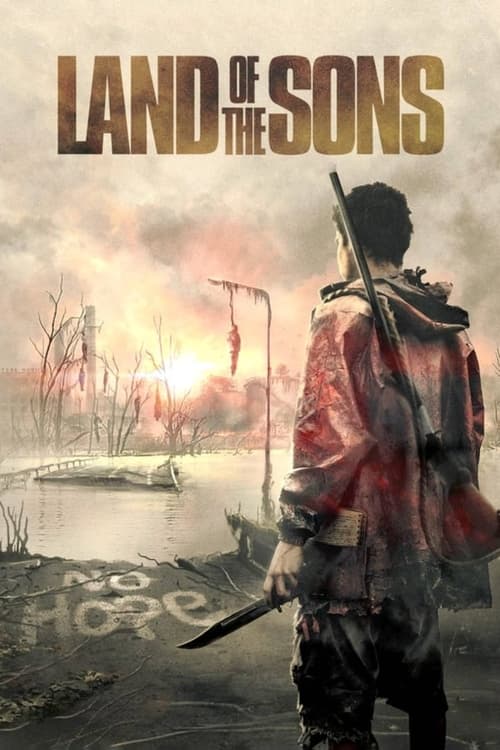
The world has ended, though no one remembers exactly when or how. Civilization has collapsed into ruin, the earth has stopped bearing fruit, and the water that once sustained life now carries only poison and death. Corpses litter the landscape like forgotten monuments to a world that no longer exists. In this wasteland of decay and despair, survival is almost impossible, yet a few humans cling to existence in the margins of this devastated realm.
Among these survivors are a father and his son, living in a ramshackle shack constructed on the banks of a putrid lake. The father, Paolo Pierobon, is a man of few words--tough, weathered, and hardened by the necessity of survival in a world that demands brutality. He has raised his son with a singular philosophy: that feelings are a luxury they cannot afford, that emotions are a weakness that will lead to death. The boy, played by Leon de la Vallée, has no name. He was born into this apocalypse, into this life of deprivation and isolation. He knows nothing of the world before, nothing of human civilization, nothing of the tenderness that once existed between people. He is feral, raised like a wild animal because, in his father's estimation, this is the only way to survive.
Every night, the father performs a ritual that the son does not understand. He sits alone and writes in a diary, his pen moving across pages with deliberate care. The son watches from the shadows, curious but unable to read the words his father inscribes. These pages contain something precious--memories, perhaps, or secrets, or the last remnants of the man the father was before the world ended. The son does not know what the diary contains, but he senses its importance. It is the only thing his father seems to value beyond mere survival.
One day, the son is attacked by a dog belonging to their neighbor, a man named Aringo. The dog lunges at him with teeth bared, driven by hunger and territorial aggression. Without hesitation, the son draws a dagger and kills the animal. He does not feel remorse or fear. He simply does what he has been taught: he eliminates the threat. Then, with the same detachment, he carries the dead dog back to the shack, skins it, and prepares it for food. His father watches him perform these tasks with an expression that is difficult to read. Perhaps he sees in his son the perfect product of his harsh teachings. Perhaps he sees something else--a reflection of what the world has forced them to become.
But the father is dying. The son can sense it, though neither of them speaks of it. The father grows weaker with each passing day, and the son knows that his time in the shack is coming to an end. When death finally comes, it arrives quietly, without drama or fanfare. The father simply ceases to be, leaving the son alone in the shack with only the diary and the memory of a man who taught him to survive but never taught him to live.
The son stands in the empty shack, holding the diary in his hands. The pages are filled with words he cannot read, and this inability torments him. His father spent every night writing these words, preserving them as though they were the most valuable thing in the world. The son understands that the diary holds the key to something--to his past, perhaps, or to understanding who his father was, or to comprehending the world that existed before the apocalypse. He knows he must find someone who can read these words to him, someone who can unlock the secrets his father kept.
The son recalls hearing whispers about a woman who lives nearby, someone the other survivors call the "witch." Her name is Valeria Golino, and she is said to possess knowledge and skills that others lack. The son leaves the shack for the first time with a clear purpose. He ventures beyond the boundaries of his isolated existence, crossing the sluice and the reservoir, following the mysterious river that winds through the devastated landscape. The journey itself is a kind of death and rebirth--he is leaving behind the only world he has ever known, stepping into a realm of uncertainty and danger.
When he finds the witch, she is not what he expected. She is a woman who has survived by her wits and her knowledge, and she recognizes in the boy something that others might miss--a capacity for change, for growth, for becoming something more than the brutal creature his father created. She agrees to help him, to read the words in his father's diary, to help him understand. But more than this, she becomes a guide for his transformation, helping him unlock not just the secrets of the diary but the capacity for feeling and connection that his father had beaten down into dormancy.
As the son travels deeper into the world beyond his shack, he encounters other survivors, and each encounter teaches him something new about the cruelty and complexity of human nature in a world without law or order. He meets two brothers, Maurizio Donadoni and Franco Ravera, who have carved out an existence by cultivating the land. But their survival comes at a terrible cost. They keep a prisoner--a young girl named Maria Roveran--locked in a cage on their property. She is their captive, their slave, a human being reduced to property in a world where human life has become cheap.
The son is horrified by this. Something in him, something that his father tried to suppress, rebels against this cruelty. He sees in Maria a reflection of his own captivity, his own imprisonment in the shack by the lake. He understands, perhaps for the first time, that there is a difference between survival and humanity, that one can survive without becoming a monster. He makes a decision that his father would have condemned as weakness: he helps Maria escape from her cage.
Together, the son and Maria flee from the brothers' property, following the river deeper into the wasteland. They are fugitives now, hunted by the brothers who see them as thieves who have stolen their property. But as they travel together, something shifts in the son. Maria becomes more than a fellow survivor to him. She becomes a connection to something his father never allowed him to experience--companionship, perhaps even the beginnings of love or deep affection. She speaks to him, teaches him words, helps him understand the world in ways that go beyond mere survival.
Their journey leads them to a large structure, a compound where a significant group of survivors has gathered. This is a new kind of society, crude and brutal, but organized nonetheless. It is ruled by a ruthless leader, Alessandro Tedeschi, a man who has consolidated power through fear and violence. The compound represents both hope and danger--hope that humanity might rebuild some form of civilization, and danger that this new civilization might be as cruel and unjust as the old one.
When the son and Maria arrive at the compound, they are immediately recognized as outsiders, as threats to the established order. The leader orders that the son be executed. This task falls to an executioner, Valerio Mastandrea, a man whose job is to carry out the brutal punishments that maintain order in this fragile society. The executioner is a complex figure--he is a killer, yes, but he is also a man who has retained some capacity for moral reflection, some ability to question the orders he is given.
As the executioner prepares to carry out his task, he looks at the son. He sees not a threat but a boy--a young man who has been shaped by circumstances beyond his control, who has traveled a long and difficult journey, who has shown capacity for compassion and growth. The executioner sees in the son a reflection of what humanity might still become, a possibility that the world has not yet completely destroyed. In this moment, the executioner makes a choice that defies the orders of his leader. He chooses mercy over obedience. He chooses to see the son's humanity rather than his threat.
This act of compassion becomes the turning point of the story. The executioner's choice to spare the son's life represents a fundamental assertion that humanity has not been completely extinguished by the apocalypse, that compassion and respect for other living beings can still exist in the hearts of survivors, even in the ruins of civilization. The son is allowed to live, and with this reprieve comes a kind of freedom that goes beyond mere physical survival.
The son's journey has transformed him completely. He has moved from a state of feral isolation to a state of connection and understanding. He has learned to read, or at least to understand the significance of the written word. He has experienced compassion, both giving it and receiving it. He has discovered that his father's diary, while precious as a record of the past, is not the only legacy worth preserving. The legacy of humanity itself--the capacity for kindness, for growth, for change--is equally valuable.
As the film draws to its conclusion, the son stands at a threshold. Behind him is the shack by the putrid lake, the isolation, the brutal teachings of his father. Before him is a world of possibility, of connection, of the chance to build something new. He has the diary, yes, and its secrets remain important. But he also has something more valuable: he has learned that he is capable of becoming more than his circumstances dictated, that he can choose compassion over cruelty, that he can unlock himself and face the outside world not as a feral beast but as a human being capable of growth and connection.
The final image is one of possibility rather than resolution. The son has not solved all the world's problems, nor has he rebuilt civilization. But he has discovered something that might be more important: he has discovered that within himself and within others, even in a devastated world, the capacity for humanity persists. He has learned to read not just the words in his father's diary but the world itself, and in that reading, he has found hope. The story ends not with answers but with the promise of transformation, with the understanding that even in the ruins of civilization, even in a world poisoned and broken, the human spirit can still choose compassion, still choose growth, still choose to become something more than survival alone demands.





What is the ending?
In the ending of "Land of the Sons," the protagonist, a young boy named Giovanni, confronts the harsh realities of his world as he navigates the aftermath of a devastating conflict. He faces the loss of his father and the burden of survival in a desolate landscape. Ultimately, Giovanni's journey leads him to a moment of reckoning, where he must decide how to carry on in a world stripped of innocence.
As the film draws to a close, Giovanni stands at a crossroads, grappling with the weight of his experiences and the legacy of his father. The ending leaves viewers with a sense of ambiguity, reflecting the ongoing struggle for hope and humanity in a fractured world.
The final scenes of "Land of the Sons" unfold with a palpable tension, as Giovanni, now deeply affected by the loss of his father, wanders through the barren landscape that has become his home. The air is thick with a sense of despair, and the remnants of civilization are scattered around him, serving as haunting reminders of what once was. Giovanni's face is etched with sorrow, his eyes reflecting a mixture of fear and determination.
In a pivotal moment, Giovanni encounters a group of survivors who are also grappling with the aftermath of the conflict. They are weary and hardened, their faces telling stories of loss and survival. Giovanni, still a child at heart, feels a flicker of connection with them, yet he is also acutely aware of the chasm that separates their experiences from his own. He watches as they struggle to maintain their humanity in a world that has stripped it away, and he feels the weight of his father's teachings pressing down on him.
As the sun begins to set, casting an orange glow over the desolate landscape, Giovanni finds himself at a makeshift camp where the survivors gather. They share stories of their past, and Giovanni listens intently, absorbing their wisdom and pain. In this moment, he realizes that he is not alone; there are others who have endured similar losses and who are also searching for meaning in the chaos.
The emotional climax occurs when Giovanni is faced with a choice: to cling to the memories of his father and the innocence of his childhood or to embrace the harsh realities of survival. He stands at the edge of the camp, looking out into the vast emptiness, contemplating his next steps. The camera lingers on his face, capturing the internal struggle as he weighs his options.
In the final moments, Giovanni makes a decision that signifies his growth. He steps forward, joining the group of survivors, symbolizing his acceptance of the world as it is and his commitment to forging a new path. The film closes with a shot of Giovanni walking alongside the others, their silhouettes framed against the fading light. This scene encapsulates the film's exploration of resilience and the enduring human spirit, even in the face of overwhelming adversity.
As the credits roll, viewers are left with a sense of hope intertwined with the harsh realities of life. Giovanni's fate is one of survival, but it is also a journey toward understanding and connection, as he learns to navigate a world that has forever changed him. The film leaves the audience pondering the complexities of loss, the importance of community, and the fragile nature of hope in a world that often feels devoid of it.
Is there a post-credit scene?
"Land of the Sons," produced in 2021, does not feature a post-credit scene. The film concludes its narrative without any additional scenes after the credits roll, focusing instead on the emotional and thematic resolution of the story. The film's ending encapsulates the journey of its characters, leaving the audience with a sense of closure regarding their struggles and relationships.
What is the significance of the relationship between the father and son in Land of the Sons?
The relationship between the father and son is central to the narrative, showcasing a deep bond that is tested by the harsh realities of their post-apocalyptic world. The father's protective instincts drive him to teach his son survival skills, while the son grapples with the desire for independence and understanding his father's past. This dynamic creates tension as they navigate their emotional connection amidst the struggle for survival.
How does the setting influence the characters' actions in Land of the Sons?
The desolate and harsh landscape of the post-apocalyptic world profoundly influences the characters' actions. The barren environment serves as a constant reminder of the dangers they face, pushing the father to be overly cautious and the son to seek adventure and freedom. The setting amplifies their emotional states, with the bleakness reflecting their internal struggles and the urgency of their survival.
What role do the other survivors play in the story of Land of the Sons?
Other survivors in Land of the Sons serve as both a threat and a reflection of the main characters' struggles. Encounters with these individuals highlight the moral dilemmas faced by the father and son, forcing them to confront their values and the lengths they will go to protect each other. These interactions also reveal the varying degrees of humanity left in a world stripped of civilization.
How does the son’s character evolve throughout Land of the Sons?
The son's character evolves from a sheltered boy to a more resilient and independent individual. Initially, he is heavily reliant on his father's guidance, but as the story progresses, he begins to question his father's decisions and seeks to carve out his own identity. This evolution is marked by moments of defiance, curiosity, and ultimately, a deeper understanding of the complexities of survival and human connection.
What are the key challenges the father faces in Land of the Sons?
The father faces numerous challenges, including the constant threat of danger from other survivors, the struggle to provide for his son in a barren landscape, and the emotional burden of protecting his child while grappling with his own past traumas. These challenges force him to make difficult decisions that test his moral compass and his ability to maintain hope in a seemingly hopeless world.
Is this family friendly?
"Land of the Sons," produced in 2021, is not considered family-friendly due to its mature themes and intense emotional content. The film explores a post-apocalyptic world where a father and his son navigate survival amidst harsh realities.
Potentially objectionable or upsetting aspects include:
- Violence: The film contains scenes of physical confrontations and the aftermath of violence, which may be distressing for younger viewers.
- Death and Loss: Themes of mortality and the impact of losing loved ones are central to the narrative, leading to emotional and heavy moments.
- Despair and Isolation: The characters experience profound feelings of hopelessness and isolation, which could be unsettling for sensitive audiences.
- Dark Atmosphere: The overall tone of the film is bleak, with a focus on survival in a harsh environment, which may be overwhelming for children.
These elements contribute to a narrative that is more suitable for mature audiences rather than children.








