
















Popular
What motivates Hermia to defy her father's wishes in A Midsummer Night's Dream?
How does Puck's character influence the events in the forest?
What is the significance of Titania's enchantment and how does it affect her relationship with Oberon?
How does Demetrius's character evolve throughout the story?
What role do the Mechanicals play in the overall narrative of A Midsummer Night's Dream?
Should I watch it?
Ask Your Own Question

What is the plot?
Sorry, we aren't able to watch and write up a full detailed plot yet. Check back in a few days.



What is the ending?
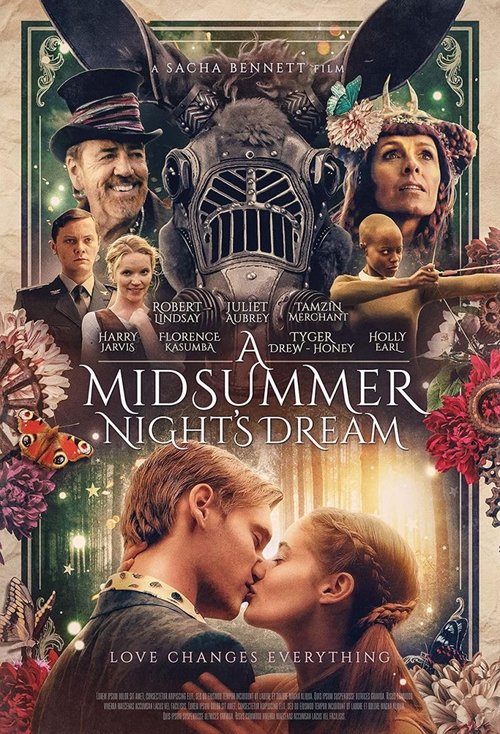
In the ending of the 2022 film "A Midsummer Night's Dream," the characters find resolution in their romantic entanglements after a night of magical chaos in the forest. The love potion's effects are reversed, leading to reconciliations and new beginnings. The play concludes with a joyful celebration of love and unity, as the characters prepare for a wedding.
As the film draws to a close, the scene shifts back to the enchanted forest, where the moonlight bathes the surroundings in a soft glow. The air is thick with the remnants of magic, and the characters begin to awaken from their slumber, still under the influence of the love potion.
First, we see Lysander and Hermia, who had been caught in a web of confusion and misplaced affections. Lysander, now free from the enchantment, gazes at Hermia with clarity and love. He expresses his deep feelings for her, and Hermia, relieved and overjoyed, reciprocates. Their reunion is filled with laughter and tears, symbolizing the trials they have overcome.
Next, Demetrius awakens, still under the spell's influence, but as the magic fades, he realizes his true feelings for Helena. The moment is tender as he approaches her, his eyes filled with sincerity. Helena, who had longed for his affection, is taken aback but soon embraces him, their love blossoming in the aftermath of the chaos. The two share a passionate kiss, solidifying their bond.
As the couples find their footing, Oberon and Titania, the king and queen of the fairies, observe from a distance. Oberon, having orchestrated the events to rectify the love misalignments, feels a sense of satisfaction. Titania, now free from the enchantment that had clouded her judgment, looks at Oberon with newfound respect and love. They reconcile, their relationship strengthened by the trials they faced, and they share a moment of intimacy, reaffirming their partnership.
The scene transitions to the clearing where the characters gather, laughter and joy filling the air. These moments are punctuated by the arrival of Theseus and Hippolyta, who have come to witness the aftermath of the night's events. The couples present their stories, recounting the confusion and the magic that had ensnared them. Theseus, amused and intrigued, decides to allow the couples to marry, recognizing the strength of their love.
The film culminates in a grand wedding celebration, where the characters don festive attire, and the atmosphere is filled with music and dance. The camera captures the joy on their faces, the warmth of their connections, and the sense of community that has emerged from the chaos.
As the festivities unfold, the characters reflect on their journeys. Lysander and Hermia, now united, express their gratitude for the trials that brought them closer. Demetrius and Helena, having found their way to each other, share a moment of laughter, acknowledging the absurdity of their past misunderstandings. Oberon and Titania, hand in hand, symbolize the harmony restored in both their relationship and the realm of the fairies.
The film closes with a final scene of the couples dancing under the stars, the camera pulling back to reveal the enchanted forest, now a place of love and unity. The last shot lingers on the moon, a symbol of the magic that brought them together, as the screen fades to black, leaving the audience with a sense of hope and the enduring power of love.
Is there a post-credit scene?
In the 2022 film adaptation of "A Midsummer Night's Dream," there is indeed a post-credit scene that adds a whimsical touch to the overall narrative.
As the credits roll, the screen fades back in to a moonlit forest, reminiscent of the enchanted setting where much of the story unfolds. The camera pans slowly through the trees, revealing the lingering magic in the air. Suddenly, Puck, the mischievous fairy played with charm and wit, appears on screen. He addresses the audience directly, breaking the fourth wall with a playful grin.
Puck begins to recount the events of the night, emphasizing the chaos and confusion that ensued due to the love potion. He winks and suggests that perhaps the audience should be careful about whom they fall in love with, hinting at the unpredictable nature of love itself.
As he speaks, the other fairies flit in and out of the shadows, giggling and whispering among themselves, creating a sense of camaraderie and mischief. The scene captures the essence of the play's themes of love, magic, and transformation, leaving viewers with a sense of wonder and a smile on their faces.
The post-credit scene concludes with Puck's famous line, "If we shadows have offended, think but this, and all is mended," before he disappears into the night, leaving a lingering sense of enchantment and the promise of magic in the air.
What motivates Hermia to defy her father's wishes in A Midsummer Night's Dream?
In the 2022 adaptation of A Midsummer Night's Dream, Hermia is driven by her deep love for Lysander, which fuels her determination to escape her father's control. She feels a strong sense of agency and passion, believing that true love should prevail over societal expectations. Her emotional turmoil is palpable as she grapples with the fear of losing Lysander and the pressure from her father, Egeus, who insists she marry Demetrius.
How does Puck's character influence the events in the forest?
Puck, the mischievous fairy, plays a pivotal role in the chaos that unfolds in the enchanted forest. His playful nature and penchant for trickery lead him to mistakenly apply the love potion to Lysander instead of Demetrius. This blunder ignites a series of comedic misunderstandings and emotional upheavals among the lovers, showcasing Puck's duality as both a source of humor and chaos. His internal conflict between loyalty to Oberon and his desire for fun adds depth to his character.
What is the significance of Titania's enchantment and how does it affect her relationship with Oberon?
In the 2022 film, Titania's enchantment, caused by the love potion, serves as a critical turning point in her relationship with Oberon. Under the spell, she falls in love with Bottom, who has been transformed to have a donkey's head. This absurd situation highlights the themes of love's irrationality and the power dynamics in their relationship. Titania's initial resistance to Oberon's demands transforms into vulnerability, revealing her emotional depth and the complexities of their love.
How does Demetrius's character evolve throughout the story?
Demetrius begins as a self-centered suitor, fixated on Hermia despite her rejection. However, as the love potion takes effect, his character undergoes a significant transformation. The enchantment leads him to genuinely fall in love with Helena, showcasing a shift from obsession to authentic affection. This evolution is marked by confusion and frustration, as he grapples with the sudden change in his feelings, ultimately leading to a more mature understanding of love.
What role do the Mechanicals play in the overall narrative of A Midsummer Night's Dream?
The Mechanicals, a group of amateur actors, provide a comedic subplot that contrasts with the main romantic entanglements. Their earnest yet bumbling attempts to stage 'Pyramus and Thisbe' serve as a humorous commentary on love and performance. Their interactions, particularly with Bottom's transformation and his over-the-top portrayal of Pyramus, add levity to the narrative while also reflecting the theme of love's folly. Their earnestness and camaraderie highlight the joy of creativity and the absurdity of love.
Is this family friendly?
The 2022 film adaptation of "A Midsummer Night's Dream" is generally family-friendly, but it does contain some elements that may be considered objectionable or upsetting for children or sensitive viewers. Here are a few aspects to be aware of:
-
Romantic Confusion: The film explores themes of love and desire, which may lead to misunderstandings and emotional turmoil among characters. This could be confusing for younger viewers.
-
Jealousy and Conflict: There are scenes depicting jealousy and conflict between characters, which may evoke feelings of discomfort or sadness.
-
Magical Transformations: The use of magic leads to characters undergoing transformations, including one character being turned into a donkey. This could be unsettling for some children.
-
Mild Language: There are instances of mild language that may not be suitable for very young audiences.
-
Emotional Turmoil: Characters experience a range of emotions, including anger, betrayal, and confusion, which may be intense for sensitive viewers.
Overall, while the film retains the whimsical and comedic elements of Shakespeare's original play, these themes may require parental guidance for younger audiences.








