
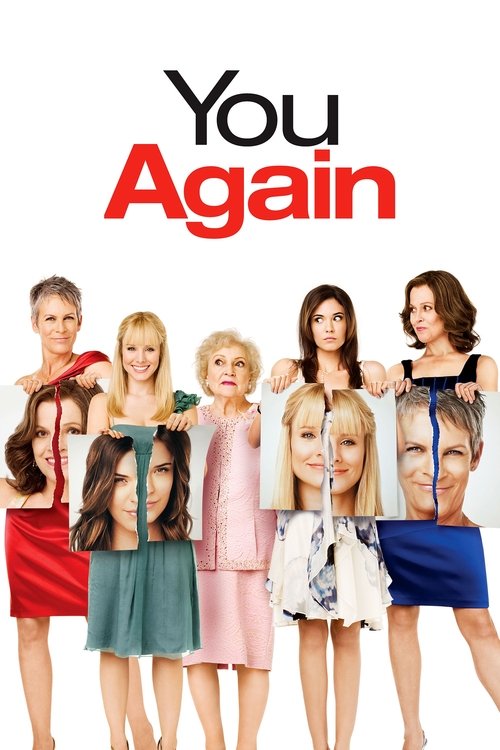







































Popular
What is the main conflict between Marni and Joanna in the movie?
How does Marni's family react to her feelings about Joanna?
What role does the character of Grandma Bunny play in the story?
How does Marni attempt to sabotage Joanna's wedding plans?
What is the significance of the high school reunion in the plot?
Should I watch it?
Ask Your Own Question

What is the plot?
Sorry, we aren't able to watch and write up a full detailed plot yet. Check back in a few days.






What is the ending?
In the ending of "You Again," Marni discovers that her high school nemesis, Joanna, is about to marry her brother, and she confronts her past insecurities. After a series of comedic and heartfelt confrontations, Marni and Joanna come to an understanding, leading to a resolution of their rivalry. The film concludes with a wedding that brings together both families, showcasing acceptance and the importance of moving on from past grievances.
As the film approaches its climax, the scene shifts to the wedding venue where Marni, played by Kristen Bell, is grappling with the reality that her brother, Will (played by Jimmy Wolk), is set to marry Joanna (played by Odette Yustman), the girl who bullied her throughout high school. The tension is palpable as Marni, still haunted by her past, struggles to reconcile her feelings of resentment and protectiveness over her brother.
In a pivotal moment, Marni confronts Joanna, leading to a heated exchange that reveals the insecurities both women have carried since their high school days. Joanna, who has always been the confident and popular girl, reveals her own vulnerabilities, showing that she too has been affected by their past. This confrontation is not just a clash of personalities but a cathartic moment for both women, allowing them to shed the weight of their past grievances.
As the wedding day unfolds, the atmosphere is filled with a mix of excitement and anxiety. Marni's mother, Gail (played by Jamie Lee Curtis), and Joanna's mother, Ramona (played by Sigourney Weaver), also have a history of rivalry, which adds another layer of tension to the proceedings. However, as the ceremony progresses, both mothers begin to realize the futility of their long-standing feud, leading to a moment of reconciliation that mirrors the journey of their daughters.
In a heartfelt climax, Marni ultimately decides to support her brother and Joanna, putting aside her own feelings of jealousy and insecurity. She delivers a touching speech at the wedding, acknowledging the importance of family and love over past conflicts. This moment signifies her growth and acceptance, as she embraces the idea that moving forward is more important than holding onto old grudges.
The film concludes with the wedding ceremony, where Marni, Joanna, and their families come together in a spirit of unity. The final scenes depict the joy of the celebration, with laughter and dancing, symbolizing the resolution of past conflicts and the beginning of new relationships. Marni and Joanna share a moment of understanding, suggesting that they can coexist peacefully, having both grown from their experiences.
In the end, Marni finds peace with her past, Joanna steps into her new role as a sister-in-law with a fresh perspective, and both mothers learn to let go of their rivalry. The film closes on a hopeful note, emphasizing the importance of forgiveness, acceptance, and the bonds of family, regardless of past conflicts.
Is there a post-credit scene?
In the movie "You Again," there is no post-credit scene. The film concludes with the resolution of the main conflicts and character arcs, focusing on the themes of forgiveness, acceptance, and the importance of family. The story wraps up with a celebratory atmosphere, highlighting the characters' growth and newfound understanding of one another, particularly between Marni (Kristen Bell) and her former high school nemesis, Joanna (Odette Yustman). The film ends on a positive note, emphasizing the idea that the past does not have to define the future.
What is the main conflict between Marni and Joanna in the movie?
The main conflict between Marni and Joanna arises from their tumultuous high school history. Marni, played by Kristen Bell, was bullied by Joanna, portrayed by Odette Yustman, who was the popular girl in school. When Marni discovers that Joanna is now engaged to her brother, she is determined to confront her past and prevent Joanna from becoming part of her family.
How does Marni's family react to her feelings about Joanna?
Marni's family, particularly her mother, Gail, played by Jamie Lee Curtis, is largely supportive of Joanna. Gail is excited about the upcoming wedding and believes that Joanna has changed since high school. This creates tension between Marni and her family, as they do not understand the depth of Marni's animosity towards Joanna.
What role does the character of Grandma Bunny play in the story?
Grandma Bunny, played by Betty White, serves as a comedic yet wise figure in the film. She provides insight into the family dynamics and encourages Marni to confront her past. Bunny's playful and candid nature adds humor to the story, while her own history with a former rival highlights the film's themes of forgiveness and reconciliation.
How does Marni attempt to sabotage Joanna's wedding plans?
Marni, feeling threatened by Joanna's presence in her family, devises several plans to sabotage the wedding. She tries to expose Joanna's past and even attempts to create awkward situations during family gatherings. Her actions stem from a mix of jealousy and a desire to protect her brother, which leads to humorous yet tense moments throughout the film.
What is the significance of the high school reunion in the plot?
The high school reunion serves as a pivotal moment in the plot, bringing together Marni, Joanna, and their former classmates. It acts as a catalyst for Marni to confront her past and the unresolved issues with Joanna. The reunion also highlights the characters' growth and the changes they have undergone since high school, ultimately leading to a resolution of their conflict.
Is this family friendly?
"You Again," produced in 2010, is generally considered a family-friendly film, but it does contain some elements that may be objectionable or upsetting for children or sensitive viewers. Here are a few aspects to consider:
-
Bullying and Rivalry: The film revolves around themes of high school bullying and rivalry, which may resonate negatively with younger viewers. Characters confront past grievances, leading to emotional confrontations.
-
Mature Themes: There are discussions about relationships, insecurities, and the pressures of fitting in, which might be complex for younger audiences to fully understand.
-
Physical Comedy: Some scenes involve slapstick humor and physical altercations that could be perceived as aggressive or inappropriate, depending on the viewer's sensitivity.
-
Romantic Situations: There are romantic subplots that include mild innuendos and discussions about dating, which may not be suitable for very young children.
-
Emotional Conflict: Characters experience significant emotional turmoil, including feelings of inadequacy and jealousy, which could be distressing for sensitive viewers.
Overall, while the film is lighthearted and comedic, these elements may warrant parental guidance for younger audiences.








