
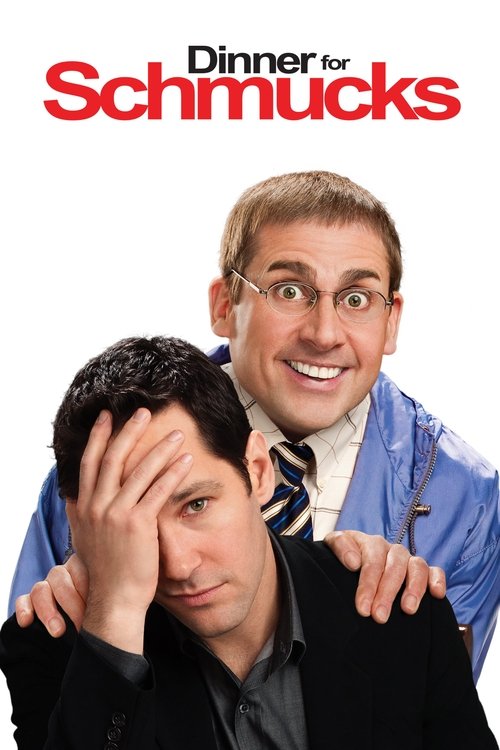




























Popular
What is the significance of the dinner event in the movie?
How does Tim's relationship with Barry develop throughout the film?
What role does Julie play in Tim's decision-making process?
What are some of the comedic situations that arise from Barry's character?
How does the character of Lance contribute to the film's conflict?
Should I watch it?
Ask Your Own Question

What is the plot?
Sorry, we aren't able to watch and write up a full detailed plot yet. Check back in a few days.







What is the ending?
In the ending of "Dinner for Schmucks," Tim, after realizing the true nature of the dinner and the impact it has on his life and relationships, decides to confront his boss and the situation. He ultimately rejects the idea of using Barry and the dinner for his own gain. The film concludes with Tim and Barry forming a genuine friendship, and Tim choosing to embrace authenticity over superficial success.
As the climax of "Dinner for Schmucks" unfolds, we find Tim (Paul Rudd) in a state of turmoil. He has been grappling with the moral implications of attending the dinner hosted by his boss, Lance (Bruce Greenwood), where guests are invited to showcase their eccentricities for the amusement of the wealthy. Tim's initial excitement about the promotion is overshadowed by his growing discomfort with the idea of humiliating others for entertainment.
The night of the dinner arrives, and Tim is filled with anxiety. He has invited Barry (Steve Carell), a well-meaning but socially awkward man who creates dioramas featuring dead mice dressed as famous figures. As Tim prepares for the event, he is torn between his ambition and his conscience. He has witnessed Barry's genuine kindness and innocence, which starkly contrasts with the cruel intentions of the dinner's purpose.
Upon arriving at the lavish venue, Tim is greeted by a series of bizarre and eccentric guests, each more outrageous than the last. The atmosphere is charged with a mix of laughter and discomfort as the guests are paraded in front of the wealthy attendees. Tim's boss, Lance, is eager to showcase the most ridiculous individuals, and he encourages Tim to participate in the mockery.
As the evening progresses, Tim's internal conflict intensifies. He watches as Barry, oblivious to the true nature of the event, is subjected to ridicule. In a pivotal moment, Tim realizes that he cannot go through with the plan to exploit Barry for his own gain. He confronts Lance, expressing his disapproval of the dinner and the way it dehumanizes the guests. This confrontation is a turning point for Tim, as he chooses to stand up for what is right rather than succumbing to the pressure of his boss.
In a dramatic turn of events, Barry inadvertently becomes the hero of the night. His genuine nature and the heartfelt connection he has with Tim resonate with the other guests, leading to a moment of unexpected camaraderie. The dinner, which was intended to be a spectacle of humiliation, transforms into a celebration of individuality and friendship.
As the night concludes, Tim and Barry leave the event together, having forged a true bond. Tim's decision to reject the superficiality of his job and embrace authenticity marks a significant character development. He realizes that success is not measured by wealth or status but by the quality of relationships and the kindness one shows to others.
In the final scenes, we see Tim and Barry embarking on new adventures together, symbolizing the strength of their friendship. Tim's relationship with his girlfriend, Julie (Stephanie Szostak), also flourishes as he embraces honesty and vulnerability. The film closes on a hopeful note, emphasizing the importance of genuine connections and the rejection of societal norms that prioritize mockery over compassion.
In summary, Tim chooses friendship and integrity over ambition, while Barry remains blissfully unaware of the chaos around him, embodying the film's message about the value of kindness and authenticity in a world often driven by superficiality.
Is there a post-credit scene?
In the movie "Dinner for Schmucks," there is no post-credit scene. The film concludes with the main storyline wrapping up as Tim Conrad, played by Paul Rudd, finds a sense of fulfillment and happiness after realizing the importance of genuine connections over superficial success. The final moments focus on Tim's relationship with his girlfriend, Julie, and his newfound appreciation for the quirky individuals in his life, particularly Barry Speck, portrayed by Steve Carell. The film ends on a positive note, emphasizing themes of acceptance and friendship, but there are no additional scenes or content after the credits.
What is the significance of the dinner event in the movie?
The dinner event is a crucial plot point in 'Dinner for Schmucks,' as it serves as the catalyst for the main character, Tim Conrad, to confront his moral dilemmas. The event is organized by Tim's boss, who encourages him to bring an 'idiot' to dinner, where wealthy guests mock and ridicule them. This sets the stage for Tim's internal conflict as he grapples with the ethics of participating in such a cruel event.
How does Tim's relationship with Barry develop throughout the film?
Tim's relationship with Barry, played by Steve Carell, evolves from initial annoyance to a deeper understanding and friendship. At first, Tim is embarrassed by Barry's eccentric behavior and his obsession with taxidermy mice dressed as famous figures. However, as the story progresses, Tim begins to see Barry's genuine kindness and innocence, leading him to question his own values and the nature of true friendship.
What role does Julie play in Tim's decision-making process?
Julie, Tim's girlfriend, plays a pivotal role in influencing his decisions throughout the film. She represents the moral compass that Tim struggles to align with. When she expresses her disapproval of the dinner and the way Tim treats Barry, it forces Tim to reevaluate his choices. Julie's character embodies the theme of integrity, pushing Tim to ultimately stand up for what is right.
What are some of the comedic situations that arise from Barry's character?
Barry's character is the source of many comedic situations in the film, primarily due to his obliviousness and quirky personality. For instance, his elaborate taxidermy displays, including a mouse dressed as a famous figure, lead to absurd and humorous moments. Additionally, his interactions with other characters, such as accidentally causing chaos at Tim's workplace and his awkward social skills, create a series of laugh-out-loud scenarios that highlight his endearing yet clumsy nature.
How does the character of Lance contribute to the film's conflict?
Lance, played by Zach Galifianakis, is a pivotal character who adds to the film's conflict. He is a rival of Tim's and represents the cutthroat corporate culture that Tim is trying to navigate. Lance's aggressive pursuit of Tim's job and his manipulative tactics create tension, especially as he becomes increasingly involved in the dinner event. His character serves as a foil to Tim, highlighting Tim's struggle between ambition and morality.
Is this family friendly?
"Dinner for Schmucks," produced in 2010, is a comedy that contains several elements that may not be considered family-friendly. Here are some potentially objectionable or upsetting aspects:
-
Adult Humor: The film features a significant amount of adult humor, including sexual innuendos and jokes that may not be appropriate for younger audiences.
-
Language: There is frequent use of strong language throughout the film, which may be unsuitable for children.
-
Themes of Manipulation: The central premise revolves around the idea of making fun of people who are different or have unusual hobbies, which could be upsetting for sensitive viewers.
-
Physical Comedy: There are scenes involving slapstick humor that may be intense or uncomfortable, including accidents and injuries that are played for laughs.
-
Social Awkwardness: The film explores themes of social awkwardness and bullying, which could resonate negatively with children or those who have experienced similar situations.
-
Emotional Moments: There are scenes that delve into feelings of loneliness and rejection, which may be distressing for some viewers.
Overall, while the film is a comedy, its content may not be suitable for all audiences, particularly younger children or those sensitive to the themes mentioned.







