








Popular
What is the significance of the character Kato in Planzet?
How does the relationship between Kato and his team evolve throughout the film?
What role does the alien threat play in shaping the characters' motivations?
How does the film depict the emotional toll of the battle on the characters?
What is the significance of the final battle scene in Planzet?
Should I watch it?
Ask Your Own Question

What is the plot?
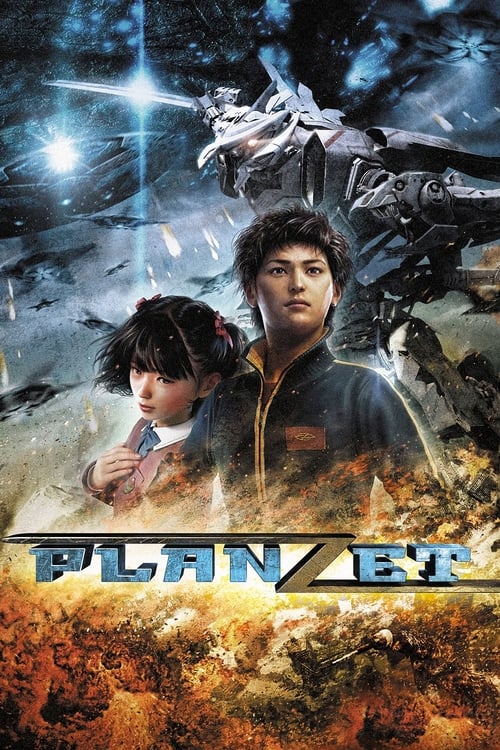
In 2047, Earth is shattered in a single, catastrophic wave of violence when an alien life-form later codified by the military as the FOS erupts from the sky and obliterates the world's major cities. Entire urban centers vanish under the assault, and the opening destruction is so absolute that humanity's response is not victory but survival; the remnants of civilization are forced into a desperate, global truce and begin to rebuild from the ashes. Among the survivors is Taishi Akejima, also romanized in some sources as Hiroshi Akishima, a young soldier whose entire sense of purpose is shaped by the death of his father in that first invasion. That loss hardens into obsession, and by the time the story jumps forward to 2053, Taishi is no longer just a soldier of the Planetary Defense Forces Alliance but a man who wants the aliens dead more than anything else.
The world of 2053 is one of fragile peace held together by engineering and fear. Three years after the invasion, humanity has erected the Diffuser, a planetary shield meant to block another full-scale attack and buy the species time to breathe. The device is not a triumph in the usual sense; it is a pressure seal on a wound that never truly closes, and everyone knows it only works because the enemy is held back rather than defeated. That uneasy balance defines the atmosphere as the military prepares a final counterattack called Planzet, or "Plan Zed," a last gamble to retake the planet and strike back at the FOS. But the plan contains its own terrifying contradiction: to launch the offensive, the Diffuser must be disabled, leaving Earth exposed again to annihilation.
Taishi is stationed at Fuji Base in Japan, where the final operation is centered. The Japanese-side synopsis frames his role more explicitly: he is a GL-2 robot weapon pilot ordered to defend the people at Fuji Base while the operation unfolds. That order places him in the middle of the worst possible intersection of duty and desire. He wants to join the attack and avenge his father, but he is also told to hold the line and protect civilians and personnel as the base becomes the focal point of humanity's last stand. The tension in the story comes from that split in his identity: vengeance pulls him toward the enemy, while command binds him to defense. Every frame of the final operation carries the sense that the world is being gambled away on purpose.
As Planzet begins, the mood tightens from strategic urgency into immediate catastrophe. The Diffuser's protection is only temporary, and once the decision is made to drop it, the entire planet becomes vulnerable again. The film's worldbuilding makes the danger brutally clear: humanity is not launching a clean military operation from a position of strength, but exposing itself in order to have any chance at all of ending the war. That is the heart of the film's drama. The command structure knows what it is risking. Taishi knows it too. He has been living inside the memory of 2047 for six years, and every alien contact is filtered through the image of his father dying beneath that first invasion. When he is sent to Fuji Base, the war stops being abstract. It becomes a place, a deadline, and a test of whether he can fight as part of something larger than revenge.
The story's major revelation is not a secret in the mystery sense, but it still lands with force: humanity never truly beat the FOS at all. The Diffuser created a temporary stalemate, a shielded pause in which civilization could reorganize and attempt a counterstrike later. That means the final operation is not the culmination of a long victory arc; it is the first real chance to push back, and it is built on a deliberately self-destructive choice. The military codename for the enemy, FOS, underscores how mechanized and clinical humanity's fear has become. These are not just monsters from the sky anymore. They are the force that erased cities, shattered families, and turned survival into doctrine.
At Fuji Base, the defensive battle becomes the emotional core of the movie. Taishi is not just waiting for orders; he is standing on the threshold of the one opportunity to settle the score for his father's death. The base itself functions like a pressure cooker. Outside, the aliens threaten the planet. Inside, every soldier understands that the success of Planzet depends on holding the line long enough for the offensive to proceed. The visuals and tone implied by the summaries suggest a desperate military staging ground under siege, with all the fragility of a human-made fortress on a dead-alive world. Taishi's role as protector becomes inseparable from his need for revenge, and that contradiction fuels the story's momentum.
When the final counterattack begins, the gamble becomes literal. The Diffuser is taken down, and Earth is left naked to whatever comes next. The operation's name, "Plan Zed," sounds final because it is final; there is no fallback plan left after it is activated. The film's climax is built on the tension between the offensive and the defense, between the hope of regaining the stars and the possibility of losing everything. As the FOS respond, Fuji Base becomes the stage for the last human resistance. Taishi fights with the weight of six years of grief inside him, every move colored by the memory of the father he lost in 2047. His enemy is no longer just an abstract alien species but the force that stole his past and shaped his life.
The available plot summaries do not provide a scene-by-scene casualty list beyond the backstory, but one death is explicit and central: Taishi Akejima's father dies during the 2047 FOS invasion. That death is the motive engine of the entire film, and it is the emotional wound that makes Taishi's participation in the final operation so personal. The summaries do not verify any other named deaths with certainty, so any additional casualty detail would go beyond the available record. What is clear is that the battle's stakes are enormous enough to imply mass loss if the plan fails, because the shield has been dropped and the planet is defenseless again.
The confrontation at Fuji Base and the broader counteroffensive against the FOS reach their climax in a final, desperate push whose exact shot-by-shot outcome is not preserved in the summary sources. What the film does make unmistakable is the scale of the choice: humanity is betting its entire future on a single assault that cannot be undone once the Diffuser is disabled. That unresolved tension is the last emotional note the summaries preserve. Taishi's revenge is tied to the fate of the planet, and the story ends in the shadow of that ultimate gamble. The final scene, in broad terms, leaves the audience with the question the operation itself embodies: will humanity finally seize the chance to reclaim Earth, or will exposing itself for one last strike condemn it to extinction?
So the complete story of Planzet is one of ruin, resistance, and a deliberate leap into danger. It opens with the annihilation of Earth's cities in 2047, follows the survivors as they build the Diffuser and live under its fragile protection, and then drives into 2053, where Taishi Akejima/Hiroshi Akishima, a soldier at Fuji Base, is ordered to defend the base while a final counterattack is launched against the FOS. His father's death in the first invasion gives the conflict its personal weight, and the operation's demand that the Diffuser be disabled turns salvation into a near-suicidal act. The movie closes on that edge, with the world hanging between revenge and annihilation, and the result of humanity's last gamble left as the final, crushing question.
More Movies Like This
Browse All Movies →




What is the ending?
In the ending of "Planzet," the main characters face a climactic battle against the alien invaders. The protagonist, Kato, sacrifices himself to save his friends and ensure their escape. The remaining characters, including his comrades, are left to grapple with their loss while continuing the fight against the alien threat.
As the film approaches its conclusion, the tension escalates. The scene opens with Kato and his team, now fully aware of the dire situation they are in. The alien forces have intensified their assault, and the stakes have never been higher. Kato, filled with determination and a sense of responsibility, rallies his friends, urging them to fight back with everything they have. The atmosphere is thick with anxiety, but also a sense of camaraderie as they prepare for what may be their final stand.
The battle begins in earnest, with the team piloting their mechs against the overwhelming alien forces. Explosions light up the darkened sky, and the sound of metal clashing against metal fills the air. Kato's internal struggle is palpable; he knows that the odds are stacked against them, yet he feels a deep-seated need to protect his friends and the world they inhabit. As they engage in combat, the emotional weight of their situation becomes increasingly evident. Each character fights not just for survival, but for the memories of those they have lost and the hope of a future free from fear.
In a pivotal moment, Kato realizes that the only way to ensure his friends' escape is to make the ultimate sacrifice. He devises a plan to draw the aliens' attention away from his teammates, knowing that this act could cost him his life. As he executes his plan, the visuals are striking; Kato's mech becomes a beacon of defiance amidst the chaos, drawing fire and attention from the alien forces. His friends watch in horror and admiration as he charges into the fray, fully aware of the consequences.
The scene shifts to a heart-wrenching farewell as Kato's friends witness his selfless act. The emotional turmoil is evident on their faces; they are torn between the instinct to save him and the understanding that he is doing this for their sake. Kato's final moments are filled with a mix of bravery and sorrow, as he fights valiantly, ultimately succumbing to the overwhelming alien forces. His sacrifice is not in vain, as it allows his friends to escape to safety.
As the dust settles, the remaining characters regroup, grappling with the loss of Kato. The atmosphere is heavy with grief, but also a newfound resolve. They understand that Kato's sacrifice has given them a chance to continue the fight. The film closes with a poignant scene of the team standing together, united in their purpose, honoring Kato's memory as they prepare to face the ongoing alien threat. Each character is left with a sense of determination, vowing to carry on the fight for their fallen friend and for the future of humanity.
Is there a post-credit scene?
In the movie "Planzet," there is indeed a post-credit scene that adds an intriguing layer to the story. After the credits roll, the scene opens in a desolate landscape, reminiscent of the devastated Earth seen throughout the film. The camera pans slowly across the barren terrain, revealing remnants of the battle against the alien invaders.
As the dust settles, a figure emerges from the shadows. It is revealed to be one of the surviving characters, who had been presumed lost during the conflict. This character stands amidst the ruins, looking out over the horizon with a mix of determination and sorrow. The expression on their face conveys a deep sense of loss but also a flicker of hope.
In this moment, the character pulls out a small device, reminiscent of the technology used in the fight against the aliens. They activate it, and a holographic projection appears, displaying a map of the stars. The map highlights several locations, suggesting that there may be other survivors or remnants of humanity scattered across the galaxy.
The scene closes with the character setting off in a new direction, a sense of purpose igniting their steps. This post-credit moment hints at the possibility of future adventures and the enduring spirit of humanity, leaving the audience with a sense of anticipation and wonder about what lies ahead.
What is the significance of the character Kato in Planzet?
Kato serves as a pivotal character in Planzet, representing the human struggle against overwhelming odds. His determination to protect his friends and fight against the alien threat showcases his bravery and leadership qualities. Throughout the film, Kato grapples with feelings of fear and responsibility, often reflecting on the weight of his choices as he leads his team in battle.
How does the relationship between Kato and his team evolve throughout the film?
Initially, Kato's relationship with his team is marked by tension and uncertainty, as they face the daunting alien invasion together. As the story progresses, Kato's leadership and willingness to sacrifice for his friends foster a sense of camaraderie and trust among the group. This evolution is highlighted in key moments where they must rely on each other, ultimately solidifying their bond as they confront their fears and fight for survival.
What role does the alien threat play in shaping the characters' motivations?
The alien threat in Planzet serves as a catalyst for the characters' motivations, pushing them to confront their deepest fears and insecurities. Each character reacts differently to the invasion; some are driven by a desire for revenge, while others seek to protect their loved ones. This external conflict forces them to evolve, revealing their true selves and testing their limits as they band together to fight against a common enemy.
How does the film depict the emotional toll of the battle on the characters?
Planzet poignantly illustrates the emotional toll of battle on its characters through intense visual storytelling and character interactions. As they face loss and despair, moments of vulnerability are captured, such as when characters reflect on their pasts or express their fears. The weight of their experiences is palpable, leading to emotional breakdowns and moments of solidarity that highlight the psychological impact of their fight against the aliens.
What is the significance of the final battle scene in Planzet?
The final battle scene in Planzet is significant as it encapsulates the culmination of the characters' growth and the stakes of their struggle. It is a visually stunning and emotionally charged sequence where Kato and his team confront the alien forces with everything they have. This moment not only tests their physical abilities but also their resolve and unity as a team, ultimately serving as a testament to their journey and the sacrifices they are willing to make for one another.
Is this family friendly?
"Planzet," produced in 2010, is an animated science fiction film that contains several elements that may not be suitable for younger audiences or sensitive viewers. Here are some potentially objectionable or upsetting aspects:
-
Violence and Destruction: The film features scenes of battles between humans and alien forces, which include explosions and destruction of cities. The visual impact of these scenes may be intense for children.
-
Death and Loss: Characters experience loss and the threat of death, which can evoke strong emotional responses. The portrayal of characters facing dire situations may be distressing.
-
Emotional Turmoil: The characters undergo significant emotional struggles, including fear, despair, and the weight of responsibility. These themes may be heavy for younger viewers to process.
-
Alien Threats: The presence of alien creatures and the tension surrounding their attacks can be frightening, particularly for children who may be sensitive to sci-fi horror elements.
-
Mature Themes: The film explores themes of survival, sacrifice, and the consequences of war, which may be complex and difficult for younger audiences to fully understand.
Overall, while "Planzet" is an animated film, its themes and content may not be appropriate for all children, and parental discretion is advised.








