













Popular
What are the key events that lead to the climax of the film?
How does the relationship between the main characters evolve throughout the film?
How does the film portray the theme of loss through its characters?
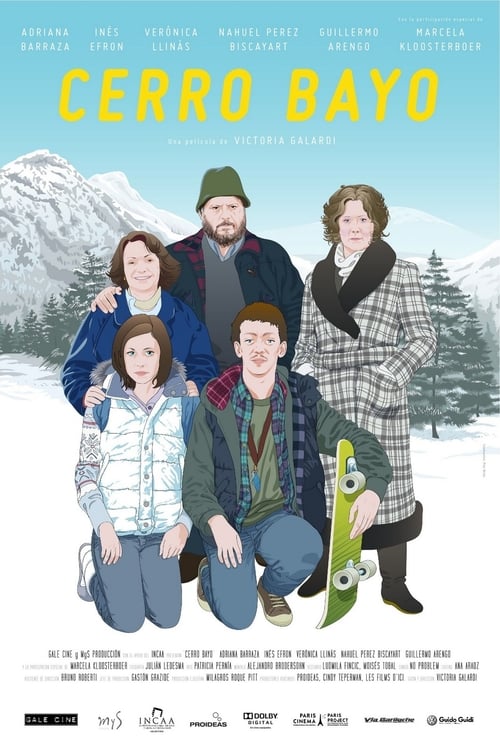
What is the significance of the character of the young girl in Cerro Bayo?
What role does the setting of Cerro Bayo play in the story?
Should I watch it?
Ask Your Own Question

What is the plot?
In the shadow of Mount Bayo, where the crisp Patagonian air carries the promise of ski season, a small town nestles at the mountain's foot, its streets hushed under a gray sky heavy with impending snow. Wooden chalets huddle together, their roofs dusted with the first faint flakes, as locals murmur about the tourists who will soon flood in, bringing life to the dormant resort of Cerro Bayo. But on this tense morning, just days before the season's official start, the town's quiet rhythm shatters inside a modest family home on the outskirts.
Juana Sánchez, a weathered woman in her late sixties with deep lines etched by years of Patagonian winds, stands alone in her dimly lit kitchen. Her hands tremble as she clutches a bottle of pills, her eyes distant, haunted by secrets long buried. Moments earlier, at the local casino--a garish beacon of neon amid the rustic town--she had won a substantial sum, a life-changing jackpot from a desperate bet on the roulette wheel. The chips had piled up, the crowd cheering faintly, but victory twisted into something darker. She fled to the woods behind her property, digging frantically under a gnarled old beech tree, the earth cold and unyielding as she shoved the bundled cash into a waterproof pouch and covered it with dirt and leaves. Now, back home, guilt and despair crash over her like an avalanche. "Why did it have to be now?" she whispers to the empty room, her voice cracking. With a final, resolute swallow, she downs the pills and collapses onto the floor, her body convulsing as darkness claims her. She slips into a deep coma, her pulse faint, her family oblivious until it's nearly too late.
Marta Sánchez, Juana's oldest daughter, a sturdy woman in her fifties with a no-nonsense demeanor honed by years of managing the family's ski rental shop, bursts through the door first. She's been at the shop all morning, haggling over inventory for the season, when a neighbor's frantic call summons her. "¡Mamá!" Marta cries, dropping to her knees beside Juana's limp form. She checks for a pulse, her face paling as she dials emergency services. Paramedics rush Juana to the town's small clinic, stabilizing her just enough to confirm she's alive--but comatose, her brain activity a fragile flicker on the monitors. The doctor, a grizzled local named Dr. Elias, pulls Marta aside. "She's stable for now, but we don't know when--or if--she'll wake. Poisoning from the overdose. You need to prepare for the worst."
Word spreads like wildfire through the tight-knit community. By afternoon, the Sánchez home buzzes with concerned neighbors dropping off casseroles and whispers. Marta, ever the pillar, calls her estranged sister in Buenos Aires. Mercedes López, the younger sister by five years, lives a chaotic life in the capital--debts piling up from failed ventures, a string of bad relationships, and a restlessness that keeps her far from Patagonia. She's in a cramped apartment, sifting through overdue bills, when Marta's call comes. "Mercedes, it's Mamá. She tried to kill herself. She's in a coma. You have to come." Mercedes hesitates, her voice sharp over the line. "What? Now? I'm in the middle of--fine, I'll book a flight. But don't expect me to stay forever." Reluctantly, she packs a bag and boards a turbulent flight south, the Andean peaks looming larger with every mile.
Marta's family adds layers to the gathering storm. Her husband, Roberto Vargas, a slick real estate agent with a perpetual five-o'clock shadow and eyes always scanning for profit, paces the living room. He's been eyeing a development boom at Cerro Bayo, and whispers of a lucrative offer for Juana's plot of land--the very one bordering the woods where the tree stands--have him scheming. Their children orbit the crisis too: Inés Vargas, Marta's ambitious 20-something daughter, sharp-featured and driven, works at the ski resort's front desk, dreaming of management and escape from the town's claustrophobia. She's the first to notice the oddities in Grandma Juana's behavior before the attempt--late nights, secretive glances. Then there's Lucas Vargas, Inés's laid-back younger brother, 18 and obsessed with snowboarding, scraping by with odd jobs while fantasizing about competing in Andorra. He idolizes his globetrotting uncle from Mercedes's side but hides his own petty thefts to fund his dreams.
Mercedes arrives that evening, the sun dipping behind Mount Bayo in a blaze of orange, casting long shadows over the clinic. She hugs Marta stiffly in the sterile hallway, the sisters' reunion laced with unspoken resentments--Marta resenting Mercedes's absenteeism, Mercedes envying the stability Marta clings to. "She looked so small," Mercedes says, peering through the window at Juana's pale, tube-fed form. "What the hell happened? She was fine last time I called." Marta shakes her head, eyes red-rimmed. "No one knows. But the town's buzzing. Someone said she won big at the casino last week."
As night falls, the first real snowflakes dance outside, blanketing the town in white. Inside the Sánchez home, the family convenes around the kitchen table, steam rising from mate gourds. Roberto pushes his agenda early. "Listen, there's an offer on Mamá's land--developers from Bariloche. Prime spot for condos with the ski lift expansion. We could sell, split it four ways. Pay off debts, give the kids a start." Marta shoots him down. "She's not dead, Roberto. And that land's been hers forever--it's where she buried her secrets, whatever they are." Inés nods fiercely. "Yeah, Dad. Grandma wouldn't want it paved over." Lucas stays quiet, fiddling with his phone, but his mind races--he overheard casino talk from a bartender buddy.
Tension simmers through the next day, a crisp Saturday with the mountain glittering under fresh powder. Ski season teases with distant lifts whirring to life for tests. Marta visits the clinic obsessively, holding Juana's hand and whispering, "Wake up, Mamá. Tell us why." Mercedes, bored in the sleepy town, wanders the casino, flashing a charming smile at the owner. "My mother, Juana Sánchez--she won here recently, right? Big pot?" The owner nods warily. "Yeah, lady hit the jackpot. Cleaned out the table. Haven't seen her since." Rumors solidify: Juana buried the money. Greed ignites.
Lucas, restless, sneaks out that afternoon to the woods behind the property. He's pieced it together from overheard gossip and a vague memory of Juana digging near the beech tree. Heart pounding, he grabs a shovel from the shed and trudges through knee-deep snow, the wind howling like a warning. Under the tree, frozen earth yields slowly. His shovel strikes metal--the pouch, stuffed with crisp bills, tens of thousands of pesos. "Holy shit," he breathes, eyes wide with elation. He stuffs it in his backpack, already envisioning Andorra's slopes. Racing home, he books flights on his phone, deleting the search history. But as he slips back inside, unseen eyes watch: Inés, who followed him on a hunch, hides in the shadows, fury boiling. She confronts him in his room later that night, door slammed shut. "You stole Grandma's money? For what, some fantasy trip?" Lucas smirks defiantly. "Find your own way out of this dump, sis. It's mine now." Their argument escalates, voices rising--"You're selfish!" "You're jealous!"--until Roberto intervenes, sensing opportunity but demanding a cut.
Mercedes, meanwhile, overhears the siblings' shouting from the hallway. Her debts flash in her mind--creditors hounding her in Buenos Aires. She corners Lucas in the kitchen at dawn Sunday, snowstorm raging outside, visibility zero. "Kid, that money--where is it?" Lucas lies poorly, but she presses, grabbing his arm. "I know about the casino. And the tree. Hand it over, or I tell Marta everything." A tense standoff ensues, Lucas shoving her back. "It's not yours! Back off!" Mercedes lunges, they grapple briefly--fists flying, a chair toppling--but Lucas overpowers her, fleeing with the bag to his truck. Mercedes, bruised and raging, vows revenge.
The storm peaks that morning, blanketing Cerro Bayo in two feet of powder, delaying ski openings and trapping the family indoors. Tensions erupt at breakfast. Marta uncovers the casino win from clinic gossip and demands answers. "Mamá buries a fortune and then tries to end it all? Why?" Roberto reveals the land offer fully: "200,000 pesos, cash. But if there's hidden money, we don't need to sell." Inés explodes. "Dad, you're disgusting! This is about Mamá, not profit!" Mercedes stokes the fire, feigning concern. "Maybe she buried it to keep it from us--from him," she nods at Roberto. Accusations fly: Marta accuses Mercedes of only returning for a handout; Mercedes retorts, "I've been running from this place since I was 18--you stayed and let it suffocate you!"
Momentum builds as Lucas attempts escape. Mid-afternoon, storm easing, he loads his truck, money hidden under the seat. But Inés blocks the driveway, shovel in hand like a weapon. "Give it back, Lucas! It's Grandma's!" Their confrontation turns physical--shoves in the snow, Inés slipping, Lucas pinning her. "Stay out of it!" he snarls. Roberto arrives, pulling them apart, but spies the bag through the truck window. Greed overrides loyalty; he knocks Lucas out with a tire iron from the bed--first blood drawn, no death, but Lucas slumps unconscious, head bleeding. "Sorry, son," Roberto mutters, grabbing the pouch and bolting inside.
Inside, pandemonium. Marta finds Lucas in the snow, reviving him as sirens wail--neighbor heard the fight. Mercedes snatches the bag from Roberto in the chaos. "This pays my debts--mine!" A full family brawl erupts: sisters clawing at each other, Roberto wrestling Mercedes, Inés shielding Lucas. "Stop! She's dying in there!" Marta screams, but blows land--bruises, a split lip for Mercedes. Amid the melee, a revelation cracks open: Roberto confesses he's known about Juana's casino habit for years, even encouraged it to fund his schemes. "She won for us, but got scared when I pushed for the land sale!" The twist lands--Marta realizes her marriage is a sham built on manipulation.
As dusk falls Sunday, snow glows under streetlights, the clinic calls: Juana stirs. The family piles into cars, racing through slushy roads. In her room, monitors beeping, Juana's eyes flutter open weakly. "The money... under the tree... not for you," she rasps, voice a gravel whisper. Another twist: the burial wasn't greed or despair--it was protection. Years ago, Roberto's shady deals nearly bankrupted them; Juana won to pay off his debts secretly but buried it when she discovered his latest scam involved selling her land to cover embezzled resort funds. "He poisoned our life... I couldn't let him take it all." Confrontation peaks bedside: Roberto lunges at Juana's IV stand in panic, but Marta tackles him. "Get out! Police are coming!" Inés dials authorities, revealing Roberto's schemes.
Roberto bolts into the night, slipping on ice outside the clinic--his desperate flight ends in a non-fatal crash into a ditch, leg broken, arrested minutes later by arriving cops. Lucas, head bandaged, confesses his theft tearfully to Juana. "I wanted out, Abuela. Forgive me." Mercedes, shamed, returns the money pouch. "I was wrong. We're all running from something."
Climax resolves in quiet vigil through Monday morning, ski season launching with fanfare horns echoing from Cerro Bayo. Juana, frail but lucid, divides the winnings: debts cleared for Mercedes, seed money for Inés's resort ambitions, Lucas's Andorra trip funded ethically. The land stays unsold--preserved for the family. Sisters reconcile in tearful embrace. "We almost lost everything," Marta says. "But we found us," Mercedes replies.
Final scene: Weeks later, full ski season bustle. Juana, recovering at home, watches from her porch as Lucas shreds fresh powder on the slopes, Inés greets tourists with newfound confidence. Marta and Mercedes share mate under the beech tree, money safely banked, snow-capped Mount Bayo eternal sentinel. Roberto, divorced and jailed for fraud, fades to irrelevance. The family, scarred but whole, faces the future--not disrupted, but reborn in the white embrace of Patagonia. Fade to swirling snow.





What is the ending?
In the ending of "Cerro Bayo," the story culminates in a tragic confrontation that leads to the death of several characters, leaving a haunting impact on those who survive. The film concludes with a sense of unresolved tension and emotional turmoil, particularly for the main character, who is left to grapple with the consequences of the events that transpired.
As the film approaches its climax, we find ourselves in a tense atmosphere, where the characters are increasingly isolated and their relationships strained. The protagonist, a woman named "M" (played by the actress who embodies her), is deeply affected by the unfolding events. She is haunted by her past and the choices she has made, which have led her to this moment of crisis.
Scene by scene, the tension escalates. M confronts her feelings of guilt and loss, particularly regarding her relationship with her partner, who has been drawn into the conflict. The setting is a remote cabin in the mountains, surrounded by the stark beauty of nature, which contrasts sharply with the emotional chaos within. The isolation of the location amplifies the characters' internal struggles, as they are cut off from the outside world.
As the confrontation unfolds, M's partner becomes embroiled in a violent altercation with another character, leading to a tragic outcome. The scene is fraught with emotion, as M watches helplessly, her heart racing with fear and desperation. The camera captures the raw intensity of the moment, focusing on the characters' expressions and the palpable tension in the air.
In the aftermath of the violence, M is left to deal with the fallout. The cabin, once a place of refuge, now feels like a prison filled with memories of what has been lost. The emotional weight of the events bears down on her, and she is forced to confront the reality of her situation. The film lingers on her face, capturing the depth of her sorrow and the complexity of her feelings as she grapples with the consequences of the choices made by herself and those around her.
As the final scenes unfold, we see M standing alone, looking out at the vast landscape that surrounds her. The beauty of the mountains is juxtaposed with her inner turmoil, symbolizing the conflict between nature's serenity and the chaos of human emotions. The film closes on a note of ambiguity, leaving the audience to ponder the fates of the characters and the unresolved tensions that linger in the air.
In summary, the ending of "Cerro Bayo" is marked by tragedy and emotional complexity, with M left to navigate the aftermath of violence and loss, while the fates of the other characters serve as a stark reminder of the consequences of their actions. The film concludes with a haunting sense of unresolved conflict, echoing the themes of isolation, guilt, and the struggle for redemption.
Is there a post-credit scene?
Cerro Bayo does not have a post-credit scene. The film concludes its narrative without any additional scenes after the credits roll. The story wraps up with a focus on the emotional and psychological aftermath of the events that transpired, leaving the audience to reflect on the characters' journeys and the themes of loss and isolation.
What are the key events that lead to the climax of the film?
Key events leading to the climax include the gradual unraveling of the characters' relationships, the revelation of past traumas, and the mounting tension as the characters confront their fears. A series of unsettling occurrences culminate in a dramatic confrontation that forces the characters to face the consequences of their actions.
How does the relationship between the main characters evolve throughout the film?
The relationship between the main characters, particularly the couple, evolves from a state of tension and unresolved issues to a deeper understanding of each other's pain. As they confront their past and the trauma of the events that unfold, their bond is tested, leading to moments of both conflict and reconciliation.
How does the film portray the theme of loss through its characters?
The film portrays loss through the experiences of its characters, each grappling with their own grief and the impact of their losses on their lives. The emotional weight of their pasts is depicted through flashbacks and poignant moments of reflection, illustrating how loss shapes their identities and relationships.
What is the significance of the character of the young girl in Cerro Bayo?
The young girl in Cerro Bayo serves as a pivotal character who embodies innocence and vulnerability. Her interactions with the adult characters highlight their emotional struggles and the impact of the tragic events surrounding them. She represents hope and the possibility of healing amidst the chaos.
What role does the setting of Cerro Bayo play in the story?
The setting of Cerro Bayo is crucial to the narrative, as the remote and picturesque landscape contrasts sharply with the dark events that transpire. The isolation of the location amplifies the characters' emotional turmoil and serves as a backdrop for their personal struggles, creating a sense of entrapment and urgency.
Is this family friendly?
"Cerro Bayo," a 2011 film, is not particularly family-friendly and contains several elements that may be objectionable or upsetting for children or sensitive viewers.
-
Themes of Grief and Loss: The film explores deep emotional themes surrounding the loss of loved ones, which may be heavy for younger audiences to process.
-
Intense Emotional Scenes: There are moments of heightened emotional distress, including characters dealing with trauma and sorrow, which could be overwhelming.
-
Violence and Threatening Situations: The film includes scenes that depict violence or the threat of violence, contributing to a tense atmosphere.
-
Isolation and Despair: The characters experience feelings of isolation and despair, which may resonate negatively with sensitive viewers.
-
Mature Themes: The narrative delves into complex adult relationships and moral dilemmas that may not be suitable for children.
These aspects contribute to a tone that is more suited for mature audiences, making it less appropriate for family viewing.









