
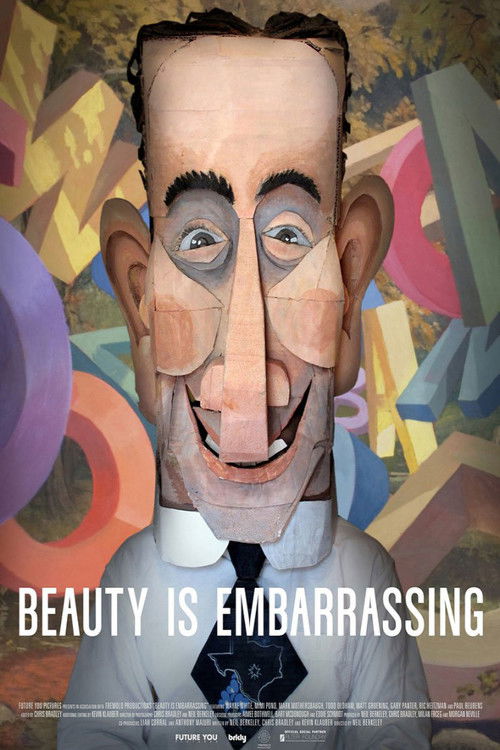




Popular
What is Wayne White's background and how does it influence his art?
How does Wayne White's relationship with his family impact his artistic journey?
What role does humor play in Wayne White's artwork and personality?
How does Wayne White's artistic process evolve throughout the film?
What significance do the various art pieces featured in the film hold for Wayne White?
Should I watch it?
Ask Your Own Question

What is the plot?
Sorry, we aren't able to watch and write up a full detailed plot yet. Check back in a few days.








What is the ending?
In the ending of "Beauty Is Embarrassing," Wayne White reflects on his life and career, embracing his artistic journey and the challenges he faced. He finds fulfillment in his work and the connections he has made, culminating in a sense of acceptance and joy in his creative expression.
As the film approaches its conclusion, we see Wayne White in a series of intimate and reflective moments. The scene transitions to Wayne in his studio, surrounded by his vibrant and whimsical artwork. He is engaged in the process of creating, a testament to his passion and dedication to his craft. The camera captures the colorful chaos of his workspace, filled with puppets, paintings, and various artistic tools, illustrating the essence of his creative spirit.
Wayne shares anecdotes from his life, recounting his experiences in the art world, his time working on "Pee-wee's Playhouse," and the struggles he faced as an artist. His storytelling is infused with humor and vulnerability, revealing his internal conflicts and the moments of embarrassment that shaped him. He reflects on the importance of embracing one's identity and the beauty found in imperfections.
In a poignant moment, Wayne discusses the impact of his work on others, highlighting the joy and inspiration he hopes to bring to his audience. He expresses gratitude for the support of his family and friends, acknowledging their role in his journey. The film intersperses clips of Wayne's past performances and art installations, showcasing the evolution of his style and the playful nature of his creations.
As the credits begin to roll, we see Wayne in a final scene, joyfully interacting with his art and the people around him. He embodies a sense of peace and fulfillment, having come to terms with his past and embracing the present. The film closes with a message of self-acceptance and the celebration of creativity, leaving the audience with a sense of hope and inspiration.
In summary, the ending of "Beauty Is Embarrassing" encapsulates Wayne White's journey of self-discovery and artistic expression, highlighting the importance of embracing one's uniqueness and finding beauty in the journey of life.
Is there a post-credit scene?
"Beauty Is Embarrassing," a documentary film released in 2012, does not feature a post-credit scene. The film focuses on the life and work of artist Wayne White, exploring his creative journey, personal struggles, and the evolution of his artistic expression. The narrative concludes with a reflection on his impact and the joy he finds in his art, leaving viewers with a sense of inspiration rather than a cliffhanger or additional scene after the credits. The film wraps up its themes of creativity and self-acceptance without any further content following the main credits.
What is Wayne White's background and how does it influence his art?
Wayne White, the central figure of 'Beauty Is Embarrassing,' is a talented artist and puppeteer whose background in the 1980s art scene in New York City significantly shapes his creative journey. His experiences working on the television show 'Pee-wee's Playhouse' and his subsequent move to Los Angeles to pursue his artistic ambitions reveal his struggle between commercial success and personal artistic expression. This tension drives much of his work and the narrative of the film.
How does Wayne White's relationship with his family impact his artistic journey?
Wayne White's relationship with his family, particularly his wife and children, plays a crucial role in his artistic journey. The film showcases intimate moments where he reflects on the support and challenges he faces from his family. His desire to balance his career with family life creates emotional depth, highlighting the sacrifices he makes and the joy he finds in sharing his art with them.
What role does humor play in Wayne White's artwork and personality?
Humor is a vital element in Wayne White's artwork and personality, serving as a coping mechanism and a means of connection with his audience. Throughout the film, his playful and often absurd sense of humor is evident in his art, which includes whimsical word paintings and puppetry. This lightheartedness contrasts with the more serious aspects of his life, illustrating how humor helps him navigate the complexities of being an artist.
How does Wayne White's artistic process evolve throughout the film?
Wayne White's artistic process evolves significantly throughout 'Beauty Is Embarrassing.' Initially, he grapples with the expectations of commercial art, but as the film progresses, he embraces a more authentic and personal style. This transformation is marked by his experimentation with different mediums and techniques, culminating in a deeper understanding of his identity as an artist. His journey reflects a shift from external validation to internal fulfillment.
What significance do the various art pieces featured in the film hold for Wayne White?
The various art pieces featured in 'Beauty Is Embarrassing' hold profound significance for Wayne White, representing milestones in his artistic evolution and personal growth. Each piece reflects his unique perspective, often infused with humor and commentary on societal norms. The film highlights specific works, such as his iconic word paintings, which serve as a visual diary of his thoughts and experiences, illustrating the interplay between his life and art.
Is this family friendly?
"Beauty Is Embarrassing" is a documentary that explores the life and work of artist Wayne White, known for his unique and often whimsical artistic style. While the film is primarily focused on his creative journey, there are a few aspects that may be considered objectionable or upsetting for children or sensitive viewers.
-
Language: The film contains some instances of strong language, which may not be suitable for younger audiences.
-
Themes of Struggle: Wayne discusses his personal and professional struggles, including moments of self-doubt and the challenges of pursuing a creative career. These themes may resonate deeply and could be upsetting for some viewers.
-
Artistic Content: Some of Wayne's artwork and performances may include adult themes or imagery that could be confusing or inappropriate for children.
-
Emotional Vulnerability: The film delves into Wayne's emotional experiences, including feelings of embarrassment and vulnerability, which may be intense for sensitive viewers.
Overall, while the film celebrates creativity and self-expression, parents may want to consider these elements when deciding if it is appropriate for younger audiences.