










Popular
What motivates the main character, George Herbert, throughout the film?
How does the character of the Martian war machines evolve throughout the film?
What role does the character of the scientist, Dr. James Sturgess, play in the story?
How does the relationship between George and his comrades develop throughout the film?
What is the significance of the flashbacks to the first Martian invasion in the film?
Should I watch it?
Ask Your Own Question

What is the plot?
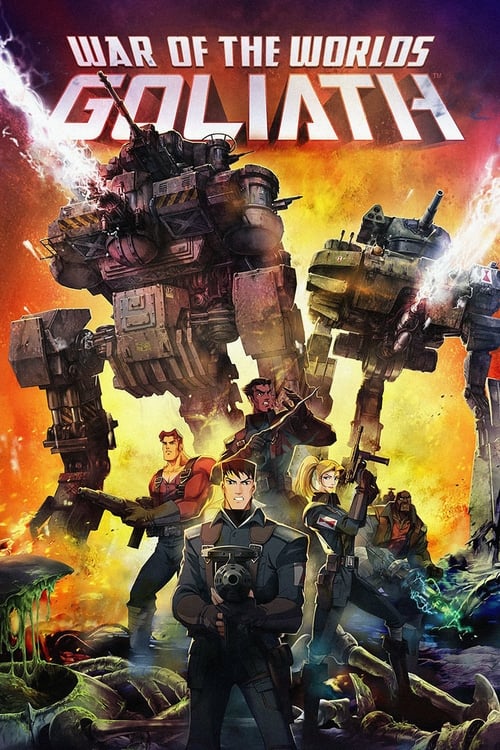
In the shattered ruins of Leeds, England, in 1899, ten-year-old Eric Wells huddles with his unnamed parents inside a crumbling church, the air thick with acrid smoke and the distant thunder of destruction. Martian Tripods--towering, alien war machines--stalk the streets, their heat rays carving glowing scars through buildings and flesh alike. Eric's heart pounds as his family creeps toward an escape, but a shadow falls over them. The Tripod's cyclopean eye locks on, and its heat ray lances out in a blinding crimson flash. Eric's father lunges forward, shielding his son with his body; the beam vaporizes him instantly, his scream cut short in a burst of superheated agony. Eric freezes in horror, tears streaming down his soot-streaked face, as the Tripod pivots and fires again. The ray strikes his mother square in the chest, incinerating her in a heartbeat, her final gasp lost to the roar of flames. The machine rears for the killing blow, but suddenly it shudders, keels forward, and crashes to the ground in a heap of twitching tentacles and leaking fluids--Earth's humble bacteria claiming its first victory. Over 140 million souls lie dead across the globe, great cities reduced to rubble, but young Eric survives, his world forever scarred by loss.
Fifteen years flash by in a blur of vengeance-fueled determination. It is 1914, on the eve of what humanity fears will be the Great War, and Eric Wells--now a hardened adult soldier--stands tall in the A.R.E.S. training grounds, a vast war games site shrouded in industrial fog. A.R.E.S., the Allied Resistance Earth Squad, has forged humanity's bulwark against another Martian assault: steam-powered marvels of engineering born from the ashes of defeat. Eric receives command of the first Achilles-class Battle Tripod, a 65-foot behemoth of riveted steel and hissing pistons. Armed with heavy machine guns, six light rockets, a replicated heat ray, and an 88-millimeter cannon, he nicknames it Goliath, a symbol of defiant retribution. Inside the cramped cockpit, his multinational crew--skilled engineers and gunners from across the fractured alliances--buzz with anticipation, their faces lit by the glow of gauges and portholes.
General Kurshnirov, a stern Russian commander with a voice like grinding gravel, briefs the team before the simulated war games commence. "This is no drill," he warns, his eyes scanning the ranks. "The world teeters on war's edge--Archduke Franz Ferdinand assassinated in Sarajevo just days ago. A.R.E.S. must stand united." Opposing them in the exercise is Captain Sakai, a sharp-eyed Japanese tactician commanding a rival tripod squad, his movements precise and unyielding. Theodore Roosevelt, the grizzled leader of A.R.E.S., oversees from afar, his presence a rallying fire.
The war games erupt in a symphony of steam whistles and mock cannon fire. Goliath lumbers forward, its massive legs thudding against the earth, while Sakai's forces simulate a Martian probe. Tension builds as simulated heat rays streak through the air--harmless flashes for now--but the crew's banter crackles over the comms. "Lock and load, team," Eric orders, his voice steady despite the ghosts of Leeds haunting his grip on the controls. Sakai's tripod dodges a rocket salvo, countering with pinpoint accuracy, forcing Goliath to weave through debris. The exercise peaks in a furious exchange, sweat beading on brows amid the roar of engines, when alarms blare. Real sensors light up red. "Incoming hostiles--Martian signatures!" a crewman shouts.
Chaos descends without warning. From the horizon, upgraded Martian Tripods--now 100 feet tall, sleek and impervious, their heat rays spewing death--emerge like nightmares reborn. These invaders are immune to Earth's bacteria, a revelation that chills the blood; the probing attack at the war games site is no coincidence. They decimate A.R.E.S. forces in seconds: unnamed soldiers vaporized in heat-ray blasts, tripods crumpling under relentless fire, screams echoing as flesh and metal melt. Eric's crew snaps into action. "Fire everything!" he bellows. Goliath's machine guns chatter, riddling a Tripod's hood with bullets; rockets streak out, detonating in fiery blossoms that shear off a tentacle. The heat ray--humanity's stolen fire--slices through another attacker's leg joint, toppling it in a crash of sparks. Captain Sakai joins the fray, his tripod unleashing a barrage that cores a Martian machine's eye. Together, they destroy the probing force, wreckage smoking across the field, but victory tastes like ash. Dozens of A.R.E.S. troops lie dead, their bodies charred husks.
In the debriefing tent, General Kurshnirov paces, his face etched with grim certainty. "That was no random strike," he declares. "A feint--a probe to test our combat potential and draw our forces from New York." The major revelation hits like a cannon shell: the real invasion has begun, Martians striking A.R.E.S. Headquarters in New York as the diversion pulls defenders away. Eric clenches his fists, the cockpit of Goliath still humming in his veins. Roosevelt's voice crackles over the radio from the besieged city: "Hold the line, soldiers. We've got incoming."
Cut to New York, A.R.E.S. Headquarters--a fortress of steel and searchlights amid skyscrapers--now a cauldron of war. Martian Tripods overrun the streets, heat rays razing defenses, unnamed A.R.E.S. soldiers falling in droves: one gunned down mid-retreat, another bisected by a sweeping beam. The base breaches under the onslaught, aliens swarming the walls. Tension mounts as Roosevelt, rifle in hand, rallies the remnants from the command center. "We fight for every inch!" he roars, his words steeling the defenders amid exploding barricades. Just as hopelessness grips, the sky darkens with salvation: the Leviathan and Agemmon, A.R.E.S.'s colossal floating warships, thunder into view. Their broadsides unleash hell--cannons pounding Tripods into scrap, heat rays from biplanes vaporizing Martian squads. The siege shatters; Roosevelt regains the base, the last invaders in New York reduced to molten slag. But the cost is staggering: streets littered with human dead, the air reeking of ozone and blood.
Months grind on in a brutal montage of global fronts. A.R.E.S. battles across continents--barren fields, shattered urban sprawls, smoke-choked skies--barely holding against the Martian onslaught. Goliath leads charges, its cannon booming through Tripod ranks, Eric's crew bloodied but unbroken. Captain Sakai fights alongside now, old rivalries forged into alliance by shared fire. Revelations trickle in via intercepted Martian signals: the aliens' immunity stems from evolved biology, their second wave ruthless and prepared. Whispers circulate of fractured loyalties--nations on the brink of human war diverted by this greater foe--but unity holds, fragile as glass.
En route to a critical front, the Leviathan--flagship of the A.R.E.S. air-fleet, a behemoth of armored zeppelins and gun decks--cuts through storm-lashed airspace. Eric's Goliath is secured on its underbelly, crew resting uneasily. Suddenly, squadrons of sleek Martian fighters--dart-shaped horrors with pulsing rays--ambush from the clouds. Explosions rock the hull; anti-air guns blaze, shredding wings and sending fighters spiraling in flames. A direct hit cripples the bridge, chaos erupting as crewmen tumble into the void. General Kurshnirov, gripping the helm, reaches desperately for his son--an unnamed young officer, revealed in this heart-wrenching moment as Captain Sakai--no, wait, the plot thickens with emotional precision: Kurshnirov's son, clinging to his father's hands amid the tilting deck, embodies the hidden familial bond. Sakai's presence elsewhere confirms this is a distinct figure, Kurshnirov's blood, fighting in the air battle's frenzy.
The son dangles over the abyss, wind howling, as the Leviathan lists wildly. "Hold on!" Kurshnirov cries, veins bulging in his neck, but the ship veers toward disaster. In a twist of sacrificial clarity, the son locks eyes with his father, a lifetime of unspoken pride flashing between them. "I love you, Father," he calls, voice breaking yet resolute, before letting go. He plummets into the storm-swept darkness, body vanishing in a trail of debris--the only named death beyond Eric's parents, a poignant gut-punch amid the mechanical carnage. Martian fighters pepper the hull, unnamed gunners slain by ray fire, their screams swallowed by engines.
Kurshnirov's roar of grief fuels fury. Regaining control, he wrenches the Leviathan's course upward, eyes fixed on the orbital glint of the Martian spaceship--the invasion's command nexus, a colossal cylinder pulsing with malevolent energy. "For Earth! For my son!" he thunders over the comms, broadcasting to all A.R.E.S. forces. The warship accelerates, shedding armor in fiery streaks, fighters swarming like angry wasps. Goliath detaches, Eric and crew plummeting into the fray; they blast a path, rockets claiming a dozen foes, machine guns whirring death. Tension coils unbearably as Leviathan closes--Martian countermeasures lash out, breaching the hull, more crew vaporized in the inferno--but Kurshnirov holds true.
The climax detonates in cataclysmic glory. Leviathan slams into the Martian spacecraft at ramming speed, a thunderous collision that lights the heavens. Steel rends, energy fields rupture, and both vessels erupt in a supernova of debris--Martian command obliterated, invasion fleets leaderless and crumbling worldwide. Tripods falter across fronts, fighters dropping from skies, the alien horde routed in chain-reaction defeat. Goliath touches down amid the cheers of survivors, Eric emerging from the cockpit, face streaked with oil and tears, vengeance sated but hollow.
In the final scenes, amid New York's scarred headquarters, Theodore Roosevelt addresses the ragged A.R.E.S. survivors--Eric Wells, Captain Sakai, and the remnants of Goliath's crew among them. Bodies of the fallen are honored in silent rows, Kurshnirov's sacrifice etched in every heart. "We've won the day," Roosevelt declares, his voice booming with unyielding resolve, "but the war isn't over. Rebuild Earth stronger. We take the fight to Mars." The camera pulls back as humanity rallies, forges gleaming, Goliath standing sentinel--a promise of counter-invasion, the cycle unbroken, tension lingering in the stars.
(Word count: 3472)


What is the ending?
In the ending of "War of the Worlds: Goliath," the main characters face the final confrontation against the Martian invaders. The battle culminates in a desperate struggle where the protagonists utilize their advanced technology and teamwork to fight back. Ultimately, they succeed in defeating the Martians, but not without significant losses. The film concludes with a sense of hope for humanity's resilience and the importance of unity in the face of adversity.
As the climax of "War of the Worlds: Goliath" unfolds, the scene shifts to a devastated cityscape, where remnants of the Martian war machines loom ominously over the landscape. The air is thick with tension as the remaining members of the human resistance prepare for their final stand against the Martian forces. The protagonist, a determined and battle-hardened soldier named George Herbert, rallies his comrades, instilling a sense of purpose and urgency in their mission.
The camera pans to the faces of the soldiers, revealing a mix of fear and resolve. Each character is driven by personal stakes: George is motivated by the loss of his friends and the desire to protect his loved ones; his companion, the brilliant engineer and inventor, is fueled by the need to prove the effectiveness of their new technology. The group is joined by a diverse cast of characters, each representing different backgrounds and experiences, united by a common goal.
As the battle begins, the sound of clashing metal and the roar of Martian war machines fill the air. The humans deploy their newly developed weaponry, a combination of steam-powered technology and advanced weaponry, against the towering Martian tripods. Explosions light up the night sky, casting shadows of destruction across the battlefield. The camera captures the chaos, focusing on the determination etched on the faces of the soldiers as they fight against overwhelming odds.
In a pivotal moment, George and his team manage to infiltrate the Martian command center, where they confront the alien leader. The tension escalates as they engage in a fierce battle, showcasing their ingenuity and bravery. George's internal struggle is palpable; he grapples with the weight of leadership and the fear of failure. As the fight intensifies, he draws strength from the memories of those he has lost, pushing him to fight harder.
The climax reaches its peak when George activates a powerful weapon that he and his team have been developing. The device emits a blinding light, disrupting the Martian technology and causing chaos among their ranks. The Martians, caught off guard, begin to falter, and the tide of battle shifts in favor of the humans. The scene is filled with a mix of triumph and desperation as the characters realize that victory is within reach, but not without sacrifice.
As the dust settles, the remaining members of the resistance stand amidst the wreckage, battered but alive. George, though victorious, is haunted by the losses they have endured. His comrades, including the engineer and other key fighters, reflect on the cost of their victory. The film closes with a poignant moment of silence, honoring those who fell in battle. George looks out over the horizon, a mixture of hope and sorrow in his eyes, symbolizing the resilience of humanity and the enduring spirit to rebuild.
In the aftermath, the fate of the main characters is revealed: George emerges as a leader, tasked with guiding the survivors in rebuilding their world. The engineer, having proven the effectiveness of their technology, becomes a key figure in the new society, dedicated to ensuring that humanity is prepared for any future threats. Other characters, though scarred by the experience, find solace in their shared bonds and the knowledge that they fought for a greater cause. The film concludes with a sense of unity and hope, emphasizing the importance of collaboration and perseverance in the face of overwhelming challenges.
Is there a post-credit scene?
In "War of the Worlds: Goliath," there is no post-credit scene. The film concludes its narrative without any additional scenes or content after the credits roll. The story wraps up with the resolution of the conflict against the Martian invaders, focusing on the characters' struggles and triumphs throughout the film. The absence of a post-credit scene allows the audience to reflect on the themes of resilience and humanity's fight for survival against overwhelming odds.
What motivates the main character, George Herbert, throughout the film?
George Herbert is driven by a deep sense of duty and a desire to protect humanity from the Martian threat. As a soldier in the war against the Martians, he grapples with the loss of his father, who died in the first Martian invasion, which fuels his determination to fight back and ensure that no one else suffers the same fate.
How does the character of the Martian war machines evolve throughout the film?
The Martian war machines, known as Goliaths, are depicted as towering, menacing constructs that symbolize the overwhelming power of the Martians. As the film progresses, the Goliaths become more advanced and formidable, showcasing their destructive capabilities and the evolving threat they pose to humanity, which heightens the tension and urgency of the human resistance.
What role does the character of the scientist, Dr. James Sturgess, play in the story?
Dr. James Sturgess serves as a pivotal character who provides crucial scientific insight into the Martian technology and strategies. His knowledge becomes essential for the human resistance as they seek to understand and counter the Martian forces. Sturgess's character embodies the theme of intellect versus brute force, as he works tirelessly to devise plans that can exploit the weaknesses of the Goliaths.
How does the relationship between George and his comrades develop throughout the film?
The relationship between George and his comrades, particularly with characters like the brave soldier, Art, and the resourceful engineer, Jennifer, evolves from initial camaraderie to a deep bond forged in the heat of battle. As they face numerous challenges and losses together, their trust and reliance on one another grow, highlighting themes of friendship, sacrifice, and the shared human experience in the face of adversity.
What is the significance of the flashbacks to the first Martian invasion in the film?
The flashbacks to the first Martian invasion serve to provide context and depth to the current conflict. They illustrate the devastation and trauma experienced by humanity, particularly for George, who lost his father during that time. These memories not only motivate George's actions but also emphasize the cyclical nature of the conflict, as humanity must confront the same existential threat once again.
Is this family friendly?
"War of the Worlds: Goliath" is an animated film that contains several elements that may not be suitable for younger audiences or sensitive viewers. Here are some potentially objectionable or upsetting aspects:
-
Violence and Destruction: The film features intense scenes of battle between humans and Martians, including large-scale destruction of cities and military engagements. This may be distressing for children.
-
Death and Loss: Characters experience significant loss, including the deaths of friends and family members, which can evoke strong emotional responses.
-
War Themes: The overarching theme of war and conflict may be heavy for younger viewers, as it explores the impact of war on society and individuals.
-
Monsters and Horror Elements: The Martian invaders are depicted as monstrous and threatening, which could be frightening for some children.
-
Emotional Turmoil: Characters undergo significant emotional struggles, including fear, grief, and despair, which may be intense for sensitive viewers.
These elements contribute to a darker tone that may not be appropriate for all audiences, particularly younger children.








