
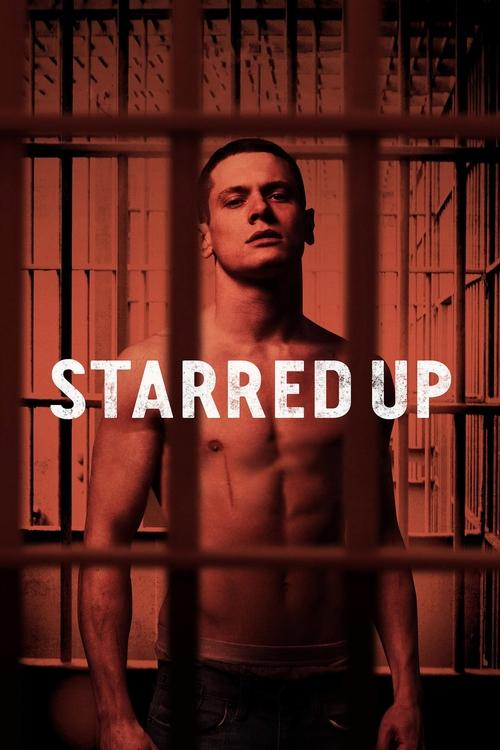






























Popular
What is the significance of Eric's relationship with his father, Neville, in the film?
How does Eric's behavior change throughout his time in prison?
What role does the character of Oliver play in Eric's development?
What events lead to the climax of Eric's conflict with Neville?
How does the film portray the theme of father-son relationships through Eric and Neville?
Should I watch it?
Ask Your Own Question

What is the plot?
Sorry, we aren't able to watch and write up a full detailed plot yet. Check back in a few days.









What is the ending?
In the ending of "Starred Up," Eric, after a tumultuous journey through the prison system and his relationship with his father, Neville, faces a critical moment of self-realization. He ultimately chooses to confront his violent tendencies and the cycle of aggression that has defined his life. The film concludes with Eric being transferred to a different facility, leaving behind the chaos of his past and the complex relationship with his father, who remains in prison.
As the final scenes unfold, Eric is seen in a new environment, suggesting a glimmer of hope for his future. Meanwhile, Neville is left to grapple with his own demons, still entrenched in the prison system. The film closes on a note of uncertainty, emphasizing the ongoing struggles of both characters.
As the film approaches its conclusion, the tension between Eric and his father, Neville, reaches a boiling point. In the aftermath of a violent confrontation in the prison yard, Eric is taken to a solitary confinement cell. The stark, cold walls of the cell reflect his internal turmoil, a young man trapped in a cycle of violence and anger, much like his father.
In the following scenes, Eric is visited by his father, Neville, who is visibly shaken by the events that have transpired. The two men engage in a heated conversation, filled with resentment and unspoken pain. Eric's face is a mask of defiance, yet beneath it lies a flicker of vulnerability. He grapples with the realization that he has inherited not just his father's anger but also the weight of his legacy.
As the dialogue unfolds, Eric's internal conflict becomes palpable. He is torn between the desire to break free from his father's shadow and the instinct to lash out, a behavior he has learned from Neville. The emotional stakes are high, and the audience can feel the tension crackling in the air as they confront their shared history.
In a pivotal moment, Eric is offered a chance to participate in a group therapy session led by Oliver, a compassionate counselor who has been trying to guide him throughout his time in prison. The session takes place in a stark, fluorescent-lit room, filled with other inmates who are also struggling with their pasts. Eric's initial resistance is evident; he sits with his arms crossed, a defensive posture that speaks volumes about his reluctance to open up.
However, as the session progresses, Eric begins to let down his guard. He shares a raw and emotional account of his life, revealing the pain and anger that have driven him to violence. The camera captures the subtle shifts in his expression, from defiance to vulnerability, as he confronts the truth of his existence. The other inmates listen intently, and for the first time, Eric feels a sense of connection and understanding.
The climax of the film occurs when Eric makes the decision to confront his father one last time. In a dimly lit visiting room, the two men sit across from each other, the tension palpable. Eric's voice trembles as he expresses his desire to break free from the cycle of violence that has defined their relationship. Neville, hardened by years in prison, struggles to comprehend his son's plea. The emotional weight of their conversation hangs heavy in the air, as both men grapple with their identities and the choices that have led them to this moment.
As the film draws to a close, Eric is informed of his transfer to a different facility. The news is bittersweet; it signifies a new beginning but also a painful separation from his father. In the final scenes, Eric walks through the prison corridors, the sound of his footsteps echoing against the concrete walls. He carries with him the lessons learned from his experiences, a flicker of hope igniting within him.
Meanwhile, Neville is left behind, still entrenched in the prison system, a man unable to escape the consequences of his past. The film ends with a poignant shot of Eric being led away, a mixture of determination and uncertainty etched on his face. The audience is left to ponder the fates of both characters, encapsulating the film's exploration of familial bonds, the cycle of violence, and the possibility of redemption.
Is there a post-credit scene?
The movie "Starred Up," produced in 2014, does not have a post-credit scene. The film concludes with a powerful and emotional ending that leaves the audience reflecting on the characters' journeys and the complexities of their relationships. The focus remains on the intense narrative and character development throughout the film, particularly the relationship between Eric, a young man recently transferred to an adult prison, and his estranged father, Neville. The absence of a post-credit scene emphasizes the weight of the story and its themes rather than providing additional content after the credits.
What is the significance of Eric's relationship with his father, Neville, in the film?
Eric, played by Jack O'Connell, is a young man who has been 'starred up' from a juvenile facility to an adult prison, where he encounters his estranged father, Neville, portrayed by Ben Mendelsohn. Their relationship is fraught with tension and unresolved issues, as Eric grapples with feelings of abandonment and anger towards Neville, who has been in prison for a long time. This dynamic is pivotal as it highlights Eric's struggle for identity and connection, while also showcasing the cycle of violence and criminality that runs in their family. Their interactions are charged with emotional weight, revealing Eric's desire for paternal approval and the conflicting feelings of resentment and longing.
How does Eric's behavior change throughout his time in prison?
Initially, Eric exhibits aggressive and volatile behavior, often getting into fights and challenging authority. His anger stems from a deep-seated frustration and a sense of betrayal by the system and his family. However, as he begins to engage with the prison's therapy group led by Oliver, played by Rupert Friend, Eric starts to confront his emotions and past traumas. This journey is marked by moments of vulnerability, where he reveals his fears and insecurities, indicating a shift from pure aggression to a more introspective approach. The therapy sessions serve as a catalyst for his transformation, allowing him to explore the roots of his anger and the possibility of change.
What role does the character of Oliver play in Eric's development?
Oliver, the prison therapist, plays a crucial role in Eric's development by providing a space for him to explore his emotions and confront his past. Unlike other authority figures, Oliver approaches Eric with empathy and understanding, encouraging him to articulate his feelings rather than resorting to violence. Through their sessions, Oliver helps Eric to recognize the patterns of behavior that have led him to prison and to consider the possibility of redemption. This relationship is pivotal as it represents a glimmer of hope for Eric, who has been surrounded by a culture of aggression and despair. Oliver's guidance challenges Eric to reflect on his choices and the impact of his upbringing, ultimately influencing his path towards self-awareness.
What events lead to the climax of Eric's conflict with Neville?
The climax of Eric's conflict with Neville is reached during a tense confrontation in the prison yard. As Eric struggles with his emotions and the weight of his father's legacy, he is drawn into a violent altercation that escalates tensions between inmates. This confrontation is fueled by Neville's attempts to assert control and protect Eric, but it backfires, leading to a public display of their fractured relationship. The culmination of their conflict is marked by Eric's realization that he cannot escape the cycle of violence that his father represents. This moment is pivotal as it forces Eric to confront not only his father's influence but also his own choices, ultimately leading to a critical turning point in his character arc.
How does the film portray the theme of father-son relationships through Eric and Neville?
The film intricately portrays the theme of father-son relationships through the tumultuous dynamic between Eric and Neville. Their interactions are steeped in a complex mix of love, resentment, and the desire for connection. Neville's presence in Eric's life serves as a constant reminder of the path Eric could take if he succumbs to the same destructive behaviors. The film captures moments of vulnerability, such as when Eric seeks validation from Neville, juxtaposed with instances of betrayal and disappointment. This duality highlights the struggle for acceptance and the impact of familial bonds on personal identity. Ultimately, their relationship serves as a microcosm of the broader themes of generational trauma and the quest for redemption.
Is this family friendly?
"Starred Up" is not considered family-friendly due to its intense themes and graphic content. Here are some potentially objectionable or upsetting aspects:
-
Violence: The film contains several scenes of physical violence, including fights between inmates, which can be quite graphic and disturbing.
-
Strong Language: There is frequent use of strong profanity throughout the film, which may be inappropriate for younger audiences.
-
Sexual Content: There are references to sexual situations and relationships that may be uncomfortable for children or sensitive viewers.
-
Emotional Turmoil: The film explores heavy themes such as mental health issues, familial conflict, and the struggles of incarceration, which can be emotionally intense and distressing.
-
Substance Abuse: There are depictions of drug use and discussions surrounding addiction, which may be upsetting for some viewers.
Overall, the film's mature themes and graphic content make it unsuitable for children and potentially distressing for sensitive individuals.