







Loading additional questions...
Popular
What is the relationship between Don Carlo and Elisabeth of Valois?
How does the character of King Philip II influence the plot?
What role does the Grand Inquisitor play in the story?
How does the character of Rodrigo, the Marquis of Posa, impact Don Carlo's journey?
What is the significance of the auto-da-fé scene in the narrative?
Should I watch it?
Ask Your Own Question

What is the plot?
Sorry, we aren't able to watch and write up a full detailed plot yet. Check back in a few days.
More Movies Like This
Browse All Movies →



What is the ending?
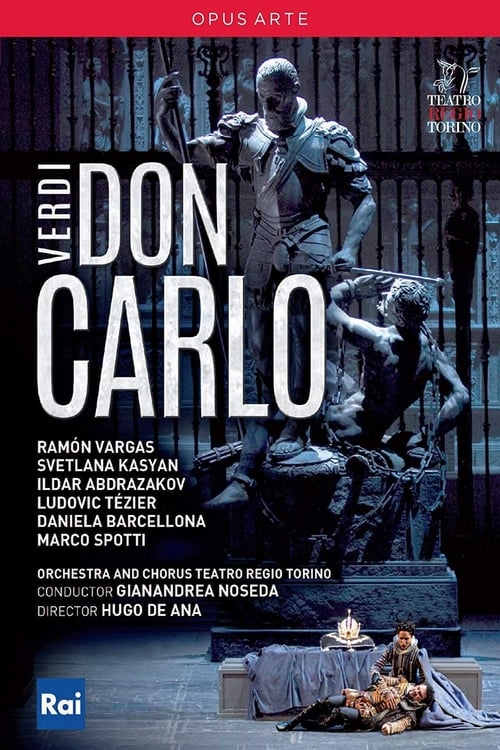
In the ending of the 2013 film "Verdi: Don Carlo," the characters face the consequences of their choices and the oppressive political climate. Don Carlo, having lost his love for Elisabetta, is left in despair. The Grand Inquisitor confronts King Philip II, asserting the power of the church over the state. The opera concludes with a sense of tragedy and unresolved conflict, as the characters grapple with their fates.
As the final act unfolds, we find ourselves in a dimly lit chamber, where the tension is palpable. Don Carlo, played with deep emotional resonance, stands alone, reflecting on his lost love for Elisabetta and the futility of his rebellion against the oppressive regime. His heart is heavy with sorrow, and the weight of his unfulfilled desires hangs in the air. The audience can feel his internal struggle, a man torn between love and duty, longing for a freedom that seems forever out of reach.
In a stark contrast, King Philip II, portrayed with a chilling authority, enters the scene. His presence is commanding, and he embodies the oppressive nature of the monarchy. He is haunted by his own insecurities and the realization that his power is fragile. The Grand Inquisitor, a figure of cold pragmatism, stands beside him, reinforcing the idea that the church's influence is paramount. Their dialogue reveals the deep-seated conflict between personal desires and the harsh realities of political power.
As the scene progresses, the Grand Inquisitor confronts Don Carlo, emphasizing the futility of his rebellion. The tension escalates as Carlo defiantly stands his ground, refusing to submit to the oppressive forces that seek to control him. The emotional stakes are high, and the audience can sense the impending tragedy that looms over the characters.
Elisabetta, caught in the web of political intrigue, enters the scene, her presence a bittersweet reminder of the love that once flourished between her and Don Carlo. She is torn between her loyalty to her husband, King Philip, and her lingering feelings for Carlo. The emotional turmoil is palpable as she navigates her conflicting loyalties, embodying the tragic consequences of a love that cannot be fulfilled.
In the climactic moments, the characters confront their fates. Don Carlo, realizing that his fight for freedom is in vain, is left with a sense of despair. The Grand Inquisitor's chilling proclamation of the church's dominance serves as a stark reminder of the oppressive forces at play. King Philip, despite his power, is left feeling isolated and haunted by his own insecurities.
As the opera draws to a close, the characters are left in a state of unresolved conflict. Don Carlo's dreams of love and freedom are shattered, and he is left to grapple with the reality of his situation. Elisabetta, too, is left with a heavy heart, caught between her love for Carlo and her duty to her husband. The Grand Inquisitor and King Philip stand as symbols of the oppressive forces that dictate the characters' lives, leaving the audience with a haunting sense of tragedy and the weight of unfulfilled desires.
In the final moments, the stage is enveloped in darkness, symbolizing the bleakness of their fates. The characters' struggles resonate deeply, leaving a lasting impression of the complexities of love, power, and the human condition. The opera concludes, not with resolution, but with a poignant reminder of the sacrifices made in the name of love and the relentless grip of authority.
Is there a post-credit scene?
What is the relationship between Don Carlo and Elisabeth of Valois?
Don Carlo is deeply in love with Elisabeth of Valois, who is initially betrothed to him. However, due to political machinations, she is forced to marry his father, King Philip II of Spain. This creates a complex emotional turmoil for Don Carlo, as he grapples with his love for Elisabeth and the betrayal he feels towards his father.
How does the character of King Philip II influence the plot?
King Philip II is a central figure whose authoritarian nature and obsession with power drive much of the conflict in the story. His marriage to Elisabeth not only strains his relationship with Don Carlo but also highlights his oppressive rule, particularly in his treatment of those who oppose him, such as the reformist faction led by the Grand Inquisitor.
What role does the Grand Inquisitor play in the story?
The Grand Inquisitor serves as a powerful antagonist, representing the oppressive religious authority in Spain. He is a staunch supporter of King Philip II and seeks to maintain control over the populace through fear and persecution. His confrontation with Don Carlo and the other characters underscores the themes of tyranny and moral conflict.
How does the character of Rodrigo, the Marquis of Posa, impact Don Carlo's journey?
Rodrigo, the Marquis of Posa, is a close friend and confidant of Don Carlo. He encourages Carlo to pursue his ideals of freedom and justice, acting as a moral compass. Rodrigo's unwavering support and eventual sacrifice for the cause of reform deeply affect Don Carlo, pushing him further into despair and conflict with the monarchy.
What is the significance of the auto-da-fé scene in the narrative?
The auto-da-fé scene is a pivotal moment in the opera, showcasing the brutal enforcement of religious orthodoxy. It serves as a dramatic turning point, where the characters confront the consequences of their beliefs and actions. The public execution of heretics highlights the oppressive atmosphere of the time and the moral dilemmas faced by Don Carlo and his allies.






