








Popular
Who is the main character in Next Time I'll Aim for the Heart and what drives his actions throughout the film?
What is the significance of the relationship between Pierre and the female character, and how does it impact the plot?
How does the film depict the psychological state of Pierre as he delves deeper into the investigation?
What role does the setting play in shaping the atmosphere of the film?
What are the key turning points in Pierre's investigation that lead to significant revelations about the murders?
Should I watch it?
Ask Your Own Question

What is the plot?
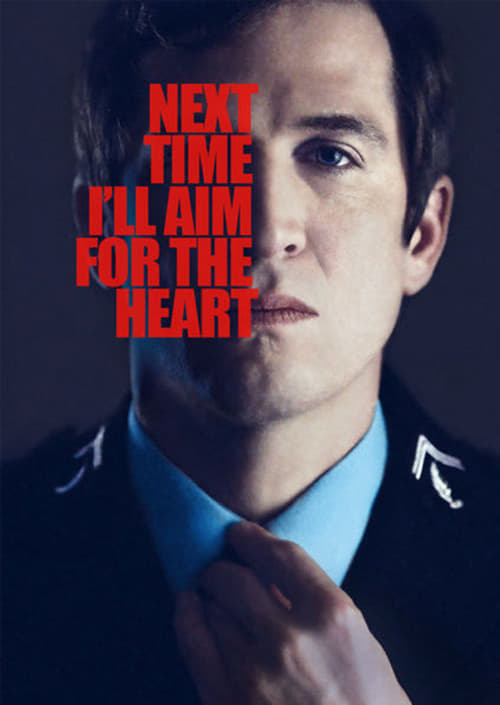
In the winter of 1978, the Oise region of France is already settling into its long, cold dark when Franck Neuhart begins his killing spree, moving through the snowbound roads as if he belongs to the same ordinary world he is tearing apart. He is a young gendarme, quiet, careful, almost unremarkable in the way he holds himself inside the force, and that is exactly what makes him so terrifying: he is not a stranger on the edge of the law but one of its own, a man trusted to patrol the roads, investigate violence, and protect the very people he stalks. The film opens with that contradiction fully intact, and it never lets go of it. The first image of danger comes on a deserted road at night, where two young women on scooters are traveling to a party and one of them, Alice, is suddenly and brutally struck by a driver who runs her down again and again. The attack is not random in the emotional sense, even if it seems random to anyone watching from outside the car. Franck is behind the wheel, and the car itself becomes the first extension of his hatred, a weapon that allows him to transform a routine rural road into a place of sudden annihilation. Alice is left shattered and critically wounded, while Franck disappears back into the ordinary machinery of the world, his face calm, his public role untouched.
The case quickly takes on an anxious rhythm. The countryside around the Oise becomes a landscape of fear, where roads, intersections, and lonely stretches of pavement all feel like traps. Young women hitchhiking or traveling alone begin to vanish into Franck's orbit, and each new attack deepens the tension because the police are hunting a man who is already standing among them. Franck's double life is the film's central engine: by day he is the model officer, diligent and unobtrusive, present at meetings and investigations, listening to the discussion of patterns and clues; by night he becomes the predator. The contradiction is unbearable because he is not merely hiding from the law but helping to organize it. The investigation, maps, reports, roadblocks, and search patterns all circulate through the same institution that shelters him. Every step toward solving the case is also a step Franck watches from inside the room.
Soon the police begin receiving taunting correspondence, and one letter becomes the phrase that brands the whole story: "Next time I'll aim for the heart." The line is chilling not only because it promises escalation but because it turns Franck's violence into a kind of signature, a declaration that he has not finished and intends to move from injury to murder. It is the language of a man who wants to frighten the authorities and also to control the terms of the hunt. The letter hangs over the investigation like a stain. It tells the police that the next attack will not be a warning or a wound; it will be fatal. In a world already poisoned by uncertainty, the phrase becomes a countdown.
Franck does not act like a conventional cinematic killer. He does not bristle with showy mania in public. Instead, the film lets his private world fracture slowly and disturbingly. At home, in the silence away from the station, the cracks start to show. He is solitary, emotionally cut off, and increasingly drawn to rituals of pain. He harms himself, handles reeds and barbed wire, and immerses himself in icy water, as if he can force some internal rot out through the skin. These scenes are not merely there to suggest a troubled conscience; they show a man who is losing command of the boundaries between punishment and desire. The self-inflicted suffering mirrors the violence he directs outward, and each act of self-harm feels like a response to a pressure he cannot articulate. He appears to understand, in flashes, that something inside him is breaking, but he cannot stop the momentum. The film makes his interior collapse feel as methodical as his assaults on the roadside.
At the same time, he reaches for one of the few connections that feels human to him: Sophie, his cleaning lady, who becomes his romantic interest. She stands in stark contrast to his hidden life. Where he is rigid and secretive, she is warm and visible, a presence from the world of ordinary domestic routines that Franck has almost no access to anymore. Their relationship briefly offers the possibility that he might still belong to a normal life, that he might still inhabit a kitchen, a conversation, a touch that is not violent. But the tenderness is unstable from the beginning, because the audience knows what Sophie does not: the man courting her is the same man terrorizing the region. Their scenes together carry a strange emotional voltage. He is drawn to her, but the attraction only exposes how far he has already fallen. He cannot live inside the domestic warmth he seeks. He can only visit it as an intruder.
Meanwhile, the attacks continue. Franck's method grows more brazen and more deadly. He starts by using his car to run women down on the roads, then escalates into the random shooting of young female hitchhikers. The film shows him searching for these women in a way that makes the countryside itself feel predatory. A lonely road, a winter dusk, a stopped car at the edge of a field, a figure waiting near the shoulder--each image becomes a threshold to violence. The victims are often young, isolated, and vulnerable, and the film never softens the brutality of what happens to them. One attack is especially devastating because it moves from the shock of impact to the horrifying recognition that the victim is still alive, or barely alive, and that the police must now chase a killer who has already left a body behind. The pattern hardens: a car, a roadside, a young woman, gunfire or impact, then disappearance into the cold.
Franck keeps working the case in his official capacity, which turns every scene at the station into an exercise in dramatic irony. He appears calm while others are distressed. He listens while colleagues debate possibilities. He helps process the terror that he himself has authored. The quiet professionalism he shows is one of the film's most unnerving details, because it allows him to conceal his impulses not through elaborate disguise but through competence. He is good at his job. That is what makes him so dangerous. He understands procedure, knows how investigations unfold, and can anticipate where suspicion might go. The killer is not an outsider forced to improvise around the law; he is embedded in its routines.
The pressure intensifies as evidence accumulates and the police try to make sense of the geographical pattern. The roads of the Oise, the forests, the isolated stretches outside towns, and the places where cars are abandoned or victims are found all become part of a map of violence. The case is not simply a trail of bodies but a route, a murderous journey across the region. The film keeps emphasizing the physical space of the hunt: winter roads, dim headlights, fields dark against the snow, the forest of Chantilly in the background of the real case that inspired the story, and the isolated edges where Franck can strike and vanish. These places matter because they create the conditions for his crimes, but they also become the terrain on which he will eventually be exposed. The same pattern that protects him starts to betray him.
As the months pass, Franck becomes more entangled in his own unraveling. His self-punishment grows harsher, his emotional expression more brittle. The film presents him less as a master planner than as a man who is increasingly unable to contain the contradiction of himself. He is both hunter and hunted, investigator and suspect, officer and outlaw. He lives inside a machine that he is actively sabotaging from within. The tension comes from wondering not whether he will be caught in the abstract, but how long he can keep the illusion intact before the strain tears it apart. His movements become more erratic, yet he still manages to stay just ahead of direct suspicion. That delay makes the dread worse. Every time he escapes, the world seems to shrink a little tighter around him.
His relationship with Sophie deepens even as his psychology deteriorates. She sees fragments of his loneliness, but not the full abyss. In their scenes, the film briefly slows down and lets the viewer feel how seductive normal life can be for someone like Franck, how much he seems to want the illusion of being a man with a home, a woman, a future. But the violence keeps pressing back in. The contrast between intimacy and brutality becomes unbearable. He cannot reconcile the tenderness he seeks with the destruction he enacts. When he returns from those moments of near-normality, he returns to the dark interior of his compulsion.
The investigation finally begins to close in not because Franck confesses openly in a dramatic outburst, but because the pattern around him becomes too difficult to ignore. His colleagues start to suspect that the killer is not an invisible outsider but someone already inside the gendarmerie, someone with access, knowledge, and the eerie ability to stay one step ahead. The film's central irony sharpens at this point: the men trying to solve the case are beginning to understand that the person they are chasing may be standing in the same room, saluting them in the morning and murdering women at night. The murder map, the letters, the repeated attacks on roads and hitchhikers, the timing, the opportunities--all of it begins to point inward.
This shift in suspicion is the story's main turning point. Once the possibility enters the investigation that the killer is a gendarme, the whole structure of Franck's protection starts to collapse. The very institution that made him invisible also becomes the instrument of his undoing. His colleagues, no longer looking only outward, begin to examine the familiar with fresh dread. The film pushes this inward turn hard, and the suspense comes from the fact that Franck knows they are getting closer. His face remains controlled, but the pressure on him is now visible in the way he carries his body and the way he drifts through scenes like a man already half-caught.
The final stretch moves toward confrontation with grim inevitability. The letters, the suspicious behavior, the pattern of attacks, and the knowledge that the killer is a cop all converge until Franck can no longer hide behind procedure. His colleagues identify him as the source of the terror, and the case turns from an external manhunt into an internal purge. There is no grand escape, no triumphant last crime, no dramatic blaze of freedom. The law closes around one of its own. The arrest comes from fellow gendarmes, and that detail is crucial because it restores the moral order of the world in the bleakest possible way: the same institution that shielded him is now the one that restrains him.
The ending does not offer redemption. Franck is not saved by love, conscience, or surrender in any meaningful emotional sense. His crimes remain what they have always been: the brutal acts of a man whose hidden madness has finally become impossible to contain. The film's final movement leaves behind the terror that has gripped the Oise, but it does so through exposure rather than healing. Franck is taken down, and the murders stop only because he is stopped. The title phrase, "Next time I'll aim for the heart," lingers as the last true emblem of his psyche: a promise of escalation, a threat, a confession, and a final mark of how far the violence had already traveled before anyone understood who was responsible. By the final scene, the killer is no longer the anonymous shadow on the road. He is Franck Neuhart, the model gendarme whose secret life has finally been dragged into the light, arrested by his own colleagues as the cold roads of the Oise fall silent behind him.
What is the ending?
In the ending of "Next Time I'll Aim for the Heart," the film culminates in a tense confrontation between the protagonist, police officer Franck, and the serial killer he has been pursuing. Franck's internal struggle and obsession with the case lead to a tragic conclusion, where he ultimately confronts the killer, resulting in a violent showdown. The film closes with Franck's fate left ambiguous, hinting at the psychological toll the case has taken on him.
Expanding on the ending in a chronological and narrative fashion:
As the film approaches its climax, Franck, portrayed by Guillaume Canet, is deeply entrenched in his obsession with the serial killer who has been terrorizing the region. The tension builds as Franck's personal life begins to unravel; he is increasingly isolated from his colleagues and loved ones, consumed by the need to catch the murderer. The audience witnesses his emotional turmoil as he grapples with the weight of his responsibilities and the darkness of the case.
In the penultimate scenes, Franck receives a crucial lead that brings him closer to the killer. The atmosphere is thick with suspense as he prepares for the confrontation. The setting shifts to a desolate area where the killer is believed to be hiding. Franck's heart races, and his determination is palpable; he is both a hunter and a haunted man, driven by a mix of duty and personal demons.
As Franck arrives at the location, the tension escalates. He spots the killer, and a cat-and-mouse game ensues. The killer, a figure shrouded in menace, taunts Franck, revealing the psychological games he has played throughout the investigation. Franck's internal conflict is laid bare; he is torn between his role as a protector of the law and the darker impulses that the case has awakened within him.
The confrontation reaches its peak when Franck and the killer engage in a violent struggle. The scene is charged with raw emotion, showcasing Franck's desperation and the killer's chilling calmness. In a moment of chaos, Franck's obsession culminates in a tragic decision, leading to a violent resolution that leaves both men irrevocably changed.
As the dust settles, the aftermath of the confrontation is stark. Franck is left standing amidst the wreckage of his choices, grappling with the consequences of his actions. The film closes on a haunting note, with Franck's fate uncertain. He is a man who has lost himself in the pursuit of justice, and the audience is left to ponder the psychological scars that linger long after the final confrontation.
In the end, Franck's journey is one of tragedy and obsession, illustrating the profound impact that a relentless pursuit can have on an individual. The film leaves viewers with a lingering sense of unease, reflecting on the complexities of human nature and the darkness that can reside within.
Is there a post-credit scene?
The movie "Next Time I'll Aim for the Heart," directed by Cédric Anger and released in 2014, does not feature a post-credit scene. The film concludes with a focus on the resolution of its central narrative, which revolves around the real-life story of a serial killer in France during the 1970s. The ending emphasizes the emotional and psychological aftermath of the events depicted, leaving the audience with a sense of closure regarding the characters' arcs and the story's themes.
Who is the main character in Next Time I'll Aim for the Heart and what drives his actions throughout the film?
The main character is Pierre, a police officer portrayed by Guillaume Canet. His actions are driven by a complex mix of personal ambition, a desire for justice, and a deep-seated emotional turmoil stemming from his past. As he investigates a series of murders, he becomes increasingly obsessed with the case, which leads him to confront his own demons.
What is the significance of the relationship between Pierre and the female character, and how does it impact the plot?
The relationship between Pierre and the female character, who is a key witness in the murder investigation, adds emotional depth to the story. Their interactions reveal Pierre's vulnerability and his struggle to maintain professional boundaries while grappling with his feelings for her. This relationship complicates his investigation and ultimately influences his decisions, highlighting the tension between his duty as a police officer and his personal desires.
How does the film depict the psychological state of Pierre as he delves deeper into the investigation?
As Pierre delves deeper into the investigation, the film portrays his psychological state as increasingly unstable. He experiences moments of intense frustration, paranoia, and obsession, which are visually represented through close-up shots of his strained expressions and erratic behavior. The weight of the case begins to take a toll on his mental health, leading to a breakdown that affects both his personal and professional life.
What role does the setting play in shaping the atmosphere of the film?
The setting of the film, primarily in a gritty urban environment, plays a crucial role in shaping its atmosphere. The dark, rain-soaked streets and the claustrophobic interiors of police stations create a sense of tension and foreboding. This backdrop mirrors Pierre's internal struggles and enhances the film's themes of isolation and desperation, making the viewer feel the weight of the investigation alongside him.
What are the key turning points in Pierre's investigation that lead to significant revelations about the murders?
Key turning points in Pierre's investigation include the discovery of crucial evidence that links the murders to a specific pattern, as well as his encounters with various suspects that reveal deeper layers of the case. Each revelation brings him closer to the truth but also heightens the stakes, leading to moments of intense confrontation and moral dilemmas that challenge his sense of justice and personal ethics.
Is this family friendly?
"Next Time I'll Aim for the Heart" is a crime drama that delves into the life of a serial killer and the investigation surrounding his crimes. While the film is compelling and rich in narrative detail, it contains several elements that may not be suitable for children or sensitive viewers.
-
Violence and Murder: The film depicts scenes of murder and violence, including the aftermath of killings, which can be graphic and unsettling.
-
Psychological Tension: There are intense moments that explore the psychological state of the killer, which may be disturbing for some viewers.
-
Crime Investigation: The film includes scenes of police investigations that may involve discussions of crime scenes and the impact of violence on victims and their families.
-
Emotional Distress: Characters experience significant emotional turmoil, including grief and trauma, which may be heavy for younger audiences.
-
Dark Themes: The overarching themes of obsession, guilt, and the nature of evil are explored, which may not be appropriate for all viewers.
Overall, the film's mature themes and graphic content make it more suitable for adult audiences.







