






Popular
What is the significance of the door in the story?
How does Maja's relationship with her husband evolve throughout the film?
What role does the character of the mysterious man play in Maja's journey?
How does Maja's perception of reality change after she discovers the door?
What are the consequences of Maja's choices as she interacts with the alternate world?
Should I watch it?
Ask Your Own Question

What is the plot?
Sorry, we aren't able to watch and write up a full detailed plot yet. Check back in a few days.


What is the ending?
In the ending of "The Door," the protagonist, a woman named Maja, confronts the reality of her choices and the consequences of her actions. She faces the haunting memories of her past and the impact they have on her present. Ultimately, she makes a significant decision that leads to a resolution of her internal conflict, but it comes at a cost. The film concludes with a sense of ambiguity, leaving the audience to ponder the implications of her journey.
As the final scenes unfold, Maja stands before the door that symbolizes her past and the choices she has made. The atmosphere is heavy with tension, and the weight of her memories presses down on her. She recalls moments of joy and pain, the faces of those she has lost, and the relationships that have shaped her. The door represents both a barrier and a passage, a threshold between her past and the uncertain future that lies ahead.
In a pivotal moment, Maja reaches for the door handle, her hand trembling with uncertainty. The camera captures the conflict in her eyes, a mixture of fear and determination. She hesitates, reflecting on the life she has led and the people she has hurt. The memories flood back, each one a reminder of the choices that have led her to this moment.
As she finally opens the door, a blinding light spills out, illuminating her face. This light symbolizes hope and the possibility of redemption, but it also signifies the unknown. Maja steps through the threshold, and the door closes behind her with a resounding thud, echoing the finality of her decision.
In the aftermath, the film shifts to a scene where Maja is seen walking away from the door, her posture more upright, suggesting a newfound strength. The weight of her past still lingers, but there is a sense of liberation in her stride. The camera pans out, revealing the landscape around her, a mix of shadows and light, representing the duality of her journey.
The fate of Maja is one of transformation. She has faced her demons and made a choice to move forward, albeit with the scars of her past. The film leaves her future open-ended, inviting the audience to reflect on the nature of forgiveness and the possibility of change.
In contrast, the other characters who have been part of Maja's journey are left behind in the shadows of her past. Their fates are intertwined with hers, but they remain in the background, serving as reminders of the consequences of her actions. The film closes on a note of ambiguity, emphasizing the complexity of human relationships and the enduring impact of our choices.
Is there a post-credit scene?
The movie "The Door," produced in 2014, does not contain a post-credit scene. The film concludes its narrative without any additional scenes or content after the credits roll. The story wraps up with a focus on the emotional and psychological journey of the main character, which is central to the film's themes. As such, viewers are left to reflect on the events and character developments that have transpired throughout the film without any further revelations or cliffhangers in a post-credit sequence.
What is the significance of the door in the story?
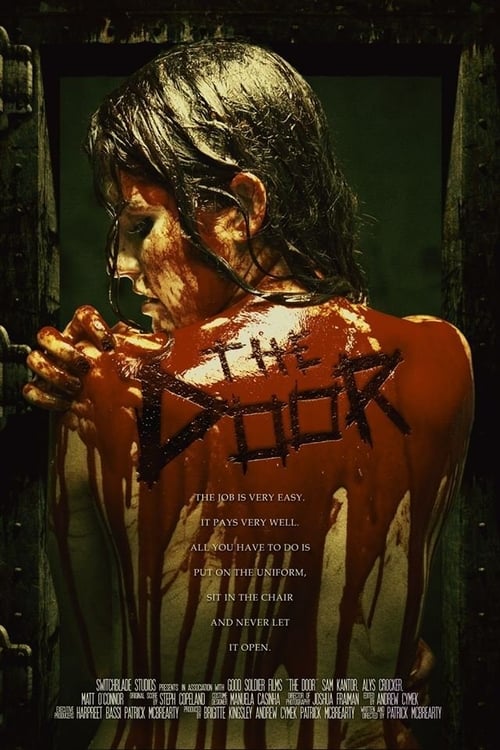
The door serves as a pivotal symbol in the film, representing the boundary between reality and the alternate world that the protagonist, a grieving mother named Maja, encounters. It is through this door that she is drawn into a realm where she confronts her past and the loss of her daughter, leading to a series of emotional and psychological challenges.
How does Maja's relationship with her husband evolve throughout the film?
Maja's relationship with her husband, who is also grieving the loss of their daughter, becomes strained as they cope with their grief in different ways. Initially, there is a sense of distance and misunderstanding between them, but as Maja delves deeper into the alternate world through the door, her husband becomes increasingly concerned for her mental state, leading to tension and conflict.
What role does the character of the mysterious man play in Maja's journey?
The mysterious man serves as a guide and a catalyst for Maja's exploration of her grief. He appears at critical moments, offering cryptic advice and pushing her to confront her emotions. His presence is both unsettling and intriguing, as he embodies the complexities of her journey through loss and acceptance.
How does Maja's perception of reality change after she discovers the door?
After discovering the door, Maja's perception of reality becomes increasingly distorted. She oscillates between her mundane life and the surreal experiences in the alternate world, leading her to question what is real. This shift is marked by vivid imagery and emotional turmoil, as she grapples with her memories and the haunting presence of her daughter.
What are the consequences of Maja's choices as she interacts with the alternate world?
Maja's choices in the alternate world have profound consequences on her psyche and her relationships. As she becomes more entangled in the alternate reality, she risks losing touch with her husband and her own sense of self. Each decision she makes leads to deeper revelations about her grief, ultimately forcing her to confront the truth about her daughter's death and her own healing process.
Is this family friendly?
"The Door," produced in 2014, is a psychological thriller that delves into themes of grief, loss, and the supernatural. While it has a compelling narrative, it may not be considered family-friendly due to several potentially objectionable or upsetting elements.
-
Themes of Grief and Loss: The film explores deep emotional pain related to the death of a loved one, which may be distressing for children or sensitive viewers.
-
Supernatural Elements: The presence of supernatural occurrences can be frightening, particularly for younger audiences who may not be able to differentiate between fiction and reality.
-
Intense Emotional Scenes: There are moments of high emotional tension, including characters experiencing despair and anguish, which could be upsetting.
-
Violence and Threats: While not excessively graphic, there are scenes that involve threats and a sense of danger that may be unsettling.
-
Dark Atmosphere: The overall tone of the film is dark and foreboding, which might be too intense for younger viewers.
These aspects contribute to a viewing experience that may not be suitable for children or those who are sensitive to such themes.







