


















Popular
What is the significance of the character Rey Ciso in the film?
How does the character of the director, Francis, influence the plot?
What role does the character of the actress, Barbara, play in Rey's life?
What is the significance of the murders that occur during the film's production?
How does the film explore the theme of guilt through Rey's character?
Should I watch it?
Ask Your Own Question

What is the plot?
Sorry, we aren't able to watch and write up a full detailed plot yet. Check back in a few days.


What is the ending?
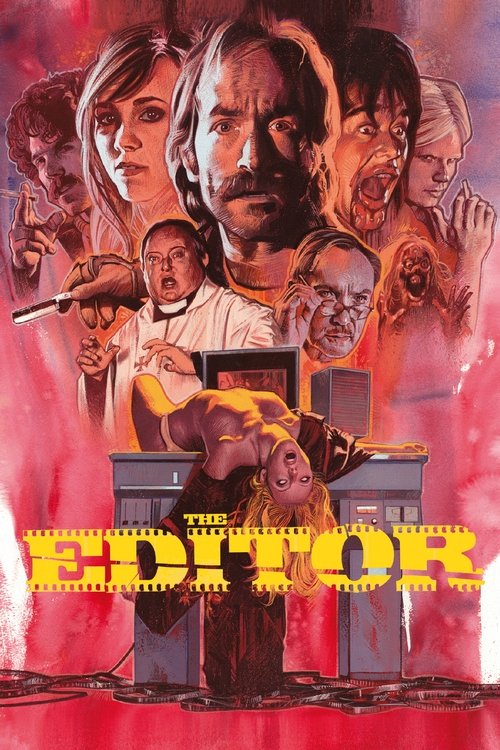
In the ending of "The Editor," the protagonist, Rey Ciso, confronts the truth about his past and the murders that have been occurring around him. As he pieces together the mystery, he faces a shocking revelation about his own identity and the nature of the killings. The film culminates in a chaotic climax where Rey's fate intertwines with that of the other characters, leading to a violent and tragic conclusion.
As the final act unfolds, Rey Ciso, the beleaguered film editor, finds himself in a desperate situation. The tension escalates as he is pursued by the police and haunted by the specters of his past. The scene opens with Rey in a dimly lit editing room, surrounded by film reels and the remnants of his once-promising career. His hands tremble as he sifts through the footage, desperately trying to make sense of the gruesome murders that have plagued the film set.
In a series of flashbacks, Rey recalls moments from his life, revealing his deep-seated fears and regrets. The audience sees him grappling with his identity, feeling the weight of the accusations against him. He is tormented by visions of the victims, their faces twisted in agony, as he struggles to separate reality from the horror of the films he edits.
The narrative shifts to a confrontation with the film's director, who has been orchestrating the chaos behind the scenes. In a tense exchange, Rey demands answers, but the director's cryptic responses only deepen the mystery. The atmosphere is thick with tension as Rey's desperation mounts, and the audience can feel his emotional turmoil as he fights to clear his name.
As the climax approaches, Rey is drawn into a final showdown with the true killer, a figure shrouded in darkness and deceit. The scene is frenetic, filled with quick cuts and disorienting angles that mirror Rey's fractured psyche. The confrontation is brutal, with Rey fighting not only for his life but also for his sanity. The violence escalates, and the editing room becomes a battleground, symbolizing Rey's internal struggle.
In the chaos, Rey discovers a shocking truth about himself--he is not just an innocent bystander but has been complicit in the horrors that have unfolded. This revelation hits him like a tidal wave, and the emotional weight of his actions crashes down upon him. The audience witnesses his transformation from a victim to a participant in the very violence he sought to escape.
As the dust settles, the fate of the main characters is revealed. Rey, now fully aware of his dark past, is left to grapple with the consequences of his actions. The police arrive, and he is taken into custody, a broken man haunted by the ghosts of his past. The director, having manipulated the events for his own gain, escapes unscathed, leaving Rey to bear the burden of the truth alone.
The film closes with a haunting image of Rey in his cell, staring blankly at the wall, the weight of his guilt and the horrors he has witnessed etched into his expression. The final shot lingers on his face, capturing the essence of a man irrevocably changed by the events that transpired, leaving the audience to ponder the thin line between creator and creation, and the darkness that can lurk within.
Is there a post-credit scene?
In the movie "The Editor," produced in 2014, there is indeed a post-credit scene. After the credits roll, the scene opens in a dimly lit room where a film editor is seen working diligently at a film editing table. The atmosphere is tense, filled with the sound of a film projector whirring in the background.
As the editor cuts and splices film reels, he becomes increasingly agitated, his hands trembling slightly as he works. The camera zooms in on his face, revealing a mix of determination and anxiety. Suddenly, he stops and stares at the screen, where disturbing images flash by--hints of the horror and chaos that unfolded throughout the film.
The editor's expression shifts from focus to horror as he realizes the implications of what he is viewing. He begins to sweat, and the tension in the room escalates. The scene culminates with a jarring cut to black, leaving the audience with a lingering sense of unease and the suggestion that the horrors of the film may not be entirely confined to the screen. This post-credit moment reinforces the film's themes of madness and the blurred lines between reality and fiction, leaving viewers with a haunting final impression.
What is the significance of the character Rey Ciso in the film?
Rey Ciso, played by Adam Brooks, is the protagonist and a once-renowned film editor who now struggles with his past and the decline of his career. His character embodies the themes of guilt and redemption, as he grapples with the violent and mysterious events surrounding the film productions he works on. His emotional state fluctuates between desperation and determination, reflecting his internal conflict as he tries to uncover the truth behind the murders that occur.
How does the character of the director, Francis, influence the plot?
Francis, portrayed by Matthew Kennedy, is a passionate but erratic director whose obsession with his film leads to chaos on set. His volatile nature and artistic vision drive the narrative forward, as his demands push Rey into increasingly dangerous situations. Francis's character serves as a catalyst for the unfolding horror, as his inability to control the production mirrors the unraveling of Rey's sanity.
What role does the character of the actress, Barbara, play in Rey's life?
Barbara, played by Poppy Simmons, is a key figure in Rey's life, representing both a source of desire and a reminder of his failures. Her presence complicates Rey's emotional landscape, as he is drawn to her while also feeling the weight of his past mistakes. Their interactions are charged with tension, revealing Rey's longing for connection amidst the chaos surrounding him.
What is the significance of the murders that occur during the film's production?
The murders that take place during the film's production serve as a critical plot device that heightens the tension and mystery of the story. Each murder is intricately tied to the characters' personal struggles and the film's production, reflecting the blurred lines between reality and fiction. These violent events force Rey to confront his own demons and the consequences of his past, ultimately leading him to seek the truth.
How does the film explore the theme of guilt through Rey's character?
Rey's character is deeply affected by guilt, stemming from his involvement in the violent events that transpire. As he navigates the chaotic world of filmmaking, his guilt manifests in paranoia and hallucinations, illustrating his deteriorating mental state. The film uses Rey's experiences to explore how guilt can consume an individual, driving them to the brink of madness as they seek redemption.
Is this family friendly?
"The Editor," produced in 2014, is not considered family-friendly due to its graphic content and mature themes. Here are some potentially objectionable or upsetting aspects that may occur for children or sensitive viewers:
-
Graphic Violence: The film features several scenes of intense violence, including gory murders and dismemberment, which are depicted in a stylized manner.
-
Sexual Content: There are explicit sexual situations and nudity that may be inappropriate for younger audiences.
-
Strong Language: The dialogue includes frequent use of profanity, which may not be suitable for children.
-
Psychological Horror Elements: The film contains unsettling themes and psychological tension that could be distressing for sensitive viewers.
-
Dark Humor: The film employs a blend of horror and dark comedy, which may not resonate well with all audiences, particularly younger viewers.
Overall, the film's combination of horror, violence, and adult themes makes it more appropriate for mature audiences.








