



















































Popular
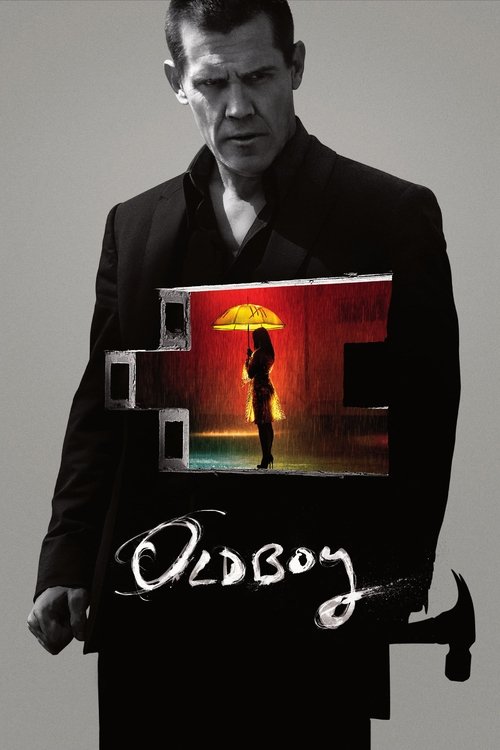
What is the significance of the character of Joe Doucett in Oldboy?
How does the character of Mia play a role in Joe's journey?
What is the role of the antagonist, Adrian, in the story?
What is the significance of the 'whale' metaphor in the film?
How does the film depict the theme of revenge through Joe's actions?
Should I watch it?
Ask Your Own Question

What is the plot?
Sorry, we aren't able to watch and write up a full detailed plot yet. Check back in a few days.

What is the ending?
In the ending of the 2013 film "Oldboy," Joe Doucett confronts his captor, who reveals the truth about the past and the reasons behind his imprisonment. After a violent confrontation, Joe learns that he has been manipulated into a cycle of revenge and suffering. In a tragic twist, he discovers that he unknowingly had an incestuous relationship with his daughter, who is now a young woman. Overwhelmed by guilt and despair, Joe chooses to erase his memories of the past, seeking solace in a hypnotic suggestion. The film concludes with a haunting ambiguity, leaving the audience to ponder the consequences of vengeance and the nature of suffering.
As the film approaches its climax, Joe Doucett, played by Josh Brolin, finds himself in a dimly lit room, face-to-face with his captor, the enigmatic and sinister figure known as Adrian (played by Sharlto Copley). The tension is palpable as Joe, fueled by rage and desperation, demands answers for the years of torment he has endured. Adrian, with a calm demeanor, reveals the elaborate scheme he orchestrated, explaining that Joe was imprisoned for the sins of his past, particularly for the way he treated his wife, who had been a victim of his neglect and abuse.
In a series of flashbacks interspersed with the present confrontation, the audience learns that Adrian's motivation was deeply personal. He had been a childhood friend of Joe's wife, and his actions were driven by a desire for revenge. As Joe grapples with this revelation, the emotional weight of his past choices crashes down upon him. The camera captures the anguish on Joe's face, a mixture of anger, regret, and confusion.
The confrontation escalates into violence, with Joe fighting against Adrian's henchmen in a brutal showdown. The choreography of the fight scenes is intense, showcasing Joe's desperation to reclaim his life. He fights with a primal instinct, fueled by the need to confront the man who has taken everything from him. The cinematography emphasizes the chaos of the fight, with close-ups of Joe's strained expressions and the visceral impact of each blow.
After the dust settles, Joe finally confronts Adrian in a more intimate setting, where the true horror of his situation is revealed. Adrian shows Joe a video of his daughter, now a young woman, and the realization hits Joe like a thunderbolt. He had unknowingly engaged in a sexual relationship with her, a fact that Adrian had orchestrated as the ultimate act of revenge. The emotional devastation is palpable as Joe's world crumbles around him. The camera lingers on his face, capturing the horror and despair that wash over him.
In the aftermath of this revelation, Joe is left with an unbearable burden of guilt. He wanders through the streets, haunted by the memories of his actions and the knowledge of what he has lost. The film's tone shifts to one of deep melancholy as Joe seeks a way to escape the pain of his reality. He encounters a hypnotist, who offers him a chance to forget everything--his imprisonment, his past, and the tragic fate of his daughter.
In the final scenes, Joe undergoes the hypnotic suggestion, and the audience is left with a haunting image of him smiling, seemingly at peace. However, the ambiguity of his fate lingers. The film closes with a shot of Joe walking away, leaving the audience to ponder whether true redemption is possible or if the cycle of suffering will continue.
As for the fates of the main characters, Joe Doucett is left in a state of emotional turmoil, choosing to erase his memories rather than confront the consequences of his actions. Adrian, having achieved his revenge, remains a shadowy figure, embodying the darkness of vengeance. The film concludes with a sense of unresolved tension, emphasizing the themes of suffering, guilt, and the complexities of human relationships.
Is there a post-credit scene?
In the 2013 film "Oldboy," there is no post-credit scene. The film concludes with a powerful and emotional climax, leaving the audience to reflect on the intense journey of the protagonist, Joe Doucett, and the shocking revelations that unfold. After the final confrontation and the resolution of the central conflict, the credits roll without any additional scenes or content. The absence of a post-credit scene emphasizes the weight of the story and the impact of the choices made by the characters throughout the film.
What is the significance of the character of Joe Doucett in Oldboy?
Joe Doucett, played by Josh Brolin, is a deeply flawed character whose journey of vengeance and self-discovery drives the narrative. Initially, he is portrayed as a heavy-drinking, irresponsible man who neglects his responsibilities, particularly towards his daughter. His abduction and subsequent imprisonment for 20 years transform him into a man consumed by rage and a desire for revenge. This transformation highlights his internal struggle as he grapples with his past mistakes and the consequences of his actions.
How does the character of Mia play a role in Joe's journey?
Mia, portrayed by Elizabeth Olsen, becomes a pivotal figure in Joe's life after his release from captivity. She represents a glimmer of hope and humanity in his dark world. As Joe seeks answers and revenge, Mia's compassion and understanding provide a stark contrast to the brutality he has experienced. Her character serves as a catalyst for Joe's emotional awakening, pushing him to confront his past and the choices he has made.
What is the role of the antagonist, Adrian, in the story?
Adrian, played by Sharlto Copley, is the mastermind behind Joe's imprisonment and serves as the primary antagonist. His motivations are rooted in a desire for revenge against Joe for a past transgression. Adrian's character is complex; he is both charismatic and menacing, embodying the themes of manipulation and control. His interactions with Joe are psychologically intense, as he reveals the depths of his plan and the reasons behind Joe's suffering, ultimately leading to a shocking confrontation.
What is the significance of the 'whale' metaphor in the film?
The 'whale' metaphor is introduced during a pivotal scene where Joe Doucett reflects on his life and the choices he has made. It symbolizes the idea of being trapped and the struggle for freedom. The metaphor resonates with Joe's own experience of being imprisoned for 20 years, paralleling his internal battle as he seeks to break free from the chains of his past. This imagery serves to deepen the emotional weight of his journey and highlights the themes of entrapment and liberation.
How does the film depict the theme of revenge through Joe's actions?
Revenge is a central theme in Oldboy, depicted through Joe's relentless pursuit of those who wronged him. After his release, Joe's actions are driven by a singular focus on vengeance, leading him to confront various adversaries in brutal and violent ways. The film illustrates the psychological toll that revenge takes on Joe, as he becomes increasingly consumed by his quest, blurring the lines between justice and brutality. His journey ultimately raises questions about the cost of revenge and its impact on his humanity.
Is this family friendly?
The 2013 film "Oldboy," directed by Spike Lee, is not considered family-friendly due to its intense and mature themes. Here are some potentially objectionable or upsetting aspects that may affect children or sensitive viewers:
-
Violence: The film contains graphic violence, including brutal fight scenes and depictions of physical harm. One notable scene features a lengthy, choreographed fight in a corridor that is both intense and violent.
-
Torture and Imprisonment: The protagonist experiences a long period of confinement and psychological torment, which may be distressing for viewers.
-
Themes of Revenge: The central theme revolves around revenge, which is explored in a dark and unsettling manner, raising moral questions that may be challenging for younger audiences.
-
Sexual Content: There are scenes that involve sexual violence and suggestive content, which are depicted in a disturbing context.
-
Substance Abuse: The film includes scenes of alcohol consumption and drug use, contributing to the overall dark tone.
-
Emotional Distress: The characters experience significant emotional trauma, loss, and betrayal, which may be upsetting for sensitive viewers.
Overall, the film's graphic content and heavy themes make it unsuitable for children and potentially distressing for sensitive individuals.








