





































Popular
What role does Dan Rather play in the film Truth?
How does Mary Mapes' character evolve throughout the film?
What is the significance of the documents in the story?
How does the film portray the relationship between Mary Mapes and Dan Rather?
What challenges does the CBS news team face after the report is aired?
Should I watch it?
Ask Your Own Question

What is the plot?
In the bustling heart of the CBS News offices in New York, months before the heated 2004 U.S. presidential election, Mary Mapes strides purposefully through the 60 Minutes Wednesday production suite, her face etched with the fierce determination of a journalist on the hunt. She's the veteran producer, fresh off her Peabody Award-winning exposé on Abu Ghraib prison abuses, and now she's laser-focused on a story that could shake the race: Did George W. Bush receive preferential treatment in the Texas Air National Guard to dodge Vietnam deployment? Her team buzzes around her--Mike Smith, the sharp-eyed digital whiz played with boyish intensity; Lucy Scott, the meticulous researcher whose quiet focus hides a steely resolve; and Colonel Roger Charles, the grizzled retired military officer whose gravelly voice carries the weight of decades in uniform. "The military is good at what they do," Charles mutters as they pore over scanned records in the dimly lit suite, stacks of documents and glowing computer screens illuminating their faces. "No mistakes, no errors. If Bush's files are lost or altered, someone made that happen."
Mapes leans over a desk cluttered with military files, her eyes narrowing at gaps in Bush's service record from the early 1970s. Charles points to notes on Bush's struggles with basic physical aptitude tests, his skepticism fueling the fire. Tension simmers in the air--the election looms, competitors like The New York Times and USA Today are circling the same leads, and Mapes feels the clock ticking. She snaps orders, her voice cutting through the hum of printers and ringing phones: "We need more. Barnes is our angle--get me confirmation." The team dives deeper, cross-referencing payroll records, flight logs, and whispers of favoritism, their shared adrenaline building a fragile momentum. Visuals flicker on screens: faded photos of a young Bush in Guard uniform, smirking confidently, juxtaposed against Vietnam body counts scrolling like a grim ticker.
Cut to a private, shadowed interview site elsewhere, where Dan Rather, the silver-haired anchor of CBS Evening News, sits across from Ben Barnes, the former Texas Lieutenant Governor. Rather's gravitas fills the room, his trademark suspenders and steady gaze unchanged after decades on air. Barnes, uncomfortable yet resolute, leans forward. "I pulled strings for George Bush to get him into the Texas Air National Guard," he confesses, his voice low and weighted with decades-old regret. "It was wrong, but that's what happened. He didn't have to go to Vietnam." Rather nods, his expression a mask of journalistic steel, but inside, the revelation ignites--this is corroboration, a blockbuster thread tying Bush's elite connections to his safe haven from combat. He relays the tape back to Mapes' suite, where the team erupts in hushed excitement. "This is it," Mapes breathes, her eyes gleaming as she cues up the footage, the confession playing on loop amid coffee-stained memos and overflowing ashtrays.
But leads alone won't suffice; they need documents, hard proof. Mapes hits the road, driving through the dusty backroads of rural Texas to a nondescript ranch house owned by Bill Burkett, a weathered cattle rancher with a whistleblower's glint in his eye. Burkett, played with brooding intensity, ushers her into a cluttered living room stacked with Bibles, farm ledgers, and hidden files. He's evasive at first, paranoia flickering as he glances out windows at passing trucks. "These came from my wife's collection--Killian memos, straight from Jerry Killian's desk," he finally says, sliding over a manila envelope stained with age. Mapes' hands tremble slightly as she unfolds them: typed memos from 1972-1973, allegedly from Lieutenant Colonel Jerry B. Killian, Bush's commanding officer. One reads starkly: "George Bush is here today, but 41-year-olds shouldn't be flying. He's gone AWOL for months." Another demands superiors "sugarcoat" evaluations: "I will not rate him Go due to my unfavorable report." A third alleges Bush received undue favoritism, skipping drills and leveraging family ties. Burkett claims he saw them burned by Guard officials, then salvaged copies. Mapes' heart races--this isn't just smoke; it's fire, detailing Bush's spotty attendance, 1972 AWOL status, and orders to falsify records.
Back in the CBS suite that night, the team huddles under fluorescent lights, tension coiling like a spring. Mike Smith boots up his computer, running the memos through software to check fonts, spacing, proportional typewriters--1970s era details that scream authenticity at first glance. Lucy Scott cross-checks against known Killian signatures, her fingers flying over keyboards. Charles grunts approval from his military vantage: "Killian was real; he'd have written this." But doubt creeps in--experts consulted via phone waffle, one typing expert praising the era-appropriate look, another hesitating on superscript "th" in dates like "111th Fighter Interceptor Wing." Mapes pushes forward, her voice urgent: "The story is true, even if the memos are messy. Barnes backs it. Bush's real records have holes." Rather calls in, his tone paternal yet pressing: "Air it, Mary. Beat the competition." Excitement peaks as they edit the segment--grainy Guard photos morph into Rather's voiceover, Barnes' confession intercut with memo close-ups, swelling music underscoring Bush's evasion of Vietnam duty.
September 8, 2004, dawns electric in the CBS production suite. The team finalizes the 60 Minutes Wednesday segment, "For the Record," rushing to preempt rivals. Dan Rather delivers it prime-time, his measured cadence narrating Bush's privileged path: entry via Barnes' strings, shoddy service, AWOL suspicions, all pinned by the Killian memos. The suite explodes in cheers as it airs--Mapes hugs Smith, Charles cracks a rare smile, Lucy exhales in relief. Viewers nationwide tune in, the report dominating headlines overnight. Momentum surges; this could sway the election, expose elite hypocrisy amid Iraq War debates.
But dawn breaks into backlash by September 9. Blogs ignite first--conservative sites like Power Line and Little Green Footballs dissect the memos pixel by pixel. "These are Word documents, not 1972 typewriters!" one post screams, zooming on kerning and fonts impossible for IBM Selectrics. Phones ring off hooks in the suite; Mapes fields furious calls from superiors like Josh Howard, executive producer of 60 Minutes II, and Betsy West, senior VP. Andrew Heyward, CBS News president, looms in meetings, his face darkening. Tension fractures the team--Smith frantically re-verifies, Lucy uncovers Burkett's anonymous source chain, Charles defends the content: "Forgeries or not, Bush was AWOL." Rather goes on-air September 10, issuing a cautious statement: "If the documents are questioned, we stand by the reporting process." But pressure mounts; Viacom, CBS's parent, whispers of White House ire, corporate interests clashing with journalism.
Confrontation erupts in executive boardrooms. Bruce Greenwood's character, a slick CBS lawyer-executive hybrid, corners Mapes: "You rushed it for ratings. Liberal bias--your Abu Ghraib glory went to your head." Mapes fires back, eyes blazing: "The story is true! Bush's records prove it--gaps, no flights logged in 1972. The memos amplified it." Smith snaps during a tense edit session, yelling, "We're being thrown under the bus for Viacom's Bush buddies!" Rather, isolated in his anchor booth, feels the noose tighten, his legacy flashing before him--Walter Cronkite's heir, now pilloried. By mid-September, Rather apologizes fully on CBS Evening News, voice cracking slightly: "We made a mistake in judgment, and we apologize to viewers." The emotional blow lands hard; Mapes watches from the suite, tears welling as screens show Rather humbled.
The internal review panels convene in sterile CBS hearing rooms, fluorescent lights casting harsh shadows on long oak tables. An independent panel, suits and stern faces, grills the team one by one, shifting focus from Bush's service truth to memo authenticity lapses. First, Mike Smith testifies, his composure cracking under accusations of sloppy digital forensics. Tension builds as Lucy Scott faces bias charges, her voice steady but eyes pleading: "We vetted what we could--the content holds." Colonel Charles, medals pinned to his jacket, clashes fiercely: "I've seen real military lies; this was no forgery hoax. Bush didn't serve honorably." Outcomes sting--Smith, Scott, and Charles are banned from CBS premises, fired in a cascade of emails and security escorts. Smith erupts in the suite before leaving, ranting wildly amid scattered papers: "This is corporate ass-covering! Viacom's selling us out to the White House!" Guards haul him away, his shouts echoing down corridors, the team's unity shattering visually in slow-motion heartbreak.
Rather endures his hearing, stoic but weary, the panel probing his sign-off on unverified docs. Post-session, in a quiet anchor room, he confides to Mapes: "I'm done. After this, I retire from broadcasting." His eyes, shadowed by regret, meet hers--a mentor passing the torch amid flames. Momentum hurtles toward climax: two grueling panel sessions for Mapes herself, the suite now a ghost town of empty desks and blinking voicemails.
October 2004, the final hearing room pulses with finality. Mapes sits alone, defiant in a crisp blouse, facing the panel's cold scrutiny. They've hammered her on Burkett's shaky provenance, untested typewriters, ignored blogger red flags. But as questions loop into corporate piety--"Did politics drive you?"--Mapes rises, her voice rising like a thunderclap, cheeks flushed with raw passion. "Journalism isn't about perfect documents; it's about truth!" she lectures, pacing the room, gesturing wildly at invisible memos. "We pierced the veil on Abu Ghraib, exposed torture. Now, Bush's favoritism--Barnes confessed, records gapped. You focus on superscript 'th's while Viacom bows to power? This isn't bias; it's duty against interests!" The panel shifts uncomfortably, lawyers scribbling furiously, but her words hang vivid, electric--a vivid emotional peak, tears streaking her face as she invokes fallen soldiers, Vietnam ghosts, journalistic souls sold for stock prices. Silence falls, heavy as defeat.
Fade to Rather's final CBS Evening News sign-off, late 2004, the studio bathed in warm anchor lights one last time. "And that's the way it is," he intones, voice steady but laced with finality, eyes locking on the camera as if bidding farewell to America. Credits don't roll yet; we linger on his empty desk, suspenders draped like a relic. Mapes, ousted implied by her solitary walk from CBS towers into a rainy New York night, carries no redemption--fired, blackballed, her career in ruins despite the story's core truth. No one dies, but ideals perish: Smith jobless and raging, Scott silenced, Charles exiled to consulting, Rather retired in disgrace. The screen fades on Mapes' unbowed face in the downpour, a defiant silhouette against corporate glass giants, the 2004 election marching on unchanged, Bush reelected amid the wreckage. The system screwed them--not for lies, but for daring to chase truth in a verification rush, leaving journalism's soul hollowed.






What is the ending?
In the ending of the movie "Truth," Dan Rather and Mary Mapes face the fallout from the controversy surrounding the report on George W. Bush's military service. The film concludes with Rather resigning from CBS News, while Mapes is left grappling with the consequences of their investigation. The final scenes depict the personal and professional toll the scandal has taken on both characters, highlighting their commitment to journalistic integrity despite the backlash.
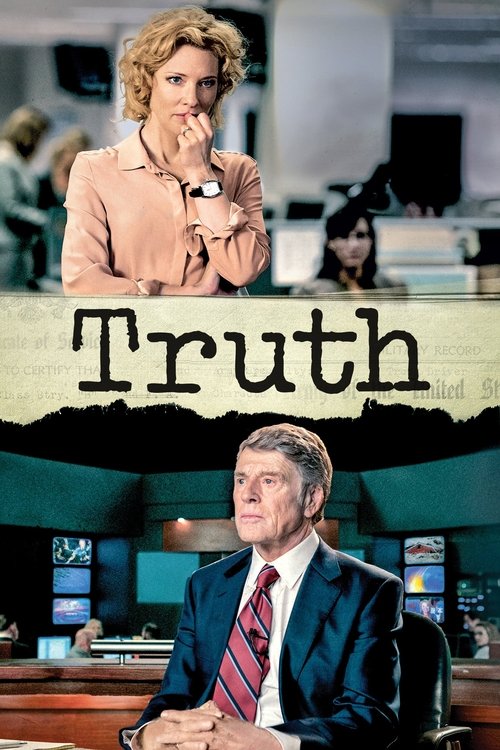
As the film approaches its conclusion, the tension escalates following the broadcast of the controversial report on "60 Minutes." The scene opens with Dan Rather, portrayed by Robert Redford, sitting in a dimly lit office, reflecting on the gravity of the situation. The atmosphere is thick with anxiety as he and Mary Mapes, played by Cate Blanchett, prepare for the inevitable backlash. They are acutely aware that their careers and reputations are on the line.
The narrative shifts to the aftermath of the report's airing. The newsroom is abuzz with criticism, and the pressure mounts as various media outlets begin to question the validity of their sources. Mary, visibly shaken, tries to defend their work, but the mounting evidence against them begins to take its toll. The emotional weight of the situation is palpable; Mary's determination to stand by the truth clashes with the reality of the corporate media landscape, which prioritizes reputation over integrity.
In a pivotal scene, Rather and Mapes are called to a meeting with CBS executives. The tension in the room is suffocating as they face a panel of stern-faced executives who are more concerned about the network's image than the truth of the story. Rather, with a mix of defiance and resignation, argues for the importance of their findings, but the executives are unmoved. The scene captures the stark contrast between journalistic ideals and corporate interests, emphasizing the sacrifices made in the pursuit of truth.
As the fallout continues, Rather is ultimately forced to resign from CBS News. The scene is heavy with emotion as he delivers his farewell, reflecting on the principles of journalism and the importance of holding power accountable. His resignation marks a significant turning point, symbolizing the loss of integrity within the media landscape. The camera lingers on his face, revealing a mix of sadness and resolve as he steps away from the network that had been his home for decades.
Meanwhile, Mary Mapes faces her own reckoning. The final scenes depict her grappling with the consequences of the scandal. She is seen in her home, surrounded by the remnants of her once-promising career, feeling the weight of the public scrutiny and personal attacks. The emotional turmoil is evident as she reflects on her commitment to the truth, even as it has cost her dearly. The film closes with a sense of ambiguity regarding her future, leaving the audience to ponder the sacrifices made in the name of journalism.
In summary, the ending of "Truth" encapsulates the struggles of Dan Rather and Mary Mapes as they confront the repercussions of their investigation. Rather resigns, symbolizing the loss of journalistic integrity, while Mapes is left to navigate the fallout, embodying the personal cost of pursuing the truth in a world increasingly hostile to it.
Is there a post-credit scene?
The movie "Truth," produced in 2015, does not have a post-credit scene. The film concludes with a focus on the aftermath of the controversial report regarding George W. Bush's military service, leaving viewers with a sense of the ongoing impact of journalistic integrity and the personal toll it takes on those involved. The narrative wraps up without any additional scenes or content after the credits, emphasizing the serious themes explored throughout the film.
What role does Dan Rather play in the film Truth?
Dan Rather, portrayed by Robert Redford, is a veteran journalist and the anchor of CBS Evening News. He is depicted as a determined and principled reporter who is deeply committed to uncovering the truth, even when faced with significant challenges and backlash from powerful figures.
How does Mary Mapes' character evolve throughout the film?
Mary Mapes, played by Cate Blanchett, begins as a confident and ambitious producer who believes in the integrity of her work. As the story unfolds, she faces intense scrutiny and personal attacks following the controversial report on President George W. Bush's military service, leading her to experience doubt, vulnerability, and a fierce resolve to defend her journalistic integrity.
What is the significance of the documents in the story?
The documents in the film are central to the controversy surrounding the report on Bush's military service. They are alleged to be forged, and their authenticity becomes a focal point of the investigation. The struggle over the documents symbolizes the broader conflict between journalistic integrity and political power.
How does the film portray the relationship between Mary Mapes and Dan Rather?
The relationship between Mary Mapes and Dan Rather is depicted as one of mutual respect and camaraderie. They share a deep commitment to journalism and support each other through the challenges they face. However, as the fallout from the report escalates, their bond is tested, revealing the pressures of their professional environment.
What challenges does the CBS news team face after the report is aired?
After the report is aired, the CBS news team faces a barrage of criticism from both the public and political figures. They encounter intense media scrutiny, internal investigations, and personal attacks, leading to a crisis of confidence within the team. The pressure mounts as they struggle to defend their work against accusations of bias and incompetence.
Is this family friendly?
The movie "Truth," produced in 2015, is not considered family-friendly due to its mature themes and content. Here are some potentially objectionable or upsetting aspects that may occur for children or sensitive viewers:
-
<strong>Strong Languagestrong>: The film contains frequent use of profanity, which may be inappropriate for younger audiences.
-
<strong>Depictions of Stressful Situationsstrong>: The narrative revolves around a controversial news story, leading to intense moments of conflict and pressure, which may be distressing.
-
<strong>Themes of Deception and Betrayalstrong>: The exploration of journalistic integrity and the consequences of misinformation can be heavy and complex, potentially unsettling for younger viewers.
-
<strong>Emotional Turmoilstrong>: Characters experience significant emotional distress, including anxiety and fear, particularly in the face of public scrutiny and personal attacks.
-
<strong>Real-Life Consequencesstrong>: The film addresses the fallout from a major news scandal, including the impact on personal relationships and careers, which may be difficult for some viewers to process.
Overall, the film's serious subject matter and adult themes make it more suitable for mature audiences.









