
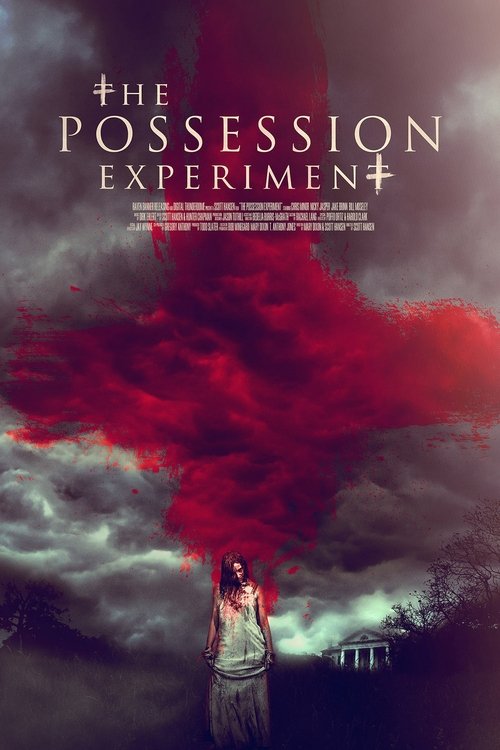





Popular
What motivates the main character, Adam, to conduct the possession experiment?
How does Adam's relationship with his friends change throughout the film?
What role does the character of Father Thomas play in the story?
What are the consequences of Adam's possession during the experiment?
How does the film depict the theme of skepticism versus belief in the supernatural?
Should I watch it?
Ask Your Own Question

What is the plot?
Sorry, we aren't able to watch and write up a full detailed plot yet. Check back in a few days.







What is the ending?
In the ending of "The Possession Experiment," the protagonist, Adam, confronts the demonic entity that has been tormenting him throughout the film. After a series of harrowing events, he ultimately sacrifices himself to save his friends, but the entity manages to escape, leaving a lingering threat.
As the film reaches its climax, Adam, who has been deeply affected by the possession and the events surrounding it, finds himself in a dark and foreboding setting. The atmosphere is thick with tension, and the air is heavy with the weight of his choices. He is determined to confront the demon that has wreaked havoc on his life and the lives of those around him.
In a dimly lit room, Adam gathers his friends, including his girlfriend, and they prepare for a final confrontation. The group is fraught with fear and uncertainty, each member grappling with their own emotional turmoil. Adam's internal struggle is palpable; he feels responsible for the chaos that has unfolded and is driven by a desperate need to protect his loved ones.
As they perform a ritual to expel the demon, the atmosphere shifts dramatically. The lights flicker, and an oppressive presence fills the room. The demon manifests, taking on a terrifying form that embodies Adam's deepest fears. The friends are paralyzed with fear, but Adam stands firm, fueled by a mix of courage and desperation.
In a moment of clarity, Adam realizes that the only way to truly defeat the demon is to confront it head-on. He makes the ultimate sacrifice, allowing the demon to possess him fully in a bid to save his friends. The struggle is intense, with Adam's body convulsing as the entity fights for control. His friends watch in horror, torn between their desire to help him and the fear of the demon's power.
As Adam succumbs to the possession, he manages to momentarily regain control, urging his friends to escape. In a heart-wrenching farewell, he tells them to run, knowing that he may not return. The friends flee the scene, leaving Adam to face the demon alone.
In the aftermath, the camera lingers on Adam's face, a mixture of anguish and determination etched into his features. The demon's laughter echoes in the background, suggesting that while Adam has sacrificed himself, the threat is far from over. The film closes with a chilling sense of unresolved danger, hinting that the demon has not been vanquished but has instead found a new host in Adam.
The fate of each main character is sealed in this final act. Adam, in his selfless act, becomes a tragic hero, consumed by the very darkness he sought to defeat. His friends, though they escape physically, are left emotionally scarred by the events they witnessed, forever changed by the horror of possession and loss. The film ends on a note of ambiguity, leaving the audience to ponder the true nature of evil and the sacrifices made in the face of it.
Is there a post-credit scene?
In "The Possession Experiment," there is indeed a post-credit scene that adds an eerie twist to the film's conclusion. After the credits roll, the scene opens in a dimly lit room, where a group of individuals is gathered around a table, engaged in a discussion about the events that transpired during the film. The atmosphere is tense, filled with a sense of foreboding.
As the camera pans, it reveals that they are examining footage from the possession experiment conducted by the main character, Adam. The footage shows unsettling moments of the experiment, highlighting the chaotic and terrifying experiences that Adam endured. The group appears to be analyzing the data, intrigued yet visibly shaken by what they see.
Suddenly, the lights flicker, and a chilling presence seems to envelop the room. One of the individuals at the table begins to exhibit signs of distress, their demeanor shifting as they become increasingly agitated. The scene culminates in a shocking moment when the possessed individual suddenly lunges at the camera, leaving the audience with a lingering sense of dread and the implication that the evil force may not be contained after all.
This post-credit scene serves to reinforce the film's themes of possession and the dangers of tampering with the unknown, leaving viewers with an unsettling feeling that the horror may continue beyond the film's narrative.
What motivates the main character, Adam, to conduct the possession experiment?
Adam, a college student studying psychology, is driven by a combination of curiosity and a desire for fame. He wants to prove that possession is a psychological phenomenon rather than a supernatural one, hoping that his experiment will gain him recognition and respect in his field.
How does Adam's relationship with his friends change throughout the film?
Initially, Adam's friends, including his roommate and fellow students, support his experiment, intrigued by the idea of exploring the supernatural. However, as the experiment progresses and the consequences become dire, their support wanes, leading to tension and fear among the group, ultimately fracturing their friendships.
What role does the character of Father Thomas play in the story?
Father Thomas serves as a mentor figure to Adam, providing insight into the nature of possession and the spiritual implications of his experiment. He warns Adam about the dangers of tampering with forces beyond human understanding, representing a voice of caution that Adam initially dismisses.
What are the consequences of Adam's possession during the experiment?
As Adam becomes increasingly possessed, he experiences violent outbursts, hallucinations, and a loss of control over his body and mind. This transformation not only endangers his life but also puts his friends at risk, leading to tragic events that escalate the horror of the situation.
How does the film depict the theme of skepticism versus belief in the supernatural?
The film illustrates this theme through Adam's initial skepticism about possession, which is challenged as he experiences the reality of the supernatural firsthand. His journey from disbelief to a terrifying encounter with true evil highlights the struggle between rational thought and the inexplicable nature of the supernatural.
Is this family friendly?
The Possession Experiment is not considered family-friendly due to its horror themes and graphic content. Here are some potentially objectionable or upsetting aspects that may affect children or sensitive viewers:
-
Supernatural Themes: The film revolves around demonic possession, which may be frightening for younger audiences or those sensitive to horror elements.
-
Graphic Violence: There are scenes that depict violence, including physical harm to characters, which can be disturbing.
-
Disturbing Imagery: The film includes unsettling visuals associated with possession and exorcism, which may evoke fear or anxiety.
-
Strong Language: The dialogue contains profanity and harsh language that may not be suitable for children.
-
Psychological Horror: The film explores themes of fear, madness, and the unknown, which can be psychologically intense and unsettling.
-
Emotional Distress: Characters experience significant emotional turmoil, including fear, despair, and trauma, which may be distressing for sensitive viewers.
Overall, the film's content is geared towards an adult audience and may not be appropriate for children or those who are easily upset by horror themes.








