


Popular
What role does the setting play in the development of the plot?
What is the significance of the character Dr. John D. McCarthy in the story?
How does the character of Agent Kelsey relate to the central theme of the film?
What is the relationship between Dr. McCarthy and the subjects of his research?
How does the character of the antagonist influence the story's conflict?
Should I watch it?
Ask Your Own Question

What is the plot?
Sorry, we aren't able to watch and write up a full detailed plot yet. Check back in a few days.






What is the ending?
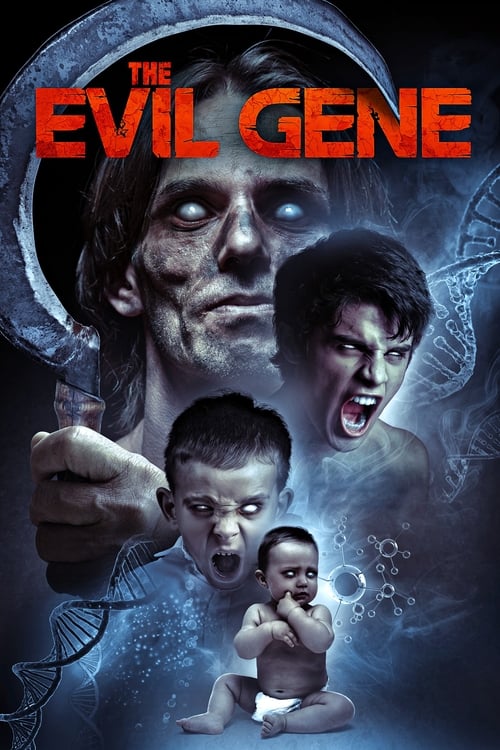
In the ending of "The Evil Gene," the protagonist, Agent K, confronts the truth about his own lineage and the dark legacy of violence that runs through his family. The film culminates in a tense showdown where K must face the consequences of his actions and the evil that has been passed down to him. Ultimately, he makes a choice that leads to a tragic resolution, leaving him to grapple with the implications of his heritage.
As the film approaches its climax, we find Agent K in a dimly lit room, the air thick with tension. He is surrounded by evidence of the horrific acts committed by his father, a notorious serial killer. The walls seem to close in on him as he grapples with the realization that he may share the same violent tendencies. The camera captures the flicker of doubt in his eyes, reflecting his internal struggle between the desire to break free from his family's dark legacy and the fear that he may be doomed to repeat it.
In a pivotal scene, K confronts his father, who has been revealed to be alive and orchestrating a series of murders. The confrontation is charged with emotion, as K's father taunts him, suggesting that the "evil gene" is an inescapable part of their bloodline. K's anger boils over, and he fights against the psychological manipulation of his father, desperate to assert his own identity apart from the monstrous legacy.
As the confrontation escalates, K is forced to make a choice. In a moment of clarity, he realizes that he must take a stand against the evil that has plagued his family. He decides to confront his father not just physically but morally, rejecting the notion that he is destined to follow in his footsteps. The struggle culminates in a violent clash, where K ultimately overpowers his father, but not without significant emotional turmoil.
In the aftermath, K stands over his father's lifeless body, the weight of his actions crashing down on him. The camera lingers on K's face, capturing the mix of relief and horror as he grapples with the reality of what he has done. He has broken the cycle of violence, but at a great personal cost. The film closes with K walking away from the scene, a solitary figure against the backdrop of a darkened world, symbolizing both his victory and the haunting legacy he must now carry.
The fate of the main characters is sealed in this final act. K, while having defeated his father, is left to confront the emotional scars of his lineage. His journey has transformed him, but the question of whether he can truly escape the "evil gene" remains. The film leaves viewers with a sense of ambiguity about K's future, suggesting that while he has taken a significant step towards redemption, the battle against his inherited darkness is far from over.
Is there a post-credit scene?
In "The Evil Gene," there is no post-credit scene. The film concludes without any additional scenes or content after the credits roll. The story wraps up with the resolution of the main plot, focusing on the psychological and supernatural elements that have been explored throughout the film. The ending leaves viewers with a sense of closure regarding the characters and the central conflict, without any further revelations or cliffhangers.
What role does the setting play in the development of the plot?
The setting of 'The Evil Gene' is integral to the film's atmosphere and narrative progression. Much of the story unfolds in a secluded research facility, which creates a claustrophobic environment that heightens the tension and sense of isolation among the characters. This setting serves as a microcosm for the exploration of evil, as the characters are cut off from the outside world, forcing them to confront their darkest impulses. The stark, clinical surroundings contrast with the emotional turmoil experienced by the characters, amplifying the psychological horror elements of the plot.
What is the significance of the character Dr. John D. McCarthy in the story?
Dr. John D. McCarthy is a pivotal character in 'The Evil Gene.' He is a psychologist who specializes in the study of violent behavior and the genetic predisposition to evil. His internal conflict revolves around his fascination with the darker aspects of human nature, which drives him to explore the boundaries of morality and ethics in his research. As he delves deeper into the minds of his subjects, he grapples with his own moral compass, leading to a complex portrayal of a man torn between scientific curiosity and the potential consequences of his findings.
How does the character of Agent Kelsey relate to the central theme of the film?
Agent Kelsey is a key figure in 'The Evil Gene,' serving as a federal agent investigating a series of violent crimes linked to a genetic anomaly. Her character embodies the struggle between duty and personal ethics, as she becomes increasingly entangled in the implications of the research conducted by Dr. McCarthy. Kelsey's determination to uncover the truth about the genetic predisposition to violence reflects her internal battle with the fear of what such knowledge could mean for humanity, making her a crucial lens through which the film explores its themes.
What is the relationship between Dr. McCarthy and the subjects of his research?
Dr. McCarthy's relationship with the subjects of his research is complex and fraught with ethical dilemmas. He views them as both subjects of scientific inquiry and individuals with their own stories and struggles. As he interacts with them, he becomes increasingly invested in their lives, leading to a moral conflict as he must balance his scientific ambitions with the humanity of those he studies. This dynamic raises questions about the nature of evil and whether it can be understood or controlled, ultimately influencing his decisions and the trajectory of the plot.
How does the character of the antagonist influence the story's conflict?
The antagonist in 'The Evil Gene' plays a crucial role in driving the story's conflict. This character embodies the manifestation of the genetic predisposition to violence that Dr. McCarthy is studying. Their actions serve as a catalyst for the investigation led by Agent Kelsey and create a sense of urgency as the characters race against time to prevent further violence. The antagonist's motivations and background are intricately tied to the central themes of the film, challenging the protagonists to confront not only the external threat but also the internal struggles related to the nature of evil.
Is this family friendly?
"The Evil Gene," produced in 2016, is not considered family-friendly due to its themes and content. The film contains several potentially objectionable or upsetting elements, including:
-
Violence: There are scenes depicting physical confrontations and aggressive behavior, which may be disturbing for younger viewers.
-
Psychological Themes: The film explores dark psychological concepts, including the nature of evil and mental illness, which could be unsettling for sensitive audiences.
-
Mature Language: The dialogue includes strong language that may not be appropriate for children.
-
Murder and Death: The plot involves murder and the implications of violent acts, which can be distressing.
-
Intense Emotional Scenes: Characters experience significant emotional turmoil, including fear, anger, and despair, which may be intense for some viewers.
Overall, the film's exploration of dark themes and its portrayal of violence make it more suitable for mature audiences.







