


Popular
What challenges does the character of Jack face in his relationship with his father?
How does the character of Laura cope with her feelings of isolation after her son is born?
What role does the character of Grace play in the family dynamics?
How does the character of the grandfather influence the family's perception of success?
What pivotal moment leads to Jack's realization about his own identity?
Should I watch it?
Ask Your Own Question

What is the plot?
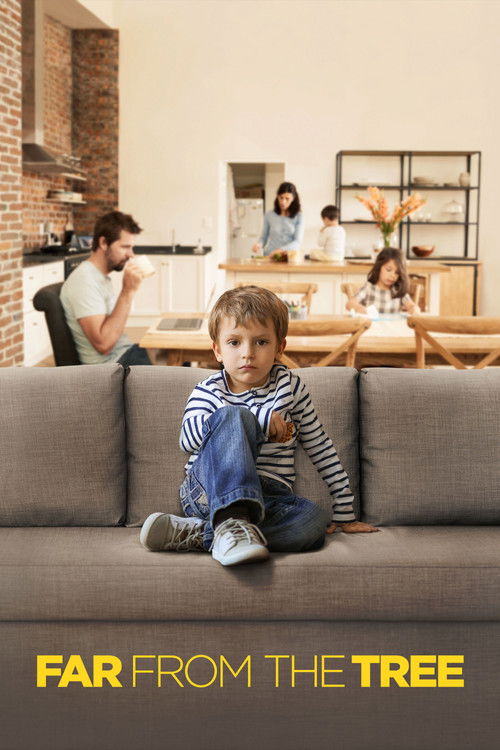
The film Far From the Tree (2018) is a documentary, not a fictional thriller, so there is no single linear plot with deaths, villain reveals, or a conventional ending. Instead, it moves from family to family, using Andrew Solomon's own story as a frame to examine how parents confront children who are profoundly different from them. The film's central emotional arc is not about who dies, but about how families absorb disappointment, fear, love, and acceptance.
It opens with Andrew Solomon speaking about himself and the devastation his parents felt when he came out as gay, immediately establishing the documentary's theme of parental expectation colliding with a child's identity. From there, the film broadens into a series of intimate portraits of families dealing with Down syndrome, autism, dwarfism, and criminal violence, each story showing a different version of the same painful question: what happens when the child you have is not the child you imagined?
The first major family story centers on Jason Kingsley, a man in his forties with Down syndrome. Through interviews and archival material, the film shows that Jason was once presented almost as a public success story, a "poster boy" for what a child with Down syndrome could achieve, but adulthood brings a harsher reality, and his parents are forced to reckon with the limits that never disappear simply because love exists. The documentary lingers on the tension between pride and grief: Jason has his own personality, his own desires, and his own emotional life, but his parents must also accept that independence is partial and fragile.
The tone then shifts to Jack, a teenager with autism, whose family spends years searching for explanations and treatment. The film emphasizes the frustration of uncertainty: Jack's parents endure testing, therapies, and long stretches of fear before finding an intervention that finally helps unlock his intelligence. This portion of the documentary is especially tender because it does not present autism as a mystery to be "solved" so much as a relationship to be understood. The emotional center is the parents' wish to do everything right and their dread that they may have somehow failed him, a fear voiced directly in the film when Jack's mother wonders whether she did something during pregnancy to cause his condition.
From there the documentary turns to Loini, a young woman with dwarfism. Her story is more quietly observational than dramatic, but it is no less revealing. She describes how her size shapes nearly every practical aspect of life, including mobility and independence, and one of her frustrations is not being able to drive because her family cannot afford a specially equipped car. The film gives her dignity and specificity rather than treating dwarfism as a medical abstraction. Her situation is shown as a constant negotiation with a world built for other bodies, and that negotiation becomes both physical and emotional.
The film then expands to Leah and Joe, a married couple with dwarfism who want to have a child. Their storyline shifts the question from child-rearing to parenthood itself: what does it mean to create a family when your own bodies will shape that family's future in ways that are both intimate and unpredictable? Their determination is portrayed as hopeful but not naïve. The documentary follows their efforts with a mixture of warmth and realism, showing that even an act of joy can carry the pressure of fear, inheritance, and the unknown.
The most devastating section concerns Trevor, the teenage boy who, in 2010 at age 16, murders an 8-year-old boy and is later serving a life sentence in prison. This is the film's darkest rupture, because it introduces a family who appears conventional, loving, and ordinary, yet is shattered by an act that no amount of hindsight can make fully intelligible. Trevor's parents undergo a battery of tests and investigations, hoping for a neurological or psychological explanation that will turn horror into something legible. None arrives. The father's stunned conclusion--"He was just broken" --captures the documentary's refusal to offer easy closure.
What follows is one of the film's most unsettling emotional arcs: Trevor's parents must continue loving a son who has committed an unforgivable act while also mourning the child they thought they knew. The documentary does not treat this as a puzzle with a satisfying answer. Instead, it presents the family's grief as unfinished and morally unbearable. Trevor's imprisonment is the clearest form of consequence in the film, but even that does not resolve the emotional damage. The murder is the only death clearly described in the available plot material, and it is caused by Trevor, who kills the 8-year-old boy by slitting his throat, as summarized in the source material.
The documentary's structure links all these stories through Andrew Solomon's recurring idea that families are often defined by the distance between expectation and reality. The film does not build toward a single revelation in the way a narrative feature does; instead, each family's portrait acts as another layer of the same central argument. In one story, difference is identity; in another, it is disability; in another, it is a crime so severe it destroys any illusion of parental control.
Visually, the film moves between interviews, home footage, archival images, and observational scenes, using these materials to make each family feel lived-in rather than symbolic. Emotionally, it keeps returning to the same human pattern: parents begin with an image of the child they hoped for, then are forced to meet the child they actually have. That collision produces embarrassment, love, shame, devotion, and exhaustion in different measures, depending on the family.
The documentary's larger conclusion is not a dramatic twist but an ethical shift. It asks viewers to move away from the language of normality and toward the harder language of understanding. By the time the film reaches its end, the audience has moved through stories of coming out, developmental disability, physical difference, family aspiration, and catastrophic violence, and the unifying emotional truth is that parenthood is not mastery but endurance.
If you meant the fiction film Far From the Apple Tree (2019) rather than the documentary Far From the Tree, I can write the full spoiler narrative for that title instead.
More Movies Like This
Browse All Movies →






What is the ending?
In the ending of "Far from the Tree," the characters come to terms with their identities and relationships. The film culminates in a poignant reunion where the family members confront their pasts and embrace their differences. The story closes on a hopeful note, emphasizing acceptance and love.
As the final act unfolds, we find ourselves in a quiet, intimate setting where the family gathers for a heartfelt conversation. The atmosphere is thick with unspoken emotions, and each character is visibly affected by the weight of their shared history. The camera captures the subtle shifts in their expressions, revealing a mix of apprehension and hope.
The first scene shows the family members seated around a table, the tension palpable. The parents, struggling with their own feelings of guilt and regret, initiate the conversation. They express their desire to understand their children better, acknowledging the pain caused by their past actions. The lighting is soft, casting a warm glow that contrasts with the heaviness of the moment, symbolizing the potential for healing.
Next, we see the children, each grappling with their own identities and the impact of their upbringing. The eldest child, who has faced significant challenges, speaks candidly about the struggles of feeling different and the longing for acceptance. The camera zooms in on their face, capturing the vulnerability and strength in their words. This moment is crucial as it lays bare the emotional scars that have shaped their lives.
As the conversation progresses, the family members begin to share their experiences and feelings more openly. The dialogue flows, revealing layers of misunderstanding and love. The parents listen intently, their expressions shifting from defensiveness to empathy. This scene is marked by close-ups of their hands, fidgeting nervously, a visual representation of their internal conflict and desire to connect.
In a pivotal moment, one of the children stands up, their voice trembling but resolute. They declare their need for acceptance, not just from their parents but from themselves. This declaration serves as a turning point, prompting the others to reflect on their own journeys. The camera captures the reactions of the family, a mix of surprise and realization dawning on their faces.
The final scene transitions to a more hopeful setting, perhaps a park or a family gathering, where the family is seen engaging in light-hearted activities. Laughter fills the air, and the camera pans across their faces, now relaxed and joyful. This visual shift signifies the transformation that has taken place. The characters are no longer defined solely by their struggles but by their resilience and the bonds they have forged.
As the credits roll, we see brief glimpses of each character moving forward in their lives. The parents are shown attending support groups, actively seeking to understand and support their children better. The children are depicted pursuing their passions, embracing their identities with newfound confidence. The film closes with a sense of unity and hope, leaving the audience with the message that love and acceptance can bridge even the widest divides.
Is there a post-credit scene?
In the movie "Far from the Tree," there is no post-credit scene. The film concludes its narrative without any additional scenes after the credits roll. The story wraps up with a focus on the emotional journeys of the characters, particularly the themes of acceptance and familial love, leaving the audience with a sense of closure regarding the characters' arcs.
What challenges does the character of Jack face in his relationship with his father?
Jack struggles with the expectations placed upon him by his father, who has a traditional view of masculinity and success. Jack's desire to pursue a different path, one that embraces his artistic side, creates tension between them. This conflict is exacerbated by Jack's feelings of inadequacy and the pressure to conform to his father's ideals.
How does the character of Laura cope with her feelings of isolation after her son is born?
Laura experiences profound loneliness and a sense of disconnection from her family after the birth of her son, who has special needs. She grapples with her emotions, feeling overwhelmed by the responsibilities of motherhood and the societal expectations that come with it. Her journey involves seeking support and understanding, ultimately leading her to find strength in her vulnerability.
What role does the character of Grace play in the family dynamics?
Grace serves as a bridge between her father and brother, often trying to mediate their conflicts. She embodies empathy and understanding, recognizing the struggles both Jack and their father face. Grace's character highlights the importance of communication and connection within the family, as she navigates her own feelings of being caught in the middle.
How does the character of the grandfather influence the family's perception of success?
The grandfather represents traditional values and a rigid definition of success, which heavily influences the father's expectations for Jack. His presence looms over the family, creating pressure for Jack to achieve what the grandfather considers worthy. This generational conflict adds depth to the family's struggles, as they confront differing ideals about identity and fulfillment.
What pivotal moment leads to Jack's realization about his own identity?
A pivotal moment occurs when Jack confronts his father during a heated argument, where he expresses his frustrations about living up to expectations. This confrontation forces Jack to reflect on his own desires and identity, leading to a breakthrough where he begins to embrace his true self, separate from his father's vision of success.
Is this family friendly?
"Far from the Tree," produced in 2019, is a documentary that explores the experiences of families with children who have disabilities, particularly focusing on the themes of acceptance, love, and the challenges of parenting. While the film is generally family-friendly and aims to foster understanding and empathy, there are some potentially objectionable or upsetting aspects that may affect children or sensitive viewers:
-
Emotional Struggles: The film features families grappling with the emotional weight of raising children with disabilities. This includes moments of sadness, frustration, and vulnerability that may be intense for younger viewers.
-
Parental Conflict: There are scenes that depict tension and conflict between parents as they navigate their differing perspectives on raising their children, which may be difficult for some viewers to watch.
-
Personal Stories of Struggle: The documentary includes personal narratives that highlight the challenges faced by both the children and their families, including societal stigma and personal hardships, which could be upsetting.
-
Health Issues: Some families discuss medical challenges and the realities of living with disabilities, which may include discussions of health crises or emotional distress.
-
Societal Reactions: The film addresses how society often reacts to disabilities, including moments of discrimination or misunderstanding, which could be distressing for sensitive viewers.
Overall, while "Far from the Tree" is a heartfelt exploration of family dynamics and acceptance, it does contain themes and scenes that may require parental guidance for younger audiences.








