






Popular
How does the setting impact the characters' development in the film?
What is Mateo's main conflict throughout the film?
How does Mateo's relationship with his father influence his decisions?
What role does the character of Ana play in Mateo's journey?
What pivotal moment leads Mateo to make a significant change in his life?
Should I watch it?
Ask Your Own Question

What is the plot?
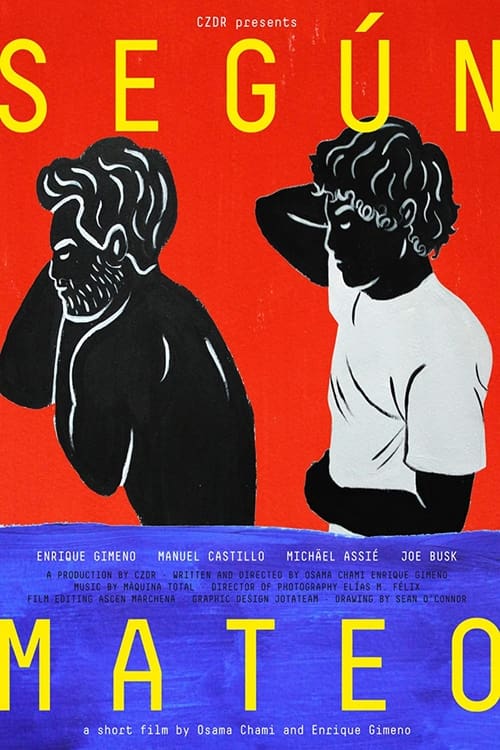
Mateo and Marc come home after a night out with Luke, a stranger they have just met, and the apartment immediately feels too small for the heat and friction they have brought back with them. The night has the slippery, charged quality of an encounter that started as fun and is already curdling into something uneasy: drinks, flirtation, drugs, and the quiet suspense of what each person really wants from the others. Mateo, Marc, and Luke are still half-drifting in the afterglow of the evening when the film opens on their flat, but the mood sharpens fast, and what seems like a casual late-night get-together turns into a pressure cooker.
Inside Mateo and Marc's home, the surface-level intimacy of the trio starts to crack. Mateo becomes restless and aggressive, his behavior difficult to read at first, as if he is trying to force sensation into his body by escalating the tension in the room. Marc is still positioned as his boyfriend, but the two are not in sync; their connection is strained, and the argument between them grows from awkwardness into a real rupture. Luke, who has arrived as a night-out novelty, becomes part witness and part catalyst, an outsider whose presence makes the couple's instability impossible to ignore. The scene is intimate in the worst way, with the emotional claustrophobia of people who can no longer pretend they are enjoying themselves.
The fight between Mateo and Marc is the first major break in the film. Mateo's aggression pushes Marc away, and the argument lands not as a simple lovers' quarrel but as a sign that Mateo is already detached from the ordinary rules of feeling. Something in him is missing, though neither of them can fully name it yet. Instead of letting the night settle or cool, Mateo chooses to leave the flat. That decision shifts the story from domestic conflict into something darker and more dangerous, because once Mateo steps outside, the film stops being about a relationship problem and becomes about a mystery hidden in his own body.
Out on the street, in the darkness just outside the flat, Mateo encounters Jon, the drug dealer they have called. Jon is not just a random contact; he arrives with the charged familiarity of someone summoned into the night for pleasure, relief, or distraction. The meeting immediately changes the shape of the story. Mateo is no longer reacting only to Marc or to the tension inside the apartment. Now he is face to face with a man who represents risk, chemistry, and the possibility of crossing a line. The air of the street scene is colder and less forgiving than the apartment, and that contrast matters: what began as a private emotional collapse is now moving into a physical one.
Jon and Mateo do not simply exchange words and part ways. Mateo convinces Jon to take him to Jon's house, and that choice is the hinge of the film. The persuasion is crucial because it shows Mateo actively steering himself toward the place where the truth will finally emerge. Jon's home is not introduced as a safe refuge; it feels like an extension of the night's danger, a private interior where the boundaries between desire, pain, and self-destruction can collapse. The film's momentum tightens here. Mateo is no longer drifting; he is pursuing something, even if he does not yet understand what it is.
When Mateo gets inside Jon's house, the atmosphere becomes more intimate and more disturbing at once. The encounter turns from a casual drug-fueled detour into a revelation that redefines everything that has come before. Mateo discovers that he cannot feel anything unless it is through pain. That truth is the center of the film, and it lands like a secret finally dragged into the open. His aggression earlier in the flat is suddenly recontextualized: he has not just been acting out or picking fights. He is chasing sensation in the only way available to him. Pain is not only punishment for Mateo; it is the one doorway through which the world reaches him.
The revelation is devastating because it explains Mateo's behavior while also making it lonelier. He is not simply reckless; he is numb. He cannot access ordinary pleasure, warmth, or connection in the usual way, so he is drawn toward intensity, toward injury, toward anything that can break through the deadness. The film does not frame this as a neat diagnosis or a tidy confession. Instead, it lets the discovery settle over him like a terrible clarity. The emotional power of the scene comes from the realization that Mateo's body has been keeping a secret from him, and that secret has been shaping his choices all night.
Marc is left behind in the orbit of that revelation, and the earlier argument now feels like the first visible symptom of a deeper truth. The film's tension comes from the way it links intimacy to damage without softening either one. Mateo's inability to feel except through pain turns the preceding scenes into a tragic setup: every look, every argument, every moment of impulsive heat is part of his attempt to force himself into being present. Jon, by taking Mateo to his house, unwittingly becomes the conduit for that discovery. He is less a savior or villain than the person who opens the final door.
The story's emotional climax is the moment Mateo understands himself. There is no indication of a death, no final violent payoff in the available plot information, and no indication that anyone is killed. The film instead resolves itself around the recognition that Mateo's relationship to sensation is fundamentally broken. That recognition is its own kind of ending, because once Mateo knows that pain is the only thing he can feel, nothing about the night can remain innocent or ordinary. The discovery gives the earlier argument and the street encounter an entirely new meaning, turning a messy evening into a portrait of a man trying to touch the world through injury.
The final movement of the film stays close to that revelation rather than sprawling outward into a bigger event. Mateo's story closes on the unsettling truth that his body is not responding as expected, and that what he has been calling tension, aggression, or restlessness is actually a desperate search for sensation. The night that begins with Mateo and Marc returning home after a night out with Luke ends with Mateo facing a private horror inside Jon's house: he can feel only through pain. That is the film's complete emotional resolution, and it leaves the viewer with a stark, uncomfortable understanding of Mateo's loneliness, the fragility of his relationship with Marc, and the brutal cost of needing pain just to feel alive.







What is the ending?
In the ending of "According to Mateo," Mateo confronts his feelings and the consequences of his actions, leading to a resolution with the people in his life. He ultimately chooses to embrace honesty and vulnerability, which allows him to reconnect with those he cares about.
As the film approaches its conclusion, we find Mateo in a moment of deep reflection. He stands alone in his apartment, surrounded by remnants of his past relationships and the choices he has made. The weight of his decisions hangs heavily on him, and he grapples with the emotional turmoil that has built up throughout the story.
In the next scene, Mateo meets with his best friend, who has been a constant source of support. They sit in a small café, the atmosphere filled with the soft murmur of conversations and the clinking of cups. Mateo's friend encourages him to be honest about his feelings, pushing him to confront the truth of his relationships. This conversation serves as a catalyst for Mateo, igniting a spark of determination within him.
The following scene shifts to Mateo's encounter with his love interest, who has been hurt by his indecisiveness and lack of communication. They meet in a park, where the vibrant colors of autumn leaves contrast with the heaviness of their conversation. Mateo takes a deep breath, his heart racing as he finally opens up about his fears and insecurities. He admits to his mistakes, expressing genuine remorse for the pain he has caused. His vulnerability is palpable, and the tension between them begins to dissolve as she listens intently.
As they talk, the camera captures the subtle shifts in their expressions--hope flickers in her eyes as she realizes that Mateo is ready to change. The scene is filled with emotional weight, as both characters navigate the complexities of love, trust, and forgiveness. Mateo's honesty paves the way for a potential reconciliation, and they share a tentative yet hopeful embrace, symbolizing a new beginning.
In the final moments of the film, Mateo stands on a rooftop, overlooking the city as the sun sets. The sky is painted with hues of orange and pink, mirroring the transformation he has undergone. He reflects on the journey he has taken, the mistakes he has made, and the relationships he has fought to mend. The camera zooms in on his face, capturing a sense of peace and acceptance. Mateo has chosen to embrace his true self, and in doing so, he has opened the door to a brighter future.
The film concludes with a sense of resolution for all main characters. Mateo's friend finds solace in knowing that he has supported Mateo through his struggles. The love interest, while still cautious, is willing to explore the possibility of rebuilding their relationship. Mateo's journey of self-discovery and emotional honesty serves as a powerful reminder of the importance of communication and vulnerability in relationships, leaving the audience with a sense of hope and renewal.
Is there a post-credit scene?
In the movie "According to Mateo," there is no post-credit scene. The film concludes its narrative without any additional scenes or content after the credits roll. The story wraps up with the main characters reflecting on their journeys and the choices they have made, leaving the audience with a sense of closure regarding their arcs. The absence of a post-credit scene emphasizes the film's focus on the emotional resolutions and the relationships that have been developed throughout the story.
How does the setting impact the characters' development in the film?
The setting, which juxtaposes urban life with traditional cultural elements, reflects the characters' internal struggles. The vibrant city life represents freedom and modernity, while the more conservative aspects of their environment highlight the conflicts they face in pursuing their true selves.
What is Mateo's main conflict throughout the film?
Mateo's main conflict revolves around his struggle to balance his personal desires with the expectations placed upon him by his family and society. He grapples with the pressure to conform to traditional values while yearning for authenticity in his relationships.
How does Mateo's relationship with his father influence his decisions?
Mateo's relationship with his father is strained, as his father embodies the traditional values that Mateo feels trapped by. This dynamic creates internal turmoil for Mateo, as he seeks approval while also wanting to break free from his father's expectations.
What role does the character of Ana play in Mateo's journey?
Ana serves as a catalyst for Mateo's self-discovery. Her free-spirited nature and willingness to challenge societal norms inspire Mateo to confront his own fears and desires, ultimately pushing him towards a more authentic life.
What pivotal moment leads Mateo to make a significant change in his life?
A pivotal moment occurs when Mateo witnesses a confrontation between his father and Ana, which forces him to reevaluate his priorities. This confrontation acts as a wake-up call, prompting Mateo to take decisive action towards living a life true to himself.
Is this family friendly?
"According to Mateo," produced in 2017, is a romantic comedy that explores themes of love, relationships, and personal growth. While it has a light-hearted tone, there are some elements that may be considered objectionable or upsetting for children or sensitive viewers.
-
Mature Themes: The film delves into adult relationships, including discussions about infidelity and emotional struggles, which may not be suitable for younger audiences.
-
Language: There are instances of strong language that may not be appropriate for children.
-
Romantic Situations: The film includes scenes that depict romantic encounters and relationships that may be too mature for younger viewers.
-
Emotional Conflict: Characters experience emotional turmoil, including heartbreak and personal crises, which could be distressing for sensitive viewers.
-
Family Dynamics: There are moments of tension and conflict within family relationships that may resonate with viewers who have experienced similar issues.
Overall, while the film is primarily a comedy, its exploration of adult themes and emotional depth may not make it entirely family-friendly.








