











Popular
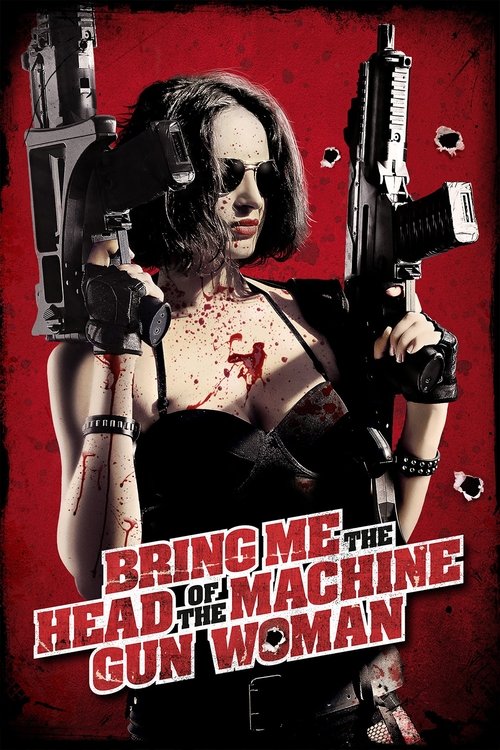
Who is the Machine Gun Woman and what motivates her actions throughout the film?
What role does the character of the 'Chilean' play in the story and how does he evolve?
How does the relationship between the Machine Gun Woman and the Chilean develop throughout the film?
What are the key obstacles the Machine Gun Woman faces in her quest for revenge?
What is the significance of the final confrontation in the film, and how does it reflect the characters' journeys?
Should I watch it?
Ask Your Own Question

What is the plot?
Sorry, we aren't able to watch and write up a full detailed plot yet. Check back in a few days.



What is the ending?
In the ending of "Bring Me the Head of the Machine Gun Woman," the protagonist, a hapless man named Chaco, finds himself in a climactic showdown with the titular character, the Machine Gun Woman. After a series of chaotic confrontations, the film concludes with a violent and dramatic resolution that leaves Chaco and the Machine Gun Woman facing their fates.
As the film reaches its climax, Chaco, who has been on a quest to find the Machine Gun Woman to fulfill a bounty, finally confronts her. The tension escalates as they engage in a fierce battle, showcasing their contrasting motivations and the chaos surrounding them. Ultimately, the confrontation leads to a tragic outcome, with both characters facing dire consequences for their actions throughout the film.
In the expanded narrative of the ending:
The scene opens in a dimly lit warehouse, the air thick with tension. Chaco, a man who has been driven by desperation and misguided ambition, stands at one end, his heart racing as he prepares for the final confrontation. He has been through a whirlwind of events, driven by the promise of wealth and recognition, but now he is faced with the reality of his choices.
Across the room, the Machine Gun Woman, a fierce and formidable figure, stands ready, her weapon gleaming under the sparse light. She embodies strength and defiance, having fought her way through a world that has sought to control her. The stakes are high, and both characters are aware that this encounter will determine their fates.
As they engage in a brutal exchange of gunfire, the sound of bullets ricocheting off the walls fills the air, punctuated by the grunts and shouts of their struggle. Chaco, fueled by a mix of fear and determination, realizes that he is outmatched. The Machine Gun Woman, with her unparalleled skill, moves with precision and agility, showcasing her prowess as a fighter.
In a moment of desperation, Chaco attempts to reason with her, revealing his own vulnerabilities and the misguided motivations that led him to this point. He speaks of his dreams and the allure of the bounty, but the Machine Gun Woman, hardened by her experiences, remains resolute. She sees through his facade, recognizing that he is just another pawn in a game far larger than himself.
The battle intensifies, and as the dust settles, both characters find themselves wounded and exhausted. In a final, heart-wrenching moment, they come face to face, each reflecting on their choices and the paths that brought them here. The Machine Gun Woman, embodying the spirit of rebellion, makes a choice that seals her fate. In a tragic twist, she sacrifices herself, taking down Chaco in the process, leaving him to grapple with the consequences of his actions.
As the scene fades, the warehouse is left in silence, a stark contrast to the chaos that just unfolded. Chaco, now alone, is left to confront the emptiness of his ambition and the loss of the Machine Gun Woman, a figure who represented both danger and freedom. The film closes on a haunting note, emphasizing the futility of their conflict and the tragic outcomes of their intertwined destinies.
In the end, Chaco is left to ponder the cost of his quest, while the Machine Gun Woman's legacy lingers, a reminder of the fierce spirit that fought against oppression. Their fates serve as a poignant commentary on ambition, sacrifice, and the harsh realities of a world filled with violence and betrayal.
Is there a post-credit scene?
In "Bring Me the Head of the Machine Gun Woman," there is indeed a post-credit scene that adds a humorous twist to the film's conclusion. After the credits roll, viewers are treated to a brief moment featuring the character of the Machine Gun Woman herself. She is seen in a playful and exaggerated manner, showcasing her over-the-top persona. This scene serves to reinforce her larger-than-life character and provides a light-hearted cap to the film's intense and action-packed narrative. It emphasizes the film's blend of action and comedy, leaving the audience with a memorable and entertaining final impression.
Who is the Machine Gun Woman and what motivates her actions throughout the film?
The Machine Gun Woman, played by Fernanda Urrejola, is a fierce and skilled assassin known for her deadly marksmanship and ruthless demeanor. Her motivations are deeply rooted in a desire for revenge against those who have wronged her, particularly after the death of her partner. This personal vendetta drives her to take on dangerous missions, showcasing her resilience and determination.
What role does the character of the 'Chilean' play in the story and how does he evolve?
The character known as the 'Chilean,' portrayed by Matías Oviedo, is a hapless and somewhat cowardly man who becomes embroiled in the chaos surrounding the Machine Gun Woman. Initially motivated by a desire to impress her and gain notoriety, he evolves from a timid figure into someone who must confront his fears and take a stand, ultimately becoming more courageous as he navigates the violent world around him.
How does the relationship between the Machine Gun Woman and the Chilean develop throughout the film?
The relationship between the Machine Gun Woman and the Chilean is complex and evolves from one of initial attraction and admiration to a deeper bond forged through shared experiences of violence and survival. As they face various threats together, the Chilean's admiration for her skills grows, while the Machine Gun Woman begins to see him as more than just a pawn in her quest for revenge, leading to moments of vulnerability and connection.
What are the key obstacles the Machine Gun Woman faces in her quest for revenge?
Throughout her quest for revenge, the Machine Gun Woman faces numerous obstacles, including rival gangs, law enforcement, and her own emotional turmoil stemming from her past. Each confrontation tests her skills and resolve, forcing her to navigate a treacherous landscape filled with betrayal and violence, all while maintaining her focus on her ultimate goal.
What is the significance of the final confrontation in the film, and how does it reflect the characters' journeys?
The final confrontation in the film is a climactic showdown that encapsulates the characters' journeys and the culmination of their motivations. It serves as a moment of reckoning for both the Machine Gun Woman and the Chilean, forcing them to confront their pasts and the consequences of their choices. This intense battle not only highlights their growth but also underscores the themes of vengeance and redemption that permeate the narrative.
Is this family friendly?
"Bring Me the Head of the Machine Gun Woman" is not considered family-friendly due to its explicit content and themes. Here are some potentially objectionable or upsetting aspects:
-
Graphic Violence: The film features numerous scenes of intense violence, including gunfights and bloodshed, which may be disturbing for children or sensitive viewers.
-
Strong Language: There is frequent use of profanity throughout the film, which may not be suitable for younger audiences.
-
Adult Themes: The narrative includes themes of revenge, crime, and moral ambiguity, which may be complex and unsettling for children.
-
Sexual Content: There are instances of sexual innuendo and suggestive situations that may not be appropriate for a younger audience.
-
Dark Humor: The film employs a style of dark humor that may not resonate well with all viewers, particularly those who are sensitive to such content.
Overall, the film's tone and content are geared towards an adult audience, making it unsuitable for children or those who are easily upset by violence and mature themes.









