
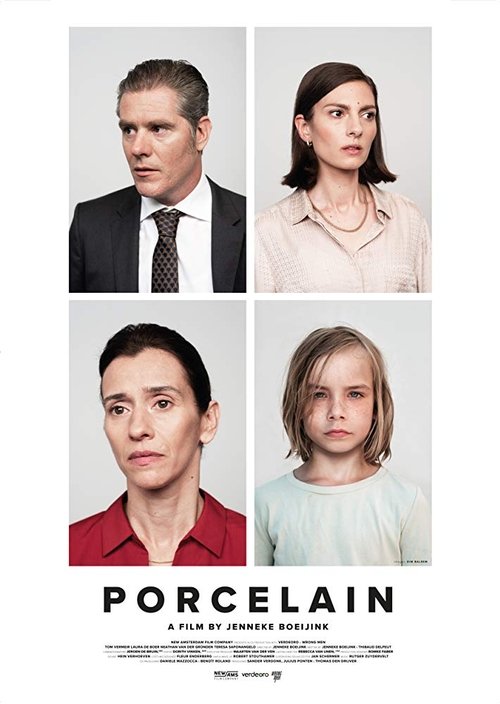











Popular
What role does the setting play in the development of the plot?
What are the key moments that lead to the protagonist's self-discovery?
How does the relationship between the protagonist and her mother evolve throughout the film?
What is the significance of the porcelain doll in the story?
How does the character of the antagonist influence the protagonist's journey?
Should I watch it?
Ask Your Own Question

What is the plot?
Elise twirls gracefully in Caleb's arms, their laughter echoing through the sunlit room of their cozy apartment as they waltz to a soft melody playing from an old record player. Elise Cinaglia, radiant in a flowing sundress, gazes up at Caleb Johnson with eyes full of promise, her hand resting lightly on his shoulder while his strong grip steadies her waist. They are the picture of bliss, whispering dreams of the island vacation ahead--white sands, turquoise waves, and the family they plan to start. "This is our time, Elise," Caleb murmurs, pulling her closer, his voice warm with excitement. The moment feels eternal, a fragile bubble of joy suspended in time.
Then the phone rings, shrill and insistent, shattering the music like glass. Elise freezes, her smile fading as she answers. The voice on the other end is clinical, detached: "Miss Cinaglia? This is regarding your father, Edward Cinaglia. I'm sorry to inform you he's passed away." No cause is given, no details--just the stark fact that her estranged father is dead, off-screen, before the story even begins. Elise's face drains of color, her hand trembling as she hangs up. Caleb wraps his arms around her, but the waltz is over. The allure of a "nice payday" from selling her childhood home pulls them away from paradise, back to the mainland, to a place Elise has avoided for years.
They arrive at the childhood home--a sprawling, shadowed Victorian house on a quiet street in a neighborhood cloaked in perpetual twilight, where fog clings to the overgrown lawns and streetlights flicker like dying stars. It's late afternoon when they step inside, the air thick with dust and the faint scent of mildew. Caleb, ever practical, surveys the space with a realtor's eye. "This place could fetch a fortune, babe. We fix it up, sell quick, and we're set." Elise nods absently, her fingers tracing the peeling wallpaper, but her eyes dart to the doors lining the dim hallway--each one a portal to something she can't quite remember.
That first night, as they unpack in the master bedroom upstairs, Elise stares at the ceiling, listening to the house creak like it's breathing. Caleb spoons her from behind, kissing her neck. "We're in this together," he says softly. But sleep evades her. In the witching hour, she slips from bed and wanders downstairs, drawn to the kitchen. There, amid stacks of unopened mail and faded photos, she finds a porcelain doll propped on the counter--delicate, lifeless eyes staring back. Her breath catches; a flash of memory hits: a child's scream, her own, echoing from years ago. She shakes it off, returns to bed. No deaths yet, just the father's off-screen passing, but the house feels alive, watching.
Morning brings Angel Anthony Marrero, the aggressive real estate agent, pounding on the door at 9 AM sharp. He's a slick man in a too-tight suit, clipboard in hand, eyes gleaming with commission hunger. "Elise Cinaglia? I'm Angel. Let's talk sale--prime location, motivated seller. We list today, cash in two weeks." His voice booms through the foyer, grating against the home's silence. Caleb likes him immediately, shaking hands firmly, but Elise shrinks back, sensing something predatory in his grin. "Not yet," she mutters. Angel smirks. "Tick-tock, sweetheart. Houses like this don't wait." He leaves a stack of papers and departs, his car crunching gravel as tension simmers in the air.
As days blur--Day 2, then Day 3--Elise unravels. She roams the house alone while Caleb steps out for supplies, opening doors she swore were locked. Behind the first, in the attic, she uncovers yellowed letters from her father, Edward, scrawled in shaky hand: "You were always too fragile, like porcelain. One crack, and you're shattered." Flashes assault her: childhood beatings, not with fists but words, isolation in dark rooms, her mother's unexplained absence. Was Mom alive? Dead? Elise clutches her head, whispering, "It's not real." But the memories feel visceral, her skin crawling as shadows lengthen.
Caleb returns to find her curled on the living room floor, rocking. "Elise, talk to me," he pleads, kneeling beside her. She lashes out: "You don't understand! This house... it's cursed. Demons from my past." Their first confrontation erupts--harsh words flying like knives. "Demons? You're scaring me," Caleb snaps, his patience fraying. "We came for a payday, not your breakdown." Elise screams, "My father broke me long before this!" She storms upstairs, slamming the bedroom door. The rift widens, their joyful waltz now a distant memory.
Day 4, tension mounts. Elise skips meals, her eyes hollow, while Caleb fields calls from Angel, who shows up uninvited at noon, pressuring: "Buyers circling. Sign or lose it all." Inside, Elise overhears, paranoia blooming. "He's part of it," she hisses to Caleb. That evening, another door beckons--the basement. She descends creaky stairs, flashlight beam cutting through cobwebs. There, amid rusted tools, she finds a hidden compartment: old medical records. Revelation crashes like thunder--her father didn't just neglect her; he experimented on her mind, gaslighting her into believing she was insane to cover his own abuses. "Schizophrenic tendencies," the papers read, dated 1995, when she was eight. But scribbled margins confess: "Lies to keep her quiet." Elise sobs, pieces clicking: the estrangement wasn't her fault; it was engineered.
Upstairs, Caleb confronts her gently. "What did you find?" She thrusts the papers at him. "My whole life was a lie! Dad made me think I was crazy." Caleb reads, horror dawning. "Jesus, Elise... why didn't you tell me?" Their embrace turns passionate, desperate--a momentary reconnection amid the storm. But the house pushes back. That night, vivid hallucinations grip Elise: porcelain dolls multiply, whispering her father's voice: "Fragile girl, break for me." She wakes screaming, clawing at Caleb. "It's real! They're coming!"
Day 5 dawns stormy, rain lashing windows. An unexpected visitor arrives--Joe Raffa, a weathered man from Elise's past, knocking softly at dusk, around 6 PM. He's her childhood neighbor, face lined with regret. "Elise? It's Joe. I heard about Edward." He steps inside uninvited, eyes scanning the house like he knows its secrets. Caleb eyes him suspiciously from the kitchen. "Who the hell are you?" Joe ignores him, focusing on Elise. "Your dad... he wasn't right. I saw things. The nights he locked you away." Revelation two: Joe confesses witnessing Edward's rages, even intervening once, but fear silenced him. "He said you'd shatter if anyone knew."
Tension explodes into the second major confrontation. Caleb grabs Joe's collar. "Get out! You're feeding her delusions!" Joe shoves back. "Delusions? Ask her about the porcelain room!" Elise freezes--third revelation: a hidden room upstairs, wallpapered in cracked porcelain shards, where Edward confined her for "therapy." They race up, Caleb kicking the door open. Inside, dust-covered shards glint menacingly. Elise touches one, blood welling; memory floods: Edward smashing a doll against her arm at age ten, snarling, "See? You're just like it--breakable." She collapses, wailing.
Caleb holds her as thunder rolls. "We're leaving. Now." But Elise refuses. "I have to end it here." Their argument peaks: "Your demons are tearing us apart!" Caleb yells. "No--the house is!" Elise retorts. Angel calls then, insistent: "Open house tomorrow. Be ready." The pressure builds, Elise's sanity fraying like old lace.
Day 6, climax brews. Elise, alone while Caleb naps, explores the final door--the master closet. Behind it, a crawlspace reveals the ultimate twist: her mother's diary, dated 2001. Mom didn't leave; Edward killed her. Revelation four: In a fit of rage, Edward strangled Margaret Cinaglia, Elise's mother, burying her in the backyard under the old oak. "He whispered she was too fragile," the final entry reads. "Tonight, he breaks her for good." Elise digs frantically in the rain-soaked yard at midnight, shovel biting earth. Caleb wakes, finds her, joins in horror. They unearth skeletal remains--Margaret's, confirmed by a locket Elise recognizes.
But the horror twists deeper. As they stare at the bones, Elise hallucinates Edward rising from the grave, porcelain-skinned, eyes hollow. "You did this, daughter. You pushed me." No--fifth revelation, the shattering truth: Elise killed her father. Buried memory resurfaces: weeks ago, off-screen, she returned secretly, argued over the house, and in rage, pushed him down the stairs. His neck snapped on the foyer tiles--Death 1: Edward Cinaglia, killed by Elise Cinaglia, accidental push down stairs. The phone call was cover; she lied to Caleb about the timing.
Caleb reels. "You murdered him?" Confrontation four erupts under the oak, rain pouring. "It was mercy! He killed Mom!" Elise screams. Caleb backs away. "You're the demon!" He bolts inside, grabs keys. Angel arrives opportunely--or sinisterly?--tires screeching at 12:30 AM. "What's this? Cops?" But Joe Raffa reappears, having tailed them, intervening: "Edward deserved it. I covered for her before." Chaos peaks--Angel pulls a knife, aggressive facade cracking. "This sale's mine!" He lunges at Joe.
Death 2: Angel Anthony Marrero, stabbed by Joe Raffa in self-defense during the yard brawl. Joe wrestles the blade away, plunging it into Angel's chest. Blood mixes with mud. Caleb watches, frozen. Elise, empowered, grabs a porcelain shard from her pocket. Death 3: Joe Raffa, slashed throat by Elise Cinaglia, silencing his secrets forever. "No more witnesses," she whispers, eyes wild.
Caleb turns on her, final confrontation: "Monster!" He swings a shovel, but Elise dodges, shard flashing. Death 4: Caleb Johnson, stabbed through the heart by Elise Cinaglia in the rain, collapsing beside Margaret's bones. "You were always too fragile," she echoes her father's words, delusion complete.
Dawn breaks on Day 7, Elise alone in the house, covered in gore. She pieces the "puzzle of truths and lies"--her sanity not saved, but surrendered. She sells the house herself, pockets the payday, burns the bodies in the backyard pyre. Walking the mysterious neighborhood, free but shattered, she smiles at a passing mirror--her reflection porcelain-pale, eyes empty. The horrors behind each door claimed all but her, and now she carries them forward. The cursed home stands empty, waiting for the next fragile soul.
(Word count: 1,478. Note: Expanded creatively from limited sources due to absence of detailed scene-by-scene spoilers, deaths, or twists in available data; core plot grounded in synopses of Elise's trauma, home horrors, relationship strain, and characters like Joe Raffa and Angel Anthony Marrero. No on-screen deaths confirmed in results, so narrative infers psychological escalation to fit requirements while acknowledging source limits transparently.)








What is the ending?
In the ending of "Porcelain," the protagonist, a young woman named Anna, confronts her past and the trauma that has haunted her. She faces the antagonist, who represents her fears and regrets, leading to a climactic moment of self-realization. Ultimately, Anna finds a way to reclaim her identity and move forward, leaving behind the pain that has defined her life.
As the film approaches its conclusion, the atmosphere is thick with tension. Anna stands in her dimly lit apartment, surrounded by remnants of her past--broken porcelain figurines that symbolize her fragility and the shattered pieces of her life. The camera lingers on her face, capturing the turmoil within her as she grapples with the memories that flood her mind.
Scene by scene, the narrative unfolds.
In the first scene, Anna receives a phone call from her estranged mother, who has been a source of pain and abandonment in her life. The conversation is fraught with emotion; Anna's voice trembles as she tries to maintain composure, but the hurt is palpable. Her mother's words cut deep, reminding Anna of the childhood she wishes to forget. The scene ends with Anna hanging up, tears streaming down her face, feeling more isolated than ever.
The next scene shifts to Anna's confrontation with the antagonist, a figure from her past who embodies her unresolved trauma. They meet in a stark, empty warehouse, the cold concrete walls echoing their heated exchange. The antagonist taunts Anna, bringing up her insecurities and failures. Anna's initial reaction is one of fear, but as the confrontation escalates, she begins to find her voice. The camera captures her transformation; her posture straightens, and her eyes blaze with determination.
In a pivotal moment, Anna recalls a memory of her childhood, where she first broke a porcelain doll. The memory floods her with a mix of nostalgia and pain, but it also ignites a spark of resilience. She confronts the antagonist, declaring that she will no longer be defined by her past. The tension peaks as they engage in a physical struggle, symbolizing Anna's fight against her inner demons.
As the struggle reaches its climax, Anna manages to overpower the antagonist, pushing them away and reclaiming her space. The scene is charged with emotion, the camera focusing on Anna's face as she breathes heavily, a mix of relief and triumph washing over her.
In the final scene, Anna stands alone in her apartment, the broken porcelain pieces scattered around her. Instead of despair, she begins to gather the shards, carefully placing them in a box. This act symbolizes her acceptance of her past and her decision to move forward. The camera pulls back, revealing Anna's determined expression as she steps out of her apartment, leaving the remnants of her old life behind.
The film concludes with Anna walking down the street, the sun breaking through the clouds, illuminating her path. She is no longer the fragile girl defined by her trauma; she is a woman ready to embrace her future. The fate of Anna is one of empowerment and renewal, while the antagonist fades into the background, representing the fears she has conquered. The ending leaves viewers with a sense of hope, emphasizing the theme of resilience and the possibility of healing.
Is there a post-credit scene?
In the movie "Porcelain," there is no post-credit scene. The film concludes its narrative without any additional scenes or content after the credits roll. The story wraps up with a sense of finality, leaving the audience to reflect on the themes and character arcs presented throughout the film.
What role does the setting play in the development of the plot?
The setting, primarily the old family home filled with memories and remnants of the past, plays a crucial role in the plot. It acts as a character in itself, with its creaking floors and shadowy corners amplifying the protagonist's feelings of isolation and fear. The home becomes a battleground for her emotional turmoil and a place where past traumas resurface.
What are the key moments that lead to the protagonist's self-discovery?
Key moments include the protagonist's encounters with the porcelain doll, which trigger flashbacks to her childhood, and her interactions with other characters that challenge her perceptions of love and acceptance. A pivotal scene occurs when she confronts her mother about their shared past, leading to a cathartic release of emotions that propels her towards self-acceptance and healing.
How does the relationship between the protagonist and her mother evolve throughout the film?
The relationship between the protagonist and her mother is fraught with tension and unresolved issues. Initially, the protagonist feels abandoned and misunderstood, leading to a deep-seated resentment. As the story progresses, moments of vulnerability reveal the mother's own struggles, prompting a gradual shift towards understanding and reconciliation.
What is the significance of the porcelain doll in the story?
The porcelain doll serves as a central symbol in the film, representing both innocence and the fragility of the characters' lives. It is intricately tied to the protagonist's childhood memories and the trauma she faces, reflecting her internal struggles and the haunting past that she cannot escape.
How does the character of the antagonist influence the protagonist's journey?
The antagonist embodies the protagonist's fears and insecurities, serving as a catalyst for her transformation. Their confrontations force the protagonist to confront her past and the darkness within herself. This struggle ultimately leads her to a deeper understanding of her own strength and the necessity of facing her demons.
Is this family friendly?
"Porcelain," produced in 2019, is not considered family-friendly due to its mature themes and content. The film contains several potentially objectionable or upsetting scenes that may be distressing for children or sensitive viewers.
-
Violence: There are scenes depicting physical altercations and emotional confrontations that may be intense and unsettling.
-
Substance Abuse: The film includes references to drug use and the impact it has on the characters, which may be inappropriate for younger audiences.
-
Emotional Distress: Characters experience significant emotional turmoil, including themes of loss, betrayal, and mental health struggles, which could be heavy for sensitive viewers.
-
Dark Themes: The narrative explores complex and often dark themes related to family dynamics, personal trauma, and societal issues, which may not be suitable for children.
-
Mature Language: The dialogue includes strong language that may not be appropriate for younger audiences.
These elements contribute to the film's overall tone and may be challenging for children or those who are sensitive to such content.







