
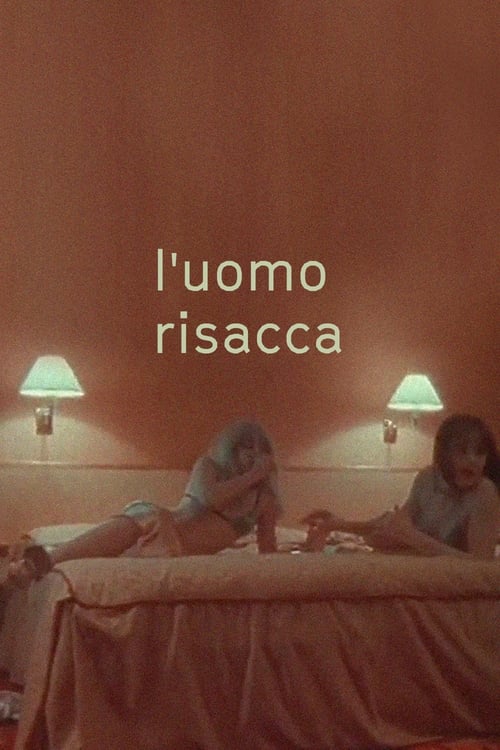





Popular
What motivates the main character, Marco, throughout the film?
How does the relationship between Marco and his father evolve in the film?
What role does the seaside setting play in the story?
How does Marco's relationship with the woman he meets impact his character development?
What are the key events that lead to Marco's moment of self-realization?
Should I watch it?
Ask Your Own Question

What is the plot?
Sorry, we aren't able to watch and write up a full detailed plot yet. Check back in a few days.



What is the ending?
In the ending of "L'uomo risacca," the protagonist, a man named Marco, confronts the consequences of his choices and the impact they have had on his life and relationships. He ultimately finds a sense of closure and acceptance, leading to a bittersweet resolution.
As the film draws to a close, Marco stands on the beach, reflecting on his past and the tumultuous events that have unfolded. He has faced the reality of his actions, particularly how they have affected his family and friends. The emotional weight of his decisions hangs heavily on him, but he begins to understand the importance of moving forward.
In a poignant moment, Marco reconciles with his estranged father, acknowledging their complicated relationship and the pain that has lingered between them. This encounter serves as a turning point for Marco, allowing him to let go of some of the burdens he has carried.
The film concludes with Marco walking away from the beach, symbolizing his journey towards healing and acceptance. He is not entirely free from his past, but he has taken the first steps towards a new beginning.
Now, let's delve into the ending in a more detailed, chronological narrative.
As the final act unfolds, the sun begins to set over the horizon, casting a warm golden light across the beach where Marco stands. The waves crash gently against the shore, mirroring the turmoil within him. He gazes out at the sea, lost in thought, as memories flood back--moments of joy, pain, and regret. The camera captures the subtle changes in his expression, revealing the internal struggle he faces.
In a flashback, we see Marco's strained relationship with his father, filled with unspoken words and unresolved conflicts. The tension between them has been a recurring theme throughout the film, and it weighs heavily on Marco's heart. He recalls the arguments, the silence, and the distance that has grown over the years. This moment of reflection is crucial, as it highlights the emotional stakes of his journey.
Returning to the present, Marco takes a deep breath and turns away from the ocean, making his way towards a small beachside café where he knows his father often visits. The atmosphere is tense as he approaches, his heart racing with anticipation and fear. He enters the café, and the familiar scent of coffee and pastries fills the air, but it does little to calm his nerves.
Inside, he spots his father sitting alone at a table, staring out the window. The older man looks weary, his face etched with lines of age and regret. Marco hesitates for a moment, but the weight of his decision propels him forward. He approaches the table, and their eyes meet--an unspoken acknowledgment of the years lost between them.
"Dad," Marco begins, his voice trembling slightly. The word feels heavy, laden with years of distance. His father looks up, surprise flickering across his features. There's a long pause, filled with the tension of unexpressed emotions. Marco continues, "I think we need to talk."
The conversation that follows is raw and emotional. They confront their past, the misunderstandings, and the pain that has kept them apart. Marco expresses his feelings of abandonment and confusion, while his father reveals his own struggles and regrets. The dialogue is punctuated by moments of silence, where the weight of their shared history hangs in the air.
As they talk, the camera captures the subtle shifts in their expressions--anger, sadness, and finally, a glimmer of understanding. Marco's father reaches out, placing a hand on his son's arm, a gesture of reconciliation. Marco's eyes well up with tears as he feels the warmth of his father's touch, a sign that perhaps they can begin to heal.
The scene shifts back to the beach, where Marco stands once more, this time with a sense of clarity. The sun is now dipping below the horizon, painting the sky in hues of orange and pink. He takes a moment to breathe in the salty air, feeling a sense of release. The waves continue to crash, but they no longer feel like a reminder of his turmoil; instead, they symbolize the ebb and flow of life.
As Marco walks away from the beach, the camera follows him, capturing his silhouette against the vibrant sky. He is not entirely free from his past, but he has taken significant steps towards acceptance. The film closes with a lingering shot of the ocean, a reminder of the journey ahead and the possibility of new beginnings.
In the final moments, we see Marco's father watching him from a distance, a look of hope on his face. The film leaves the audience with a sense of bittersweet resolution, emphasizing the themes of reconciliation, the complexity of familial relationships, and the importance of moving forward despite the scars of the past. Each character has faced their own demons, and while the journey is far from over, there is a sense of possibility for healing and connection.
Is there a post-credit scene?
The movie "L'uomo risacca," produced in 2000, does not feature a post-credit scene. The film concludes its narrative without any additional scenes or content after the credits roll. The story wraps up with a focus on the main characters and their emotional journeys, leaving the audience with a sense of closure regarding the plot and character arcs.
What motivates the main character, Marco, throughout the film?
Marco is driven by a deep sense of loss and a desire for redemption. His internal struggle is highlighted by his memories of a past relationship and the emotional scars that linger from it. As he navigates his life, he grapples with feelings of isolation and the need to reconnect with his own identity.
How does the relationship between Marco and his father evolve in the film?
The relationship between Marco and his father is strained and complex. Initially, there is a palpable tension, as Marco feels misunderstood and judged by his father. As the story progresses, moments of vulnerability and shared experiences begin to bridge the gap, revealing a deeper bond that is rooted in shared pain and the longing for acceptance.
What role does the seaside setting play in the story?
The seaside setting serves as a powerful backdrop that reflects Marco's emotional state. The ebb and flow of the tides symbolize his internal struggles, while the beauty and harshness of the landscape mirror his journey of self-discovery. The ocean becomes a character in itself, representing both freedom and entrapment.
How does Marco's relationship with the woman he meets impact his character development?
The woman Marco meets represents a chance for healing and connection. Initially, he is guarded and hesitant to open up, but as their relationship develops, she challenges him to confront his past and embrace vulnerability. This relationship acts as a catalyst for Marco's growth, pushing him towards acceptance and a renewed sense of hope.
What are the key events that lead to Marco's moment of self-realization?
Key events leading to Marco's self-realization include a series of confrontations with his father, moments of introspection by the sea, and pivotal interactions with the woman he meets. Each encounter forces him to confront his fears and regrets, culminating in a powerful scene where he finally acknowledges his pain and takes steps towards healing.
Is this family friendly?
"L'uomo risacca," produced in 2000, is a film that explores complex themes and emotional struggles, which may not be suitable for younger audiences or sensitive viewers.
-
Themes of Loss and Grief: The film delves into the emotional turmoil of the characters dealing with loss, which may be heavy and difficult for children to understand.
-
Depictions of Isolation: Characters experience feelings of loneliness and isolation, which could be upsetting for sensitive viewers.
-
Mature Relationships: There are elements of adult relationships that may include tension and conflict, which might not be appropriate for younger audiences.
-
Emotional Turmoil: The characters undergo significant emotional challenges, including despair and existential questioning, which could be distressing.
-
Subtle Violence: While not graphic, there are moments of tension that may imply violence or conflict, which could be unsettling.
Overall, the film's exploration of deep emotional and psychological themes may not be suitable for children or those who are sensitive to such content.







