































Popular
What is the significance of Barley Scott-Blair's profession as a publisher in the story?
How does Barley's relationship with Katya evolve throughout the film?
What role does the manuscript play in the development of the plot?
What are the motivations behind the character of the Russian scientist, who provides the manuscript?
How does the setting of post-Cold War Russia influence the characters' actions and decisions?
Should I watch it?
Ask Your Own Question

What is the plot?
Sorry, we aren't able to watch and write up a full detailed plot yet. Check back in a few days.





What is the ending?
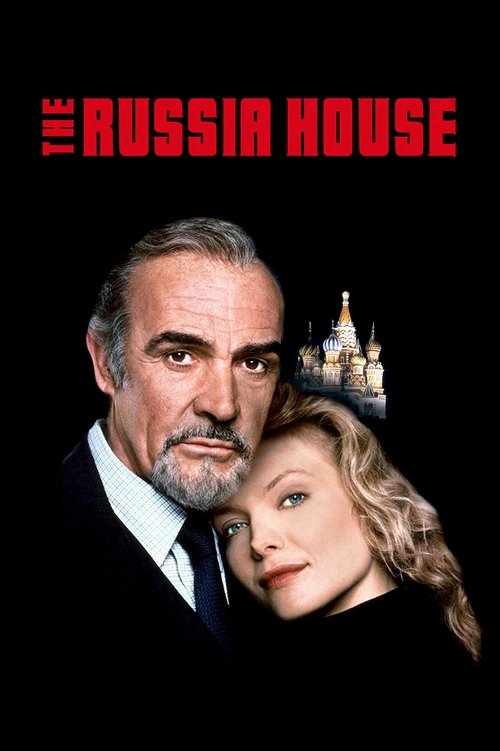
In the ending of "The Russia House," Barley Scott-Blair, played by Sean Connery, ultimately decides to stay in Russia with Katya, portrayed by Michelle Pfeiffer. He rejects the opportunity to return to the West and the life he once knew, choosing instead to embrace a new beginning with Katya, despite the uncertainties that lie ahead.
As the film draws to a close, Barley is seen in a train station, where he is approached by Katya. They share a moment of connection, hinting at their deepening relationship. The film ends on a note of hope and ambiguity, suggesting that Barley has found a sense of purpose and belonging in Russia, away from the political machinations of the West.
Now, let's delve into the ending in a more detailed, chronological narrative.
The final act of "The Russia House" unfolds with Barley Scott-Blair grappling with the weight of his choices. After a series of intense encounters and revelations, he finds himself at a train station, a place that symbolizes both departure and arrival. The atmosphere is thick with tension, as Barley reflects on the tumultuous journey that has led him here. He has been caught in a web of espionage, love, and betrayal, and now stands at a crossroads.
As he waits, the camera captures his internal struggle. Barley is a man torn between the safety of his life in the West and the allure of a new life with Katya, the enigmatic Russian woman who has captured his heart. The station is bustling with people, yet he feels isolated, lost in thought. The sounds of the train announcements echo around him, a reminder of the choices he must make.
Suddenly, Katya appears, her presence illuminating the dimly lit station. She approaches him with a mixture of urgency and vulnerability. Their eyes meet, and in that moment, the weight of their shared experiences hangs heavily in the air. Barley can see the fear and hope in her expression, reflecting the stakes of their situation. She has risked everything to be with him, and he knows that their love is fraught with danger.
As they converse, the dialogue is charged with emotion. Katya expresses her desire to leave Russia, to escape the oppressive political climate that threatens their future. Barley listens intently, his heart torn. He understands the risks involved, yet he is also acutely aware of the connection they share. The chemistry between them is palpable, underscoring the depth of their bond.
In a pivotal moment, Barley makes a decision. He chooses to stay in Russia, rejecting the notion of returning to the West. This choice is not made lightly; it is a culmination of his journey, a realization that his life in the West feels hollow compared to the authenticity he has found with Katya. The camera captures the moment as he takes her hand, a gesture of solidarity and commitment.
As they walk together through the station, the world around them fades into the background. The bustling crowd, the trains arriving and departing, all become secondary to their connection. They step into the unknown, hand in hand, symbolizing their shared resolve to face whatever challenges lie ahead.
The film concludes with a sense of ambiguity, leaving the audience to ponder the future of Barley and Katya. Their fate is uncertain, but the final image of them together conveys a message of hope and resilience. Barley has chosen love over safety, a testament to the transformative power of human connection amidst the chaos of political intrigue.
In summary, Barley Scott-Blair embraces a new life in Russia with Katya, rejecting the comforts of the West. Their journey together signifies a profound shift in Barley's character, as he finds purpose and belonging in a world fraught with uncertainty. The ending encapsulates the film's exploration of love, loyalty, and the complexities of human relationships against a backdrop of geopolitical tension.
Is there a post-credit scene?
The movie "The Russia House," produced in 1990, does not have a post-credit scene. The film concludes with its final moments, leaving the audience with a sense of resolution regarding the characters and their journeys. The story wraps up without any additional scenes or content after the credits roll.
What is the significance of Barley Scott-Blair's profession as a publisher in the story?
Barley Scott-Blair, played by Sean Connery, is a British publisher who becomes embroiled in the world of espionage when he is approached to help with a manuscript that contains sensitive information about Soviet nuclear capabilities. His profession is significant as it highlights his initial naivety and the contrast between the literary world and the dangerous political landscape he is drawn into. Barley's love for literature and his desire for truth drive him to navigate the complexities of the Cold War, ultimately leading him to question his own values and the implications of the information he is handling.
How does Barley's relationship with Katya evolve throughout the film?
Barley's relationship with Katya, portrayed by Michelle Pfeiffer, evolves from a professional connection to a deep emotional bond. Initially, Barley is captivated by Katya's beauty and intelligence, but as they work together on the manuscript, he becomes increasingly aware of the risks she faces as a Soviet citizen involved in espionage. Their relationship is marked by tension and uncertainty, as Barley grapples with his feelings for her while also recognizing the dangers of their situation. Ultimately, their love is tested by the political realities surrounding them, leading to moments of both intimacy and heartbreak.
What role does the manuscript play in the development of the plot?
The manuscript serves as a crucial plot device that drives the narrative forward. It contains vital information about Soviet nuclear capabilities, which makes it a target for various intelligence agencies. As Barley becomes more involved with the manuscript, it symbolizes the intersection of literature and espionage, reflecting the themes of truth and deception. The manuscript's existence propels Barley into a world of intrigue, forcing him to confront moral dilemmas and the consequences of revealing sensitive information. Its fate ultimately influences the characters' decisions and the trajectory of the story.
What are the motivations behind the character of the Russian scientist, who provides the manuscript?
The Russian scientist, who provides the manuscript to Barley, is motivated by a desire to expose the truth about the Soviet Union's nuclear capabilities and to prevent potential disaster. He is portrayed as a man of integrity, willing to risk his life to ensure that the information reaches the West. His actions reflect a deep-seated belief in the importance of transparency and the need for accountability in government actions. This motivation adds a layer of complexity to the plot, as it highlights the personal sacrifices made by individuals in the pursuit of truth amidst a backdrop of political tension.
How does the setting of post-Cold War Russia influence the characters' actions and decisions?
The setting of post-Cold War Russia profoundly influences the characters' actions and decisions throughout the film. The atmosphere is charged with uncertainty and danger, as the collapse of the Soviet Union creates a volatile environment for both citizens and foreign agents. Barley, as a Western outsider, must navigate this landscape with caution, aware that his every move could have serious repercussions. The characters are often caught between their personal desires and the larger political implications of their actions, leading to moments of tension and conflict. The setting serves as a constant reminder of the stakes involved, shaping their motivations and the choices they make as they seek to balance love, loyalty, and the pursuit of truth.
Is this family friendly?
"The Russia House," produced in 1990, is a film that contains several elements that may not be suitable for children or sensitive viewers. Here are some potentially objectionable or upsetting aspects:
-
Violence and Threats: The film includes scenes of intimidation and threats, which may be unsettling for younger audiences. Characters face danger, and there are moments of tension that could be distressing.
-
Adult Themes: The narrative explores complex themes such as espionage, betrayal, and political intrigue, which may be difficult for children to understand and could be emotionally heavy for sensitive viewers.
-
Romantic Relationships: There are romantic elements that involve adult relationships, including moments of intimacy and emotional conflict that may not be appropriate for younger viewers.
-
Substance Use: The film depicts characters consuming alcohol, which may not be suitable for children and could be concerning for sensitive audiences.
-
Mature Language: There are instances of strong language and adult dialogue that may not be appropriate for younger viewers.
Overall, while the film is rich in narrative and character development, its themes and content may be more suitable for mature audiences.






