





Popular
Who is the main detective investigating the murders in Sher Mountain?
What motivates the character of Sarah, the local journalist?
How does the relationship between Detective Hargrove and Sarah evolve throughout the film?
What clues lead Detective Hargrove to suspect the involvement of the local lodge owner?
What role does the mountain setting play in the unfolding of the mystery?
Should I watch it?
Ask Your Own Question

What is the plot?
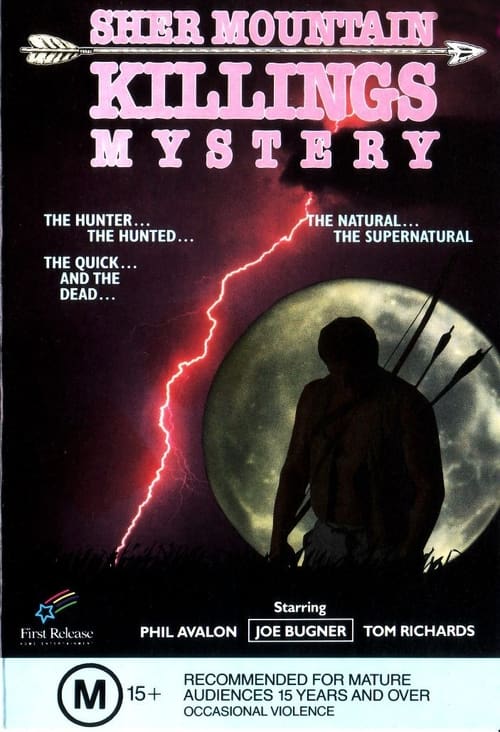
Sher Mountain Killings Mystery opens in a burst of greed and bad luck, as Davey Joe Cordeaux and Conrad break into the home of an ancient, almost mythic old man and steal a stone said to carry magic powers and the promise of eternal life. The theft is not just a crime but a curse beginning to wake, because the moment Davey Joe takes the gem for himself, the film makes clear that he has not stolen treasure so much as he has invited something ancient and hostile into the lives of everyone around him. He thinks the stone will bring him fortune and endless life, but instead it becomes the seed of suspicion, betrayal, and supernatural pursuit.
Davey Joe quickly proves himself as reckless as he is selfish. Rather than handing the stone over, he hides it under the bed of his mute brother, Caine Cordeaux, turning the family home into the first hiding place of the curse. That choice matters immediately, because the danger is no longer out in the world with the criminals; it is tucked into the ordinary intimacy of the Cordeaux household, under the sleeping space of a brother who cannot fully warn anyone about what has happened. Caine becomes the unwitting vessel of the story's central threat, while Davey Joe continues to act as though he can outsmart whatever he has set loose.
At the same time, Alex Cordeaux emerges as the apparent responsible brother, planning a camping trip and trying to keep life moving in some normal direction. Muriel Cordeaux, who acts as a caretaker within the family, is left to manage the domestic fallout, while Billy Cordeaux, younger and more vulnerable, is drawn into the story's widening circle of danger. The film also introduces Sole, the intermediary who expects to profit from the stone, and who, along with Conrad, represents the human side of the greed driving everything forward. Yet there is already another presence hovering over the story: "The Protector," a force tasked with recovering the stolen gem, suggesting from the outset that the stone is not merely valuable but watched over by something older and more judgmental than any of the thieves realize.
The plot starts tightening when Alex takes Caine along on a field trip to Sher Mountain, unaware that the stone is now in Caine's hands. The journey shifts the story from the cramped secrecy of the family home into the broader, more threatening landscape of Sher Mountain Wilderness Park and Forest, where the film's supernatural elements begin to feel physically present. Their path crosses the Sher Mountain Forest ranger, a strange, imposing figure whose pupils shine an eerie blue. He appears at first like an eccentric local authority, even promoting Caine to Junior Ranger, but the blue shine in his eyes marks him as something more than human. The ranger feels like a watchman standing between the natural world and the theft that has disturbed it, and his presence gives the mountain an atmosphere of quiet menace.
Meanwhile, the criminals come crashing back into the family's life. Conrad and Sole barge into Muriel and Davey Joe's apartment in the city, turning the domestic setting into a tense confrontation space. The apartment break-in confirms that the thieves are not just chasing the stone; they are unraveling under the pressure of their own greed. What should have been a clean transaction has become a frantic hunt, and every encounter feels more desperate than the last. Soon after, Sole and Conrad elude Muriel and drive toward Sher Mountain Wilderness Park with Billy in the back of the car, dragging the family deeper into the conflict and making Billy a pawn in the struggle.
The tension escalates brutally when Sole and Conrad apprehend the group and use Billy as a hostage. They force Alex to reveal where the cursed stone is hidden, and the threat is direct and ugly: give up the gem or Billy pays the price. Alex refuses to break under pressure in the way they expect. In one of the film's sharpest moments of resistance, he kicks Conrad in the balls, breaking the villains' control just long enough for him, Billy, and Caine to escape. The scene is chaotic, physical, and humiliating for the criminals, but it also shows how thin the line is between survival and disaster. The family's escape is not a triumph so much as a scramble through the dark, with the stone still driving everything behind them.
The stone itself is the true engine of the plot, and every revelation makes it seem more dangerous. It is repeatedly described as magical, cursed, and capable of granting eternal life, but the film gradually shows that immortality is not a gift here--it is a trap. Davey Joe's original theft already set the curse in motion, and by hiding the stone under Caine's bed, he has tied the family to a supernatural burden they never asked to carry. Caine, because of his vulnerabilities, becomes central to the mystery almost by accident, and the theft's consequences spread outward through the entire group. No one can simply walk away from the stone once it has been taken, because the curse insists on follow-through.
As the chase continues, Davey Joe goes on the run and even reaches the monorail in an attempt to escape. This moment gives the story a brief, almost breathless sense of motion, as if the stone might be outrun by enough distance and enough noise. But the film keeps reminding the viewer that the curse is not merely something you carry; it is something that tracks you. The landscape of Sher Mountain becomes a maze of danger, and the survivors' movements feel less like strategy than like being funneled toward a confrontation that has already been waiting for them.
The final act turns fully supernatural when Sole manages to reclaim the gemstone. For a moment, it seems as if the human conflict has resolved in the villains' favor, but that victory immediately triggers the judgment of the force guarding the stone. The Ranger returns to reclaim the gemstone, and the film's atmosphere changes from crime thriller to ghost story. The ranger figure is no longer just a strange local official with blue pupils; he is the stone's enforcer, the supernatural "Protector" made visible. The revelation lands with visual force, because the ordinary rules of pursuit and escape no longer apply.
Sole confronts the ranger with a rifle, firing at him in panic, but the shots miss as though the ranger is not fully bound by ordinary physical reality. The ranger takes back the bag and twists and contorts Sole's arm, overpowering him with a cold, almost ritual severity. Sole tries to run, but blue light streams down from the heavens and captures him. The image is stark and terrible: the sky itself seems to open judgment on him. Sole bursts into flames and dies, the curse claiming one of the men who tried to profit from it. His death is the film's clearest fatal consequence, and it completes the supernatural punishment that has been building since the stone was stolen.
With Sole gone, the blue light fades back into the sky, and the survivors gather at the ranger station. The station becomes the story's final place of reckoning, where human consequences replace the immediate violence of the chase. Alex tells Davey Joe that he is in trouble, and Davey Joe answers with a weary, almost resigned, "Thought I may be." The line lands like the last small admission of guilt from a man who has spent the entire film trying to outrun the result of his own selfishness. It is not a heroic confession, just a tired acknowledgment that the bill has come due.
The ending does not restore anyone to a clean slate. Muriel finally catches up to Billy, who is miserable enough to complain that he has not been able to pee for three hours, a detail that gives the aftermath an odd, physical honesty after all the supernatural spectacle. Life, the film suggests, continues in the body even after curses and flames. In another small but telling final beat, Alex walks in on Dianne as she rapidly returns to reality, implying she has been in some dazed or altered state and is only now rejoining the world after the ordeal. These closing moments are deliberately uneasy rather than triumphant. The stone has been taken back, the immediate danger is gone, and Sole is dead, but the family's damage remains visible in every exhausted face and awkward silence.
By the final scene, the main conflict is resolved in the sense that the cursed gemstone has been reclaimed by its guardian and one of the central criminals has been destroyed, but the story leaves behind a sense of contamination. Davey Joe survives, yet he ends the film not as a winner but as a man under judgment, standing at the ranger station with his trouble finally named. Alex, Muriel, Caine, Billy, and Dianne survive the ordeal, but they have all been dragged through fear, coercion, and the discovery that an ancient power has been moving around them all along. Sher Mountain Killings Mystery closes on that uneasy balance: the supernatural force has asserted control, the greed that began the theft has been punished, and the survivors are left to absorb the fact that some curses are less about immortality than about making sure no one who steals from them gets away clean.






What is the ending?
In the ending of "Sher Mountain Killings Mystery," the truth behind the murders is revealed, leading to a confrontation that resolves the central conflict. The main characters face their fates as the mystery unravels, culminating in a tense climax that brings closure to the story.
As the film approaches its conclusion, the atmosphere is thick with tension. The protagonist, a determined investigator, has pieced together the clues that have eluded him throughout the film. He gathers the remaining characters in a dimly lit cabin, the shadows dancing on the walls as the flickering light casts an ominous glow. The air is heavy with anticipation, and the investigator's heart races as he prepares to unveil the truth.
Scene by scene, the investigator recounts the events leading to the murders, his voice steady but laced with urgency. He reveals that the killings were not random acts of violence but were deeply rooted in a web of betrayal and revenge. The audience can see the reactions of the other characters--fear, disbelief, and a dawning realization of their own complicity in the events that transpired.
As the investigator lays out the final pieces of the puzzle, the tension escalates. One of the characters, a seemingly innocent bystander, is revealed to have a darker past, and the truth hits like a thunderclap. The emotional weight of the revelation is palpable; the character's facade crumbles, and the audience witnesses a transformation from innocence to guilt. The investigator confronts this character, and the confrontation is charged with raw emotion, as the weight of their actions comes crashing down.
In the climax, the murderer, cornered and desperate, attempts to flee. A chase ensues through the rugged terrain of Sher Mountain, the characters navigating treacherous paths and steep cliffs. The landscape mirrors the turmoil within, as the investigator's determination drives him forward, fueled by a mix of justice and personal stakes. The chase culminates at a cliff's edge, where the murderer, faced with nowhere to go, makes a fateful decision that seals their destiny.
In the aftermath, the remaining characters are left to grapple with the consequences of their actions. The investigator, though victorious in solving the mystery, is haunted by the lives lost and the darkness that lurked beneath the surface of their community. The emotional toll is evident on his face, a mixture of relief and sorrow as he reflects on the fragility of trust and the depths of human nature.
As the film closes, the camera pans out over the serene landscape of Sher Mountain, contrasting the chaos that unfolded. The fate of the main characters is sealed: the investigator walks away, burdened yet resolute, while the others are left to confront their own demons, forever changed by the events that transpired. The final shot lingers on the mountain, a silent witness to the tragedy, as the screen fades to black, leaving the audience to ponder the complexities of morality and the shadows that can lurk within even the most idyllic settings.
Is there a post-credit scene?
The movie "Sher Mountain Killings Mystery," produced in 1990, does not feature a post-credit scene. The film concludes its narrative without any additional scenes or content after the credits roll. The story wraps up with the resolution of the central mystery, leaving the audience with a sense of closure regarding the characters and their fates.
Who is the main detective investigating the murders in Sher Mountain?
The main detective investigating the murders in Sher Mountain is Detective John Hargrove, a seasoned investigator with a keen eye for detail and a strong sense of justice.
What motivates the character of Sarah, the local journalist?
Sarah, the local journalist, is motivated by her desire to uncover the truth behind the mysterious killings, driven by a personal connection to the victims and a deep-seated need to protect her community.
How does the relationship between Detective Hargrove and Sarah evolve throughout the film?
As the investigation progresses, the relationship between Detective Hargrove and Sarah evolves from a professional partnership to a deeper emotional bond, as they share their fears and frustrations while working together to solve the case.
What clues lead Detective Hargrove to suspect the involvement of the local lodge owner?
Detective Hargrove begins to suspect the local lodge owner after discovering inconsistencies in his alibi and finding evidence that links him to the victims, including a unique piece of jewelry that belonged to one of the deceased.
What role does the mountain setting play in the unfolding of the mystery?
The mountain setting plays a crucial role in the unfolding of the mystery, as its treacherous terrain and isolation create an atmosphere of suspense and danger, complicating the investigation and heightening the sense of urgency for the characters.
Is this family friendly?
"Sher Mountain Killings Mystery," produced in 1990, contains several elements that may not be suitable for children or sensitive viewers. Here are some potentially objectionable or upsetting aspects:
-
Violent Themes: The film revolves around a series of murders, which may include graphic descriptions or depictions of violence that could be disturbing.
-
Murder Investigation: The plot involves a police investigation into the killings, which may include tense and suspenseful scenes that could be frightening for younger audiences.
-
Emotional Turmoil: Characters experience significant emotional distress, including grief and fear, which may be intense for sensitive viewers.
-
Dark Atmosphere: The overall tone of the film is somber and mysterious, which might create an unsettling experience for children.
-
Mature Discussions: There may be conversations about death, loss, and the nature of evil that could be inappropriate for younger viewers.
These elements contribute to a narrative that is more suited for mature audiences, as it explores complex themes and emotions surrounding crime and its impact on individuals and communities.









