
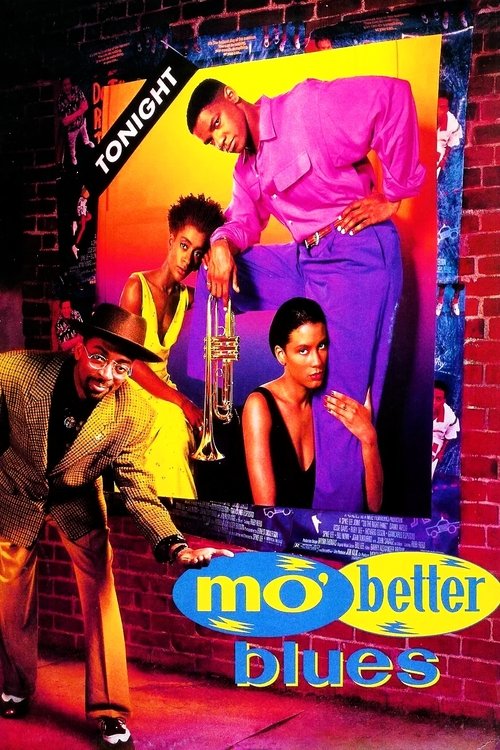























Popular
What is the significance of Bleek Gilliam's trumpet in the film?
How does Bleek's relationship with his bandmates evolve throughout the film?
What role does the character of Indigo play in Bleek's life?
How does the film portray the theme of loyalty among friends in the context of Bleek's relationships?
What is the impact of Bleek's choices on his romantic relationships with both Indigo and Clarke?
Should I watch it?
Ask Your Own Question

What is the plot?
Sorry, we aren't able to watch and write up a full detailed plot yet. Check back in a few days.






What is the ending?
In the ending of Mo' Better Blues, Bleek Gilliam, a talented jazz trumpeter, faces the consequences of his choices regarding his relationships and career. After a series of conflicts with his bandmates and romantic interests, Bleek ultimately realizes the importance of loyalty and love. The film concludes with Bleek reconciling with his band and his love interest, Indigo, as he embraces his passion for music and the people in his life.
As the film approaches its conclusion, we find Bleek Gilliam, portrayed by Denzel Washington, grappling with the fallout from his decisions. The tension between him and his bandmates, particularly the saxophonist Shadow Henderson, played by Wesley Snipes, has reached a boiling point. The band has been struggling, and Bleek's inability to balance his personal and professional life has led to a rift that threatens their future.
In a pivotal scene, Bleek is confronted by Shadow, who feels betrayed by Bleek's lack of commitment to the band. The two engage in a heated argument, revealing their deep-seated frustrations. Shadow accuses Bleek of being selfish, while Bleek defends his choices, insisting that he is trying to do what is best for everyone. This confrontation serves as a turning point for Bleek, forcing him to reflect on his priorities.
As the story unfolds, Bleek's romantic life becomes increasingly complicated. He is torn between two women: his long-time girlfriend, Indigo, played by Spike Lee's frequent collaborator, and a new love interest, a beautiful singer named Clarke. The emotional turmoil of his relationships weighs heavily on Bleek, and he struggles to find a balance between his love for music and his love for these women.
In the climax of the film, Bleek faces a personal crisis when he is injured in a violent altercation. This moment of vulnerability forces him to confront the reality of his life choices. As he recuperates, he begins to understand the value of the people around him, particularly Indigo, who has always been supportive despite his flaws.
The final scenes depict Bleek's journey toward redemption. He reconciles with Indigo, acknowledging her unwavering love and support. In a heartfelt moment, he expresses his commitment to her, realizing that his passion for music is intertwined with the relationships he has neglected. This emotional reunion signifies Bleek's growth as a character, as he learns to prioritize love and loyalty over his ego and ambition.
The film concludes with Bleek returning to the stage with his band, now united and stronger than before. The music swells, and the audience can feel the renewed energy and passion that Bleek brings to his performance. The final shot captures Bleek, fully immersed in his music, surrounded by his bandmates and Indigo, symbolizing his acceptance of both his artistic identity and his personal relationships.
In summary, the fates of the main characters are intertwined in this resolution. Bleek emerges as a more mature individual, having learned the importance of loyalty and love. Indigo stands by him, reaffirming her role as his partner. Shadow, despite their earlier conflict, finds a way to reconnect with Bleek, suggesting a hopeful future for the band. The film closes on a note of reconciliation and the enduring power of music, emphasizing that true fulfillment comes from both personal and professional harmony.
Is there a post-credit scene?
Mo' Better Blues, produced in 1990, does not have a post-credit scene. The film concludes with a powerful resolution to the story of Bleek Gilliam, a talented jazz trumpeter played by Denzel Washington, as he navigates the complexities of his career, relationships, and personal struggles. The film ends on a reflective note, focusing on Bleek's journey and the choices he has made, leaving the audience with a sense of closure rather than an additional scene after the credits.
What is the significance of Bleek Gilliam's trumpet in the film?
Bleek Gilliam's trumpet serves as a symbol of his passion and dedication to jazz music. It represents his identity as a musician and his struggle to balance his artistic integrity with the commercial demands of the music industry. Throughout the film, Bleek's relationship with his trumpet reflects his emotional state and the conflicts he faces in his personal and professional life.
How does Bleek's relationship with his bandmates evolve throughout the film?
Bleek's relationship with his bandmates, particularly with Shadow and Crooklyn, is complex and evolves as tensions rise due to personal and professional conflicts. Initially, they share a camaraderie rooted in their love for music, but as Bleek's ego and ambition grow, it leads to friction. Shadow's resentment over Bleek's leadership and Crooklyn's struggles with his own insecurities create a rift that ultimately affects their performances and the band's cohesion.
What role does the character of Indigo play in Bleek's life?
Indigo, played by Cynda Williams, is a significant figure in Bleek's life, representing both love and conflict. She is a talented singer who becomes romantically involved with Bleek, but their relationship is tumultuous. Indigo's desire for recognition and her own artistic aspirations often clash with Bleek's focus on his career, leading to emotional turmoil and jealousy that complicates their bond.
How does the film portray the theme of loyalty among friends in the context of Bleek's relationships?
The theme of loyalty is intricately woven into Bleek's relationships with his friends and bandmates. As Bleek becomes more successful, he faces challenges that test the loyalty of those around him. The film highlights moments of betrayal, such as when Shadow feels sidelined and Crooklyn's frustrations boil over, showcasing how ambition can strain friendships and lead to difficult choices that impact their loyalty to one another.
What is the impact of Bleek's choices on his romantic relationships with both Indigo and Clarke?
Bleek's choices significantly impact his romantic relationships with both Indigo and Clarke. His commitment to his music often takes precedence over his personal life, leading to misunderstandings and heartache. With Indigo, his neglect and focus on his career create a cycle of jealousy and conflict, while his relationship with Clarke, a more stable and supportive figure, is complicated by Bleek's inability to fully commit. These dynamics illustrate Bleek's internal struggle between love and ambition.
Is this family friendly?
"Mo' Better Blues," produced in 1990, is not considered family-friendly due to several elements that may be objectionable or upsetting for children or sensitive viewers.
-
Strong Language: The film contains frequent use of profanity, which may not be suitable for younger audiences.
-
Drug Use: There are scenes depicting drug use and the effects it has on individuals, which could be distressing or inappropriate for children.
-
Sexual Content: The film includes sexual situations and themes, including infidelity and complex romantic relationships, which may be uncomfortable for younger viewers.
-
Violence: There are moments of tension and conflict that can escalate to violence, reflecting the struggles of the characters in the music industry.
-
Emotional Turmoil: The characters experience significant emotional struggles, including jealousy, betrayal, and the pressures of ambition, which may be heavy themes for sensitive viewers.
These aspects contribute to the film's mature rating and suggest that it may not be suitable for a younger audience.






