




Popular
What motivates Shiratori Reiko to pursue her career in the entertainment industry?
How does Reiko's relationship with her family evolve throughout the film?
What challenges does Reiko face in her journey to stardom?
Who are the key supporting characters in Reiko's life, and how do they influence her journey?
What pivotal moments define Reiko's character development throughout the film?
Should I watch it?
Ask Your Own Question

What is the plot?
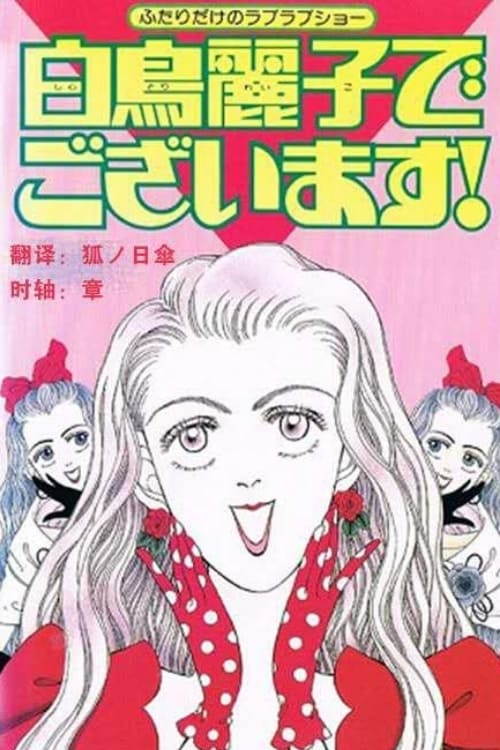
Reiko Shiratori begins as the kind of girl the story itself cannot resist teasing: rich, stunning, absurdly proud, and completely undone by the one thing she refuses to admit out loud, which is that she has been in love with Tetsuya Akimoto since their school days. The film opens on that contradiction and keeps returning to it as its emotional engine. Reiko's entire personality is built around control--she can command a room, dismiss people with a glance, and act as though affection is beneath her--but the moment Tetsuya is involved, her composure fractures. She wants him close, then pushes him away, then tries to pretend she never wanted him at all. That push and pull becomes the film's defining rhythm, and from the first scenes it is clear that Tetsuya, ordinary, sincere, and increasingly baffled, is the one person who can make her proud mask crack.
After high school, Reiko makes the most dramatic choice possible without ever admitting the truth: she follows Tetsuya to Tokyo and enrolls at the same university he attends. On the surface, she tries to frame it as coincidence, as though the two of them simply happened to end up in the same city by fate. In reality, every step she takes is driven by the same obsession. Tokyo becomes the stage where she can pursue him while still pretending she is not pursuing him, and that contradiction shapes every conversation between them. Reiko hovers near him, watches him, interferes in his life, and then withdraws the moment he seems to take her seriously. The result is both comic and painful, because Tetsuya keeps encountering a girl who clearly wants his attention but seems determined to deny him any straightforward path to understanding her.
Tetsuya, for his part, does not simply sit still and wait. Confused by Reiko's mixed signals, he begins to drift toward other women, and that development sharpens the romantic conflict. One of those women is Kyouko, a high-school friend of Reiko's. Her presence changes the emotional geometry of the story, because now Reiko has to watch not just the boy she loves but also a friend becoming entangled with him. The jealousy is immediate even when Reiko refuses to name it. She reacts with the same old pride, tightening her expression, making cutting remarks, and pretending her feelings are not wounded. But the more she tries to maintain control, the more obvious it becomes that she is losing it.
The situation grows even more tangled when Takada Haruo, a college classmate, enters the picture and asks Reiko to help him win Kyouko's affection. That request is almost cruel in its irony. Reiko is already struggling to hide her own feelings for Tetsuya, and now she is being pulled into a role that forces her to help another man pursue a rival. The triangle widens into a full romantic knot: Reiko wants Tetsuya, Tetsuya is pulled toward someone else because Reiko keeps rejecting him, Kyouko becomes a point of tension between them, and Takada Haruo adds another layer of complication by making Reiko an unwilling accomplice in someone else's courtship. Every conversation now carries an undercurrent of misdirection. People say one thing and mean another. Reiko smiles when she is hurt. Tetsuya grows more frustrated because he can sense her affection without ever being allowed to trust it.
One of the film's recurring pleasures is how it turns every emotional exchange into a minor battle of pride. Reiko often behaves as if she is above the very idea of pleading for love, but her actions betray her. She finds excuses to be near Tetsuya, she reacts sharply when Kyouko appears, and she keeps trying to preserve the fantasy that she is in control of the situation. Tetsuya, meanwhile, is forced into the role of the only person willing to say what everyone else is avoiding. His growing relationships with other women are not presented as deep romantic commitments so much as the natural consequence of Reiko's refusal to be honest. He is lonely, confused, and increasingly unwilling to keep participating in a game where the rules are written by her pride.
As the misunderstandings pile up, the emotional temperature rises. Reiko's act of pretending not to care becomes harder and harder to sustain. She can endure public embarrassment, but she cannot endure the quiet humiliation of seeing Tetsuya move on while she remains trapped in silence. The film turns that humiliation into a crisis. At last, the strain becomes too much for her, and she decides to go home and accept an arranged marriage. It is presented as a retreat, but it is also a last defensive maneuver: if she cannot be honest about her love, then she will bury it under duty, family expectation, and the outward dignity she has always used as armor. The choice is heartbreaking precisely because it is so in character. Reiko would rather surrender her own happiness than openly confess that she has wanted Tetsuya all along.
That decision becomes the story's decisive turning point only because Tetsuya refuses to let it stand unchallenged. He sees through the arrangement immediately. What looks like a responsible return to family duty is, to him, obviously a smokescreen. He understands that Reiko is running not toward marriage but away from her own feelings. At that point the emotional balance of the film changes. For the first time, Tetsuya is no longer merely reacting to her confusion; he is the one who names the truth she has been hiding from everyone, including herself. He confronts the situation directly and asserts his claim to her love. The significance of this moment is not just that he chooses her, but that he does so after reading her correctly. The film's central romance resolves not through a grand confession from Reiko, but through Tetsuya's certainty that her pride has always been covering real devotion.
The final movement lands as a release after all the tension. Reiko's elaborate evasions collapse because Tetsuya has finally refused to treat them as meaningful distance. Her efforts to replace love with obedience, or affection with ceremony, cannot survive that confrontation. The story closes on the emotional truth that has been present from the beginning: Reiko Shiratori has been in love with Tetsuya Akimoto all along, and no amount of pride, social performance, or arranged expectation can erase it. The ending does not need a tragic sacrifice or a dramatic reversal; its power comes from recognition. Reiko's mask fails, Tetsuya sees the real woman underneath, and the film ends with the romantic pair at last moving toward each other honestly rather than through misread signals and wounded pride.
No deaths are established in the available plot information, and the story's conflict remains romantic and emotional rather than lethal. The complete drama is contained in the characters' refusals, misunderstandings, and eventual recognition, ending with the truth finally spoken where it matters most: in the moment when Tetsuya makes clear that he knows exactly who Reiko is, what she has been doing, and whom she has always loved.


What is the ending?
In the ending of "I Am THE Shiratori Reiko!", Reiko Shiratori confronts her past and the choices she has made. After a series of emotional revelations and confrontations, she ultimately decides to embrace her true self and the life she wants to lead, rather than the one dictated by societal expectations. The film concludes with her stepping into a new chapter of her life, symbolizing personal growth and self-acceptance.
As the final act unfolds, the scene opens with Reiko standing in her apartment, surrounded by remnants of her past life. The walls, once adorned with accolades and reminders of her former self, now feel suffocating. She gazes out the window, the city bustling below, a stark contrast to the turmoil within her. The weight of her decisions hangs heavily on her shoulders, and she reflects on the sacrifices she has made for the sake of others, particularly her family and her career.
In the next scene, Reiko meets with her estranged mother, who has come to visit. The atmosphere is tense, filled with unspoken words and unresolved feelings. As they sit across from each other, the conversation begins with polite small talk but quickly escalates into a confrontation. Reiko's mother expresses disappointment in her daughter's choices, believing that Reiko has strayed from the path of success and respectability. Reiko, feeling the sting of her mother's words, finally finds the courage to voice her own feelings. She explains how she has felt trapped by expectations and how she longs for freedom to pursue her own happiness.
The emotional climax occurs when Reiko's mother, taken aback by her daughter's honesty, begins to soften. The two women share a moment of vulnerability, revealing their fears and dreams. This cathartic exchange allows Reiko to feel a sense of liberation, as she realizes that she no longer needs to seek her mother's approval to define her worth.
Following this pivotal moment, Reiko decides to take a bold step. She visits her workplace, where she has been a prominent figure but has felt increasingly out of place. In a powerful scene, she addresses her colleagues, expressing her desire to leave her position. The room is filled with shock and disbelief, but Reiko stands firm, her voice steady and resolute. She explains that she wants to pursue her passion for art, something she had set aside for far too long. Her colleagues, initially resistant, begin to understand her perspective, and a sense of respect begins to build.
As Reiko walks out of the office for the last time, she feels a rush of exhilaration mixed with fear. The city outside is vibrant, and she takes a deep breath, embracing the uncertainty of her future. The camera follows her as she walks through the streets, her expression shifting from apprehension to determination. She stops at an art gallery, where her work is being displayed for the first time. The sight of her paintings, vibrant and full of life, brings tears to her eyes. This moment signifies her rebirth, a celebration of her true self.
In the final scenes, we see Reiko surrounded by friends and fellow artists at the gallery opening. Laughter and joy fill the air as she receives compliments and encouragement. The warmth of acceptance envelops her, contrasting sharply with the isolation she felt earlier. As the camera pans out, Reiko stands confidently, a smile on her face, embodying the freedom she has fought for.
The film concludes with a sense of hope and renewal. Reiko's journey has been one of self-discovery, and she has emerged stronger, ready to embrace her identity and pursue her dreams. The fate of the main characters reflects their growth: Reiko has chosen authenticity over societal expectations, her mother begins to understand her daughter's choices, and her colleagues learn to respect individual aspirations. The ending encapsulates the film's message about the importance of self-acceptance and the courage to forge one's own path.
Is there a post-credit scene?
The movie "I Am THE Shiratori Reiko!" does not have a post-credit scene. The film concludes its narrative without any additional scenes or content after the credits roll. The story wraps up with the main character, Reiko Shiratori, having undergone significant personal growth and transformation throughout her journey, leaving the audience with a sense of closure regarding her experiences and relationships.
What motivates Shiratori Reiko to pursue her career in the entertainment industry?
Shiratori Reiko is driven by a deep desire to prove herself and escape the shadow of her family's expectations. She seeks validation and independence, which fuels her ambition to succeed in the competitive world of show business.
How does Reiko's relationship with her family evolve throughout the film?
Initially, Reiko feels constrained by her family's traditional values and their lack of support for her dreams. As she gains success, her family begins to recognize her determination and talent, leading to a gradual shift in their relationship, where they start to appreciate her choices.
What challenges does Reiko face in her journey to stardom?
Reiko encounters numerous obstacles, including fierce competition, personal insecurities, and the pressure to conform to industry standards. These challenges test her resilience and force her to confront her own fears and doubts about her abilities.
Who are the key supporting characters in Reiko's life, and how do they influence her journey?
Key supporting characters include her mentor, who provides guidance and encouragement, and her rival, who embodies the challenges Reiko must overcome. These relationships shape her growth, pushing her to refine her skills and assert her identity in the industry.
What pivotal moments define Reiko's character development throughout the film?
Pivotal moments include her first major audition, where she faces rejection but learns to persevere, and a confrontation with her rival that forces her to confront her self-doubt. Each moment serves as a catalyst for her transformation from an insecure girl to a confident performer.
Is this family friendly?
"I Am THE Shiratori Reiko!" is a film that, while primarily a comedy-drama, does contain some elements that may be considered objectionable or upsetting for children or sensitive viewers. Here are a few aspects to be aware of:
-
Themes of Identity and Self-Discovery: The protagonist, Reiko, grapples with her identity and societal expectations, which may resonate deeply and evoke emotional responses.
-
Family Conflict: There are scenes depicting tension and conflict within Reiko's family, which may be distressing for younger viewers or those sensitive to familial issues.
-
Romantic Relationships: The film explores romantic entanglements that may include misunderstandings and emotional turmoil, which could be complex for younger audiences to process.
-
Social Commentary: The film addresses societal pressures and the struggles of women in a patriarchal society, which may include moments of frustration or sadness.
-
Emotional Struggles: Reiko experiences moments of despair and confusion regarding her life choices, which could be heavy for sensitive viewers.
Overall, while the film has comedic elements, its deeper themes and emotional moments may require parental guidance for younger audiences.







