



Popular
Should I watch it?
Ask Your Own Question

What is the plot?
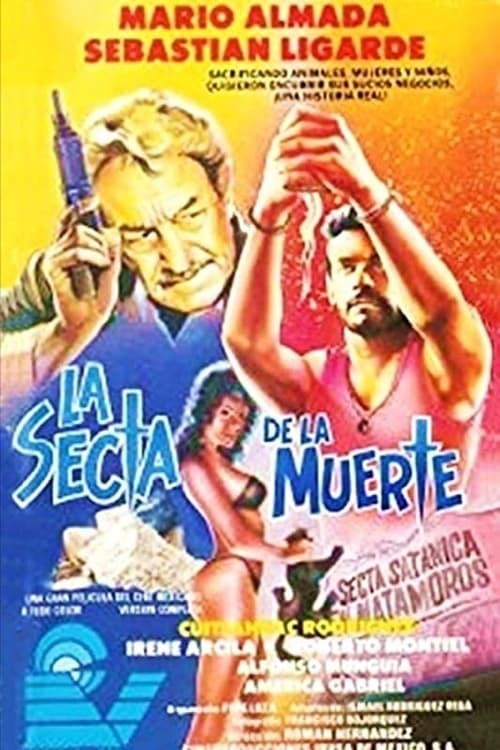
In The Ritual of Death (the film apparently meant by The Cult of Death), a small theater troupe drifts into catastrophe when its next stage project becomes a literal invocation of ancient sacrifice. The story opens with a pounding rock song over tribal drums, immediately setting a feverish, pulsing tone as the actors gather around the idea of staging a new production centered on Egyptian ritual and human sacrifice. What begins as an artistic decision quickly turns sinister, because the troupe is not merely adapting a story; they are reaching into a forbidden text, a cursed manuscript or translated ancient book connected to sacrificial rites. The film's premise is simple at first and then increasingly grotesque: the actors want something shocking for the stage, but the material they choose is alive with malign power, and the moment they begin treating it like performance rather than warning, they open a door they cannot close.
The group is presented as a small, amateur theatrical company, and their search for a new play becomes the engine of the horror. According to one account, they first hear a presentation on ritualistic sacrifice and become fascinated enough to build a show around it. Another version says they steal an ancient Egyptian text from an old man living in a bizarre windmill barn. That image gives the story an almost fairy-tale perversity: a shabby troupe, a lonely elder, and a forbidden book hidden in an uncanny rural structure. However it happens, the result is the same. The actors take possession of an occult text describing rites to the god of death and start turning it into theater. The book is not treated as a mere prop; it is the original source of the power that now begins to seep into their rehearsal space, and the play they think they are inventing is already written elsewhere, in blood and antiquity.
As the troupe rehearses and refines the material, the atmosphere darkens. The film suggests that the ritual they are staging is not just historically gruesome but spiritually active, an old sacrificial act waiting for someone foolish enough to repeat it. Visual fragments of hallucination and dread start to intrude on ordinary scenes. One description mentions a strange man carrying a weird, hairy book whose presence seems to make the flesh on a character's arms melt away in a nightmarish vision. In another account, Brad, a young actor played by Olair Coan, begins to experience bizarre hallucinations about ancient Egyptian and Indian satanic rituals after coming into contact with the cursed knowledge. The hallucinations are not random decorative horror; they are the first sign that the ancient force is entering the present tense of the film and colonizing Brad's mind and body. The line between rehearsal and possession disappears. What the troupe thinks is research becomes infestation.
Brad is the central figure in that transformation. The sources identify him most clearly as the actor who falls under the influence of the awakened spirit, and he becomes the film's most explicit vessel of corruption. His behavior deteriorates as he eats raw, bloody goat liver and drifts into grotesque visions, a detail that marks his surrender to the ritual's primal, animal energy. The film treats this in luridly sensational fashion, but narratively it is important: Brad is not just afraid of the occult force, he starts to ingest it, literally and symbolically, allowing it to move from manuscript to flesh. His possession is the clearest indication that the play has crossed into actual invocation. The spirit does not remain trapped in the pages or on the stage; it finds a host.
At the same time, a second and broader supernatural plot emerges. The sources describe a "vengeful and gorgeous satanic priestess" who uses the unsuspecting acting troupe as a means to recall the spirit of a fanatical cult leader who once led his followers to mass suicide. This revelation reframes the whole production. The troupe is not merely awakening an "ancient spirit" by accident; they are being maneuvered into serving a deliberate occult agenda. The priestess is the hidden intelligence behind the chaos, and her beauty makes the threat more seductive, as if the film wants to suggest that the cult's power is tied to desire as much as death. She manipulates the actors into reenacting the ritual so that the old cult leader can return from beyond the grave or beyond history, and that return is tied to mass death, fanaticism, and collective self-destruction.
Once the ritual begins to gather force, the story accelerates into open carnage. The play becomes too real, the line between staged sacrifice and actual sacrifice vanishes, and the actors start disappearing one by one only to turn up dead later. The film's account of these deaths is not fully itemized in the available sources, so the exact kill order and every individual victim cannot be verified from the materials provided, but the broad progression is clear: the troupe is picked apart as the ritual intensifies. The deaths are not isolated accidents or random slasher beats; they are presented as the direct consequence of the ritual's activation, as though every rehearsal, every spoken line, and every symbolic gesture pushes another member of the company closer to the altar. The sense of inevitability grows stronger with each disappearance, and the theater itself becomes a haunted machine converting curiosity into slaughter.
Brad's possession turns him from victim into agent, and one synopsis describes him as going on a bloody killing spree under the influence of the ancient spirit. This is the film's major internal twist: the man who seems most obviously endangered becomes one of the main instruments of the violence. Once the spirit fully takes hold, Brad is no longer simply a frightened actor caught in a supernatural mishap. He becomes the body through which the old power walks into the world. The horror of the story depends on this reversal. A ritual that begins as a creative experiment ends with one of the performers transformed into a homicidal extension of a dead cult's will. The troupe's own stage production has become the mechanism of its undoing.
The priestess's role also sharpens the tragedy. She is not merely releasing a force; she is guiding the company into an act that recalls the spirit of the cult leader and appears to empower the hidden old religion behind the carnage. The story suggests an ancient network of sacrificial belief, one that may even blend Egyptian and South American rites in the film's bizarre cosmology. That mixture of traditions adds to the sense of doctrinal confusion and occult overreach, but it also underlines a central idea: the film imagines death cults as portable, adaptable systems of violence that can be reawakened by anyone reckless enough to reconstruct them. The stage becomes an altar, the script becomes scripture, and the actors become offerings.
As the killings mount, the film pushes toward a climax built on escalating possession and panic. The surviving characters confront the fact that they have not only caused a disaster but invited one with their own hands. The ritual is now active, and the curse cannot be explained away as coincidence or bad luck. The troupe's original creative ambition collapses into terror, and every scene after that carries the weight of people realizing too late that their play has become a real sacrificial ceremony. The available sources do not preserve every line of dialogue from the climax, but the logic of the narrative is unmistakable: characters begin trying to stop what they started, only to discover that the force they invoked is older and more relentless than their courage.
The film's final stretch is described in broad but brutal terms. There are murders, possession, and the apparent return of the cult leader's spirit through the sacrificial performance. The actors keep dying, the spell tightens, and Brad's breakdown into violence makes it clear that no one in the troupe is fully safe from the curse once the text has been performed. Because the sources do not provide a trustworthy scene-by-scene ending, the exact order of the last confrontations cannot be fully reconstructed, but the outcome is clear enough: the ritual unleashes a bloodthirsty demon-like force, the bodies keep falling, and the play spirals into murderous chaos. Any attempt to distinguish theater from reality is obliterated. The stage no longer contains the violence; it is the violence.
The final implication is that the cult's power has succeeded in making the troupe an instrument of resurrection. The ancient leader associated with mass suicide is recalled through the actions of the priestess and the performance itself, and the human cost is total or near-total among the actors. The film does not, in the available sources, give a fully verified account of who survives the end, whether the priestess is destroyed, or whether the spirit is banished for good. What is certain is that the story closes in a state of violent completion rather than restoration: the cursed text has done its work, the ritual has become real, and the small theater company has been consumed by the very death rite it tried to put on stage.
In the end, The Ritual of Death plays like a fever dream about artistic arrogance turning into occult disaster. The opening idea of a play about human sacrifice mutates into actual sacrifice, possession, and mass murder. Brad's corruption, the priestess's manipulation, the cult leader's resurrection, and the troupe's collapse all converge in a final vision where performance and ritual are indistinguishable, and the theater becomes a slaughterhouse dressed as art.

What is the ending?
In the ending of "The Cult of Death," the protagonist, Sarah, confronts the cult leader, revealing the truth about the cult's dark practices. After a tense showdown, she manages to escape, but not without significant emotional scars. The cult is ultimately dismantled, but the impact of their actions lingers on the survivors.
As the climax unfolds, Sarah finds herself in the heart of the cult's lair, a dimly lit chamber adorned with ominous symbols and flickering candles. The air is thick with tension as she steps forward, her heart racing, determined to confront the cult leader, a charismatic yet sinister figure who has manipulated so many. The leader, with a chilling calmness, attempts to sway Sarah, appealing to her fears and doubts, trying to convince her that the cult's practices are for a higher purpose.
Sarah, however, fueled by a mix of fear and resolve, stands her ground. She reveals her knowledge of the cult's true nature, exposing the lies that have ensnared its members. The confrontation escalates, and the leader, feeling threatened, orders his followers to seize her. In a desperate bid for freedom, Sarah fights back, using her wits and the knowledge she has gained throughout her harrowing journey.
As chaos erupts, the cult members, once loyal, begin to question their leader's authority. Some hesitate, torn between their indoctrination and the truth Sarah has unveiled. In this moment of doubt, Sarah seizes the opportunity to escape, racing through the labyrinthine corridors of the cult's hideout, her heart pounding in her chest.
Outside, the night is dark and foreboding, but Sarah's determination shines through. She reaches a clearing where the moonlight bathes the ground in a silvery glow. Just as she thinks she is free, the cult leader appears, blocking her path. A final confrontation ensues, filled with raw emotion and desperation. Sarah, drawing on her inner strength, manages to outsmart him, leading to his downfall.
In the aftermath, the cult is dismantled, and law enforcement arrives to apprehend the remaining members. Sarah, though physically safe, is left grappling with the emotional toll of her experience. The film closes with her standing at the edge of the clearing, looking back at the remnants of the cult's influence, a mixture of relief and sorrow washing over her. She knows that while she has escaped, the scars of her ordeal will remain, a reminder of the darkness she faced and the strength she found within herself.
The fates of the main characters are starkly different. Sarah emerges as a survivor, forever changed but resolute in her newfound freedom. The cult leader, once powerful and feared, is left defeated, his influence shattered. The remaining cult members face the consequences of their actions, some choosing to seek redemption while others remain lost in their beliefs. The film concludes on a note of ambiguity, emphasizing the lasting impact of trauma and the complex journey of healing.
Is there a post-credit scene?
The movie "The Cult of Death," produced in 1990, does not feature a post-credit scene. The film concludes its narrative without any additional scenes or content after the credits roll. The story wraps up with a sense of finality, leaving the audience to reflect on the events that transpired throughout the film. The absence of a post-credit scene aligns with the film's overall tone and thematic resolution, focusing on the characters' journeys and the implications of their choices rather than setting up for a sequel or further exploration of the story.
How does the relationship between Sarah and her family evolve throughout the film?
Initially, Sarah's relationship with her family is strained due to her involvement with the cult. As the story progresses, her family's concern grows, leading to confrontations that highlight their desperation to save her. Ultimately, Sarah's journey back to her family becomes a crucial element in her struggle against the cult.
What motivates the main character to join the cult?
The main character, Sarah, is initially drawn to the cult due to her search for belonging and a sense of purpose after experiencing personal loss. Her emotional vulnerability makes her susceptible to the cult's promises of community and enlightenment.
How does the cult manipulate its members?
The cult employs psychological manipulation techniques, including isolation from outside influences, intense emotional experiences, and a hierarchy that fosters dependency on the leaders. Members are subjected to rituals that reinforce their commitment and create a sense of fear about leaving.
What role does the antagonist play in the cult?
The antagonist, known as the High Priest, embodies the cult's dark influence. He is charismatic yet sinister, using his power to control members through fear and intimidation. His personal motivations are rooted in a desire for absolute power and the belief that he is a conduit for a higher purpose.
What pivotal event causes Sarah to question her loyalty to the cult?
A pivotal event occurs when Sarah witnesses a secret ritual that involves a sacrifice, which starkly contrasts with the cult's teachings of love and enlightenment. This shocking revelation triggers her internal conflict and leads her to question the morality of the cult's practices.
Is this family friendly?
"The Cult of Death," produced in 1990, is not considered family-friendly. The film contains several potentially objectionable or upsetting scenes that may be distressing for children or sensitive viewers.
-
Violence and Gore: The film features graphic depictions of violence, including scenes of murder and ritualistic killings that may be unsettling.
-
Cult Themes: The narrative revolves around a cult, which includes themes of manipulation, brainwashing, and psychological terror that could be disturbing.
-
Death and Dismemberment: There are scenes that involve death and dismemberment, which are portrayed in a graphic manner.
-
Dark Atmosphere: The overall tone of the film is dark and foreboding, with a pervasive sense of dread that may be unsettling for younger audiences.
-
Psychological Horror: Elements of psychological horror, including fear and paranoia, are prevalent throughout the film, which may be too intense for sensitive viewers.
These aspects contribute to a mature rating, making it unsuitable for children or those who are easily upset by such content.







