
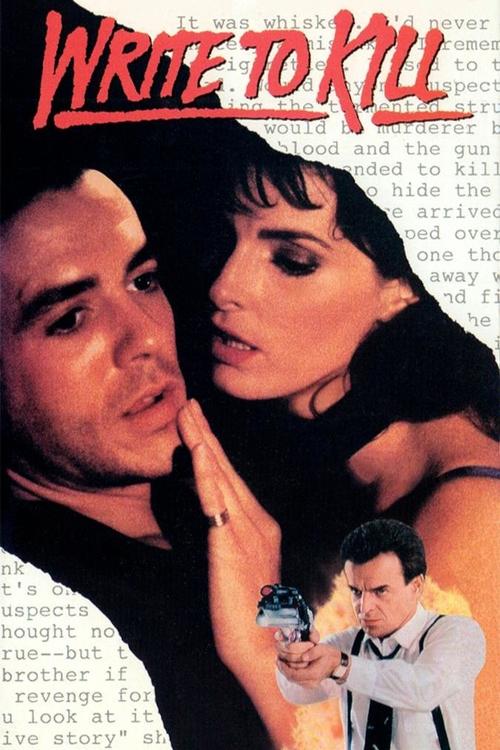












Popular
What specific events lead to the climax of the film, and how do they impact the characters involved?
What motivates the main character, a writer, to become involved in the murder investigation?
How does the relationship between John and the detective evolve throughout the film?
What role does the mysterious antagonist play in the plot, and how does their presence affect the characters?
How does the setting influence the mood and tone of the film, particularly in key scenes?
Should I watch it?
Ask Your Own Question

What is the plot?
Sorry, we aren't able to watch and write up a full detailed plot yet. Check back in a few days.

What is the ending?
In the ending of "Write to Kill," the protagonist, a writer named Jack, confronts the antagonist, a serial killer named John, in a tense showdown. Jack manages to outsmart John, leading to a climactic confrontation where he ultimately defeats him. The film concludes with Jack reflecting on the events, grappling with the emotional toll of the violence he has witnessed and the impact it has had on his life.
As the final act unfolds, the tension escalates. Jack, having pieced together the clues left by John, finds himself in a dimly lit warehouse, the air thick with anticipation. The camera pans across the shadows, revealing Jack's determined expression, a mix of fear and resolve etched on his face. He knows he must confront John to put an end to the terror that has plagued him and those around him.
In a series of flashbacks, Jack recalls the moments that led him here--the chilling phone calls, the cryptic messages, and the haunting realization that John has been using his own writing as a blueprint for his crimes. Each memory weighs heavily on Jack, fueling his anger and desperation. He grips a pen tightly, a symbol of his power as a writer, but also a reminder of the responsibility that comes with it.
As Jack navigates the warehouse, he hears a faint sound--a sinister chuckle echoing through the darkness. John appears, his demeanor calm yet menacing, a stark contrast to Jack's frantic energy. The two engage in a psychological battle, exchanging taunts and threats. John revels in the chaos he has created, while Jack fights to maintain his composure, knowing that the stakes are life and death.
The confrontation escalates as John reveals his twisted motivations, explaining how he sees himself as an artist, with Jack's stories serving as his canvas. Jack, fueled by a mix of fear and anger, finally confronts John, challenging his worldview. The tension reaches a boiling point as they grapple physically, each struggling for dominance. Jack's determination shines through as he uses his knowledge of John's patterns against him, ultimately gaining the upper hand.
In a final, desperate move, Jack manages to outsmart John, leading to a dramatic climax where he overpowers him. The struggle culminates in a moment of catharsis as Jack, breathing heavily, stands over John, who lies defeated on the ground. The warehouse is silent except for Jack's heavy breaths, the weight of his actions settling in.
As the dust begins to settle, Jack reflects on the violence he has experienced and the toll it has taken on him. He walks away from the scene, the camera capturing his conflicted expression--a mix of relief and sorrow. The film closes with Jack looking out into the distance, contemplating the fragility of life and the darkness that can lurk within the human psyche.
In the aftermath, Jack is left to grapple with the emotional scars of his encounter with John. The film leaves viewers with a sense of unresolved tension, highlighting the complexities of good and evil, and the impact of violence on the human spirit. Jack's fate remains uncertain, as he must now navigate a world forever changed by his experiences, carrying the weight of his choices and the haunting memories of the confrontation.
Is there a post-credit scene?
The movie "Write to Kill," produced in 1991, does not have a post-credit scene. The film concludes its narrative without any additional scenes or content after the credits roll. The story wraps up with the resolution of the main plot, focusing on the characters' fates and the consequences of their actions throughout the film.
What specific events lead to the climax of the film, and how do they impact the characters involved?
The climax is reached when John uncovers crucial evidence that links the antagonist to the murders. This revelation puts both him and Sarah in grave danger, forcing them to confront the antagonist in a high-stakes showdown that tests their courage and commitment to justice.
What motivates the main character, a writer, to become involved in the murder investigation?
The main character, a writer named John, is initially drawn into the murder investigation due to his curiosity and desire for inspiration for his next novel. As he delves deeper, he becomes emotionally invested, feeling a sense of responsibility to uncover the truth and protect those involved.
How does the relationship between John and the detective evolve throughout the film?
John's relationship with the detective, Sarah, begins with tension as they have differing approaches to the investigation. However, as they work together, they develop mutual respect and a deeper emotional connection, ultimately relying on each other to navigate the dangers they face.
What role does the mysterious antagonist play in the plot, and how does their presence affect the characters?
The mysterious antagonist serves as a shadowy figure whose actions drive the tension in the story. Their presence creates a sense of danger that looms over John and Sarah, pushing them to confront their fears and ultimately leading to a climactic confrontation that tests their resolve.
How does the setting influence the mood and tone of the film, particularly in key scenes?
The setting, often depicted in dark, moody urban environments, enhances the film's suspenseful tone. Key scenes, such as the investigation in shadowy alleys and tense confrontations in dimly lit rooms, create an atmosphere of danger and urgency that reflects the characters' emotional states.
Is this family friendly?
"Write to Kill," produced in 1991, is not considered family-friendly due to its mature themes and content. Here are some potentially objectionable or upsetting aspects that may affect children or sensitive viewers:
-
Violence: The film contains scenes of violence, including physical confrontations and threats, which may be intense and unsettling.
-
Murder and Crime: The plot revolves around a murder mystery, and there are depictions of crime that could be disturbing.
-
Emotional Turmoil: Characters experience significant emotional distress, including fear, anxiety, and trauma, which may be heavy for younger audiences.
-
Adult Themes: The narrative includes themes of betrayal, revenge, and moral ambiguity that may not be suitable for children.
-
Language: There may be instances of strong language or suggestive dialogue that could be inappropriate for younger viewers.
These elements contribute to a tone that is more suited for mature audiences rather than children.








