
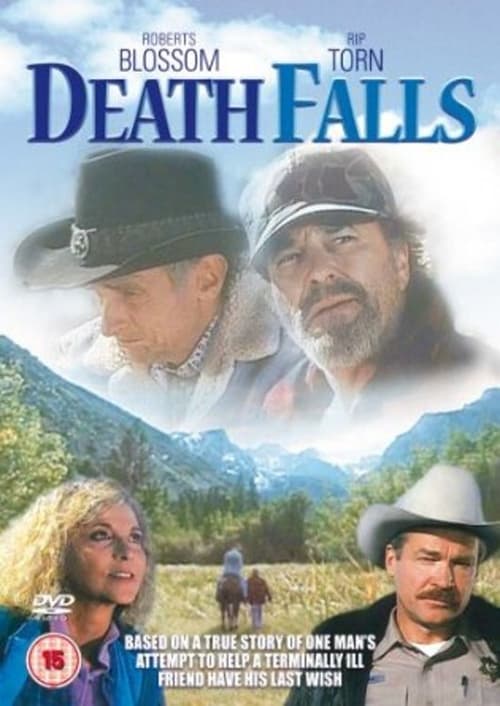










Popular
What motivates the main character, Detective John McCarty, to investigate the case in Death Falls?
How does the relationship between Detective McCarty and the local sheriff evolve throughout the film?
What role does the character of Sarah play in the story, and how does her presence affect McCarty?
What are the key clues that lead McCarty to uncover the truth behind the deaths?
How does the setting of the small town contribute to the overall atmosphere of Death Falls?
Should I watch it?
Ask Your Own Question

What is the plot?
Sorry, we aren't able to watch and write up a full detailed plot yet. Check back in a few days.




What is the ending?
In the ending of "Death Falls," the protagonist, a detective named John, confronts the antagonist, a serial killer named Frank, in a tense showdown. After a series of harrowing events, John manages to outsmart Frank, leading to his arrest. The film concludes with John reflecting on the emotional toll of the case and the impact it has had on his life.
As the climax of "Death Falls" unfolds, the tension escalates dramatically. John, having pieced together the clues throughout the investigation, finds himself in a remote, wooded area where Frank has lured him. The atmosphere is thick with suspense, the trees casting long shadows as the sun begins to set, creating an eerie backdrop for their confrontation.
Scene 1: The Confrontation John arrives at the location, his heart racing, a mix of determination and dread coursing through him. He knows that Frank is dangerous, a cunning predator who has evaded capture for too long. As he steps cautiously through the underbrush, the sounds of nature seem to fade, replaced by the pounding of his own heartbeat. Suddenly, Frank appears, a sinister smile on his face, taunting John about his failures and the lives he has taken. The dialogue is sharp, filled with tension, as John tries to maintain his composure, knowing that one wrong move could be fatal.
Scene 2: The Struggle The confrontation escalates into a physical struggle. John, fueled by a mix of fear and anger, grapples with Frank. The fight is brutal, showcasing John's desperation to bring the killer to justice. They tumble to the ground, leaves and dirt flying as they wrestle for control. John's internal struggle is palpable; he is not just fighting for his life but for the lives of all of Frank's victims. The emotional weight of the case bears down on him, and he channels that into his determination to win.
Scene 3: The Turning Point In a moment of clarity, John remembers a crucial detail from the investigation--a weakness in Frank's strategy. He uses this knowledge to gain the upper hand, finally managing to subdue Frank. As he holds Frank down, the realization of what he has done washes over him. The killer, now defeated, begins to laugh maniacally, revealing the depths of his madness. John, breathing heavily, feels a mix of triumph and horror; he has caught the monster, but at what cost?
Scene 4: The Aftermath With Frank in custody, the scene shifts to the police station. John stands in front of a mirror, his reflection showing the toll the case has taken on him. He is haunted by the faces of the victims, the weight of their stories pressing heavily on his conscience. The emotional scars are evident; he has won the battle but lost a part of himself in the process. The camera lingers on his face, capturing the conflict within him--relief mixed with sorrow.
Scene 5: Resolution The film concludes with John walking out of the station, the sun setting behind him, casting long shadows. He knows that while he has brought Frank to justice, the scars of the case will remain with him. The final shot is a poignant reminder of the emotional toll of his work, leaving the audience to reflect on the complexities of justice and the human psyche.
In the end, John emerges as a changed man, burdened by the weight of his experiences, while Frank is taken away, a remorseless figure, symbolizing the darkness that exists in the world. The film closes on a note of somber reflection, emphasizing the lasting impact of violence and the struggle for justice.
Is there a post-credit scene?
The movie "Death Falls," produced in 1991, does not have a post-credit scene. The film concludes its narrative without any additional scenes or content after the credits roll. The story wraps up with the resolution of the main plot, focusing on the emotional and psychological aftermath of the events that transpired throughout the film. The absence of a post-credit scene allows the audience to reflect on the characters' journeys and the themes of loss and redemption that permeate the story.
What motivates the main character, Detective John McCarty, to investigate the case in Death Falls?
Detective John McCarty is driven by a deep sense of justice and personal responsibility. As he delves into the mysterious deaths surrounding the small town, he becomes increasingly aware of the emotional toll these events take on the community. His determination is fueled by a desire to protect the innocent and uncover the truth, especially as he begins to connect the dots between the victims and the dark secrets hidden within the town.
How does the relationship between Detective McCarty and the local sheriff evolve throughout the film?
Initially, Detective McCarty and the local sheriff, Sheriff Harlan, have a strained relationship marked by distrust and differing approaches to the investigation. McCarty's relentless pursuit of the truth clashes with Harlan's desire to maintain order and protect the town's reputation. As the plot unfolds, they are forced to confront their differences and ultimately develop a reluctant partnership, realizing that they must work together to solve the case and bring justice to the victims.
What role does the character of Sarah play in the story, and how does her presence affect McCarty?
Sarah, a local woman with a mysterious past, becomes a pivotal character in the story. Her connection to one of the victims draws McCarty closer to the emotional core of the investigation. As McCarty interacts with Sarah, he finds himself grappling with his own feelings of vulnerability and empathy. Her strength and resilience in the face of tragedy inspire him, and their relationship adds a layer of complexity to his character, pushing him to confront his own demons while seeking justice.
What are the key clues that lead McCarty to uncover the truth behind the deaths?
Throughout the investigation, McCarty uncovers several key clues that piece together the mystery. He discovers a series of cryptic messages left by the victims, which hint at a larger conspiracy. Additionally, he finds connections between the victims' backgrounds, revealing a pattern of betrayal and revenge. The turning point comes when he stumbles upon a hidden location that ties the victims together, leading him to confront the antagonist and ultimately unravel the dark secrets of the town.
How does the setting of the small town contribute to the overall atmosphere of Death Falls?
The small town setting plays a crucial role in establishing the film's atmosphere. Its picturesque yet eerie landscape creates a stark contrast between the town's outward charm and the underlying darkness of the events unfolding. The close-knit community, filled with secrets and unspoken tensions, amplifies the sense of isolation felt by McCarty as he navigates the investigation. The town's haunting beauty serves as a backdrop for the emotional turmoil experienced by the characters, enhancing the film's suspense and dramatic tension.
Is this family friendly?
"Death Falls," produced in 1991, is not considered family-friendly due to its themes and content. The film contains several potentially objectionable or upsetting aspects, including:
-
Violence: There are scenes that depict physical confrontations and threats, which may be distressing for younger viewers.
-
Death and Grief: The narrative revolves around themes of loss and the emotional turmoil associated with death, which can be heavy and upsetting for sensitive audiences.
-
Psychological Tension: The film explores intense emotional states, including fear and paranoia, which may be unsettling for children.
-
Mature Themes: The storyline delves into darker aspects of human nature and relationships, which may not be suitable for younger viewers.
-
Emotional Distress: Characters experience significant emotional pain and trauma, which could be difficult for sensitive individuals to process.
Overall, the film's serious tone and mature content make it more appropriate for adult audiences.








