
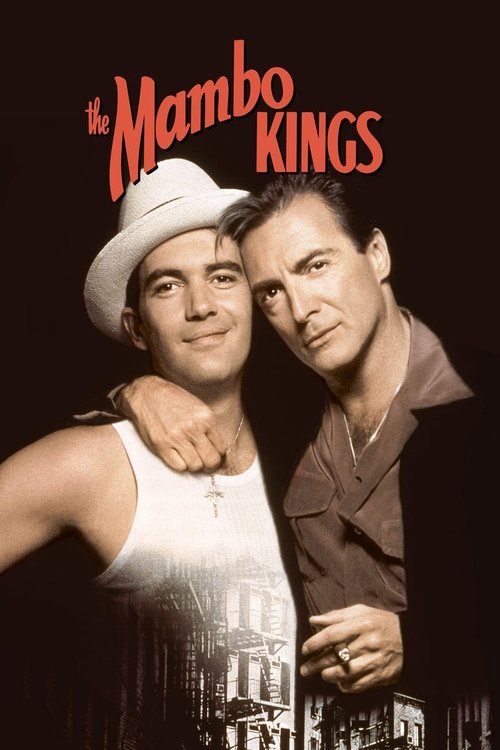












Popular
What motivates the character Cesar Castillo to pursue a music career in New York City?
How does the relationship between Cesar and his brother Nestor evolve throughout the film?
What role does the character of Dolores play in Cesar's life?
What challenges do the Mambo Kings face in the music industry?
How does the film depict the theme of nostalgia through the character of Nestor?
Should I watch it?
Ask Your Own Question

What is the plot?
Sorry, we aren't able to watch and write up a full detailed plot yet. Check back in a few days.




What is the ending?
In the ending of "The Mambo Kings," the brothers, Cesar and Nestor Castillo, face the culmination of their dreams and struggles. Cesar, who has been deeply affected by the loss of his brother Nestor, ultimately finds solace in his music and the memories they shared. The film concludes with a poignant performance that encapsulates their journey, highlighting the enduring power of music and brotherhood.
As the final scenes unfold, we see Cesar Castillo, played by Armand Assante, grappling with the weight of his brother Nestor's death. Nestor, portrayed by Antonio Banderas, has tragically passed away, leaving a profound void in Cesar's life. The emotional turmoil is palpable as Cesar reflects on their shared dreams and the vibrant life they once envisioned together.
In a flashback, we witness the brothers' rise to fame, their passion for music, and the joy they brought to audiences. However, the reality of Nestor's absence looms large, and Cesar is left to navigate the world alone. He struggles with feelings of guilt and sorrow, haunted by memories of their performances and the bond they shared.
The climax of the film arrives as Cesar prepares for a significant performance. The stage is set, and the atmosphere is electric with anticipation. As he steps into the spotlight, the audience is filled with a mix of excitement and nostalgia. Cesar begins to play, and the music flows through him, a tribute to his brother and their shared legacy. The performance is both a celebration and a mourning, as Cesar channels his grief into the rhythm and melody.
In the audience, we see glimpses of their past life together, interspersed with the present moment. The music serves as a bridge between the two worlds, allowing Cesar to connect with Nestor one last time. As the final notes resonate, there is a sense of catharsis, a release of the pain that has burdened him since Nestor's death.
The film concludes with a powerful image of Cesar, standing alone on stage, yet surrounded by the memories of his brother. The audience erupts in applause, but for Cesar, the applause is bittersweet. He has found a way to honor Nestor's memory through their music, but the ache of loss remains. The final scene fades out, leaving viewers with a sense of hope intertwined with sorrow, encapsulating the essence of their journey as the Mambo Kings.
In summary, Cesar is left to carry on the legacy of their music, forever changed by the loss of Nestor, while the film emphasizes the enduring bond of brotherhood and the healing power of music.
Is there a post-credit scene?
The Mambo Kings, produced in 1992, does not have a post-credit scene. The film concludes with a poignant ending that encapsulates the journey of the main characters, Cesar and Nestor Castillo, as they navigate their dreams and struggles in the world of music. The final moments focus on their reflections and the impact of their experiences, leaving the audience with a sense of closure without any additional scenes after the credits.
What motivates the character Cesar Castillo to pursue a music career in New York City?
Cesar Castillo, played by Armand Assante, is driven by a deep passion for music and a desire to escape the limitations of his life in Cuba. He dreams of fame and success, believing that the vibrant music scene in New York will provide him with the opportunities he craves. His ambition is fueled by a longing for recognition and the hope of reuniting with his estranged family.
How does the relationship between Cesar and his brother Nestor evolve throughout the film?
Cesar and Nestor Castillo, portrayed by Antonio Banderas, share a complex relationship marked by both camaraderie and rivalry. Initially, they are united by their love for music and their dreams of success. However, as they navigate the challenges of the music industry, tensions arise due to Cesar's domineering personality and Nestor's desire for independence. Their bond is tested by personal ambitions, leading to moments of conflict and reconciliation that highlight their deep familial ties.
What role does the character of Dolores play in Cesar's life?
Dolores, played by Cathy Moriarty, is a significant figure in Cesar's life, representing both temptation and emotional turmoil. She embodies the allure of the glamorous lifestyle that Cesar aspires to, but their relationship is fraught with complications. Dolores's presence brings out Cesar's vulnerabilities, as he grapples with his feelings of love, desire, and the fear of losing his artistic integrity. Their passionate yet tumultuous relationship serves as a catalyst for Cesar's personal growth and self-discovery.
What challenges do the Mambo Kings face in the music industry?
The Mambo Kings encounter numerous challenges as they strive to establish themselves in the competitive New York music scene. They face obstacles such as racial discrimination, financial instability, and the struggle to maintain their cultural identity amidst the pressures of commercial success. These challenges test their resolve and force them to confront their own insecurities, ultimately shaping their journey as musicians and brothers.
How does the film depict the theme of nostalgia through the character of Nestor?
Nestor Castillo's character embodies nostalgia as he reflects on his past in Cuba and the music that shaped his identity. Throughout the film, he often reminisces about their childhood and the simpler times spent with family. This longing for the past influences his decisions and relationships, as he grapples with the reality of their new life in America. Nestor's emotional connection to his heritage serves as a poignant reminder of the sacrifices made in pursuit of their dreams.
Is this family friendly?
"The Mambo Kings," produced in 1992, is a film that explores themes of music, love, and the immigrant experience, but it does contain elements that may not be suitable for all audiences, particularly children or sensitive viewers. Here are some potentially objectionable or upsetting aspects:
-
Adult Themes: The film delves into complex adult relationships, including romantic entanglements that may involve infidelity and heartbreak.
-
Sexual Content: There are scenes that depict sexual situations and suggestive content, which may be inappropriate for younger viewers.
-
Substance Use: Characters are shown using alcohol and engaging in nightlife, which may not be suitable for children.
-
Emotional Struggles: The characters face significant emotional challenges, including loss, regret, and the struggles of immigrant life, which could be heavy for sensitive viewers.
-
Violence: While not graphic, there are moments of tension and conflict that may be unsettling.
These elements contribute to the film's mature themes and emotional depth, making it more appropriate for older teens and adults.







