







Popular
What is the significance of the character Bargearse in the film?
How does Bargearse's relationship with his friends develop throughout the film?
What role does the setting play in Bargearse's adventures?
What are some key comedic moments involving Bargearse and how do they reflect his character?
How do the supporting characters influence Bargearse's journey in the film?
Should I watch it?
Ask Your Own Question

What is the plot?
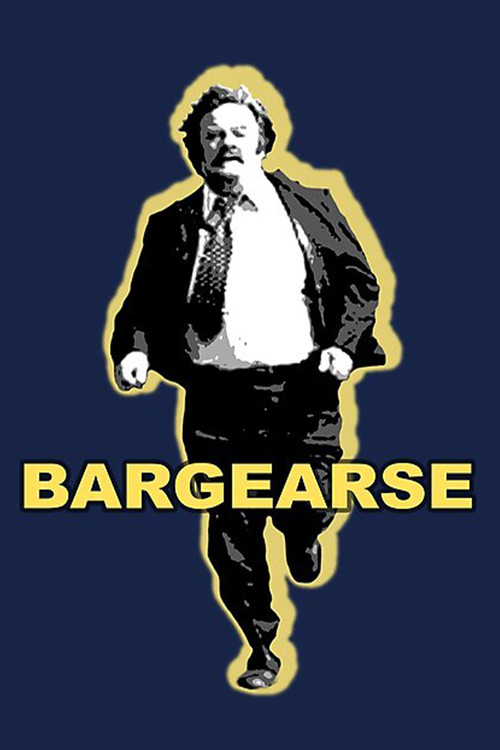
Bargearse opens as a ludicrously overdubbed cop universe in which Detective Sergeant Bargearse and Detective Twenty stumble through crime, food obsession, and institutional humiliation, with the entire comic engine built around bodily excess, ridiculous authority figures, and a world that keeps collapsing into fart jokes. The series first appears in 1993 as a set of short parody segments, adapted from the old police drama Bluey, so the "story" unfolds as a chain of linked absurd cases rather than one clean feature-length plot.
The first thing that defines Bargearse is appetite. He is introduced, in effect, as a fat policeman who loves eating and has no qualms about farting in company, and the show immediately turns that trait into the center of every scene. He moves through the station like a force of nature, his presence announced by heavy breathing, food cravings, and the smug confidence of a man who thinks a badge entitles him to anything edible within reach. Detective Twenty is beside him throughout, acting as the beleaguered straight man, the colleague who is always one beat too late to stop Bargearse from making a fool of himself or everyone around him. The tone is set at once: the jokes are low, the stakes are silly, and the police work is always sliding toward chaos.
The early sequence, "Pizza Hijack," centers on Bargearse's pizza delivery, which is hijacked by Christopher Skase. The premise itself is absurdly mundane and criminal at once: a cop whose food has been stolen reacts with the same intensity another detective might reserve for murder, and the case becomes a comic chase whose emotional core is not justice but hunger. Bargearse's outrage is personal and immediate, and the episode lets the viewer feel the insult of the theft as if someone has not merely taken his dinner but violated his dignity. Christopher Skase's involvement gives the hijacking a celebrity-crime flavor, but the real engine is Bargearse's refusal to let the matter rest until every greasy detail is accounted for.
That obsession deepens in "Bargearse's Donuts," where Detective Twenty is accused of stealing Bargearse's donuts. The accusation lands like a betrayal inside the police unit itself. What should be a professional environment becomes a domestic feud over pastries, and Bargearse treats the disappearance of the donuts with the gravity of a cold case and the wounded vanity of a man convinced everyone else is a thief. Detective Twenty, meanwhile, is dragged into the orbit of suspicion and forced into damage control, even though the audience understands that in Bargearse's world the mere absence of food is enough to trigger a full-scale moral panic. The joke is not just that donuts are missing; it is that Bargearse's entire notion of order depends on them being present.
From there the series pushes into stranger territory with "A Sh*tload of Dim-Sims," whose subtitle references "a bucket of soy sauce," and whose premise sends Bargearse toward Chinese food before forcing him to eat a race horse instead. The episode is a fever dream of appetite turned grotesque. Bargearse's desire for dim-sims becomes a farce of substitution, denial, and culinary punishment, and the visual comedy comes from the sheer indignity of having to abandon one fantasy of food for another that is more absurd, more excessive, and somehow even less satisfying. The race horse element makes the episode feel like a culinary crime scene, where the boundaries between meal and absurdity vanish entirely. The "bucket of soy sauce" detail sharpens the sensory chaos: the scene is not merely about eating, but about over-seasoned desperation, a man trying to force flavor onto the impossible.
The show then pivots into a more openly romantic and bodily register in "McChockas," where an early-morning visit to a fast-food drive-through leads to an amorous encounter. The timing matters: it is early morning, a dead hour when everything feels slightly wrong, and Bargearse's appetite once again becomes the doorway to another kind of hunger. The drive-through setting gives the scene a flicker of ordinary suburban ritual, but the series twists it into a seduction played through greasy takeaway culture. Bargearse, who can never simply buy food without creating a spectacle, blunders into intimacy as if romance itself were an extension of his eating habits. The humor depends on the collision between greasy commerce and bodily desire, with the scene's momentum carrying him from one craving to the next until he is trapped inside his own appetites.
That appetite is temporarily displaced in "Bargearse Sings," where Bargearse spends quality time with his piano and a figure-hugging blue bathrobe. The image is almost vulnerable: a man usually defined by gluttony and bluster suddenly appears domestic, solitary, and weirdly earnest. The blue bathrobe becomes a comic symbol of self-indulgence and faux refinement, as if Bargearse briefly imagines himself a crooner or lounge performer instead of a detective who farts in public. The scene gives him a moment of performance that feels both ridiculous and oddly sincere. If earlier episodes make him monstrous through excess, this one makes him comically self-aware, a man trying to translate his chaos into music and style, only to remain unmistakably Bargearse.
That illusion of control does not last. In "Bargearse in a Coma," a spot of jogging and wearing inappropriate attire leaves him in a coma. The episode turns physical vanity into catastrophe. Bargearse's attempt at fitness and his poor judgment in clothing combine to produce a collapse that feels like the universe punishing him for imagining he can behave like a normal citizen. The coma is not just a plot device; it is the comic endpoint of his entire lifestyle, where indulgence and bad choices finally overwhelm the body that has been absorbing them all along. The title also invites a dream-logic comedy, and the series's broader reputation for surreal toilet humor makes the coma feel less like a medical condition than a portal into one more absurd variation of Bargearse's subconscious.
The narrative then swerves into the criminal underworld with "Brown Velour 3," in which Bargearse cracks a brown velour smuggling ring. This is one of the more overtly procedural episodes in the series, but the case itself is ludicrously specific: not narcotics, not weapons, but brown velour. The materiality of the item makes the investigation feel like fashion policing disguised as law enforcement. Bargearse and Detective Twenty pursue the smugglers through a world of cheap texture and illicit textile exchange, and the dramatic tension comes from the ridiculous seriousness with which the show treats a commodity that should be inherently embarrassing. The case is nonetheless a real breakthrough inside the series's logic, because it shows Bargearse capable of directing his appetite and aggression toward an organized conspiracy instead of merely toward snacks.
That success feeds into "Casual Squad," where Bargearse and Detective Twenty are cracked down on for their sloppy adherence to the dress code. The irony is exquisite: after episodes in which the men have barely governed themselves at all, the institution finally chooses this moment to impose discipline on clothing and appearance. The crackdown is as much an insult to their identity as an administrative correction, because Bargearse's entire persona is built on shambling disregard for decorum. The confrontation plays like a bureaucratic humiliation, with authority figures trying to enforce neatness on men who are, by nature, visual disasters. It is a confrontation about image rather than crime, and the outcome is less about justice than about the station asserting control over bodies it can no longer pretend are professional.
All of this leads toward the finale, "The Big Finish," where Bargearse "literally goes out with a bang" as ABC ends the show because of complaints about the number of fart gags. This ending is both narrative and meta-narrative, because the world of the series collapses under the weight of the joke that has been driving it from the beginning. The complaints about fart gags become an in-universe cause of cancellation, and the cancellation itself becomes the final gag. The phrasing "literally goes out with a bang" indicates a conclusion that is physical, explosive, and unmistakably final. Bargearse's end is not reflective or tragic; it is a slapstick obliteration that matches the series's contempt for restraint.
What makes the ending sting, in comic terms, is that the show has spent its entire run building Bargearse as a creature of appetite, noise, and public embarrassment, only to let those same qualities destroy the program around him. The ABC's decision to end the show because of fart-gag complaints is the ultimate institutional response to a man who cannot stop turning every scene into a bodily event. The final bang functions as both punishment and celebration: Bargearse is erased, but he is erased in the most Bargearse way possible. Detective Twenty's role in the ending is as the last witness to this collapse, the companion who survives long enough to see the farce complete but not long enough to restore order.
Across the whole series, the emotional structure is simple even when the episodes are bizarre: Bargearse wants food, attention, and comfort; Detective Twenty follows, objects, or gets blamed; the station or the world imposes discipline; and then the situation falls apart into bodily comedy. There are no meaningful deaths established in the available source descriptions beyond the finale's explosive "bang," and the series is not presented as a conventional death-driven narrative. Instead, its dramatic stakes come from humiliation, appetite, and the repeated threat that Bargearse's own habits will overwhelm him or the system around him. The major twists are not about hidden identities or secret conspiracies so much as about the increasingly outrageous forms that his obsessions take: pizza becomes hijacking, donuts become criminal evidence, dim-sims become forced horse consumption, and fashion becomes contraband.
Even the title character's comical body becomes a site of revelation. He is never transformed into a noble detective or a tragic antihero; he remains the same shambling, fart-prone engine of disorder from opening to ending. That consistency is the point. Every episode pushes one more layer of absurdity onto the same central fact: Bargearse cannot separate police work from consumption, and Detective Twenty cannot separate his job from damage control. By the time the final explosion arrives, it feels inevitable, as though the show has been heading toward the moment the first fart joke was made and the first pizza was stolen.
The closing scene, then, is not a quiet resolution but a meta-comic detonation. ABC ends the show because the complaints about fart gags have become too much, and Bargearse's last act is to go out with a literal bang. The world does not so much conclude as collapse under the weight of its own bad taste, and that collapse is the punchline.

What is the ending?
In the ending of "Bargearse," the main character, Bargearse, finds himself in a series of comedic and chaotic situations that ultimately lead to a resolution of the conflicts he faces. The film concludes with a sense of absurdity and humor, reflecting the overall tone of the movie.
As the story unfolds towards its conclusion, Bargearse, portrayed as a bumbling yet lovable character, navigates through a series of misadventures. He is often caught in misunderstandings and slapstick scenarios that highlight his clumsiness and good-hearted nature. The climax builds as Bargearse attempts to resolve the various conflicts that have arisen throughout the film, including his interactions with other characters who have their own quirks and motivations.
In the final scenes, Bargearse's antics culminate in a chaotic but humorous resolution. The film ends on a light-hearted note, with Bargearse managing to bring a sense of unity among the characters, despite the chaos that ensues. The audience is left with a feeling of joy and laughter, encapsulating the film's comedic essence.
Now, let's delve into the ending in a more detailed, chronological narrative fashion.
As the film approaches its climax, Bargearse finds himself in a bustling town square, where the townsfolk are gathered for a festival. The atmosphere is vibrant, filled with colorful decorations and the sounds of laughter and music. Bargearse, with his signature clumsiness, stumbles into the festivities, inadvertently causing a series of mishaps. He knocks over a stand of pies, sending them flying into the air, much to the dismay of the vendors. The townspeople gasp, but then burst into laughter as Bargearse, covered in pie filling, tries to apologize while slipping and sliding on the ground.
In the midst of the chaos, Bargearse's friend, a quirky character named Wally, is trying to impress a local girl. Wally's attempts are met with failure, and he becomes increasingly frustrated. Bargearse, noticing his friend's plight, decides to help him. He concocts a plan that involves a series of ridiculous stunts, believing that if he can make the townsfolk laugh, Wally will win the girl's affection.
As Bargearse executes his plan, the scenes become increasingly absurd. He attempts to juggle various items, including fruit and even a small dog, leading to a series of slapstick moments that have the crowd roaring with laughter. However, his good intentions lead to more chaos, as he accidentally sets off a chain reaction that causes a nearby fountain to erupt, drenching everyone in water. The townspeople, initially shocked, soon find themselves laughing uncontrollably at the spectacle.
In the midst of the laughter, Wally finally gathers the courage to approach the girl he likes, who is now laughing at Bargearse's antics. Encouraged by the joyful atmosphere, Wally manages to charm her with his sincerity, and she responds positively, much to his surprise. Bargearse, seeing his friend succeed, feels a swell of pride and happiness, despite the mess he has created.
As the festival continues, Bargearse becomes the unwitting hero of the day. The townsfolk, now fully embracing the chaos he has caused, invite him to join in the festivities. They lift him onto their shoulders, celebrating him as the life of the party. Bargearse, overwhelmed with joy, beams with happiness, realizing that despite his clumsiness, he has brought people together.
The film concludes with a final scene of camaraderie, as Bargearse, Wally, and the townsfolk dance together under the stars, the laughter echoing into the night. Each character, having faced their own challenges throughout the film, finds a sense of belonging and joy in the community. Bargearse, in particular, learns that even in his blunders, he can create moments of happiness and connection.
As the credits roll, the audience is left with a sense of warmth and humor, encapsulating the essence of Bargearse's journey and the film's overall message about friendship, community, and the joy of embracing life's absurdities.
Is there a post-credit scene?
"Bargearse," produced in 1993, does not feature a post-credit scene. The film concludes without any additional content after the credits roll. The narrative wraps up the story of the main character, Bargearse, and his misadventures, leaving the audience with a sense of closure regarding the plot and character arcs. The film focuses on the comedic and absurd situations that arise from Bargearse's life, and the ending serves to encapsulate the humor and themes presented throughout the movie.
What is the significance of the character Bargearse in the film?
Bargearse is a central character who embodies the comedic and absurd elements of the film. His interactions with other characters often highlight his bumbling nature and provide a source of humor, as he navigates various misadventures that reflect his lack of awareness and social skills.
How does Bargearse's relationship with his friends develop throughout the film?
Bargearse's relationships with his friends are characterized by a mix of camaraderie and frustration. His friends often find themselves exasperated by his antics, yet they remain loyal, showcasing a bond that is tested through various comedic situations. This dynamic adds depth to the narrative as it explores themes of friendship and acceptance.
What role does the setting play in Bargearse's adventures?
The setting of Bargearse is crucial as it provides a backdrop for the character's misadventures. The film features various locations that enhance the comedic elements, such as bustling urban environments and chaotic social gatherings, which serve to amplify Bargearse's clumsiness and the absurdity of his situations.
What are some key comedic moments involving Bargearse and how do they reflect his character?
Key comedic moments often involve Bargearse's misunderstandings and physical comedy, such as his clumsy attempts to impress others or his failure to grasp social cues. These moments not only elicit laughter but also reflect his innocence and the endearing qualities that make him a sympathetic character despite his flaws.
How do the supporting characters influence Bargearse's journey in the film?
Supporting characters play a significant role in shaping Bargearse's journey. They often serve as foils to his character, highlighting his shortcomings while also providing opportunities for growth. Their reactions to his antics range from frustration to encouragement, which ultimately influences Bargearse's development and the comedic trajectory of the story.
Is this family friendly?
"Bargearse," produced in 1993, is a comedy film that features a variety of humor styles, including slapstick and adult-oriented jokes. While it may appeal to a broad audience, there are several aspects that could be considered objectionable or upsetting for children or sensitive viewers:
-
Adult Humor: The film contains numerous jokes and situations that are geared towards an adult audience, which may not be appropriate for younger viewers.
-
Language: There are instances of coarse language and crude jokes that could be unsuitable for children.
-
Physical Comedy: The slapstick nature of the film includes exaggerated physical humor that might be perceived as violent or inappropriate for sensitive viewers.
-
Themes of Absurdity: The film's surreal and absurd situations may be confusing or unsettling for younger audiences who may not grasp the comedic intent.
-
Character Behavior: Some characters exhibit questionable morals or engage in behavior that could be seen as irresponsible or negative role models.
Overall, while "Bargearse" is a comedy, its content may not be suitable for all family members, particularly younger children or those sensitive to adult themes.









