






Popular
What gifts does the main character receive on each of the twelve days of Christmas?
Who is the secret admirer that sends gifts to Mary?
How does Mary react to the gifts she receives each day?
What challenges does Mary face in her personal life during the story?
How does the relationship between Mary and Jack develop throughout the film?
Should I watch it?
Ask Your Own Question

What is the plot?
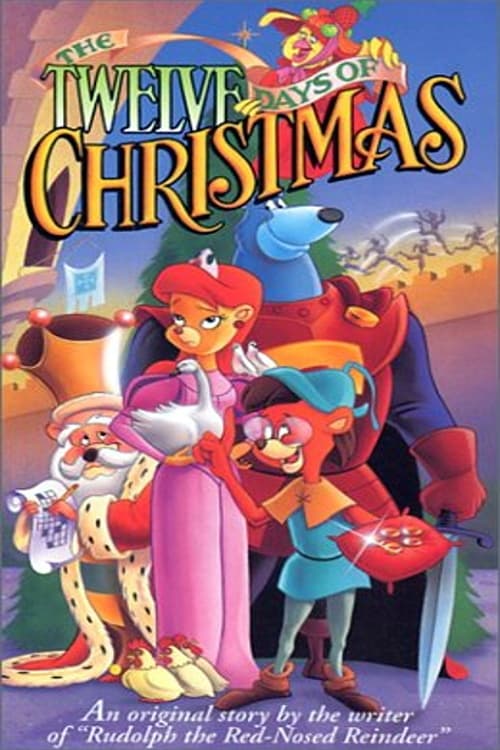
A partridge opens the story by literally narrating from a book called The Twelve Days of Christmas, and the tale immediately frames itself as an explanation for the famous carol, though what follows is less a grand epic than a bright, comic romance built on one disastrous misunderstanding. In a fairy-tale kingdom of castles and Christmas pomp, Sir Carolboomer, a brave but boorish knight, is hopelessly in love with Princess Silverbell, yet she has no interest in marrying him because what she truly wants is not wealth, titles, or grand gestures but someone who can make her laugh. That emotional gap is established early and clearly: Carolboomer has status and enthusiasm, but Silverbell's heart remains closed because he lacks humor, the one thing she is said to be missing and longing for.
Trying to solve a romantic problem like a military campaign, Carolboomer decides that Christmas gifts will win where charm has failed. He sends his long-suffering servant and squire, Hollyberry, to steal what he believes is Princess Silverbell's Christmas list so he can procure everything she wants and present himself as her perfect suitor. The plan goes wrong almost immediately, and the mistake that drives the entire special is absurdly specific: Hollyberry does not steal the princess's list at all, but the answers to the King's crossword puzzle. That error transforms ordinary gift-giving into a numbered sequence of strange errands, because the crossword answers happen to correspond to the items from "The Twelve Days of Christmas," complete with the familiar progression from one partridge in a pear tree through the later entries like four calling birds and eight maids a milking.
From there the plot becomes a cascading chain of deliveries, each day bringing a new gift, a new mishap, and a new layer of exasperation. Carolboomer orders Hollyberry back out again and again to gather the next item on the list, and Hollyberry dutifully trudges through the kingdom and beyond, collecting whatever bizarre thing the mistaken crossword answers demand. The film's structure is intentionally repetitive: the vast majority of its runtime is devoted to Hollyberry's labor, the absurdity of the gifts, and the princess's mounting irritation as each new present arrives. The story does not treat these deliveries as clean, triumphant romantic offerings; instead, each one lands as another comic failure, another reminder that Carolboomer's scheme is built on a misunderstanding of Silverbell's actual desires.
The first gift, the partridge in a pear tree, establishes the pattern: Hollyberry fetches the item, presents it, and the princess reacts with bewilderment rather than delight. Carolboomer, looking on from his own self-deceived perspective, interprets the princess's lack of enthusiasm as coyness rather than rejection. This misunderstanding is one of the special's key dramatic engines, because it lets Carolboomer keep escalating without ever recognizing that he is not making progress; he thinks Silverbell is "playing hard to get," so he simply sends Hollyberry out again to suffer through the next errand. The humor comes from the mismatch between intention and outcome: Carolboomer believes he is staging a grand romantic pursuit, while the princess experiences the gifts as increasingly nonsensical intrusions into her day.
As the days pass, the sequence of gifts continues in the familiar carol order, with the special briefly turning the song into animated slapstick logic. Hollyberry brings the successive items--two turtle doves, three French hens, four calling birds, and onward--and each delivery is met with the same escalating frustration from Princess Silverbell. The sources do not provide a minute-by-minute account of every individual gag, but they are consistent that the film is driven by a long string of "whacky shenanigans" and repeated mishaps as Hollyberry gathers each item and brings it to the princess. The joke is not merely that the gifts are unusual; it is that Carolboomer's entire romance strategy has been reduced to bureaucracy, with Hollyberry acting like a doomed courier carrying out impossible instructions.
The emotional center of these scenes is not Carolboomer's courtship but Silverbell's growing annoyance and Hollyberry's increasingly weary obedience. Carolboomer remains convinced that every new shipment is a step closer to victory, yet the princess becomes more and more frustrated by the inanity of the presents. The tone, therefore, shifts from hopeful fairy-tale romance into a kind of comic fatigue, in which the audience watches a servant complete task after task while the would-be suitor misreads every reaction. The repeated structure also gives the story a sense of momentum: each day adds another layer of absurdity, and because the gifts are numbered as if they are crossword answers, the special becomes a counting game disguised as a love story.
The middle of the film deepens the basic misunderstanding without ever really changing it. Carolboomer never stops to ask why Silverbell would want such oddly specific things; he simply believes the princess's emotional reserve is a challenge to be overcome by persistence. Hollyberry, by contrast, is the one doing the real work, absorbing the physical exhaustion and comic humiliation while Carolboomer claims the romantic credit. This imbalance becomes important because the special quietly sets up its final reversal: the knight who wants the princess is not the one earning her attention, while the servant who suffers through the errands is unknowingly becoming the story's true romantic hero.
No deaths occur anywhere in the animated short. Despite the threats and the boorish behavior, the special remains a harmless fairy-tale comedy, and none of the sources describe any fatal violence, casualties, or tragic turns. That absence matters because it confirms the story's genre: the tension is romantic and comic, not deadly.
As the twelve days continue, the absurdity of the list becomes more extravagant, and the special leans into the logic of the song itself. Items like eight maids a milking and the later entries arrive not as meaningful symbols but as comic obstacles to delivery. Hollyberry has to keep finding whatever the current line demands, and the film treats each new success as another stage in an escalating burden rather than a romantic triumph. The princess's responses are increasingly dry and frustrated, while Carolboomer's optimism becomes more detached from reality. He is still imagining a courtship narrative; she is simply trying to endure the chaos.
The tension sharpens because the story has been building toward an emotional payoff that Carolboomer has completely misunderstood from the beginning. Silverbell has already been established as someone who wants laughter, and every gift on the list fails to address that need in any real way. Carolboomer's mistake is not only that he steals the wrong paper, but that he mistakes consumption for affection: he thinks enough presents will substitute for genuine compatibility. The special never turns him into a villain, but it does make him the butt of the joke, a knight whose confidence is undermined by his inability to understand the woman he wants.
By the final stretch of the twelve days, Hollyberry has become the real center of motion in the story. He is the one enduring the comic labor, making the deliveries, and surviving Carolboomer's orders, and that practical devotion begins to matter in a world where the princess values wit and emotional sincerity more than pomp. The film's romantic logic quietly shifts while Carolboomer remains oblivious. Because he has not learned anything from the princess's frustration, he has also not noticed that Hollyberry's competence, patience, and steady effort are the qualities actually making him admirable.
When the twelve days are finally complete, Carolboomer believes the moment he has been waiting for has arrived. He expects that the gifts will have done their work and that Princess Silverbell will now be ready to accept his proposal or at least his affection. Instead, the ending flips the entire premise. The princess does not choose the knight who devised the scheme; she falls for Hollyberry, the servant who actually did all the hard work. That final reversal is the special's decisive romantic twist, and it lands as the full payoff to the earlier misunderstanding: Carolboomer's plan to win love through gifts succeeds only in directing Silverbell's attention toward the person who has been quietly proving himself all along.
The closing emotional beat is simple but firm. Carolboomer's scheme collapses because the wrong man has been trying to control the story, while the right man has been living it. Princess Silverbell, who wanted someone capable of making her laugh, ultimately discovers affection for Hollyberry, the "guy who did all the hard work," as one source bluntly puts it. The final scene resolves the fairy-tale misunderstanding not with anger or catastrophe, but with a comic romantic handoff: the intended suitor loses, the servant wins, and the princess's heart goes where the effort and sincerity actually are.
The film ends there, with its playful explanation of the carol complete and its romantic logic neatly inverted. Carolboomer does not get the princess, Hollyberry does, and the story closes on the irony that the man who tried to purchase love ends up losing it to the one who unknowingly earned it through labor, patience, and persistence.





What is the ending?
In the ending of "The Twelve Days of Christmas," the main character, a young woman named Mary, realizes the importance of family and love during the holiday season. She reconciles with her estranged father, and they come together to celebrate Christmas as a family. The film concludes with a heartwarming scene that emphasizes the joy of togetherness and the spirit of giving.
As the final scenes unfold, we find Mary, played by a spirited actress, reflecting on the lessons learned throughout the twelve days leading up to Christmas. The atmosphere is filled with a sense of urgency and anticipation as she prepares for the holiday. The decorations are vibrant, and the sounds of Christmas carols fill the air, creating a festive backdrop.
Scene by scene, the narrative builds towards the climax. Mary has been on a journey of self-discovery, grappling with her feelings of abandonment and longing for connection with her father, who has been distant for years. The tension between them has been palpable, and Mary's emotional state is one of both hope and fear as she contemplates reaching out to him.
In a pivotal moment, Mary decides to confront her father, who is portrayed as a stern but ultimately caring man. The scene is set in a cozy, warmly lit living room adorned with Christmas decorations. As Mary approaches him, her heart races, and the audience can feel her vulnerability. She expresses her feelings of hurt and disappointment, and in response, her father reveals his own regrets about their fractured relationship. This exchange is charged with emotion, as both characters confront their past and the pain that has kept them apart.
As they talk, the camera captures the subtle shifts in their expressions--Mary's initial anger softens into understanding, while her father's stern demeanor begins to crack, revealing a deep-seated love for his daughter. The dialogue is heartfelt, filled with pauses that allow the weight of their words to resonate. The scene culminates in a powerful embrace, symbolizing their reconciliation and the healing of old wounds.
The film then transitions to a festive gathering, where Mary's family and friends come together to celebrate Christmas. The atmosphere is joyful, with laughter and music filling the air. Mary's father, now fully engaged and present, joins in the festivities, showcasing his newfound commitment to being part of her life. The warmth of the scene is palpable, as the camera pans over smiling faces, twinkling lights, and the beautifully decorated Christmas tree.
In the final moments, the characters reflect on the true meaning of Christmas--love, forgiveness, and the importance of family. Mary stands with her father, surrounded by loved ones, and they share a moment of gratitude for the second chance they have been given. The film closes with a sense of hope and renewal, leaving the audience with a lasting impression of the power of connection and the spirit of the holiday season.
In summary, Mary finds peace and joy in her relationship with her father, who has embraced his role in her life once more. The film ends on a high note, celebrating the themes of love, family, and the magic of Christmas, as the characters come together to create new memories filled with warmth and happiness.
Is there a post-credit scene?
The movie "The Twelve Days of Christmas," produced in 1993, does not have a post-credit scene. The film concludes its narrative without any additional scenes or content after the credits roll. The story wraps up with the main characters resolving their conflicts and celebrating the spirit of Christmas, leaving the audience with a sense of closure and holiday cheer.
What gifts does the main character receive on each of the twelve days of Christmas?
In 'The Twelve Days of Christmas,' the main character, a woman named Mary, receives a series of increasingly extravagant gifts from her secret admirer, which correspond to the traditional song. Each day, she receives a new gift, starting with a partridge in a pear tree and culminating in a variety of unique and whimsical presents that reflect her growing feelings for the giver.
Who is the secret admirer that sends gifts to Mary?
The secret admirer sending gifts to Mary is a man named Jack, who is a kind-hearted and thoughtful individual. Throughout the film, he tries to win her affection through the gifts he sends, which are carefully chosen to reflect her interests and desires, showcasing his deep understanding of her.
How does Mary react to the gifts she receives each day?
Mary's reactions to the gifts vary throughout the film. Initially, she is puzzled and curious about the identity of her secret admirer. As the gifts continue, her excitement grows, and she begins to feel a sense of romance and intrigue, leading her to reflect on her own feelings and the possibility of love.
What challenges does Mary face in her personal life during the story?
Mary faces several challenges in her personal life, including her struggle to balance her career aspirations with her romantic feelings. She also deals with skepticism from her friends and family about the gifts and the idea of a secret admirer, which adds to her internal conflict as she navigates her emotions.
How does the relationship between Mary and Jack develop throughout the film?
The relationship between Mary and Jack develops gradually as the story unfolds. Initially, Mary is unaware of Jack's feelings for her, but as she receives the gifts, she begins to see him in a new light. Their interactions become more meaningful, and they share moments of vulnerability and connection, ultimately leading to a heartfelt realization of their love for each other.
Is this family friendly?
The Twelve Days of Christmas, produced in 1993, is generally considered a family-friendly film, focusing on themes of love, family, and the holiday spirit. However, there are a few scenes and aspects that might be potentially objectionable or upsetting for children or sensitive viewers:
-
Emotional Conflict: The film explores themes of separation and misunderstanding within a family, which may evoke feelings of sadness or anxiety in younger viewers.
-
Romantic Tension: There are moments of romantic tension and misunderstandings between characters that might be confusing for younger audiences.
-
Family Struggles: The portrayal of family dynamics, including arguments and disagreements, may resonate with some viewers as upsetting, especially if they have experienced similar situations.
-
Loss and Regret: Characters reflect on past mistakes and lost opportunities, which could be emotionally heavy for sensitive viewers.
-
Mild Frustration: Some scenes depict characters facing challenges and frustrations that could be distressing, particularly for younger children who may not understand the resolution.
Overall, while the film is lighthearted and festive, these elements may require parental guidance for younger viewers.