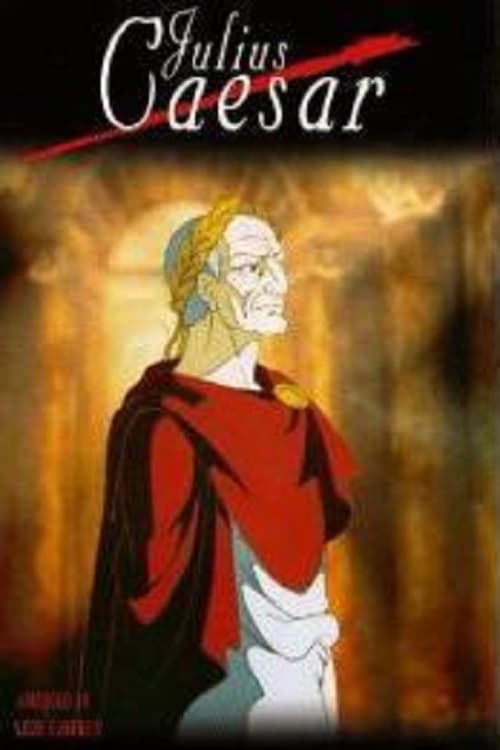








Popular
What motivates Brutus to join the conspiracy against Caesar?
How does Caesar react to the warnings he receives about the Ides of March?
What role does Cassius play in the conspiracy against Caesar?
How does the relationship between Brutus and Portia evolve throughout the film?
What is the significance of Mark Antony's speech at Caesar's funeral?
Should I watch it?
Ask Your Own Question

What is the plot?
Sorry, we aren't able to watch and write up a full detailed plot yet. Check back in a few days.


What is the ending?
In the ending of the 1994 film "Julius Caesar," Brutus and Cassius face the consequences of their actions after the assassination of Caesar. Following a series of battles, Brutus ultimately takes his own life, believing it to be the honorable choice. Antony and Octavius emerge victorious, and the film concludes with a sense of loss and the tragic fallout of ambition and betrayal.
As the film approaches its climax, the tension escalates following the assassination of Julius Caesar. The scene shifts to the battlefield where Brutus and Cassius, once allies in their cause against tyranny, find themselves at odds with the forces of Mark Antony and Octavius. The air is thick with the weight of their decisions, and the consequences of their betrayal loom large.
In a pivotal scene, Brutus and Cassius meet to discuss their strategies. Cassius, filled with doubt and regret, questions their choices, while Brutus, steadfast in his belief that they acted for the greater good of Rome, tries to reassure him. The emotional strain is palpable; Cassius feels the burden of guilt, while Brutus clings to his ideals of honor and liberty. Their camaraderie is strained, revealing the cracks in their alliance as they prepare for the impending conflict.
The battle begins, and the chaos of war unfolds. Soldiers clash, swords clash, and the cries of the wounded fill the air. Brutus and Cassius fight valiantly, but the tide turns against them. The camera captures the desperation in their eyes as they realize their forces are dwindling. Cassius, overwhelmed by the realization of their impending defeat, sends a messenger to check on the situation. When he learns that Brutus's forces are faring better, he is consumed by despair. In a moment of tragic irony, he asks his servant to help him die, believing that death is the only escape from the shame of their failure.
Meanwhile, Brutus continues to fight, embodying the tragic hero. He believes in the righteousness of their cause, but as the battle rages on, he begins to see the futility of their struggle. The weight of his decisions bears down on him, and he grapples with the loss of his friend and ally, Cassius. The emotional turmoil is evident as he fights on, driven by a sense of duty but haunted by the ghosts of his choices.
As the battle concludes, Brutus realizes that defeat is inevitable. In a poignant moment, he reflects on the ideals that drove him to assassinate Caesar. The camera lingers on his face, capturing the sorrow and regret that have taken root in his heart. He understands that the noble intentions behind their actions have led to chaos and bloodshed.
In the final scenes, Brutus chooses to take his own life rather than face capture. He finds a secluded spot, and with a heavy heart, he plunges a dagger into his own chest. The act is both tragic and noble, a final assertion of his belief in honor over dishonor. As he falls, the camera captures the stillness of the moment, a stark contrast to the chaos of the battle that raged moments before.
The film concludes with Antony and Octavius surveying the aftermath of the conflict. They stand over the bodies of the fallen, including Brutus, and reflect on the cost of ambition and betrayal. Antony, with a mix of respect and sorrow, acknowledges Brutus as "the noblest Roman of them all," recognizing the complexity of his character and the tragic consequences of their actions.
In the end, the fates of the main characters are sealed: Caesar lies dead, a victim of betrayal; Cassius succumbs to despair and takes his own life; Brutus, in his quest for honor, also chooses death over defeat; and Antony and Octavius emerge as the new power in Rome, but at a great moral cost. The film closes on a somber note, leaving the audience to ponder the themes of ambition, loyalty, and the tragic consequences of political machinations.
Is there a post-credit scene?
The 1994 film "Julius Caesar," directed by Uli Edel, does not contain a post-credit scene. The film concludes with the dramatic events surrounding the assassination of Julius Caesar and the subsequent fallout, focusing on the themes of betrayal, power, and the consequences of ambition. The narrative wraps up with the aftermath of Caesar's death, leaving the audience to reflect on the political turmoil and the personal conflicts that arise from the struggle for power in Rome. The film ends on a somber note, emphasizing the tragic consequences of the characters' actions without any additional scenes after the credits.
What motivates Brutus to join the conspiracy against Caesar?
Brutus is driven by a deep sense of honor and the belief that he must act for the greater good of Rome. He struggles with his loyalty to Caesar, whom he loves as a friend, and his fear that Caesar's ambition will lead to tyranny. This internal conflict is palpable as he grapples with the implications of betrayal, ultimately convincing himself that assassinating Caesar is necessary to preserve the Republic.
How does Caesar react to the warnings he receives about the Ides of March?
Caesar dismisses the warnings he receives, particularly from the soothsayer who warns him to 'beware the Ides of March.' His arrogance and confidence in his own power lead him to ignore these omens. This moment is filled with dramatic tension, showcasing his hubris as he brushes off the advice of those who care for him, believing himself invulnerable to harm.
What role does Cassius play in the conspiracy against Caesar?
Cassius is the mastermind behind the conspiracy, driven by jealousy and a desire for power. He manipulates Brutus into joining the plot by appealing to his sense of honor and love for Rome. Cassius's cunning and persuasive nature are evident as he orchestrates the conspiracy, using his understanding of Brutus's character to sway him, revealing his own ambition and willingness to betray for personal gain.
How does the relationship between Brutus and Portia evolve throughout the film?
Brutus and Portia's relationship is marked by tension and emotional depth. Portia, aware of Brutus's inner turmoil and the weight of his secret, pleads with him to confide in her, showcasing her strength and loyalty. As Brutus becomes increasingly consumed by the conspiracy, Portia's anxiety grows, leading to a heartbreaking moment where she feels isolated and desperate, ultimately resulting in her tragic fate.
What is the significance of Mark Antony's speech at Caesar's funeral?
Mark Antony's speech is a pivotal moment in the film, as it transforms public opinion against the conspirators. His emotional appeal, combined with his strategic use of irony and repetition, stirs the crowd's feelings of loyalty to Caesar. The speech reveals Antony's cunning nature and his ability to manipulate the masses, showcasing the power of rhetoric and the shifting tides of public sentiment in the aftermath of Caesar's assassination.
Is this family friendly?
The 1994 film "Julius Caesar," directed by Uli Edel, is a dramatic adaptation of William Shakespeare's play and contains several elements that may not be suitable for children or sensitive viewers. Here are some potentially objectionable or upsetting aspects:
-
Violence and Death: The film includes scenes of political intrigue that lead to violence, including the assassination of Julius Caesar. The depiction of this act can be intense and graphic.
-
Political Betrayal: The themes of betrayal among friends and allies can be emotionally heavy, showcasing the darker side of human relationships and ambition.
-
Emotional Turmoil: Characters experience significant emotional distress, including feelings of guilt, regret, and despair, which may be difficult for younger viewers to process.
-
Mature Themes: The film explores complex themes such as power, ambition, and morality, which may be challenging for children to fully understand.
-
Historical Context: The political machinations and the consequences of betrayal may be confusing or unsettling for younger audiences, as they reflect real historical events that led to turmoil and conflict.
Overall, while the film is a classic piece of literature brought to life, its mature themes and intense scenes may not be appropriate for all viewers, particularly children.