












Popular
What challenges does Hanamichi Sakuragi face during the National Tournament?
How does Rukawa's character develop throughout the tournament?
What role does Coach Anzai play in the team's dynamics during the tournament?
How does the rivalry between Shohoku and Shoyo High School manifest in the tournament?
What personal growth does Sakuragi experience by the end of the tournament?
Should I watch it?
Ask Your Own Question

What is the plot?
Sorry, we aren't able to watch and write up a full detailed plot yet. Check back in a few days.
More Movies Like This
Browse All Movies →




What is the ending?
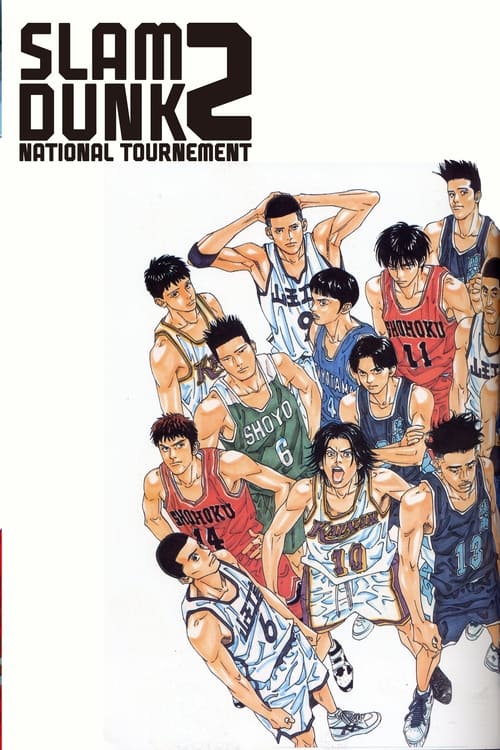
In the ending of "Slam Dunk 2: National Tournament," the Shohoku High School basketball team faces off against their rivals in a tense final match. After a hard-fought game, Shohoku emerges victorious, showcasing their growth and teamwork. The film concludes with the team celebrating their victory, solidifying their bond and determination for the future.
As the final match approaches, the atmosphere is electric. The Shohoku team, led by the passionate and determined Hanamichi Sakuragi, enters the arena, their hearts pounding with anticipation. The stakes are high, as they are not just playing for the championship but also for their pride and the respect of their peers. The camera captures the intensity in their eyes, reflecting their commitment to each other and the game.
The game begins with both teams exchanging aggressive plays. The opposing team, known for their skill and strategy, quickly takes the lead. Hanamichi, initially struggling with his confidence, feels the weight of the moment. His internal conflict is palpable; he wants to prove himself not just as a player but as a valuable member of the team. As the first half progresses, the Shohoku team finds themselves trailing, and the tension mounts.
During a timeout, Coach Anzai delivers an inspiring speech, reminding the players of their journey and the importance of teamwork. This moment reignites Hanamichi's spirit. He recalls the support of his teammates, especially Rukawa, who has always pushed him to improve. The bond between the players is highlighted as they huddle together, reaffirming their commitment to one another.
As the second half begins, the Shohoku team plays with renewed vigor. Hanamichi starts to shine, making crucial plays and demonstrating his growth as a player. The crowd roars with excitement as he executes a series of impressive dunks, showcasing his athleticism and determination. Rukawa, too, steps up, displaying his sharpshooting skills and strategic mind. The synergy between the players becomes evident, as they pass the ball fluidly and anticipate each other's moves.
With the game nearing its climax, the score is neck and neck. The opposing team, sensing their lead slipping away, intensifies their defense. Hanamichi faces a pivotal moment when he is challenged by the rival team's star player. The tension is thick as he recalls all the hard work and sacrifices made by his teammates. In a breathtaking sequence, he manages to break through the defense, executing a spectacular dunk that brings the crowd to its feet.
As the final seconds tick away, the score is tied. The Shohoku team rallies together, their eyes set on victory. In a final play, Rukawa passes the ball to Hanamichi, who takes a deep breath, channeling all his emotions into this moment. He leaps for a last-second shot, and the ball arcs through the air, time seeming to slow down. The crowd holds its breath as the ball swishes through the net, sealing their victory.
The arena erupts in cheers as the Shohoku team celebrates their hard-earned win. Hanamichi, overwhelmed with joy, embraces his teammates, tears of happiness streaming down his face. Rukawa, usually stoic, allows a rare smile to break through, acknowledging the bond they have forged through their struggles. Coach Anzai watches proudly, knowing that they have not only won the tournament but have also grown as individuals and as a team.
As the film concludes, the characters reflect on their journey. Hanamichi realizes that basketball is not just about winning but about the friendships and experiences gained along the way. Rukawa, having learned the value of teamwork, looks forward to future challenges. The film ends with the team united, their spirits high, ready to face whatever comes next, embodying the essence of perseverance and camaraderie.
Is there a post-credit scene?
In "Slam Dunk 2: National Tournament," there is no post-credit scene. The film concludes with a climactic basketball match and wraps up the storylines of the main characters without any additional scenes after the credits. The focus remains on the resolution of the tournament and the growth of the characters throughout their journey, leaving no lingering plot threads that would necessitate a post-credit moment. The ending emphasizes the themes of friendship, perseverance, and the love of the game, providing a satisfying conclusion to the narrative.
What challenges does Hanamichi Sakuragi face during the National Tournament?
During the National Tournament, Hanamichi Sakuragi faces numerous challenges, including intense competition from rival teams, particularly the formidable Shoyo High School. He struggles with his own self-doubt and the pressure to perform well, especially as he aims to prove himself to his teammates and to Haruko Akagi, the girl he admires. His journey is marked by moments of frustration, growth, and determination as he learns to channel his emotions into his gameplay.
How does Rukawa's character develop throughout the tournament?
Rukawa's character development in the tournament is significant as he transitions from a self-centered player focused solely on his own success to someone who begins to appreciate teamwork. Initially, he is portrayed as aloof and overly confident, often clashing with Sakuragi. However, as the tournament progresses, he starts to recognize the importance of collaboration and the strengths of his teammates, leading to a more mature and balanced approach to the game.
What role does Coach Anzai play in the team's dynamics during the tournament?
Coach Anzai plays a crucial role in the team's dynamics during the National Tournament by providing strategic guidance and emotional support. His calm demeanor and deep understanding of basketball help the players navigate their challenges. He encourages them to focus on their strengths and fosters a sense of unity within the team. Anzai's belief in their potential motivates the players, especially during high-pressure moments, reinforcing the importance of teamwork and perseverance.
How does the rivalry between Shohoku and Shoyo High School manifest in the tournament?
The rivalry between Shohoku and Shoyo High School is intense and manifests through fierce on-court battles and personal confrontations. The players from Shoyo, particularly their star player, are portrayed as highly skilled and arrogant, which fuels the competitive spirit of Shohoku. This rivalry is highlighted through dramatic match sequences, where both teams push each other to their limits, showcasing their skills and determination. The tension escalates as past encounters and personal stakes come into play, making their matches emotionally charged.
What personal growth does Sakuragi experience by the end of the tournament?
By the end of the tournament, Sakuragi experiences significant personal growth, evolving from a brash and impulsive player into a more disciplined and strategic athlete. He learns the value of teamwork, humility, and resilience through his interactions with his teammates and the challenges they face together. This growth is not only reflected in his improved basketball skills but also in his relationships, particularly with Haruko and Rukawa, as he begins to understand the importance of supporting others and working towards a common goal.
Is this family friendly?
"Slam Dunk 2: National Tournament" is generally considered family-friendly, focusing on themes of teamwork, perseverance, and sportsmanship. However, there are a few aspects that might be considered objectionable or upsetting for children or sensitive viewers:
-
Intense Competition: The film features high-stakes basketball games that can evoke strong emotions, including tension and anxiety, as characters face formidable opponents.
-
Conflict and Rivalry: There are scenes of rivalry and conflict between teams, which may include aggressive behavior or heated exchanges that could be unsettling for younger viewers.
-
Emotional Struggles: Characters experience moments of self-doubt, frustration, and disappointment, particularly when facing defeat or personal challenges, which may resonate deeply with sensitive audiences.
-
Physical Altercations: While not overly graphic, there are instances of physical confrontations during games that may be intense for some viewers.
Overall, while the film promotes positive messages, these elements may require parental guidance for younger audiences.







