


Popular
What is the significance of Dot's journey through space?
Who are the key characters Dot meets during her journey, and how do they influence her?
What obstacles does Dot face while navigating through space?
How does Dot's relationship with her home planet evolve throughout the film?
What role does music play in Dot's journey and character development?
Should I watch it?
Ask Your Own Question

What is the plot?
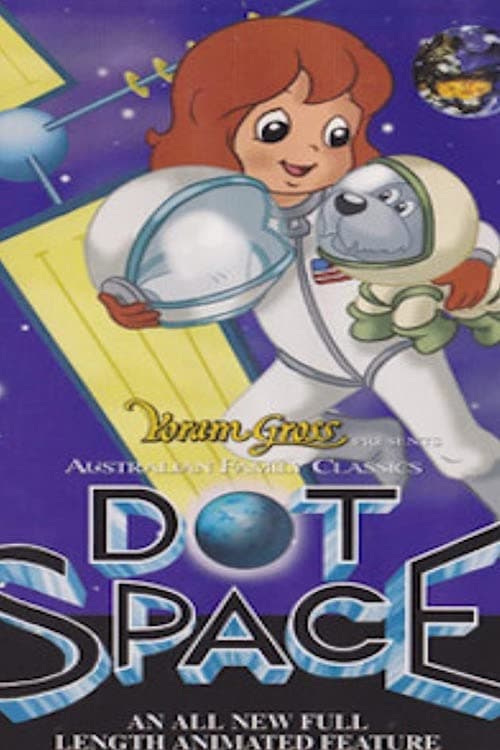
Dot sees the story begin on Earth, where a Russian space dog named Whyka is launched into orbit and immediately becomes a symbol of helplessness and urgency. On television, Dot watches the little dog stranded in space after the launch goes wrong, circling the Earth inside a broken satellite, and the image hits her hard enough that she decides, without hesitation, that she has to rescue her. The film frames her as the emotional center from the outset: she is compassionate, stubborn, and willing to put herself in danger for an animal she has never met.
That decision sends her into a rapid chain of action. Dot travels to the American launch site, where a monkey named Buster is scheduled to go to the moon, and she hatches her plan by trading places with him. The swap is both comic and tense: Buster gives up his chance to fly, and Dot slips into the role meant for him, entering the spacecraft Atlanta and preparing for launch. The sequence feels like a child's dream of impossible adventure, but it is also the first point where Dot's courage turns into real risk, because she is no longer merely watching the crisis--she is joining it.
Once Atlanta leaves the ground, the film moves into the cold, shimmering isolation of outer space. Dot finds Whyka's trapped vessel and manages to reach the dog just before the rocket self-destructs or explodes. The rescue is the first major emotional payoff, and it is also the trigger for the rest of the plot: the blast wave throws Dot's ship off course, stripping away any hope of a clean return to Earth. Instead of heading home, Dot and Whyka plunge into a new world, crash-landing on Pie-Arr-Squared, a planet defined by roundness, absurd rules, and harsh political control.
The crash transforms the story from rescue adventure into dystopian farce. Pie-Arr-Squared is a place where everything is round and where those who are not "round enough" are treated as inferior. The local soldiers, the Roundies, quickly capture Dot and Whyka after they land. The tone turns darker here: Dot is tied up and gagged, stripped of agency, and hauled before the planet's dictator, Papa Drop, who rules with pompous cruelty. Papa Drop is not merely an authority figure; he is the face of a whole system built on fear, image, and manufactured superiority.
The interrogation scene deepens the story's political absurdity. Papa Drop takes Whyka and gives the dog to his son, Roley, while Dot is dragged away for questioning and punishment. Dot's captivity becomes more humiliating as she is eventually thrown into the Prison for Squares, a holding place for those whom the Roundies consider insufficiently round. The prison is not just a location; it is the planet's ideological engine made visible, a place where physical shape is turned into social destiny. In confinement, Dot meets a prisoner named Poley, who explains one of the film's central revelations: the Roundies and the Squaries were not always enemies, and the planet once held some kind of peaceful coexistence. That history reframes everything Dot has seen. The division between the groups is not natural or inevitable--it has been imposed, and that means it can be undone.
Dot's conversations in prison become crucial because they connect her personal rescue mission to a larger struggle for justice. Poley's account suggests that Papa Drop's regime rests on manipulation rather than truth, and this makes Dot's fight bigger than getting back home. She is no longer only saving Whyka; she is stumbling into a resistance movement whether she intended to or not. The story also introduces "The Party," which is initially presented as an underground rebel force that might help overthrow Papa Drop. That name carries promise and mystery, and Dot's search for it creates a sense of momentum across the planet as she moves between danger, capture, and escape.
Dot does not remain trapped for long. She escapes prison and begins to navigate the planet's power structure with Whyka at her side. Her goal is still to return to Earth, but each new encounter pushes her deeper into the conflict between Roundies and Squaries. The Roundy Army and Papa Drop's soldiers continue to threaten her, keeping the pressure constant as she tries to survive long enough to find a way out. The tension builds because every apparent path forward turns into another trap, and each escape only exposes another layer of the regime's lies.
The film's major twist arrives when The Party is revealed not as the grand mysterious movement Dot imagines, but as Roley in disguise. This revelation shifts the emotional and political stakes again. Roley is Papa Drop's son, which means rebellion is coming from inside the dictator's own family. The father-son conflict reveals the instability of Papa Drop's power, and it also suggests that even the regime's inner circle is fractured by dissent. Roley's connection to Poley gives the story a romantic thread as well, but the film treats that mainly as part of the larger pattern of crossing boundaries that Papa Drop tries to enforce.
The rebellion accelerates when Gorgo, the huge alien dinosaur, enters the story and becomes a force capable of frightening the Roundies away. Gorgo's arrival gives Dot and her allies the opening they need, and the film uses the monster not as a villain but as an unexpected liberator. The panic Gorgo causes destabilizes the Roundies' confidence, and the balance of power begins to tip. Dot, Whyka, Roley, Poley, and the other rebels move toward open confrontation with Papa Drop, and the story finally stops circling around imprisonment and escape and starts driving toward outright overthrow.
The climax centers on exposing Papa Drop as a fraud. His authority depends on keeping the truth hidden: that Roundies and Squaries were once able to coexist, that the supposed natural order of his world is fake, and that his control comes from propaganda and fear rather than genuine legitimacy. When the rebels reveal this, the emotional effect is immediate. The regime's symbolic power collapses because its greatest weapon has always been the belief that no alternative exists. The Roundies and the soldiers turn away from Papa Drop as the lie is stripped bare, and the film's conflict resolves not through slaughter but through the collapse of false authority.
Papa Drop's own downfall is humiliating and surreal. His servant Inflato intervenes and pumps up Roley, sending him floating away into space. The moment is played as a comic reversal, but it also serves as a final sign that Papa Drop's world has lost control of the very bodies he tried to regulate. The oppressive order literally inflates and drifts away, making room for a new balance on Pie-Arr-Squared. The Squaries are freed, and the planet moves toward peace and democracy after the dictator's lies are defeated.
At the same time, Dot's personal mission reaches its conclusion. Gorgo helps recover Atlanta, and Dot is able to blast off again with Whyka, finally leaving Pie-Arr-Squared behind. The return to Earth closes the rescue arc that began with the stranded dog on television, and the film makes clear that Dot's courage has changed both her and the worlds she touches. The final movement is triumphant rather than tragic: Dot and Whyka come home to a hero's welcome. The adventure has taken them through orbit, crash, imprisonment, rebellion, and exposure of a tyrant, but it ends with survival, liberation, and return.
No clear character death is described in the available plot information; the story's threats are real, but its resolutions are largely comic, symbolic, and restorative rather than fatal. By the end, Whyka is safe, Dot is victorious, Papa Drop's rule is broken, Roley's disguise has been exposed, and the planet that once punished difference begins to heal. The final scene leaves the sense that Dot's rescue mission has become something much larger: a journey that turns compassion into revolution and brings both an animal and a planet back from the edge.
More Movies Like This
Browse All Movies →





What is the ending?
In the ending of "Dot in Space," the main character, Dot, confronts her fears and embraces her identity, leading to a resolution of her internal conflict. The film concludes with Dot finding her place in the universe, symbolizing acceptance and self-discovery.
As the final scenes unfold, Dot stands on the precipice of her journey, surrounded by the vastness of space. The colors of the cosmos swirl around her, reflecting her emotional turmoil and growth. She takes a deep breath, her heart racing as she prepares to face the challenges ahead. The weight of her past decisions hangs heavy on her shoulders, but she knows that this moment is crucial for her transformation.
In a pivotal scene, Dot encounters a series of obstacles that test her resolve. Each challenge represents a fragment of her fears and insecurities. As she navigates through these trials, the visuals shift from dark and chaotic to bright and harmonious, mirroring her internal shift from doubt to confidence. The music swells, enhancing the emotional stakes as Dot pushes through, her determination shining through her vulnerability.
As she reaches the climax of her journey, Dot confronts a shadowy figure that embodies her self-doubt. This confrontation is intense, filled with tension as Dot grapples with her identity. The dialogue is poignant, revealing her struggles and desires. In a moment of clarity, she declares her worth, and the shadow dissipates, symbolizing her victory over fear.
The final moments of the film show Dot standing tall, her silhouette framed against the backdrop of a vibrant galaxy. She smiles, a sense of peace washing over her as she realizes that she belongs in this vast universe. The camera pans out, revealing the beauty of space around her, signifying her acceptance of herself and her place in the world.
As the credits roll, the fate of the main characters is clear. Dot has emerged stronger and more self-aware, ready to embrace her future. The other characters, who have supported her throughout her journey, stand by her side, reflecting the importance of friendship and community in overcoming personal struggles. The film closes on a hopeful note, leaving the audience with a sense of fulfillment and inspiration.
Is there a post-credit scene?
"Dot in Space," produced in 1994, does not feature a post-credit scene. The film concludes its narrative without any additional scenes or content after the credits roll. The story wraps up with a sense of resolution, focusing on the journey of the main character, Dot, and her experiences in the vastness of space. The ending emphasizes the themes of exploration and self-discovery, leaving the audience with a reflective conclusion rather than a teaser or continuation of the story.
What is the significance of Dot's journey through space?
Dot's journey through space represents her quest for self-discovery and understanding her place in the universe. As she travels, she encounters various celestial beings and challenges that force her to confront her fears and insecurities.
Who are the key characters Dot meets during her journey, and how do they influence her?
During her journey, Dot meets several key characters, including a wise old star who offers guidance, a mischievous comet that challenges her perceptions, and a lonely planet that reflects her own feelings of isolation. Each character plays a crucial role in helping Dot learn valuable lessons about friendship, courage, and acceptance.
What obstacles does Dot face while navigating through space?
Dot faces numerous obstacles, including navigating through asteroid fields, overcoming her fear of the dark void of space, and dealing with the emotional turmoil of feeling insignificant in the vast universe. These challenges test her resilience and determination.
How does Dot's relationship with her home planet evolve throughout the film?
At the beginning of the film, Dot feels confined and misunderstood on her home planet. As she journeys through space and gains new perspectives, she learns to appreciate her roots and the love of her family, ultimately returning with a newfound sense of belonging and purpose.
What role does music play in Dot's journey and character development?
Music serves as a powerful emotional backdrop throughout Dot's journey, reflecting her internal struggles and triumphs. It enhances key moments, such as her moments of doubt and joy, and ultimately becomes a means of connection with the characters she meets, symbolizing the universal language of emotion.
Is this family friendly?
"Dot in Space," produced in 1994, is generally considered a family-friendly film. However, there are a few scenes and aspects that might be potentially objectionable or upsetting for children or sensitive viewers:
-
Isolation and Loneliness: The protagonist, Dot, experiences feelings of isolation as she navigates through space. This theme may resonate with children who are sensitive to feelings of loneliness.
-
Conflict and Tension: There are moments of conflict between characters that may create tension. These scenes could be intense for younger viewers, as they may depict disagreements or misunderstandings.
-
Visuals of Space: The depiction of space can be overwhelming or frightening for some children, especially if they are sensitive to dark or vast environments.
-
Emotional Struggles: Dot faces various emotional challenges throughout her journey, including fear and uncertainty. These moments may evoke strong feelings and could be distressing for some viewers.
-
Mild Peril: There are scenes where Dot encounters danger or obstacles that may create suspense. While not graphic, the sense of peril could be unsettling for younger audiences.
Overall, while "Dot in Space" is designed for a family audience, these elements may require parental guidance for younger or more sensitive viewers.