







Popular
What role does the setting play in the development of the plot?
Who are the main characters in Abunai Deka Returns and what are their roles?
What is the central conflict that Kuroda faces in the film?
How does Kuroda's relationship with his partner evolve throughout the film?
What are some key turning points in the investigation that Kuroda undertakes?
Should I watch it?
Ask Your Own Question

What is the plot?
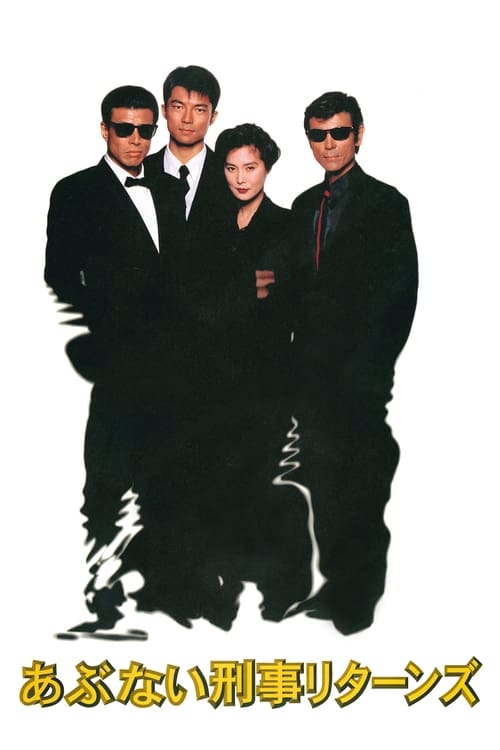
Toshiki Takayama and Yuji Oshita come back to Yokohama after years away, having retired from police work and opened their own T&Y detective agency, but the city does not let them settle into peace for long. Their return feels like the old world snapping back into place: the docks, the nightlife, the criminal shadows, and the familiar friction between the two men's reckless instincts and the city's corruption all reassert themselves at once. They are back for what should be the last, nostalgic chapter of their detective lives, but almost immediately the past reaches out and drags them into a case that is both criminal and deeply personal.
The first crack in that uneasy homecoming appears when a Japanese lawyer returning from Hong Kong is murdered in cold blood. The killing is shocking not only because it is so public and so deliberate, but because it suggests a wider transnational criminal network moving through Yokohama's ports and boardrooms. Takayama, known as Taka, immediately senses that the murder is not an isolated street execution. He begins asking the wrong questions in the right places, and that leads him straight toward Liu Fei Long, a man tied to the duo's past and now operating within the Chinese underworld's power structure. When Taka meets Liu Fei Long, he finds himself looking not only at a suspect or an intermediary, but at a man whose world is entangled with a much larger hidden machinery of violence.
Fei Long is not alone. At his side is Stella Lee, his business partner, and her presence immediately unsettles Taka because she resembles someone from his own past: Natsuko, the woman who once mattered to both Taka and Yuji. The resemblance is more than a visual echo. It becomes an emotional trigger, a living reminder that the old casework of the detectives' lives is inseparable from the old wounds of their hearts. The film lets that recognition hang in the air, turning Stella's face into a ghostly bridge between past and present. At the same time, Yokohama is starting to show signs of a larger wave of violence. The lawyer's murder is followed by a string of killings across the city, and the pattern suggests that somebody is systematically removing people who know too much or matter too much.
Right in the middle of this, the film shifts from crime thriller to family mystery when a young woman named Ayaka Nagamine walks into the T&Y detective agency and asks for help finding her mother, Natsuko. That request hits Taka and Yuji like a personal ambush. Natsuko is not a stranger to them; she is an old acquaintance, and the implication that she may be missing or in danger brings the past rushing forward. Ayaka's arrival does more than open a missing-person case. It turns the story into a search for identity, because Ayaka's very presence suggests that she may be tied to one of the two men in a way neither can safely dismiss. The film does not delay the tension: both men privately acknowledge that they each had a fling with Natsuko around the time Ayaka was born, which makes Ayaka's claim emotionally plausible and dramatically explosive.
From this point onward, the story moves in two directions at once. On one track, Taka and Yuji pursue the truth behind Natsuko's disappearance and Ayaka's parentage. On the other, they keep following the trail of the murders that began with the Hong Kong lawyer's death. Those threads tighten around each other until it becomes clear that they are not separate mysteries at all. The people being killed are connected to a broader criminal-corporate conspiracy, one that reaches into business success, underworld alliances, and old grudges from the days when Taka and Yuji were still officially on the force. The film's energy comes from the way it layers these revelations over the duo's return: every new clue feels like a reunion with something the city never stopped hiding.
As Taka presses deeper, the true architecture of the plot begins to emerge. The murders are not random, and Fei Long is not the final mastermind. Instead, the real operator behind the crimes is Kaidō Takumi, a young and seemingly rising business figure whose public image masks a criminal agenda. Kaidō is controlling the Chinese mafia headed by Liu Fei Long, turning Fei Long into a tool inside a larger plan. That is the first major twist: the man who appears to be the visible center of the underworld is actually being used by someone else. The second twist is even more personal. Kaidō is revealed to be the bastard child of the Ginsei Kai leader whom Taka killed years earlier in a previous case. That revelation instantly transforms the plot from a contemporary murder investigation into a revenge story stretched across generations. Kaidō is not merely consolidating power. He is avenging the bloodline that Taka severed, and he is doing it through a fusion of organized crime, corporate ambition, and manipulation of violence.
The stakes rise with each discovery. The corpses keep appearing, and each one sharpens the outline of Kaidō's method: he targets men of high corporate stature, using murder as both cleanup and intimidation. The city begins to feel infected by a logic that is as much economic as criminal. Power is being rearranged in the shadows, and the killings are the visible symptom of that hidden restructuring. Taka and Yuji continue to do what they have always done best: they push back, often recklessly, often with no institutional support, and often by taking physical risks that would make a normal detective stop cold. Their old chemistry returns in bursts of sarcasm, bravado, and improvisation, but beneath that familiar rhythm there is urgency now, because the investigation is no longer only about stopping criminals. It is about saving a family Taka and Yuji did not know they still had.
Meanwhile, Stella Lee remains one of the story's most emotionally charged presences. Her resemblance to Natsuko is never just ornamental; it becomes a visual pressure point whenever she appears beside Kaidō or Fei Long. Taka watches her with the suspicion of a man trying to decide whether he is seeing a clue, a ghost, or both. The film uses her to keep the audience inside the detectives' emotional confusion. She seems caught between worlds, reluctantly standing near the criminal machinery while carrying the face of someone the protagonists once loved. That ambiguity deepens the sense that the present is being haunted by the unfinished business of the past.
As the investigation closes in, the search for Natsuko becomes inseparable from the exposure of Kaidō's conspiracy. Ayaka's presence now carries even greater weight. She is not just a client; she is the human proof that the past still lives in the present. The film lets Taka and Yuji confront the possibility that one of them may be her father, and that uncertainty gives the story its most tender emotional tension. In private, both men admit their connection to Natsuko, but the film does not turn that into a cheap reveal. Instead, it uses the uncertainty to make the audience feel the vulnerability underneath the duo's swagger. They are not just chasing gangsters. They are chasing the consequences of their own younger selves.
The violence escalates until it becomes impossible to ignore that Kaidō is preparing something larger than murder. The sources describe the final stage of the story as involving a terrorist plot with a bomb, which means the conspiracy reaches beyond assassination and into mass destruction. That escalation gives the climax its shape: the murders are part of a plan to create fear, erase opposition, and force the city to submit to a new order. By the time Taka and Yuji understand the full scale of it, the case has become a race against catastrophe. The tension turns from investigative pressure to physical urgency, and the city itself becomes the pressure cooker.
The film does not provide, in the available plot material, a complete minute-by-minute account of the final showdown, but it is clear that the climax centers on the collapse of Kaidō Takumi's scheme. Taka and Yuji expose him as the real mastermind and force the conspiracy into the open, revealing that the chain of murders and manipulations was never simply Fei Long's operation. Kaidō's hidden identity as the son of the Ginsei Kai leader killed by Taka makes the final confrontation feel like a reckoning with the consequences of the duo's entire career. Every step of the pursuit has been building toward this collision between old justice and inherited revenge.
Because the provided sources do not give a complete scene-by-scene ending, they do not explicitly confirm the exact fate of Kaidō Takumi, Liu Fei Long, Stella Lee, or Natsuko in the final moments. What they do establish is that the narrative resolves by revealing Kaidō as the true culprit and by tying the murder spree, the corporate intrigue, and the family mystery into a single structure. The bomb plot is stopped, the conspiracy is brought down, and the truth about the killings is exposed. The emotional resolution comes from Ayaka's search for her mother and the way that search forces Taka and Yuji to confront the truth about their own past with Natsuko.
The story ends not with a neat return to normal life, but with a hard-won restoration of connection. Yokohama remains a city of shadows, but Taka and Yuji have once again walked through those shadows together, and in doing so they recover not only their old detective rhythm but also the buried human ties that made the case matter in the first place. The final feeling is one of closure with lingering pain: the old crimes are not fully erased, but they are answered, the truth is dragged into the light, and the reunited duo stands at the center of the aftermath with the past finally acknowledged.
More Movies Like This
Browse All Movies →




What is the ending?
In the ending of "Abunai Deka Returns," the main characters confront the antagonist in a climactic showdown. The protagonist, a dedicated detective, manages to outsmart the villain, leading to a tense resolution. The film concludes with a sense of justice served, as the detective reflects on the challenges faced and the bonds formed throughout the investigation.
As the film approaches its conclusion, the tension escalates. The protagonist, Detective Kuroda, finds himself in a high-stakes situation. After a series of intense confrontations with the antagonist, who has been orchestrating a series of crimes, Kuroda gathers his team for a final plan. They are determined to bring the villain to justice, not just for the sake of the law, but to protect the innocent lives that have been affected by the antagonist's actions.
In a dimly lit warehouse, the atmosphere is thick with suspense. Kuroda and his partner, Detective Kawai, stealthily navigate through the shadows, their hearts racing as they approach the location where the antagonist is believed to be hiding. The warehouse is filled with crates and the remnants of previous criminal activities, creating a haunting backdrop for the confrontation. Kuroda's determination is palpable; he is driven not only by duty but by a personal vendetta against the chaos the antagonist has caused.
As they enter the main area, the antagonist, a cunning and ruthless figure, reveals himself. A tense standoff ensues, with both sides exchanging sharp words that reflect their conflicting ideologies. Kuroda's resolve is tested as the antagonist taunts him, bringing up past failures and losses. The emotional weight of these words hangs heavy in the air, but Kuroda remains focused, channeling his anger into a strategic plan.
The confrontation escalates into a physical altercation. Kuroda and Kawai work in tandem, showcasing their skills and teamwork. The fight is intense, filled with close calls and moments of vulnerability. Kawai, who has always been the more impulsive of the two, finds himself in a precarious situation, but Kuroda's quick thinking saves him. This moment solidifies their bond, highlighting the theme of friendship and loyalty that runs throughout the film.
As the battle reaches its climax, Kuroda manages to outmaneuver the antagonist, using both his physical prowess and his keen intellect. In a final, decisive moment, he apprehends the villain, ensuring that justice is served. The antagonist, now defeated, is left to face the consequences of his actions, a stark reminder of the impact of crime on society.
In the aftermath, Kuroda and Kawai stand outside the warehouse, the weight of their victory settling in. They share a moment of reflection, acknowledging the challenges they faced and the lives they have touched through their work. Kuroda, though weary, feels a sense of fulfillment. He understands that while the battle against crime is ongoing, this victory is a step towards a safer community.
As the film closes, the camera pans out, capturing the city skyline at dusk. The lights begin to twinkle, symbolizing hope and resilience. Kuroda and Kawai walk away from the scene, ready to face whatever challenges lie ahead, united in their mission to protect and serve. The fate of the main characters is one of growth and camaraderie, having emerged stronger from their trials, embodying the spirit of justice that defines their roles as detectives.
Is there a post-credit scene?
In "Abunai Deka Returns," there is no post-credit scene. The film concludes without any additional scenes or content after the credits roll. The story wraps up with the resolution of the main plot, focusing on the characters' journeys and the closure of their arcs. The absence of a post-credit scene allows the audience to reflect on the events that transpired throughout the film, emphasizing the themes of justice and camaraderie that are central to the narrative.
What role does the setting play in the development of the plot?
The setting of Abunai Deka Returns, primarily in urban Tokyo, plays a crucial role in the development of the plot. The bustling city serves as a backdrop for the high-stakes investigation, with its neon lights and crowded streets reflecting the chaos and urgency of Kuroda's mission. Key locations, such as crime scenes and police headquarters, are vividly depicted, enhancing the tension and atmosphere of the narrative.
Who are the main characters in Abunai Deka Returns and what are their roles?
The main characters in Abunai Deka Returns include the seasoned detective, Kuroda, who is known for his unorthodox methods and strong sense of justice. His partner, the younger and more idealistic detective, is also pivotal in the story, providing a contrast to Kuroda's experience. The film also features various antagonists, including a criminal mastermind whose actions drive the plot forward.
What is the central conflict that Kuroda faces in the film?
Kuroda faces a complex conflict involving a series of high-profile crimes that challenge his investigative skills. As he delves deeper into the case, he confronts not only the criminals but also his own past decisions and the moral dilemmas that arise from his pursuit of justice.
How does Kuroda's relationship with his partner evolve throughout the film?
Kuroda's relationship with his partner evolves from one of initial tension and skepticism to mutual respect and understanding. As they face various challenges together, they learn to rely on each other's strengths, leading to a deeper bond that enhances their effectiveness as a team.
What are some key turning points in the investigation that Kuroda undertakes?
Key turning points in Kuroda's investigation include the discovery of crucial evidence that links the crimes to a larger conspiracy, a tense confrontation with a suspect that reveals hidden motives, and a personal crisis that forces Kuroda to reassess his approach. Each of these moments escalates the stakes and propels the narrative toward its climax.
Is this family friendly?
"Abunai Deka Returns," produced in 1996, is a Japanese action film that features elements typical of the genre, including crime, violence, and some mature themes. While the film is primarily an action-comedy, there are several aspects that may be objectionable or upsetting for children or sensitive viewers:
-
Violence: The film contains scenes of physical confrontations, including fights and shootouts, which may be intense and graphic for younger audiences.
-
Crime Themes: The plot revolves around criminal activities, including drug trafficking and organized crime, which may not be suitable for children.
-
Mature Humor: There are instances of adult humor and innuendos that may not be appropriate for younger viewers.
-
Emotional Tension: Characters experience stress, danger, and emotional turmoil, which could be unsettling for sensitive individuals.
-
Language: The dialogue may include strong language or suggestive remarks that could be inappropriate for children.
Overall, while the film has comedic elements, its action and mature themes may make it less suitable for a family-friendly viewing experience.








