
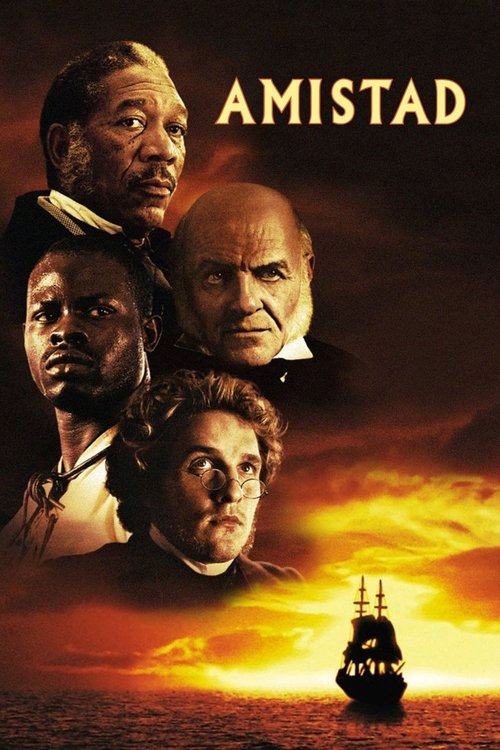
















































Popular
What events lead to the capture of the Amistad ship?
How does Cinqué's character develop throughout the film?
What role does John Quincy Adams play in the trial of the Amistad captives?
What is the significance of the relationship between Cinqué and the other captives?
How does the film depict the legal proceedings surrounding the Amistad case?
Should I watch it?
Ask Your Own Question

What is the plot?
Sorry, we aren't able to watch and write up a full detailed plot yet. Check back in a few days.









What is the ending?
In the ending of "Amistad," the Supreme Court rules in favor of the African captives, allowing them to return to Africa. However, the film concludes with a poignant scene showing the aftermath of the trial, highlighting the ongoing struggle for freedom and justice.
As the film draws to a close, the narrative unfolds with the Supreme Court's decision. The courtroom is filled with tension as the justices deliberate the fate of the Mende people, led by Cinqué. The ruling is announced, and the court finds that the captives were illegally taken from their homeland and thus have the right to return to Africa. This moment is filled with a mix of relief and triumph, as the Mende people, who have endured so much suffering, finally receive a measure of justice.
Following the ruling, we see Cinqué and the other captives preparing for their journey back home. There is a sense of hope and anticipation as they board the ship that will take them back to Africa. The emotional weight of their experiences is palpable; they have fought for their freedom and have been granted a chance to reclaim their lives.
However, the film does not shy away from the complexities of their situation. As the ship sails away, the camera captures the faces of the Mende people, reflecting a mixture of joy and sorrow. They are returning to a homeland that has been forever changed by their absence and the trauma they have endured. The final scenes emphasize the bittersweet nature of their victory, as they are free but must confront the realities of their past.
In the closing moments, the film shifts to a broader perspective, showing the ongoing struggle against slavery and the fight for human rights. The legacy of the Amistad case resonates beyond the courtroom, symbolizing the enduring quest for freedom and justice that continues to this day.
The fates of the main characters are as follows: Cinqué, the leader of the Mende people, is finally able to return to Africa, where he hopes to reunite with his family and community. John Quincy Adams, who passionately argued for the captives' freedom, is portrayed as a man who has found renewed purpose in fighting for justice, despite the personal toll it has taken on him. The other Mende captives, who have endured unimaginable hardships, are given a chance to reclaim their lives, but their journey is just beginning as they face the realities of their homeland's changes.
The film concludes with a powerful reminder of the ongoing fight for human dignity and the importance of standing up against oppression, leaving the audience with a sense of hope intertwined with the acknowledgment of the struggles that lie ahead.
Is there a post-credit scene?
The movie "Amistad," produced in 1997, does not have a post-credit scene. The film concludes with a powerful ending that focuses on the aftermath of the court ruling regarding the fate of the enslaved Africans aboard the Amistad. The final moments depict the characters reflecting on their journey and the broader implications of their struggle for freedom, but there are no additional scenes or credits that follow. The film ends on a poignant note, emphasizing the ongoing fight against slavery and the quest for justice.
What events lead to the capture of the Amistad ship?
The Amistad ship is captured in 1839 when a group of enslaved Africans, led by Cinqué, revolt against their captors aboard the ship. They manage to kill the ship's captain and crew, taking control of the vessel with the intention of sailing back to Africa. However, they are deceived by the navigational skills of the ship's navigator, who tricks them into sailing towards the United States instead.
How does Cinqué's character develop throughout the film?
Cinqué begins as a strong and determined leader among the enslaved Africans, showcasing his fierce spirit during the revolt. As the story progresses, he experiences deep emotional turmoil, grappling with the loss of his family and the trauma of enslavement. His character evolves from a warrior fighting for freedom to a symbol of hope and resilience, as he seeks justice in a foreign legal system.
What role does John Quincy Adams play in the trial of the Amistad captives?
John Quincy Adams, portrayed as a former president and a seasoned lawyer, becomes a pivotal figure in the legal battle for the Amistad captives. Initially reluctant, he is moved by their plight and agrees to represent them before the Supreme Court. His passionate defense emphasizes the principles of liberty and justice, arguing that the captives are not property but human beings deserving of freedom.
What is the significance of the relationship between Cinqué and the other captives?
The relationship between Cinqué and the other captives is central to the narrative, highlighting themes of solidarity and shared suffering. Cinqué emerges as a leader, inspiring hope and courage among the group. Their bond is tested through the trials they face, but it ultimately strengthens their resolve to fight for their freedom, showcasing their collective struggle against oppression.
How does the film depict the legal proceedings surrounding the Amistad case?
The legal proceedings in the Amistad case are depicted with intense drama and tension, showcasing the courtroom battles and the societal implications of the trial. The film illustrates the complexities of the legal arguments, including issues of international law, the rights of enslaved individuals, and the moral dilemmas faced by the characters involved. The courtroom scenes are filled with emotional weight, as the fate of the captives hangs in the balance.
Is this family friendly?
"Amistad," produced in 1997, is a historical drama that deals with heavy themes and contains several potentially objectionable or upsetting scenes. Here are some aspects that may be challenging for children or sensitive viewers:
-
Depictions of Slavery: The film portrays the brutal realities of the transatlantic slave trade, including scenes of violence and dehumanization that may be distressing.
-
Violence: There are moments of physical violence, including scenes of rebellion and conflict that can be intense and graphic.
-
Death and Suffering: The film includes scenes that depict the suffering and death of enslaved individuals, which can be emotionally impactful.
-
Emotional Trauma: Characters experience significant emotional pain, loss, and trauma, which may be difficult for younger viewers to process.
-
Language: There are instances of strong language that may not be suitable for all audiences.
-
Mature Themes: The film addresses complex themes such as freedom, justice, and human rights, which may require a level of maturity to fully understand.
Overall, while "Amistad" is an important historical narrative, its content may not be appropriate for younger audiences or those sensitive to its themes.







