











Popular
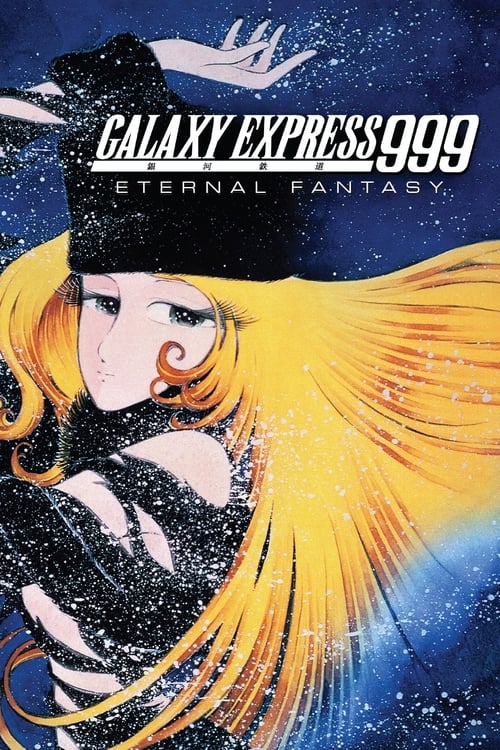
What is the significance of Maetel's character in Galaxy Express 999: Eternal Fantasy?
How does Tetsuro's character develop throughout the film?
What role do the mechanical beings play in the story?
What is the significance of the train, Galaxy Express 999, in the narrative?
How does the film explore the theme of immortality through its characters?
Should I watch it?
Ask Your Own Question

What is the plot?
Sorry, we aren't able to watch and write up a full detailed plot yet. Check back in a few days.
More Movies Like This
Browse All Movies →

What is the ending?
In the ending of "Galaxy Express 999: Eternal Fantasy," Tetsuro faces a final confrontation with the antagonist, the Phantom, who embodies the dark side of humanity's desire for immortality. Tetsuro ultimately rejects the Phantom's offer of eternal life, realizing the value of human experiences, including pain and suffering. The film concludes with Tetsuro and Maetel parting ways, as she returns to her role as a guide for others on the Galaxy Express, while Tetsuro embraces his humanity and the journey ahead.
As the climax of "Galaxy Express 999: Eternal Fantasy" unfolds, Tetsuro finds himself in a surreal confrontation with the Phantom, a figure representing the darker aspects of human desire. The scene is set in a shadowy realm, filled with swirling mists and echoes of lost souls. Tetsuro stands resolute, his heart pounding as he faces the Phantom, who offers him the chance to escape the pain of mortality through the promise of eternal life.
The Phantom, cloaked in darkness, speaks with a voice that resonates with temptation. He presents Tetsuro with visions of a life free from suffering, where he can live forever without the burdens of loss or grief. Tetsuro's internal struggle is palpable; he grapples with the allure of immortality, yet he recalls the warmth of his memories with his mother and the friends he has made along his journey. The emotional weight of his past fuels his determination.
In a moment of clarity, Tetsuro rejects the Phantom's offer, declaring that life, with all its hardships, is precious. He understands that the essence of being human lies in experiencing both joy and sorrow. This realization ignites a fierce light within him, pushing back against the darkness that the Phantom embodies. The Phantom, taken aback by Tetsuro's resolve, begins to lose his grip on the realm they inhabit.
As the confrontation escalates, the environment around them shifts dramatically. The swirling mists begin to dissipate, revealing a bright, starry expanse. Tetsuro's courage shines through, and he stands firm, affirming his choice to embrace life in all its forms. The Phantom, unable to comprehend Tetsuro's rejection of his offer, starts to fade away, his power waning in the face of Tetsuro's conviction.
In the aftermath of this confrontation, Tetsuro finds himself back on the Galaxy Express, where he is reunited with Maetel. The train glides through the cosmos, a symbol of hope and new beginnings. Maetel, with her gentle demeanor, acknowledges Tetsuro's growth and the strength he has found within himself. Their bond deepens as they share a moment of understanding, both aware that their paths are diverging.
As the train approaches a station, Maetel prepares to disembark. She turns to Tetsuro, her eyes filled with a mixture of sadness and pride. She tells him that her role as a guide is not over, and she must continue to help others on their journeys. Tetsuro, though reluctant to say goodbye, understands that this is a necessary part of their respective paths. He expresses his gratitude for her guidance and the lessons he has learned.
In a poignant farewell, Maetel steps off the train, her figure slowly fading into the distance. Tetsuro watches her go, feeling a bittersweet ache in his heart. He realizes that while their journeys may be separate, the experiences they shared will forever be a part of him. With renewed determination, Tetsuro looks ahead, ready to embrace the future and the adventures that await him.
The film concludes with Tetsuro standing on the Galaxy Express, gazing out at the vastness of space. He understands that life is a journey filled with both light and darkness, and he is prepared to face whatever comes next, cherishing the memories of those he loves. The final scene encapsulates the essence of humanity, highlighting the importance of choice, growth, and the acceptance of life's fleeting nature.
Is there a post-credit scene?
In "Galaxy Express 999: Eternal Fantasy," there is indeed a post-credit scene that adds a poignant touch to the film's conclusion. After the credits roll, the scene opens with a serene view of the cosmos, stars twinkling against the vastness of space.
The camera slowly pans to reveal the Galaxy Express 999 gliding through the stars, its sleek form cutting through the darkness. Inside the train, Tetsuro Hoshino is seen gazing out of the window, a contemplative expression on his face. The weight of his journey and the experiences he has endured is evident in his eyes. He reflects on the friends he has made and lost, particularly Maetel, whose presence lingers in his heart.
As he looks out, a soft, ethereal melody begins to play, evoking a sense of nostalgia and longing. The scene transitions to a flashback of Tetsuro and Maetel together, sharing moments of laughter and adventure aboard the train. These memories are filled with warmth, showcasing their deep bond and the impact Maetel had on Tetsuro's life.
The post-credit scene culminates with Tetsuro whispering a heartfelt promise to continue his journey, not just through space, but in life, carrying the lessons learned from Maetel and the experiences aboard the Galaxy Express 999. The screen fades to black, leaving viewers with a sense of hope and the enduring nature of their connection, even across the vastness of the universe.
What is the significance of Maetel's character in Galaxy Express 999: Eternal Fantasy?
Maetel serves as both a guide and a protector for Tetsuro throughout the journey. Her mysterious past and connection to the mechanical world create a complex emotional dynamic, as she embodies both beauty and sorrow. Her motivations are deeply tied to her own experiences and the fate of humanity, making her a pivotal character in Tetsuro's quest.
How does Tetsuro's character develop throughout the film?
Tetsuro begins as a young boy driven by a desire for revenge against the mechanical beings that killed his mother. As the story unfolds, he faces various challenges that force him to confront his own humanity and the value of life. His interactions with Maetel and other characters lead him to question his initial motivations, ultimately fostering a deeper understanding of love, loss, and the importance of human connections.
What role do the mechanical beings play in the story?
The mechanical beings represent the loss of humanity and the consequences of technological advancement. They serve as antagonists that challenge Tetsuro's beliefs and values. Throughout the film, Tetsuro encounters various mechanical characters, each illustrating different aspects of this theme, from the coldness of their existence to the tragic stories behind their transformations.
What is the significance of the train, Galaxy Express 999, in the narrative?
The Galaxy Express 999 is not just a mode of transportation; it symbolizes the journey of life and the pursuit of dreams. It connects different worlds and characters, serving as a vessel for Tetsuro's growth and exploration. The train's various stops introduce him to new experiences and challenges, each contributing to his understanding of what it means to be human.
How does the film explore the theme of immortality through its characters?
Immortality is a central theme, particularly through the character of Maetel and her connection to the mechanical beings. The film examines the allure of eternal life versus the value of human experiences and emotions. Characters who have chosen immortality often reveal a sense of emptiness, prompting Tetsuro to reflect on the importance of mortality and the richness of a finite life.
Is this family friendly?
"Galaxy Express 999: Eternal Fantasy" is generally considered suitable for older children and families, but it does contain some themes and scenes that may be unsettling for younger viewers or sensitive individuals. Here are a few potentially objectionable aspects:
-
Death and Loss: The film explores themes of mortality, with characters facing death and the loss of loved ones, which may be emotionally heavy for some viewers.
-
Violence: There are scenes of conflict and battles that may include mild violence, which could be distressing for younger audiences.
-
Existential Themes: The narrative delves into complex themes such as the meaning of life, the nature of humanity, and the consequences of immortality, which may be difficult for younger children to fully grasp.
-
Dark Imagery: Some visual elements may be dark or surreal, potentially causing discomfort or fear in sensitive viewers.
-
Emotional Turmoil: Characters experience significant emotional struggles, including despair and longing, which may resonate deeply and evoke strong feelings.
While the film is rich in storytelling and visual artistry, parents may want to consider these elements when deciding if it is appropriate for their children.








