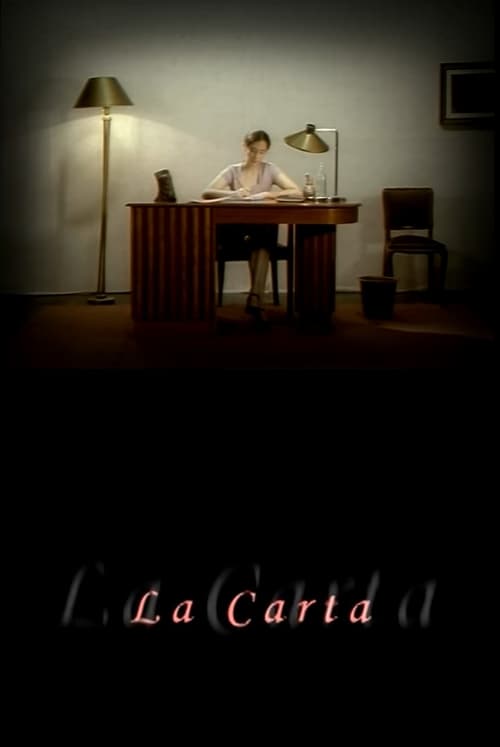



Popular
What are the key turning points in the protagonist's journey?
What role does the setting play in the development of the characters?
How does the protagonist's relationship with their family evolve throughout the film?
How does the protagonist's internal conflict manifest throughout the film?
What is the significance of the letter in La carta?
Should I watch it?
Ask Your Own Question

What is the plot?
Sorry, we aren't able to watch and write up a full detailed plot yet. Check back in a few days.
More Movies Like This
Browse All Movies →






What is the ending?
In the ending of "La carta," the main character, a woman named Laura, confronts the truth about her past and the choices she has made. She ultimately decides to embrace her future, leading to a sense of closure and hope. The film concludes with Laura finding a new path forward, leaving behind the burdens of her past.
As the film approaches its conclusion, the tension builds around Laura's internal struggle. The scene opens with Laura sitting alone in her dimly lit apartment, the weight of her past decisions heavy on her shoulders. She gazes at a letter that has been pivotal throughout the film, a symbol of her unresolved feelings and the relationships that have shaped her life. The camera lingers on her face, capturing the flicker of emotions--regret, sadness, and a glimmer of determination.
In the next scene, Laura meets with her estranged father, a man she has long held resentment towards. The atmosphere is thick with unspoken words as they sit across from each other in a small café. The tension is palpable; Laura's hands tremble slightly as she clutches her coffee cup. Her father, visibly aged and weary, attempts to bridge the gap between them, expressing his remorse for the past. Laura listens, her expression a mix of skepticism and longing for connection. This moment is crucial as it reveals her desire for reconciliation, despite the pain that lingers.
As the conversation unfolds, Laura's father shares a heartfelt story from his own youth, revealing the struggles he faced and the mistakes he made. The camera captures Laura's shifting emotions--her initial defensiveness softens as she begins to see her father as a flawed human being rather than just a source of her pain. The scene culminates in a moment of vulnerability; Laura finally opens up about her feelings of abandonment and hurt. Tears well in her eyes, and for the first time, she allows herself to express the depth of her emotions.
The next pivotal scene takes place at a family gathering, where Laura is surrounded by relatives she has distanced herself from. The atmosphere is festive, yet Laura feels like an outsider. As she watches her family interact, a sense of longing washes over her. The camera captures her isolation amidst the laughter and joy, emphasizing her internal conflict. However, as the evening progresses, Laura finds herself drawn into conversations, slowly reconnecting with her family. This gradual reintegration symbolizes her willingness to confront her past and embrace her identity.
In the final scenes, Laura stands at a crossroads, both literally and metaphorically. She is seen walking through a park, the sun setting behind her, casting a warm glow that signifies new beginnings. The letter that once held her captive is now crumpled in her hand, a representation of her decision to let go of the past. As she reaches a fork in the path, she pauses, taking a deep breath. The camera captures her contemplative expression, reflecting her newfound clarity and resolve.
The film concludes with Laura making a choice to move forward, symbolized by her decision to take the path leading away from her past. The final shot lingers on her face, a mixture of hope and determination, as she walks into the distance, leaving behind the burdens that once defined her. The screen fades to black, leaving the audience with a sense of closure for Laura, who has finally embraced her future.
In summary, Laura's journey culminates in a powerful moment of self-acceptance and reconciliation, allowing her to step into a new chapter of her life, free from the shadows of her past. The fates of the other characters, including her father, remain intertwined with Laura's journey, as they too begin to heal and reconnect, suggesting a hopeful future for their relationships.
Is there a post-credit scene?
The movie "La carta," produced in 1998, does not feature a post-credit scene. The film concludes its narrative without any additional scenes or content after the credits roll. The story wraps up with a focus on the emotional resolution of the characters, leaving the audience with a sense of closure regarding the plot and character arcs.
What are the key turning points in the protagonist's journey?
Key turning points in the protagonist's journey in La carta include the moment they first read the letter, which ignites a quest for truth and self-discovery. Another significant turning point occurs during a confrontation with a family member, where long-buried emotions surface, leading to a cathartic release. These moments are crucial as they propel the protagonist towards personal growth and resolution.
What role does the setting play in the development of the characters?
The setting in La carta is integral to character development, reflecting the emotional landscapes of the characters. The contrasting environments, from bustling urban scenes to quiet, introspective spaces, mirror the internal struggles of the protagonist. Each location serves as a backdrop for key moments of realization and growth, emphasizing the characters' emotional states and their journeys.
How does the protagonist's relationship with their family evolve throughout the film?
Throughout La carta, the protagonist grapples with their strained relationship with their family. Initially marked by misunderstandings and emotional distance, the protagonist's journey reveals deep-seated issues stemming from past grievances. As the story unfolds, moments of vulnerability and reconciliation emerge, showcasing the complexity of familial bonds and the desire for acceptance.
How does the protagonist's internal conflict manifest throughout the film?
The protagonist's internal conflict in La carta is portrayed through a series of emotional struggles and decisions that highlight their desire for belonging and understanding. This conflict manifests in moments of doubt, frustration, and ultimately, courage as they confront their fears and the implications of the letter. The character's emotional turmoil is depicted through their interactions with others and their reflective moments alone.
What is the significance of the letter in La carta?
The letter in La carta serves as a pivotal plot device that drives the narrative forward. It symbolizes unexpressed emotions and the longing for connection between characters. The protagonist's journey revolves around the contents of this letter, which reveals hidden truths and ultimately leads to a confrontation with their past.
Is this family friendly?
"La carta," produced in 1998, is a film that explores complex themes of love, loss, and the impact of past decisions on present lives. While it is a poignant narrative, there are elements that may be considered objectionable or upsetting for children or sensitive viewers.
-
Emotional Turmoil: The film delves into deep emotional struggles, including themes of regret and longing, which may be intense for younger audiences to process.
-
Family Conflict: There are scenes depicting familial discord and tension, which could be distressing for children who may not understand the complexities of adult relationships.
-
Loss and Grief: The narrative includes moments that address loss, which can evoke strong feelings of sadness and may be difficult for sensitive viewers.
-
Romantic Relationships: The film explores romantic entanglements that may include themes of betrayal or unrequited love, which could be confusing or upsetting for younger viewers.
-
Cultural Context: Some cultural references and emotional expressions may not resonate with all audiences, potentially leading to misunderstandings or discomfort.
Overall, while "La carta" offers a rich narrative experience, its emotional depth and mature themes may not be suitable for all children or sensitive individuals.