














Popular
What is the significance of the cherry orchard in the story?
How does Lyuba Ranevskaya react to the news of the auction of the cherry orchard?
What role does Lopakhin play in the fate of the cherry orchard?
How does the character of Anya evolve throughout the film?
What is the relationship between Dunyasha and Yasha, and how does it reflect the social changes in the story?
Should I watch it?
Ask Your Own Question

What is the plot?
Sorry, we aren't able to watch and write up a full detailed plot yet. Check back in a few days.








What is the ending?
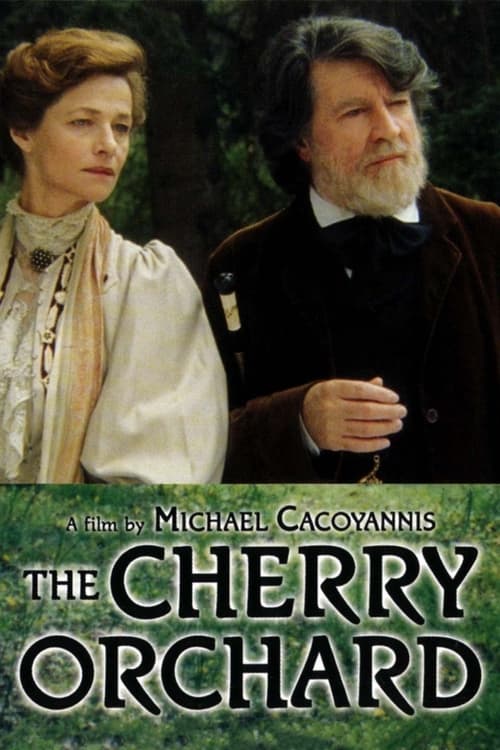
In the ending of the 1999 film "The Cherry Orchard," the estate is sold at auction, and the cherry orchard is cut down. The characters face the reality of their changing lives, with some leaving the estate and others remaining behind, grappling with their losses and the passage of time.
As the film approaches its conclusion, the atmosphere is heavy with a sense of inevitability. The estate, once vibrant and filled with memories, is now a site of impending change. The characters gather in the drawing room, where the tension is palpable. Lyuba Ranevskaya, the matriarch, is filled with despair as she realizes that her beloved cherry orchard will be lost. She clings to the memories of her past, her childhood, and the beauty of the orchard, which symbolizes her family's history and the life she once knew.
The auction takes place, and Lopakhin, the pragmatic businessman, emerges as the buyer of the estate. His intentions are clear: he plans to cut down the cherry orchard to make way for summer cottages, a decision that represents the clash between the old aristocracy and the new capitalist society. The emotional weight of this moment is profound, as it signifies the end of an era for Lyuba and her family.
As the characters react to the news, we see a range of emotions. Dunyasha, the maid, is heartbroken, while Varya, Lyuba's daughter, struggles to maintain a sense of hope amidst the chaos. Trofimov, the student, attempts to rationalize the changes, advocating for progress and the future, but his words fall on deaf ears as the reality of their situation sinks in.
In the final scenes, the characters begin to leave the estate. Lyuba, overwhelmed by grief, is unable to accept the loss of her home and the cherry orchard. She wanders through the estate, reminiscing about the past, while the sounds of the workers preparing to cut down the trees echo in the background. The cherry orchard, once a symbol of beauty and nostalgia, becomes a haunting reminder of what has been lost.
As the film closes, the sound of axes chopping down the trees fills the air, marking the definitive end of the Ranevskaya family's legacy. The characters exit the estate, each carrying their own burdens of loss and change. Lopakhin stands outside, reflecting on his new acquisition, embodying the new order that has replaced the old. The film ends with a poignant sense of finality, leaving the audience to ponder the impact of time, change, and the inevitability of progress on the lives of the characters.
Is there a post-credit scene?
The 1999 film "The Cherry Orchard," directed by Michael Cacoyannis, does not contain a post-credit scene. The film concludes with the emotional climax of the story, focusing on the fate of the cherry orchard and the characters' responses to the impending changes in their lives. The ending leaves viewers with a poignant sense of loss and reflection, encapsulating the themes of nostalgia and the passage of time that permeate Chekhov's original play. After the final scene, the credits roll without any additional content or scenes following them.
What is the significance of the cherry orchard in the story?
The cherry orchard serves as a symbol of the family's past wealth and status, representing both nostalgia and the inevitable passage of time. It is a beautiful, yet neglected estate that reflects the characters' emotional ties to their history and the changes in Russian society.
How does Lyuba Ranevskaya react to the news of the auction of the cherry orchard?
Lyuba Ranevskaya is devastated by the news of the auction. She is emotionally attached to the cherry orchard, as it represents her childhood and the memories of her family. Her reaction is one of denial and despair, as she struggles to accept the loss of her family's legacy.
What role does Lopakhin play in the fate of the cherry orchard?
Lopakhin, a former serf and now a successful businessman, proposes to cut down the cherry orchard to build summer cottages, which he believes is the only way to save the estate financially. His practical approach contrasts sharply with the emotional attachment of the Ranevskaya family, highlighting the conflict between old aristocratic values and new capitalist realities.
How does the character of Anya evolve throughout the film?
Anya, Lyuba's daughter, represents hope and the future. Throughout the film, she evolves from a naive young girl into a more aware and resilient individual. She grapples with her family's legacy and ultimately seeks to find a way to move forward, embodying the potential for change amidst the loss.
What is the relationship between Dunyasha and Yasha, and how does it reflect the social changes in the story?
Dunyasha, the maid, and Yasha, the footman, share a flirtatious relationship that reflects the shifting social dynamics of the time. Their interactions highlight the class distinctions and aspirations of the lower classes, as Dunyasha dreams of a better life while Yasha is more self-serving, embodying the changing attitudes towards social mobility and class.
Is this family friendly?
The 1999 film "The Cherry Orchard," directed by Michael Cacoyannis, is based on Anton Chekhov's play and explores themes of loss, change, and the passage of time. While it is a poignant and beautifully crafted story, it may not be considered family-friendly for younger audiences or sensitive viewers due to several potentially objectionable or upsetting aspects:
-
Themes of Loss and Displacement: The central narrative revolves around the impending sale of the family estate, which includes the beloved cherry orchard. This theme of losing one's home and heritage can be emotionally heavy and distressing.
-
Financial Struggles: The characters face significant financial difficulties, leading to discussions about poverty and the loss of social status, which may be difficult for children to understand.
-
Emotional Turmoil: Characters experience deep emotional pain, including sadness, regret, and nostalgia, which may be intense for younger viewers.
-
Conflict and Tension: There are moments of conflict between characters, including disagreements and confrontations that can create a tense atmosphere.
-
Death and Mortality: The film touches on the inevitability of change and the passage of time, which includes reflections on aging and death, themes that may be unsettling for some.
-
Complex Relationships: The dynamics between characters can be complicated, involving unrequited love and emotional manipulation, which may be challenging for younger audiences to grasp.
Overall, while "The Cherry Orchard" is a significant work of art, its mature themes and emotional depth may not be suitable for children or those sensitive to such topics.









