


























Popular
Should I watch it?
Ask Your Own Question

What is the plot?
Sorry, we aren't able to watch and write up a full detailed plot yet. Check back in a few days.






What is the ending?
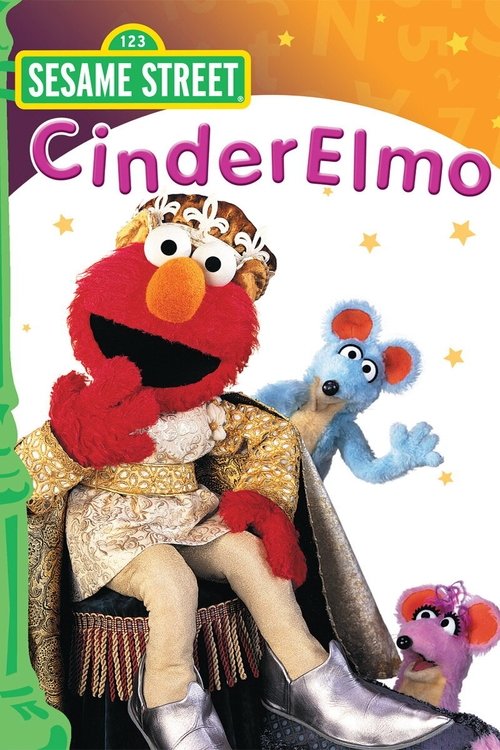
In the ending of "CinderElmo," Elmo, with the help of his friends, attends the royal ball where he meets the Prince. After a series of misunderstandings and magical moments, Elmo's true identity is revealed, leading to a heartwarming conclusion where he finds acceptance and friendship.
As the story unfolds towards its conclusion, the scene transitions to the grand royal ball, a dazzling event filled with colorful decorations and lively music. The atmosphere is electric, with guests mingling and dancing, all dressed in their finest attire. Elmo, having been transformed by the magic of his fairy godmother, arrives at the ball in a charming outfit, his eyes wide with wonder and excitement. He is filled with hope, longing to be accepted and to find a place where he belongs.
As Elmo enters the ballroom, he is initially overwhelmed by the grandeur and the presence of the Prince, who is searching for someone special. The Prince, portrayed as kind-hearted and genuine, is immediately drawn to Elmo's unique charm and innocence. Elmo, despite his initial shyness, begins to feel a sense of belonging as he interacts with the other guests, showcasing his playful nature and infectious laughter.
However, the tension rises when the clock strikes midnight, signaling the end of the magical evening. Elmo, realizing he must leave before the magic fades, rushes out of the palace, leaving behind a single red shoe. The Prince, intrigued and determined to find the owner of the shoe, begins a search that adds a layer of urgency to the narrative.
In the following scenes, the Prince visits various characters in the kingdom, including Elmo's stepmother and stepsiblings, who are eager to claim the shoe for themselves. Their attempts are comically thwarted, highlighting their selfishness and lack of true character. Meanwhile, Elmo, back in his everyday life, feels a mix of sadness and hope, yearning for the connection he felt at the ball.
The climax occurs when the Prince finally arrives at Elmo's home. The atmosphere is tense as the stepmother tries to prevent Elmo from trying on the shoe, fearing that he will be discovered. However, Elmo's friends rally around him, encouraging him to embrace his true self. With a sense of determination and support from his friends, Elmo steps forward and tries on the shoe, which fits perfectly.
In this moment, the room fills with joy and acceptance. The Prince, recognizing Elmo's true worth and the kindness he embodies, invites him back to the palace. Elmo's heart swells with happiness as he realizes that he has found not only friendship but also a place where he is truly valued.
The film concludes with a celebratory scene at the palace, where Elmo is welcomed with open arms. The Prince and Elmo share a heartfelt moment, solidifying their bond. The final scenes depict a joyous celebration, emphasizing themes of friendship, acceptance, and the importance of being true to oneself. Elmo's journey from a lonely character to one embraced by love and friendship serves as a powerful reminder of the value of authenticity and connection.
As the credits roll, viewers are left with a sense of warmth, knowing that Elmo, the Prince, and their friends will continue to share adventures together, united by the magic of friendship and acceptance.
Is there a post-credit scene?
"CinderElmo," produced in 1999, does not have a post-credit scene. The film concludes with the resolution of the story, focusing on Elmo's journey and the celebration of his triumphs. The narrative wraps up with a joyful ending, emphasizing themes of friendship, kindness, and believing in oneself, without any additional scenes after the credits. The film ends on a high note, leaving the audience with a sense of closure and happiness.
What role does Elmo play in the story of CinderElmo?
Elmo is the main character, a kind-hearted and optimistic young monster who dreams of attending the Royal Ball. He is portrayed as a modern-day Cinderella, facing challenges from his stepfamily, who are unkind and dismissive of him.
How does Elmo's Fairy Godmonster help him in CinderElmo?
Elmo's Fairy Godmonster, played by a character named 'Fairy Godmother,' magically transforms Elmo's appearance and provides him with a beautiful outfit and a carriage to attend the Royal Ball, emphasizing the theme of believing in oneself.
What obstacles does Elmo face from his stepfamily in CinderElmo?
Elmo faces ridicule and mistreatment from his stepfamily, who do not support his dreams and actively try to prevent him from going to the Royal Ball, showcasing their jealousy and lack of kindness.
What is the significance of the Royal Ball in CinderElmo?
The Royal Ball serves as a pivotal event where Elmo hopes to meet the prince and find acceptance. It represents a chance for Elmo to escape his difficult home life and experience joy and love.
How does Elmo's character develop throughout CinderElmo?
Throughout the story, Elmo evolves from a timid and oppressed character to one who embraces his identity and dreams, ultimately gaining confidence and the courage to stand up for himself, especially during the Royal Ball.
Is this family friendly?
"CinderElmo," produced in 1999, is a family-friendly film that combines elements of the classic Cinderella story with the beloved characters from Sesame Street. The movie is designed to entertain and educate young audiences, featuring themes of kindness, friendship, and perseverance.
While the film is generally suitable for children, there are a few scenes that might be considered potentially upsetting or objectionable for very sensitive viewers:
-
Emotional Struggles: The character of Elmo faces challenges and feelings of sadness when he feels left out or unappreciated, which may resonate with children who have experienced similar emotions.
-
Conflict with the Stepsisters: The stepsisters in the story can be portrayed as mean and unkind, which might be distressing for some children, especially those who are sensitive to bullying or negative behavior.
-
Disappointment and Rejection: There are moments where Elmo experiences disappointment, particularly when his dreams seem out of reach, which could evoke feelings of empathy or sadness in young viewers.
Overall, while "CinderElmo" contains some emotional moments, it ultimately conveys positive messages and resolves conflicts in a heartwarming manner, making it suitable for family viewing.









