






































Popular
What challenges does Jody face in her pursuit of becoming a professional dancer?
How does the relationship between Jody and Charlie develop throughout the film?
What role does Eva play in Jody's journey at the academy?
What is the significance of the 'Swan Lake' performance in the film?
How does the character of Jonathan Reeves influence the students at the academy?
Should I watch it?
Ask Your Own Question

What is the plot?
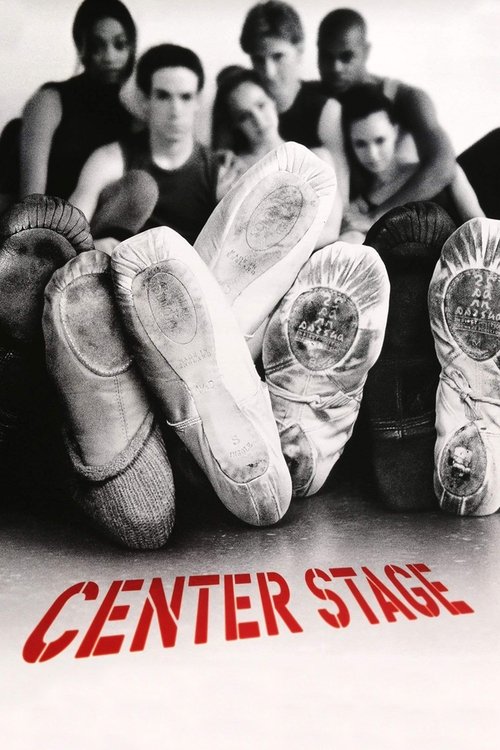
The film opens in New York City at the start of a new academic year at the exclusive American Ballet Academy, where a nationwide audition has narrowed the field to twelve young dancers, each one convinced that sheer discipline might be enough to survive the pressure cooker ahead. From the first moments, the academy feels less like a school than a gatekeeper to a tiny professional world: the students are told, directly and indirectly, that most of them will not make it, and that only a select few will advance into the affiliated company at the end of the year. In that charged atmosphere, Jody Sawyer arrives as the emotional center of the story, a dancer from Indiana whose technique is visibly imperfect--her bad feet and poor turnout are repeatedly noted--but whose passion is impossible to ignore. She is not the polished prodigy the academy usually favors; instead, she is the kind of dancer who survives on hunger, instinct, and the stubborn belief that heart can matter as much as line.
Jody is quickly placed into the close quarters of the dormitories, where she shares her room and daily life with Eva Rodriguez and Maureen Cummings, two dancers whose strengths and weaknesses sharply contrast with her own. Eva is fiery, brilliant, and defiant, the kind of student who seems to treat every rule as a challenge to her independence. Maureen, by contrast, looks like the academy's ideal on the surface: she is disciplined, technically refined, and poised for success, but beneath that perfection is a growing fragility, an obsession with control that begins to turn into a dangerous eating disorder. The three girls are connected by the same dream, yet each approaches ballet from a different wound. Jody fears she is not good enough. Eva refuses to be contained. Maureen tries to disappear into precision and self-denial.
The academy's adult world circles above them like a stern celestial machine. Jonathan Reeves, the academy's artistic director, embodies authority, judgment, and the promise of a future that can be granted or withdrawn at any moment. He watches the students as if weighing them on invisible scales, and his early assessment of Jody is especially severe. He warns her that she may not last the course, a blunt reminder that enthusiasm alone cannot erase technical weakness. The warning lands as one of the film's first major confrontations: not a shouting match, but the cold institutional verdict of a man who understands exactly how unforgiving the ballet world is. Jody absorbs the blow, but she does not break. Instead, she begins to search for some other way to define herself inside a system built to judge and rank her.
That search drives her outward from the academy's strict vocabulary into other, freer spaces around New York. She explores a salsa club and takes a jazz class, moving her body in ways that feel less prescribed and more alive. These scenes matter because they reveal what Jody lacks in classical polish she may possess in instinctive musicality and courage. In these rooms, she is not being corrected on turnout or punished for imperfect feet. She is simply moving, listening, feeling the rhythm in a way that makes her seem briefly unburdened. It is in one of these more open dance spaces that she meets Cooper Nielsen, the star dancer of the adult company and the film's most magnetic complication. Cooper is already a figure of admiration and desire when he enters the story, an elite performer who seems to have authority not only over choreography but over the emotional weather of everyone around him.
Cooper's presence immediately shifts the film into a more dangerous register. He is charming, self-assured, and intensely aware of his own body, and Jody, who has spent so long being told what she lacks, is dazzled by the attention of someone who seems to see her as desirable rather than defective. Their connection becomes a fling built out of flirtation, movement, and the intoxication of being chosen by someone who occupies the exact world Jody is trying to enter. The film does not frame this romance as innocent. It is entwined with power, status, and the fragile hope that being desired by Cooper might somehow validate Jody's place in ballet. At the same time, Charlie, another student in Jody's orbit, is quietly established as the kinder, steadier possibility she does not yet recognize. He becomes emotionally important later, but at first he is the overlooked alternative to the more glamorous danger Cooper represents.
While Jody is being pulled into this new emotional terrain, Maureen is unraveling in a different direction. Her relationship to ballet is built on control, and control begins to consume her. The film tracks her vigilant weight watching until it is no longer discipline but pathology. Her body becomes the site of a private war, and the more she tries to enforce perfection, the more precarious she becomes. One of the film's clearest revelations arrives when the medical student she dates recognizes the seriousness of her condition. This is not just a moment of concern; it is the point where Maureen's obsession is finally seen for what it is. The academy may treat suffering as normal, even virtuous, but her deterioration reveals the hidden cost of that culture. Her internal confrontation is harsher than any argument: she is fighting herself, and she is losing.
Eva, meanwhile, is fighting the system openly. She resists the teachers' discipline, pushes back against correction, and brings a volatile energy into every class. She is not the student who quietly accepts criticism. She bristles, argues, and endangers her own standing through attitude as much as through technique. Yet the film never reduces her to a mere rebel. Her defiance reads as both strength and self-sabotage, a response to the same crushing environment that is turning Maureen inward and making Jody desperate to prove she belongs. In different ways, all three girls are being shaped by the same pressure: the academy's insistence that their bodies, temperaments, and dreams must be disciplined into usefulness.
As the year advances, the stakes sharpen around the annual end-of-year workshop, the decisive performance that will determine which dancers are invited onward into the professional company. The workshop is not merely a recital; it is a judgment day. Every rehearsal, every bruise, every correction seems to funnel toward this one public test. Jonathan and the other adults treat it as the filter through which future careers will be separated from delusion. The tension between Jonathan and Cooper also grows sharper in the background, because Cooper does not merely want to dance; he wants to choreograph and shape the future on his own terms. That artistic rivalry gives the adult company scenes their own charge, but for Jody and the others the consequences are even more immediate. Their futures depend on how they are seen in this one performance window.
Jody's affair with Cooper turns out to be one of the film's central emotional traps. At first, she believes she has found something real. He is older, famous within the dance world, and able to make her feel special in a way the academy never has. But the relationship is shallow from the beginning, tied more to attraction and convenience than to commitment. The film's betrayal lands with painful clarity when Cooper ends the relationship and leaves Jody humiliated, treating her as disposable once the novelty passes. In the German summary of the film, this is the moment when she realizes that what she thought was connection was only a one-night stand, a realization sealed when he leaves her standing at the stage door while he disappears with another woman. The emotional violence of that rejection matters because it forces Jody to see the difference between being admired and being truly valued. Cooper has used her, and the glamour she projected onto him begins to collapse.
Yet the film does not leave Jody in humiliation. Instead, it channels that pain into growth. Charlie, who has been present as a gentler emotional presence, becomes increasingly important as Jody begins to understand the difference between flash and integrity. He encourages her when the pressure mounts, and his support is one of the few stable human connections in the film. Even so, the story does not simply pivot into a straightforward romance between them. Jody's deeper relationship is with her own artistic identity. She has to decide whether ballet is a test she can pass only by conforming, or a medium through which she can tell the truth about who she is.
That question comes to a head as the workshop approaches and the company prepares its showcase material. Cooper includes Jody in a piece he is choreographing, which briefly looks like an institutional breakthrough: the same man who rejected her still recognizes her enough to put her onstage in his work. But even that inclusion is unstable, bound up with his self-interest and the hierarchy of the ballet world. Jody is still trying to convert visibility into worth, while Cooper remains slippery, powerful, and emotionally unaccountable. Around them, Eva intensifies her preparation, now practicing with a greater seriousness that suggests she is finally channeling her volatile energy into survival. Maureen, by contrast, grows weaker, her struggle with food and control making her increasingly vulnerable to the demands of performance.
The final stretch of the film builds its tension through that contrast. Jody, who began as the least technically convincing of the core trio, must now deliver under the brightest light. Eva, who spent much of the year defying authority, is forced to confront whether she can actually channel her talent into consistency. Maureen, whose body has become an instrument of self-destruction, is approaching a breaking point. The workshop is no longer just an exam; it is the moment when each of their private conflicts becomes public. The adult world watches, and the students know that once the music starts, there is no hiding.
At the last moment, Maureen withdraws from her classical showcase piece. This is one of the film's sharpest twists, not because it is shocking in a thriller sense, but because it reconfigures the emotional geometry of the final performance. Maureen's collapse is the culmination of all the pressure she has been carrying, and her decision to pull out is both a defeat and a release. In her place, Eva takes the role. The substitution is crucial: Eva's opportunity arrives not through obedience or reconciliation, but because she is forced into responsibility when another dancer can no longer continue. For a character who has spent so much of the film resisting authority, the moment becomes her chance to prove that rebellion does not have to end in failure. She steps into the part under pressure, and the shift from defiance to discipline gives her storyline a hard-won payoff.
At the same time, Jody takes center stage in Cooper's choreographed piece and finally delivers a performance that transforms the audience's perception of her. The dancer once warned that she might not last the course now dances with conviction strong enough to carry the stage. What matters in this moment is not just technical cleanliness but emotional authority. Jody no longer appears as someone trying to imitate the institution's ideal; she moves as someone who has found her own expression inside it. The film frames this as a triumph, and one account notes that she receives a standing ovation for the performance. The applause functions almost like a verdict reversed: the student once considered a liability now compels admiration.
The climax also resolves the film's romantic and professional tensions in one decisive movement. Jonathan offers Jody a place in the adult company, the most conventional and prestigious reward the academy can give. On paper, it is the validation she has been chasing since the opening audition. But Jody does not simply accept the safest, most institutional path. Instead, she chooses to join Cooper's new company. That decision is the film's final statement about self-definition. It is not that the adult company is unworthy, but that Jody's future cannot be reduced to the narrow prestige ladder the academy has been using to measure her. She claims an artistic path of her own choosing, one shaped by movement, risk, and a more personal sense of possibility.
The last scenes resolve the story without death, crime, or catastrophe, but with the emotional weight of hard-earned transformation. Eva has taken the spot left open by Maureen, suggesting that talent and determination can still break through even when the path is messy and morally complicated. Maureen's arc closes in the shadow of her own collapse, a quiet but devastating reminder of how ballet's demands can turn inward and become destructive. Charlie remains the steady emotional counterpoint, his support underscoring the film's belief that kindness matters in a world obsessed with ranking. Cooper, for all his charisma, is left exposed as emotionally unreliable, a catalyst rather than a destination. Jonathan remains the figure of institutional authority, but even his offer cannot define Jody's destiny.
What finally lingers is the sense that the film's true climax is not simply winning a role but learning how to survive the machinery of judgment without surrendering one's identity. Jody begins as a girl with bad feet and too much hope, and she ends as a performer who has learned how to turn vulnerability into strength. Eva begins as a rebel who cannot fit inside the rules, and she ends by taking responsibility when the moment demands it. Maureen begins as the model of discipline and ends as a cautionary portrait of what happens when discipline devours the self. In the final image of Jody choosing her own company, the film closes on movement rather than punishment, on self-authorship rather than mere approval, and on the idea that the real performance is not just onstage but in the courage to decide who you want to become.








What is the ending?
In the ending of "Center Stage," the students of the American Ballet Academy perform in the final showcase. The performance reveals their growth and struggles throughout the film. Jody, who has faced numerous challenges, shines in her solo, while Eva, who has been a fierce competitor, faces her own moment of truth. The film concludes with the characters finding their paths, with Jody receiving an offer to join a prestigious company, and Eva realizing the importance of passion over competition.
As the final showcase approaches, the atmosphere in the American Ballet Academy is charged with anticipation and anxiety. The students are preparing for their performances, each grappling with their own fears and aspirations. Jody, who has been the underdog throughout the film, is determined to prove herself. She practices tirelessly, her determination evident in her focused expressions and the sweat glistening on her brow as she rehearses her solo.
Meanwhile, Eva, who has been a fierce rival to Jody, is also preparing for her moment on stage. She is confident, perhaps overly so, and her competitive nature drives her to push herself to the limit. However, as the showcase draws near, she begins to feel the weight of her own expectations and the pressure to succeed.
The night of the performance arrives, and the theater is filled with an audience eager to see the culmination of the students' hard work. The stage is set, and the lights dim, creating an atmosphere of excitement and tension. The first act begins, showcasing the students in various group performances. Each dancer brings their unique style and energy, and the audience is captivated by the talent on display.
As the performances unfold, we see glimpses of the characters' emotional states. Jody's nerves are palpable as she waits for her turn, her heart racing with a mix of fear and hope. Eva, on the other hand, exudes confidence, but there are moments where her facade cracks, revealing her vulnerability.
Finally, it is Jody's turn to perform her solo. As she steps onto the stage, the spotlight shines down on her, illuminating her determination. The music begins, and she dances with grace and passion, pouring her heart into every movement. The audience is entranced, and Jody's performance becomes a powerful expression of her journey, showcasing her growth from an insecure student to a confident dancer.
In contrast, Eva's performance follows, and while she is technically skilled, there is a sense of emptiness in her dance. The audience can see that she is performing for the sake of competition rather than for the love of dance. This realization hits her hard, and as she finishes, she is left with a sense of doubt about her choices.
As the showcase concludes, the students gather on stage for the final bow. The applause is thunderous, and the sense of accomplishment is palpable. Jody is approached by a representative from a prestigious dance company, who offers her a spot in their ranks. Overwhelmed with joy, Jody accepts, her dreams finally coming to fruition.
Eva, on the other hand, is left to reflect on her journey. She realizes that her obsession with winning has overshadowed her love for dance. In a moment of clarity, she approaches Jody, acknowledging her talent and expressing a newfound respect for her. This moment signifies a shift in their relationship, moving from rivalry to mutual understanding.
The film closes with the students celebrating their achievements, each character having learned valuable lessons about passion, competition, and the true meaning of success. Jody's journey culminates in her acceptance into the dance company, while Eva begins to understand the importance of dancing for herself rather than for accolades. The final scene captures the essence of their growth, leaving the audience with a sense of hope and inspiration for the future.
Is there a post-credit scene?
The movie "Center Stage," produced in 2000, does not have a post-credit scene. The film concludes with a final performance at the American Ballet Academy, showcasing the culmination of the characters' journeys and growth throughout the story. The focus remains on the characters' achievements and the emotional resolutions they experience, leaving no additional scenes or content after the credits roll.
What challenges does Jody face in her pursuit of becoming a professional dancer?
Jody, played by Amanda Schull, faces numerous challenges in her pursuit of becoming a professional dancer. Initially, she struggles with self-doubt and the pressure of competition at the prestigious American Ballet Academy. Her lack of experience in ballet compared to her peers makes her feel out of place. Additionally, Jody grapples with the intense physical demands of ballet training, including injuries and the need to maintain a perfect physique. Her emotional journey is marked by her determination to prove herself, especially when she is cast in the lead role of 'Swan Lake,' which tests her skills and resilience.
How does the relationship between Jody and Charlie develop throughout the film?
The relationship between Jody and Charlie, portrayed by Sascha Radetsky, evolves significantly throughout the film. Initially, Jody is focused on her dance career and does not notice Charlie's interest in her. As they spend more time together, particularly during rehearsals and social events, a romantic connection begins to blossom. Charlie, who is more laid-back and passionate about dance, encourages Jody to embrace her individuality. Their relationship deepens as they support each other through personal struggles, culminating in a pivotal moment where Jody realizes her feelings for him, leading to a heartfelt dance together.
What role does Eva play in Jody's journey at the academy?
Eva, played by Zoe Saldana, serves as both a friend and a rival to Jody at the academy. Initially, Eva is confident and talented, which intimidates Jody. However, as the story progresses, Eva's character reveals deeper layers, including her own insecurities and the pressure she feels to succeed. Their relationship is complex; they share moments of camaraderie but also experience jealousy and competition, particularly when both are vying for the lead role in 'Swan Lake.' Ultimately, Eva's journey parallels Jody's, as both dancers learn to confront their fears and support one another, leading to a mutual respect by the film's conclusion.
What is the significance of the 'Swan Lake' performance in the film?
The 'Swan Lake' performance is a pivotal moment in 'Center Stage,' serving as the climax of the film. It represents the culmination of the dancers' hard work, personal growth, and the emotional stakes they have faced throughout their training. For Jody, being cast as the lead is a dream come true, but it also brings immense pressure to deliver a flawless performance. The performance showcases not only the technical skills of the dancers but also their emotional depth, particularly as Jody struggles to embody the duality of the Swan Queen. The performance ultimately becomes a transformative experience for Jody, allowing her to express her true self and solidifying her place in the dance world.
How does the character of Jonathan Reeves influence the students at the academy?
Jonathan Reeves, portrayed by Peter Gallagher, is the strict and demanding artistic director at the American Ballet Academy. His character serves as a catalyst for the students' growth, pushing them to their limits and challenging their dedication to dance. His high expectations create an environment of pressure, leading to both fear and motivation among the dancers. Jonathan's tough love approach forces Jody and her peers to confront their weaknesses and strive for excellence. However, as the story unfolds, it becomes clear that his tough exterior masks a deep passion for dance and a desire to see his students succeed, ultimately influencing their journeys in profound ways.
Is this family friendly?
"Center Stage," produced in 2000, is a film that revolves around the lives of young ballet dancers at a prestigious dance academy. While it showcases the beauty and passion of dance, there are several elements that may be considered objectionable or upsetting for children or sensitive viewers:
-
Intense Competition: The film portrays the pressure and rivalry among the dancers, which can be stressful and may evoke feelings of anxiety.
-
Romantic Relationships: There are romantic subplots that include themes of infidelity and complicated relationships, which may not be suitable for younger audiences.
-
Body Image Issues: The film addresses the pressures of maintaining a certain body type in the dance world, which could be triggering for some viewers, particularly regarding self-esteem and body image.
-
Emotional Struggles: Characters experience significant emotional turmoil, including feelings of inadequacy, rejection, and the fear of failure, which may be heavy for sensitive viewers.
-
Mature Themes: There are discussions and scenes that touch on adult themes, such as ambition, sacrifice, and the darker side of pursuing a career in the arts.
Overall, while "Center Stage" is primarily focused on dance and personal growth, these elements may warrant consideration for family viewing, especially for younger children or those who are sensitive to such themes.








