

















Popular
What is the significance of the character Helen's disability in the story?
How does the setting of the old mansion contribute to the film's atmosphere?
What role does the character of Mrs. Warren play in Helen's life?
How does the killer's identity impact the story's tension?
What is the relationship between Helen and the character of Dr. Warren?
Should I watch it?
Ask Your Own Question

What is the plot?
Sorry, we aren't able to watch and write up a full detailed plot yet. Check back in a few days.






What is the ending?
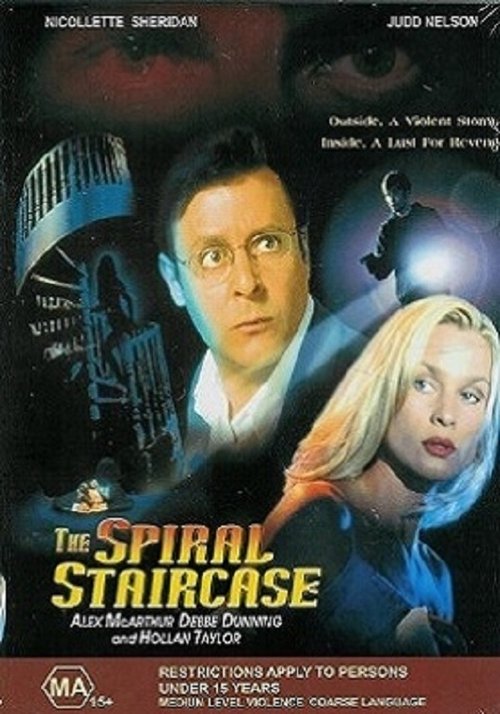
In the ending of "The Spiral Staircase," the main character, a mute woman named Helen, confronts the killer who has been stalking her. After a tense chase through the darkened house, she manages to outsmart him and ultimately survives. The film concludes with Helen finding her voice, symbolizing her triumph over fear and trauma.
As the climax of the film unfolds, the atmosphere is thick with tension. Helen, portrayed with a haunting vulnerability, is in the large, dimly lit house where she works as a caregiver. The killer, a shadowy figure who has been terrorizing the residents, is still on the loose. The audience feels the weight of her isolation, accentuated by her muteness, which has rendered her unable to call for help or express her fear verbally.
Scene by scene, the narrative builds to a heart-pounding confrontation. Helen, having sensed the danger lurking in the house, begins to navigate the darkened corridors with a mix of trepidation and determination. The camera follows her closely, capturing her anxious breaths and the way her heart races as she hears the faintest sounds that suggest she is not alone.
As she moves through the house, the tension escalates. She hears the killer's footsteps echoing ominously behind her, and her instincts kick in. Helen's internal struggle is palpable; she is terrified yet resolute, driven by the need to survive. The audience witnesses her resourcefulness as she uses her surroundings to her advantage, hiding in shadows and using the layout of the house to evade her pursuer.
In a pivotal moment, Helen finds herself cornered, and the killer's menacing presence looms closer. The scene is fraught with suspense as she musters all her courage. In a desperate bid for survival, she confronts him, using her wits to outmaneuver him. The struggle is intense, filled with physicality and raw emotion, as Helen fights not just for her life but for her autonomy and voice.
The climax reaches its peak when Helen manages to turn the tables on the killer. In a moment of sheer will, she finds a way to incapacitate him, showcasing her transformation from a frightened caregiver to a fierce survivor. The moment is cathartic, as she finally takes control of her fate.
As the dust settles, the film captures Helen in a moment of quiet reflection. She stands in the aftermath of the confrontation, breathing heavily, her face a mixture of relief and lingering fear. The camera lingers on her, emphasizing the weight of her experience. In this moment, she begins to find her voice, symbolizing her triumph over the trauma she has endured.
The film concludes with Helen stepping out of the house, a place that has been both her sanctuary and her prison. The sunlight spills over her, illuminating her path forward. The audience is left with a sense of hope, as Helen's journey signifies not just survival but the reclamation of her identity and strength. Each character's fate is intertwined with this moment; the killer is defeated, and Helen emerges transformed, ready to face the world anew.
Is there a post-credit scene?
The movie "The Spiral Staircase" produced in 2000 does not have a post-credit scene. The film concludes its narrative without any additional scenes or content after the credits roll. The story wraps up with a focus on the main character, Helen, and her harrowing experiences, leaving the audience with a sense of resolution regarding her journey and the events that transpired throughout the film.
What is the significance of the character Helen's disability in the story?
Helen, the protagonist, is a mute woman who struggles with her inability to speak, which heightens her vulnerability and isolation. Her disability serves as a critical plot device, making her an easier target for the killer and amplifying her fear and desperation throughout the film.
How does the setting of the old mansion contribute to the film's atmosphere?
The old mansion, with its dark corridors and spiral staircase, creates a claustrophobic and eerie atmosphere. The creaking floors and shadowy corners enhance the tension, making the audience feel Helen's fear as she navigates the house, especially when she realizes a killer is on the loose.
What role does the character of Mrs. Warren play in Helen's life?
Mrs. Warren serves as a maternal figure and protector for Helen. She is deeply concerned for Helen's safety and well-being, providing emotional support. However, her own fears and the unfolding events create a sense of helplessness, as she cannot fully shield Helen from the dangers that lurk in the mansion.
How does the killer's identity impact the story's tension?
The identity of the killer is shrouded in mystery, which creates a constant sense of dread. As Helen becomes increasingly aware of the danger, the audience is kept on edge, questioning who among the characters could be the murderer. This uncertainty drives the suspense and keeps viewers engaged as they try to piece together clues.
What is the relationship between Helen and the character of Dr. Warren?
Dr. Warren is a compassionate figure who shows genuine concern for Helen's well-being. His relationship with her is complex; he is both a source of comfort and a reminder of her limitations. As the story unfolds, his intentions are questioned, adding layers to their dynamic and contributing to the film's tension.
Is this family friendly?
The Spiral Staircase (2000) is a psychological thriller that contains several elements that may not be suitable for children or sensitive viewers. Here are some potentially objectionable or upsetting aspects:
-
Violence and Murder: The film revolves around a series of murders, which are depicted in a suspenseful manner. There are scenes that involve the threat of violence and the aftermath of violent acts.
-
Psychological Tension: The atmosphere is filled with suspense and psychological tension, which may be unsettling for younger viewers. The fear and anxiety experienced by the characters can be intense.
-
Themes of Disability and Vulnerability: The protagonist, who is mute, faces significant challenges and dangers, which may evoke feelings of discomfort or distress regarding her vulnerability.
-
Dark Themes: The film explores themes of fear, isolation, and the nature of evil, which may be too heavy for younger audiences.
-
Mature Situations: There are moments that involve adult themes and situations that may not be appropriate for children.
Overall, the film's tone and content may be more suitable for mature audiences due to its suspenseful and dark nature.







