
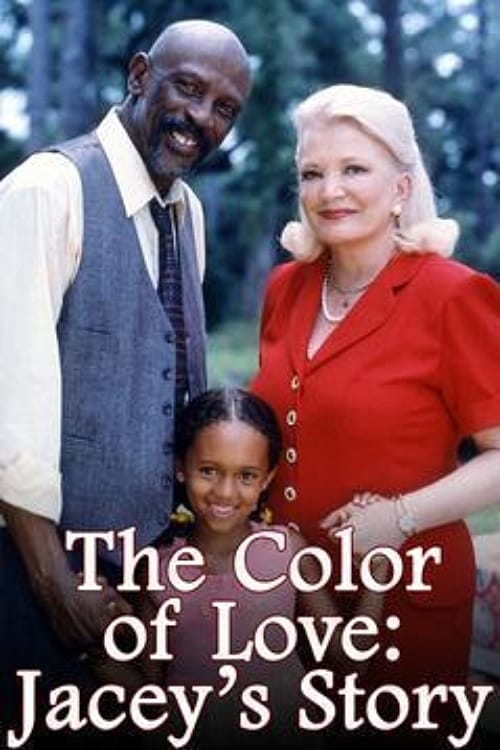












Popular
What challenges does Jacey face in her relationship with her adoptive parents?
How does Jacey's relationship with her biological mother evolve throughout the film?
What role does Jacey's friend play in her journey of self-discovery?
How does Jacey's experience at school reflect her internal struggles?
What pivotal moment leads Jacey to confront her feelings about her identity?
Should I watch it?
Ask Your Own Question

What is the plot?
Sorry, we aren't able to watch and write up a full detailed plot yet. Check back in a few days.









What is the ending?
In the ending of "The Color of Love: Jacey's Story," Jacey, a young girl of mixed race, faces the challenges of her identity and the prejudices of those around her. After a series of emotional confrontations and personal growth, she finds acceptance and love within her family and community. The film concludes with a sense of hope and unity, as Jacey learns to embrace her heritage and the people who support her.
As the final scenes unfold, we see Jacey standing in front of her school, where she has faced bullying and discrimination due to her biracial background. The camera captures her apprehensive expression, reflecting the weight of her experiences. She takes a deep breath, summoning her courage, and steps forward into the school building, symbolizing her determination to confront her challenges head-on.
In the next scene, Jacey's mother, who has been a pillar of support throughout the film, is shown preparing for a community event. She is filled with a mix of anxiety and hope, knowing that the event is an opportunity to foster understanding and acceptance among the diverse members of their community. As she arranges decorations, her eyes glisten with tears, revealing her deep emotional investment in Jacey's journey and the desire for a better future for her daughter.
The community event begins, and Jacey's mother takes the stage to speak. Her voice trembles with emotion as she shares their family's story, highlighting the struggles they have faced due to prejudice and the importance of love and acceptance. The audience listens intently, and we see a mix of reactions--some nodding in agreement, others visibly moved. This moment serves as a turning point, as it encourages dialogue and understanding among the attendees.
As the event progresses, Jacey is seen interacting with her peers, who have previously bullied her. In a pivotal moment, one of the girls who had been particularly cruel approaches Jacey, her expression shifting from hostility to remorse. She apologizes for her behavior, and Jacey, after a moment of hesitation, accepts the apology. This exchange signifies a breakthrough, not just for Jacey but for the community as a whole, as it illustrates the power of forgiveness and the potential for change.
The film culminates in a scene where Jacey and her mother embrace, surrounded by friends and supportive community members. The warmth of their hug radiates a sense of belonging and acceptance. Jacey's smile is bright, reflecting her newfound confidence and the love that envelops her. The camera pans out, capturing the diverse group of people coming together, symbolizing unity in diversity.
In the final moments, we see Jacey looking out at the horizon, her expression one of hope and determination. She has learned to embrace her identity and the love that surrounds her, ready to face whatever challenges may come her way. The film closes with a message of resilience, love, and the importance of community support in overcoming prejudice and embracing one's true self.
Is there a post-credit scene?
The movie "The Color of Love: Jacey's Story," produced in 2000, does not contain a post-credit scene. The film concludes with a focus on the resolution of Jacey's journey and her relationships, particularly highlighting her connection with her adoptive family and her search for her biological roots. The narrative wraps up without any additional scenes or content after the credits, leaving the audience with a sense of closure regarding Jacey's story.
What challenges does Jacey face in her relationship with her adoptive parents?
Jacey struggles with her identity and the cultural differences between her and her adoptive parents. She feels a sense of disconnect and often questions her place in their family, leading to emotional turmoil as she seeks acceptance and understanding.
How does Jacey's relationship with her biological mother evolve throughout the film?
Initially, Jacey is filled with anger and confusion about her biological mother, who abandoned her. As the story progresses, she learns more about her mother's circumstances and begins to empathize with her, leading to a complex emotional reconciliation.
What role does Jacey's friend play in her journey of self-discovery?
Jacey's friend serves as a supportive figure who encourages her to embrace her heritage and confront her feelings about her adoption. This friendship provides Jacey with a safe space to express her fears and aspirations, ultimately helping her to grow.
How does Jacey's experience at school reflect her internal struggles?
At school, Jacey faces bullying and isolation due to her mixed-race background. These experiences exacerbate her feelings of not belonging, highlighting her internal conflict and desire for acceptance, which is a central theme in her journey.
What pivotal moment leads Jacey to confront her feelings about her identity?
A pivotal moment occurs when Jacey participates in a school project that requires her to explore her cultural background. This experience forces her to confront her feelings about being adopted and her mixed heritage, leading to significant personal growth.
Is this family friendly?
The Color of Love: Jacey's Story is a drama that deals with themes of race, identity, and family dynamics, which may be sensitive for some viewers. Here are some potentially objectionable or upsetting aspects:
-
Racial Tension: The film explores the challenges of interracial relationships, which may include scenes depicting prejudice or discrimination that could be upsetting for children or sensitive viewers.
-
Family Conflict: There are moments of intense emotional conflict within families, including arguments and misunderstandings that may be distressing.
-
Identity Struggles: The protagonist, Jacey, grapples with her mixed-race identity, leading to scenes of confusion and emotional turmoil that may resonate deeply with viewers.
-
Emotional Scenes: The film contains moments of sadness and heartache, particularly related to family acceptance and personal struggles, which could be heavy for younger audiences.
-
Social Issues: Discussions around societal expectations and the impact of racism may be challenging for children to fully understand.
Overall, while the film carries important messages, its themes and emotional depth may require parental guidance for younger viewers.







