




























Popular
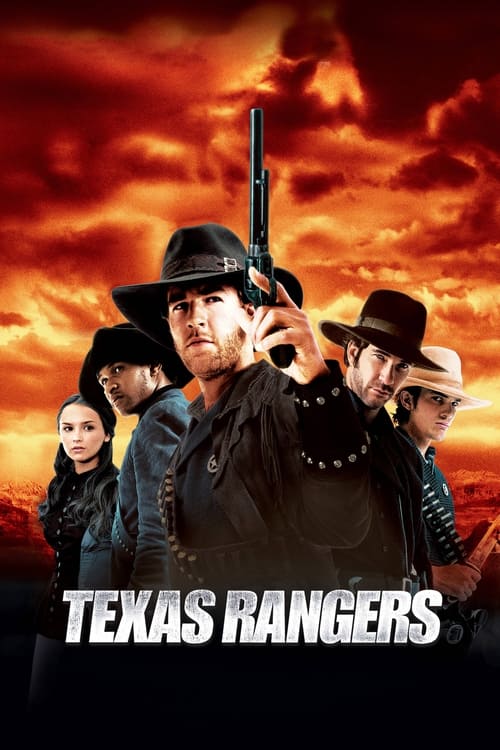
Who are the main characters in Texas Rangers and what are their roles?
What motivates Captain McNelly to form the Texas Rangers?
How does Ranger John B. Armstrong prove himself to the team?
What challenges do the Texas Rangers face while pursuing outlaws?
What is the significance of the relationship between the Texas Rangers and the local communities?
Should I watch it?
Ask Your Own Question

What is the plot?
Sorry, we aren't able to watch and write up a full detailed plot yet. Check back in a few days.


What is the ending?
In the ending of "Texas Rangers," the main characters confront the notorious outlaw, John Wesley Hardin. After a tense showdown, the Texas Rangers manage to capture Hardin, bringing an end to his violent reign. The film concludes with the Rangers reflecting on their journey and the sacrifices made along the way, solidifying their commitment to law and order in Texas.
As the final act unfolds, the Texas Rangers, led by Captain McDonald, prepare for a climactic confrontation with John Wesley Hardin. The atmosphere is thick with tension as the Rangers gather their resources and strategize their approach. Each Ranger is acutely aware of the stakes involved, not just for their own lives but for the safety of the communities they serve.
Scene 1: The Rangers receive intelligence about Hardin's whereabouts. The camera captures the determination etched on their faces, revealing their resolve to bring justice to the lawless land. The weight of their mission hangs heavily in the air, as they know that Hardin is a cunning and ruthless adversary.
Scene 2: The Rangers set out on horseback, traversing the rugged terrain of Texas. The landscape is vast and unforgiving, mirroring the challenges they face. As they ride, the camaraderie among the Rangers is palpable; they share stories and laughter, but there is an underlying tension as they approach their target.
Scene 3: The Rangers finally locate Hardin in a saloon, where he is surrounded by his gang. The atmosphere is charged with danger, and the tension escalates as the Rangers prepare to make their move. The camera zooms in on Hardin's face, revealing a mix of arrogance and defiance, as he senses the impending confrontation.
Scene 4: A fierce gunfight erupts. The sound of gunfire echoes through the saloon, and chaos ensues. The Rangers display their skills and bravery, working together to outmaneuver Hardin and his gang. Each Ranger's internal struggle is evident as they fight not only for their lives but for the ideals they uphold.
Scene 5: In a pivotal moment, Captain McDonald confronts Hardin directly. The two men face off, and the tension is palpable. McDonald's determination to uphold the law clashes with Hardin's lawlessness. The emotional stakes are high as McDonald grapples with the weight of his duty and the personal cost of the confrontation.
Scene 6: Ultimately, the Rangers succeed in capturing Hardin. The moment is bittersweet; while they have achieved their goal, the toll of the battle is evident. The camera captures the weary faces of the Rangers, reflecting on the lives lost and the sacrifices made throughout their journey.
Scene 7: In the aftermath, the Rangers regroup and reflect on their mission. They share a moment of camaraderie, acknowledging the bond forged through their trials. Each character contemplates their future, with a renewed sense of purpose to continue their fight for justice in Texas.
Scene 8: The film concludes with a montage of the Rangers riding off into the sunset, symbolizing their ongoing commitment to law and order. The final shot lingers on the Texas landscape, a reminder of the challenges that lie ahead but also of the hope that comes with their resolve.
In the end, Captain McDonald emerges as a symbol of justice, having faced his fears and fulfilled his duty. The other Rangers, each with their own personal growth, stand united, ready to face whatever challenges the future may hold. John Wesley Hardin, now captured, represents the lawlessness that the Rangers have vowed to eradicate, serving as a reminder of the ongoing struggle between order and chaos in the wild frontier of Texas.
Is there a post-credit scene?
The movie "Texas Rangers," produced in 2001, does not have a post-credit scene. The film concludes without any additional scenes or content after the credits roll. The story wraps up with the resolution of the main plot involving the Texas Rangers and their pursuit of outlaws, leaving the audience with a sense of closure regarding the characters and their journeys.
Who are the main characters in Texas Rangers and what are their roles?
The main characters in Texas Rangers include Captain McNelly, played by Dylan McDermott, who leads the Texas Rangers; Ranger Frank Hamer, portrayed by Randy Quaid, who is a seasoned lawman; and Ranger John B. Armstrong, played by Ashton Kutcher, who is a young recruit eager to prove himself. Each character brings a unique perspective and set of skills to the team, with McNelly embodying leadership, Hamer representing experience, and Armstrong showcasing youthful enthusiasm.
What motivates Captain McNelly to form the Texas Rangers?
Captain McNelly is motivated by a deep sense of justice and the need to restore order in a lawless Texas. He is driven by the violent crime wave caused by outlaws like the infamous duo Bonnie and Clyde, and he believes that forming a dedicated group of lawmen, the Texas Rangers, is essential to combat this threat and protect the innocent.
How does Ranger John B. Armstrong prove himself to the team?
Ranger John B. Armstrong proves himself to the team through a series of daring actions that showcase his bravery and quick thinking. One pivotal moment occurs when he takes the initiative during a confrontation with outlaws, demonstrating his commitment to the cause and earning the respect of his fellow Rangers, particularly Captain McNelly.
What challenges do the Texas Rangers face while pursuing outlaws?
The Texas Rangers face numerous challenges while pursuing outlaws, including violent shootouts, treacherous terrain, and the cunning tactics employed by the criminals. They also grapple with internal conflicts, such as differing opinions on how to handle the lawless environment and the emotional toll that the violent confrontations take on them, particularly on Captain McNelly.
What is the significance of the relationship between the Texas Rangers and the local communities?
The relationship between the Texas Rangers and the local communities is significant as it highlights the tension between law enforcement and the citizens they protect. The Rangers must navigate the distrust from some locals who view them as outsiders, while also seeking to gain their support in the fight against crime. This dynamic adds depth to the narrative, showcasing the complexities of law enforcement in a tumultuous period.
Is this family friendly?
The movie "Texas Rangers," produced in 2001, contains several elements that may be considered objectionable or upsetting for children or sensitive viewers. Here are some aspects to be aware of:
-
Violence: The film features gunfights and shootouts, which can be intense and graphic. Characters are shown being shot, and there are scenes depicting the aftermath of violence.
-
Death: There are moments that involve the death of characters, which may be emotionally distressing. The impact of these deaths on the surviving characters is explored, adding to the emotional weight.
-
Language: The dialogue includes some coarse language and mild profanity, which may not be suitable for younger audiences.
-
Themes of Lawlessness: The film portrays a lawless environment with themes of crime and justice, which may be unsettling for some viewers, especially younger children.
-
Emotional Turmoil: Characters experience significant emotional struggles, including loss and betrayal, which may be difficult for sensitive viewers to process.
Overall, while "Texas Rangers" is an action-adventure film, its content may not be appropriate for all family members, particularly younger children or those who are sensitive to violence and emotional distress.







