




















Popular
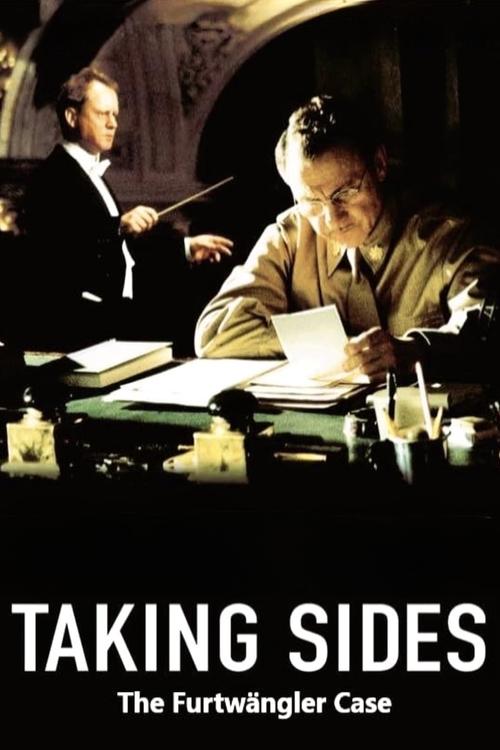
What is the significance of the character of Wilhelm Furtwängler in the film?
How does the character of Major Steve Arnold challenge Furtwängler's views?
What role does the setting of post-war Germany play in the film?
How does Furtwängler justify his actions during the Nazi regime?
What is the emotional impact of the final confrontation between Furtwängler and Arnold?
Should I watch it?
Ask Your Own Question

What is the plot?
Sorry, we aren't able to watch and write up a full detailed plot yet. Check back in a few days.







What is the ending?
In the ending of "Taking Sides," the investigation into the renowned conductor Wilhelm Furtwängler concludes with a tense confrontation between Furtwängler and the American investigator, Major Steve Arnold. Furtwängler defends his actions during the Nazi regime, while Arnold grapples with the moral complexities of art and complicity. Ultimately, Furtwängler is cleared of charges, but the emotional weight of the past lingers, leaving both men changed by their encounter.
As the film approaches its conclusion, the tension escalates in the interrogation room where Major Steve Arnold, played by Harvey Keitel, continues to press Wilhelm Furtwängler, portrayed by Stellan Skarsgård. The atmosphere is thick with unresolved conflict, as Arnold seeks to understand Furtwängler's choices during the Nazi regime. The room is dimly lit, casting shadows that reflect the moral ambiguity of their discussion.
Furtwängler, a man of great artistic stature, sits composed yet visibly strained, his brow furrowed as he recalls the pressures he faced. He argues passionately about the role of an artist in a totalitarian state, insisting that his music transcended the political turmoil surrounding him. His voice trembles with a mix of pride and regret, revealing his internal struggle as he defends his decision to remain in Germany during the war. He believes that art can serve as a refuge, a means to resist the darkness of the regime, even if it means being perceived as complicit.
Arnold, on the other hand, is relentless in his pursuit of the truth. He embodies the moral outrage of a soldier who has witnessed the horrors of the Holocaust. His frustration mounts as he confronts Furtwängler with the stark reality of the consequences of his choices. The tension between them is palpable, as Arnold's anger clashes with Furtwängler's calm demeanor. Arnold's motivations are deeply rooted in his desire for justice, yet he is also haunted by the complexities of human nature and the gray areas of morality.
As the interrogation unfolds, Furtwängler's defenses begin to crack. He reveals his deep love for music and the belief that it can unite people, even in the darkest of times. The emotional weight of his past choices hangs heavily in the air, and the audience can sense his vulnerability. He acknowledges the pain of those who suffered under the regime, yet he struggles to reconcile his artistic integrity with the reality of his situation.
In a pivotal moment, Furtwängler's composure falters as he reflects on the artists who were silenced and the music that was lost. The room grows silent, and the gravity of their conversation deepens. Arnold, sensing the shift, softens his approach, recognizing the humanity in Furtwängler despite their opposing views. This moment of connection highlights the film's exploration of the complexities of guilt, responsibility, and the power of art.
Ultimately, the investigation concludes with Furtwängler being cleared of any wrongdoing. However, the resolution is bittersweet. As he walks away from the interrogation room, there is a sense of unresolved tension. Furtwängler's fate is one of continued artistic legacy, but it is shadowed by the moral implications of his past. He is left to grapple with the choices he made and the impact they had on his life and the lives of others.
Arnold, too, is changed by the encounter. He leaves the investigation with a deeper understanding of the complexities of human nature and the burdens of history. The film closes on a note of ambiguity, leaving the audience to ponder the intricate relationship between art, morality, and the human experience. The final scenes linger on the emotional aftermath of their confrontation, emphasizing that while Furtwängler may have been exonerated, the scars of the past remain, shaping the lives of all involved.
Is there a post-credit scene?
The movie "Taking Sides," produced in 2002, does not have a post-credit scene. The film concludes with the resolution of its central conflict surrounding the investigation of the renowned conductor Wilhelm Furtwängler during World War II. The narrative wraps up as the characters reflect on the moral complexities of art, loyalty, and the choices made during a tumultuous time in history. The absence of a post-credit scene aligns with the film's serious tone and focus on the weighty themes it explores.
What is the significance of the character of Wilhelm Furtwängler in the film?
Wilhelm Furtwängler, portrayed by Harvey Keitel, is a central figure in 'Taking Sides.' He is a renowned conductor accused of having ties to the Nazi regime during World War II. His character embodies the moral complexities of art and ethics, as he grapples with his legacy and the implications of his choices during a tumultuous time. Furtwängler's internal conflict is palpable as he defends his actions, believing that music transcends politics, while also facing the harsh scrutiny of those who see his past as unforgivable.
How does the character of Major Steve Arnold challenge Furtwängler's views?
Major Steve Arnold, played by Stellan Skarsgård, serves as the film's moral counterpoint to Furtwängler. As an American investigator, Arnold is determined to uncover the truth about Furtwängler's affiliations with the Nazis. His relentless questioning and confrontational style force Furtwängler to confront uncomfortable truths about his past. Arnold's motivations stem from a deep sense of justice and a personal connection to the atrocities of the war, which adds emotional weight to their exchanges and highlights the tension between artistic integrity and moral responsibility.
What role does the setting of post-war Germany play in the film?
The setting of post-war Germany is crucial to the narrative of 'Taking Sides.' The film takes place in a war-torn Berlin, where the remnants of the Nazi regime still linger in the air. This backdrop amplifies the stakes of the investigation into Furtwängler's past, as the country grapples with its identity and the consequences of its actions during the war. The oppressive atmosphere of the city, with its stark contrasts between the beauty of music and the horrors of history, serves to heighten the emotional tension between the characters and their conflicting ideologies.
How does Furtwängler justify his actions during the Nazi regime?
Throughout the film, Furtwängler attempts to justify his actions by arguing that he used his position to protect musicians and promote culture during a dark time. He claims that his music provided solace and hope, suggesting that art can exist independently of political affiliations. This rationalization reveals his internal struggle and denial, as he grapples with the moral implications of his choices. His justifications are met with skepticism from Arnold, who challenges him to confront the reality of his complicity, creating a powerful dialogue about the responsibilities of artists in times of moral crisis.
What is the emotional impact of the final confrontation between Furtwängler and Arnold?
The final confrontation between Furtwängler and Arnold is charged with emotional intensity, as it encapsulates the film's central conflict. In this climactic scene, Furtwängler's defenses begin to crumble under Arnold's relentless questioning. The tension escalates as Furtwängler's pride clashes with Arnold's demand for accountability. This moment is not just a battle of words; it is a profound exploration of guilt, shame, and the burden of history. The emotional weight of their exchange leaves both characters visibly shaken, highlighting the personal stakes involved in their ideological battle and the lasting scars of war.
Is this family friendly?
"Taking Sides," produced in 2002, is a drama centered around the post-World War II era, focusing on the moral complexities of art, loyalty, and the consequences of war. While the film is rich in historical context and character development, it does contain several elements that may be objectionable or upsetting for children or sensitive viewers.
-
Themes of War and Trauma: The film delves into the psychological impact of war, showcasing the emotional scars left on individuals, which may be distressing for younger audiences.
-
Confrontational Dialogue: There are intense discussions and confrontations between characters that explore heavy themes such as betrayal, guilt, and moral ambiguity, which may be difficult for children to fully understand or process.
-
Depictions of Authority and Conflict: The film portrays the tension between authority figures and artists, including scenes of interrogation and conflict that may be unsettling.
-
Emotional Turmoil: Characters experience significant emotional distress, including moments of anger, sadness, and despair, which could be upsetting for sensitive viewers.
-
Historical Context of Persecution: The film touches on the persecution of artists and intellectuals during the Nazi regime, which may include references to oppression and loss that could be disturbing.
Overall, while "Taking Sides" is a thought-provoking film, its mature themes and emotional depth may not be suitable for younger audiences or those who are particularly sensitive to such topics.








